
The 2026 spring climbing season on Mount Everest has officially ended, and early verified reports confirm that at least five climbers have died on Mount Everest this year. This makes 2026 another tragic season in the long history of the world’s highest mountain, where extreme altitude, harsh weather, and increasing traffic continue to pose serious risks to climbers.
Every year, hundreds of climbers attempt to reach the summit of Everest at 8,848.86 meters, usually during the narrow spring window in April and May. This period is chosen because weather conditions are relatively stable compared to other times of the year. However, even during this “best” season, Everest remains extremely dangerous due to oxygen scarcity, freezing temperatures, and unpredictable mountain conditions.
The confirmed figure of at least five deaths in 2026 is based on compiled expedition reports and field updates, including the seasonal analysis published by Explore All About Nepal here:
Total Death on Everest in 2026
While final government reconciliation reports are still expected from the Nepal side, this number represents the most widely accepted early-season total.
The fatalities occurred across different sections of the mountain, including high camps and upper route zones, where climbers face the most extreme conditions. In many cases, deaths on Everest are not caused by a single factor but by a combination of altitude sickness, exhaustion, weather exposure, and delayed descent from summit attempts.
The Everest climbing environment, especially above 8,000 meters in the so-called “death zone,” is beyond human physiological limits. Even with supplemental oxygen, climbers can suffer from severe hypoxia, frostbite, and life-threatening fatigue.
This article provides a complete breakdown of the 2026 Everest fatalities, explains why deaths still occur despite modern technology, and examines what this season tells us about the future of high-altitude mountaineering.
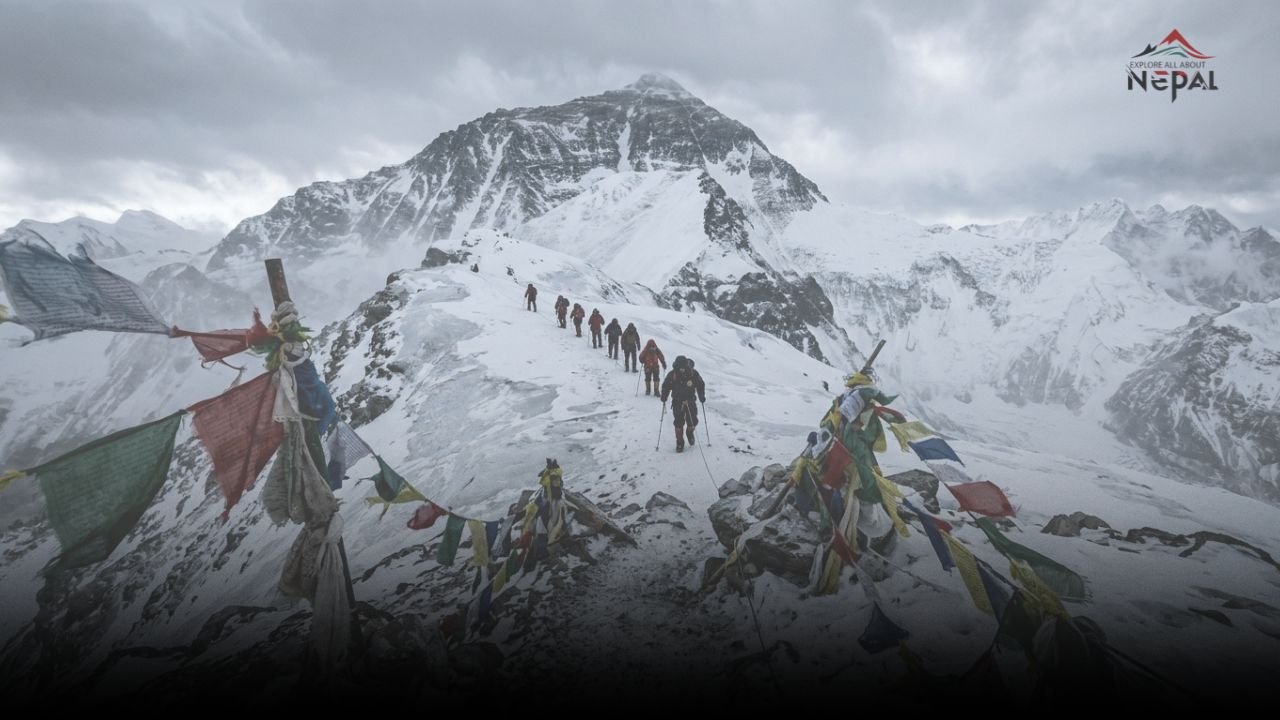
How Many People Died on Everest This Year
How Many People Died on Everest in 2026?
As of the conclusion of the spring 2026 season, at least five climbers have been confirmed dead on Mount Everest. This number is based on expedition operator reports, field confirmations, and seasonal summaries compiled after the summit window closed. It is important to note that final official verification is typically completed later by Nepal’s tourism authorities.
The reported fatalities occurred during the main climbing period when traffic was highest on the summit route. While Everest saw successful ascents this year, the mountain also continued its long-standing pattern of seasonal fatalities linked to extreme altitude and environmental risks. In general, Everest death tolls vary each year depending on weather conditions, crowding, and the experience level of climbers participating in expeditions.
Why Do Climbers Still Die on Everest?
Despite modern advancements in gear, forecasting, and expedition logistics, Everest remains one of the most dangerous mountains in the world. The primary reason is that the environment above 8,000 meters exceeds human survival limits.
The most critical risk zone is the “death zone,” where oxygen levels are so low that the human body begins to deteriorate rapidly. Even with supplemental oxygen systems, climbers experience reduced decision-making ability, physical exhaustion, and impaired judgment.
Altitude-related illnesses such as high-altitude cerebral edema (HACE) and high-altitude pulmonary edema (HAPE) remain major causes of fatalities. These conditions can develop quickly and become fatal without immediate descent.
Weather is another major factor. Everest is known for sudden storms, strong winds, and whiteout conditions that can appear within minutes. These changes often trap climbers at high altitudes or delay their descent after summit attempts.
Crowding is also a growing issue. During peak summit days, long queues form in narrow sections of the route. This increases exposure time in dangerous zones and can lead to exhaustion and oxygen depletion.
The Khumbu Icefall is another critical hazard. Constantly shifting ice structures, deep crevasses, and unstable ladders make it one of the most dangerous sections of the entire climb.
Most fatalities occur not during ascent, but during descent. Climbers are physically exhausted after summiting, and this is when oxygen supply, energy, and focus are at their lowest.
Even experienced climbers are vulnerable in these conditions, showing that Everest risks are not limited to beginners.
Everest 2026 Season in Context
The 2026 Everest season continues a long historical pattern of both achievement and tragedy. Since the first successful ascent by Sir Edmund Hillary and Tenzing Norgay in 1953, Everest has recorded hundreds of fatalities across decades of expeditions.
Modern climbing conditions have improved significantly. Today, climbers benefit from better weather forecasting, fixed ropes, advanced oxygen systems, helicopter evacuation support, and professional guiding services. These improvements have increased summit success rates.
However, increased accessibility has also led to higher traffic on the mountain. Commercial expeditions now bring large groups of climbers each season, which creates logistical congestion during summit windows.
The 2026 fatalities highlight the ongoing challenge of balancing accessibility with safety. While more climbers are reaching the summit than ever before, the risks associated with crowding and environmental exposure remain serious.
Climate change is also influencing Everest conditions. Glacial instability and changing icefall structures are making certain sections more unpredictable, adding new layers of risk to expeditions.
Authorities, including the Nepal government and the Nepal Tourism Board, continue to evaluate safety regulations, permit systems, and expedition requirements in response to these ongoing challenges.
The confirmation that at least five climbers died on Mount Everest during the 2026 spring season reinforces a reality that has remained unchanged for decades: Everest is still a highly dangerous mountain despite technological progress.
Each year, climbers push physical and mental limits to reach the world’s highest point. While many succeed, the mountain continues to demand respect, preparation, and careful decision-making. The fatalities in 2026 serve as a reminder that even with modern equipment and experienced guides, nature remains unpredictable and powerful.
The 2026 season reflects both progress and persistent risk. More climbers are successfully summiting Everest than in earlier decades, but the risks associated with extreme altitude, weather instability, and overcrowding remain significant.
As future seasons approach, discussions around safety regulations, climber experience requirements, and environmental impact are likely to become more important. Managing Everest responsibly will require cooperation between government authorities, expedition operators, and climbers themselves.
Ultimately, Everest is not just a destination it is an extreme environment where survival depends on preparation, timing, and respect for the mountain. The 2026 season stands as another chapter in Everest’s complex history one that combines achievement, ambition, and loss on the roof of the world.
