The Everest Base Camp trek takes 12–14 days, costs most Western trekkers USD 1,200–2,200 all-in, and requires two permits totaling NPR 6,000 (about USD 45). You do not need climbing skills. You do need a licensed guide, decent fitness, and respect for altitude.
This guide is written from Kathmandu, not from a marketing office. It tells you what agencies won’t: which costs are padded, where trekkers actually struggle, and what changed in 2026. This will covers everything you need to plan and complete the EBC trek itinerary, permits, difficulty, best time, gear, and the practical realities that most guides skip over.
Quick Reference: Everest Base Camp Trek at a Glance
| Detail | Info |
|---|---|
| Duration | 12–14 days round trip from Lukla |
| Max altitude | 5,364 m at Base Camp; 5,545 m at Kala Patthar |
| Total cost (guided package) | USD 1,200–2,000 |
| Total cost (independent w/ guide) | USD 900–1,300 |
| Permits | NPR 6,000 total (~USD 45) — details below |
| Guide required? | Yes — licensed guide mandatory since April 2023 |
| Best seasons | Oct–Nov and Mar–May |
| Fitness needed | Can you hike 6 hours with a daypack? That’s the bar |
| Biggest real risk | Altitude sickness, not terrain |
| Insurance | Must cover trekking to 6,000 m + helicopter evacuation |
What Is the Everest Base Camp Trek?
The EBC trek follows the traditional expedition approach route into the Khumbu, beginning at Lukla (2,860m) after a notorious 35-minute mountain flight from Kathmandu. The trail climbs through Phakding, crosses suspension bridges over the Dudh Koshi River, and arrives at Namche Bazaar (3,440m) the Khumbu’s main commercial hub and the site of the first mandatory acclimatization day.
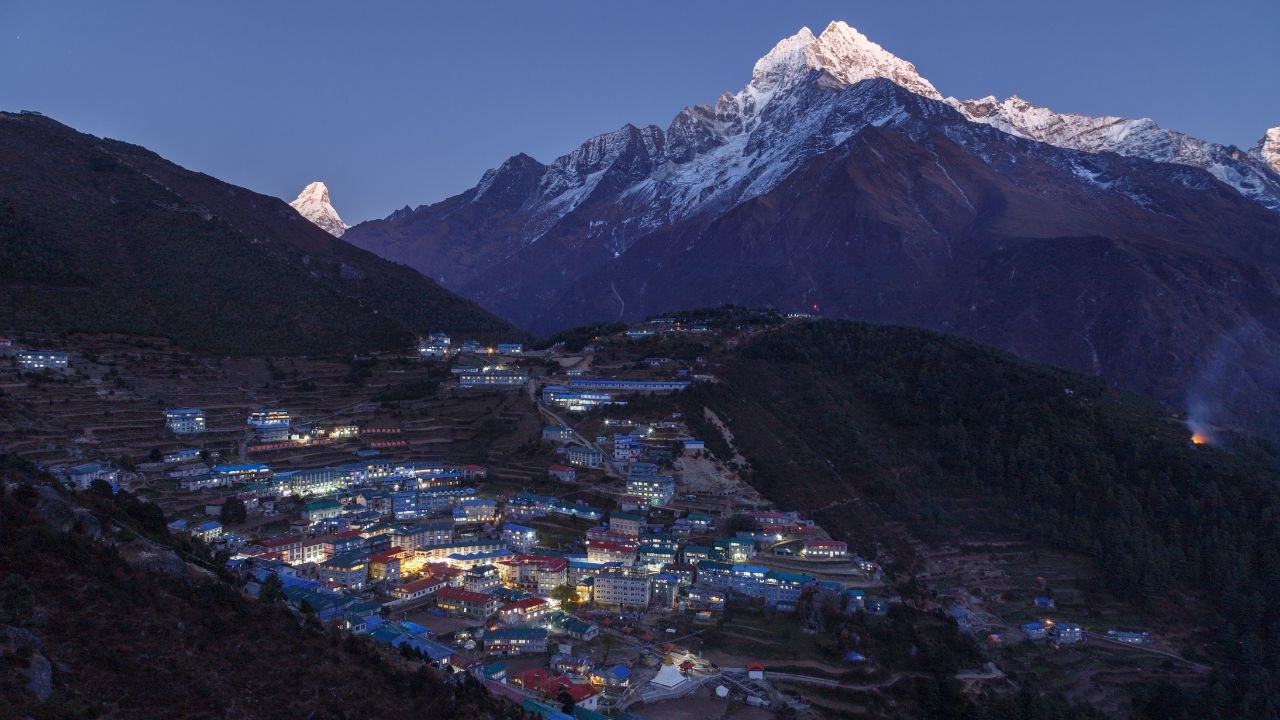
Everest Base Camp Trek: namche bazaar everest trek morning: Photo by Pritam Chhetri
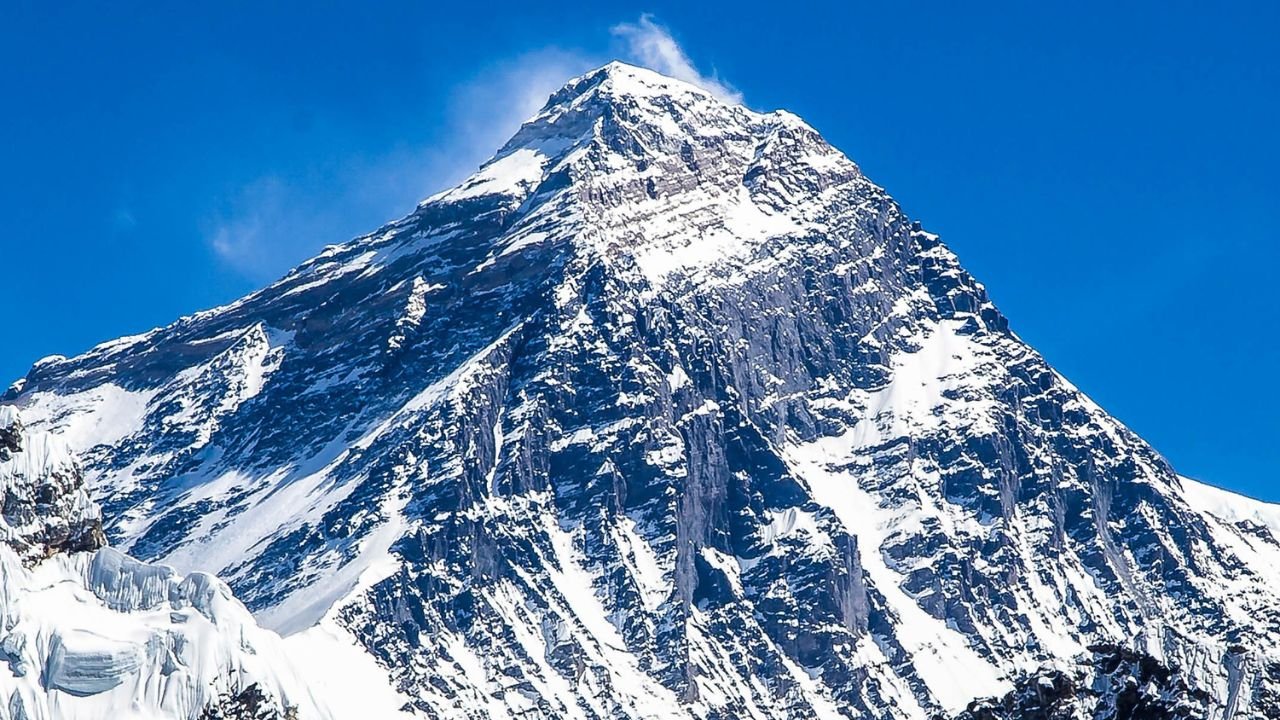
From Namche the route climbs progressively through Tengboche, Dingboche, and Lobuche, crossing increasingly high-altitude and glaciated terrain before reaching Gorak Shep (5,164m) the last tea house settlement before base camp. Most trekkers do two things from Gorak Shep: walk to Everest Base Camp itself (5,364m) for the iconic arrival, and climb Kala Patthar (5,545m) for the most photographed Everest view in existence the one where the summit appears above the Khumbu Icefall.
What distinguishes EBC from other Nepal treks isn’t simply the altitude or the destination. It’s the Khumbu itself a region unlike anywhere else in Nepal, shaped entirely by its relationship with Everest and the expedition culture that surrounds it. Namche’s Saturday market, Tengboche’s monastery, the helicopter traffic ferrying expedition supplies to higher camps, the sight of mountaineers in full expedition gear at the tea house table next to trekkers in trail shoes EBC has a specific, irreplaceable character that the altitude numbers don’t fully capture.
Is the Everest Base Camp Trek Right for You?
Difficulty: Moderate to Challenging
EBC is harder than the Annapurna Base Camp trek and easier than a technical peak ascent. The challenge is primarily about sustained altitude rather than single-day technical difficulty you’re spending more days at higher elevations than any other standard Nepal trek, which requires patience, proper acclimatization, and the ability to walk 5–7 hours per day for nearly two weeks.
The most common mistake on EBC is rushing. The itinerary has acclimatization days built in at Namche and Dingboche for physiological reasons, not scheduling convenience trekkers who skip them because they feel fine are significantly more likely to develop altitude sickness above 4,500m.
Who this trek suits:
- Trekkers who’ve done a shorter high-altitude route (ABC, Poon Hill) and want the next level
- Anyone for whom Everest specifically the mountain, the history, the Sherpa culture is the primary draw
- Travelers with 14–16 days who can do the itinerary justice without rushing
Who should reconsider:
- First-time trekkers with no high-altitude experience consider ABC first
- Anyone with fewer than 12 days insufficient time for proper acclimatization
- Trekkers with serious heart or respiratory conditions consult your doctor specifically about EBC altitude before booking
Do You Need a Guide? (Yes — Here’s the Real Rule)
Since April 1, 2023, Nepal requires foreign trekkers to hire a licensed guide for treks in national park areas, including the EBC route. Enforcement in the Khumbu has been inconsistent you will meet people who walked in alone. But checkpoints can turn you around, insurance claims can be denied without a guide, and rescue coordination is far harder solo.
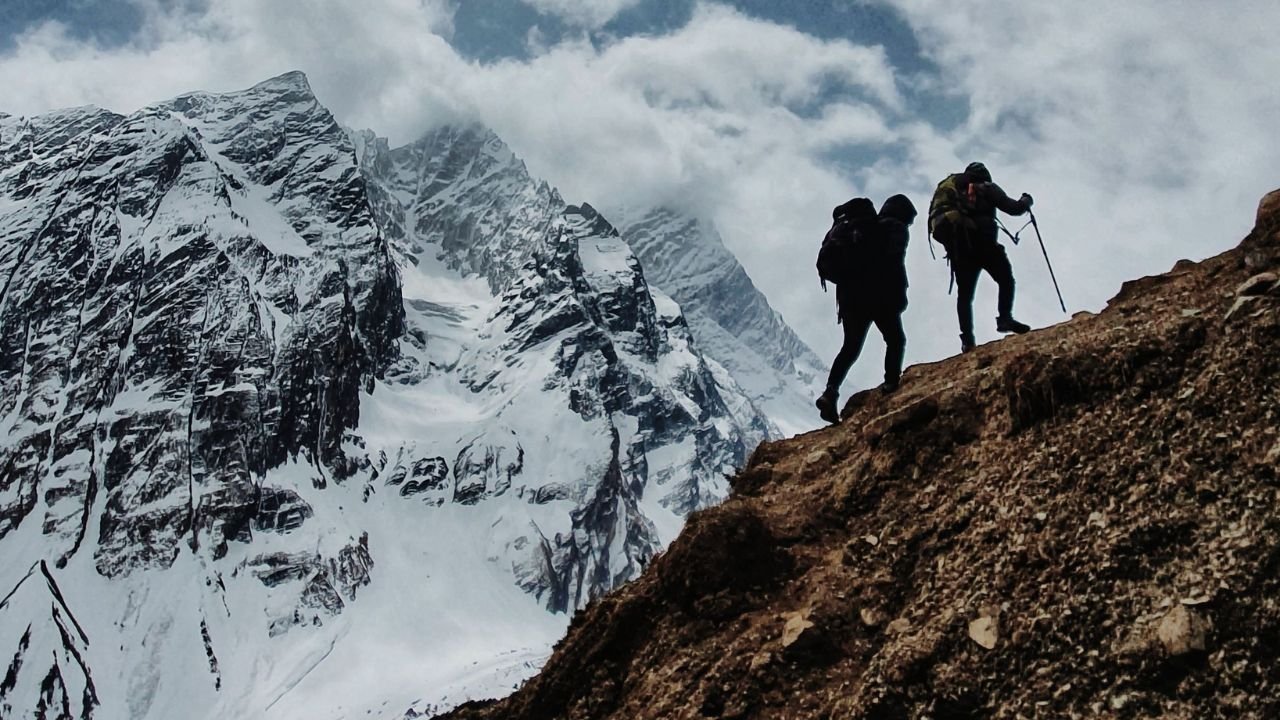
Do You Need to hire a Guide in nepal
Our position: treat the rule as real. A guide costs $25–35/day and is the single best safety investment on this trek. For the full legal picture, see our solo trekking ban explainer and guide hiring cost guide.
See our guide to the best trekking agencies in Nepal for what to look for when booking.
Permits: Exactly What You Need (Verified July 2026)
You need two permits. Neither can be arranged online.
1. Sagarmatha National Park Entry Permit NPR 3,000 (SAARC nationals: NPR 1,500). Buy at the Nepal Tourism Board in Kathmandu (Bhrikuti Mandap) or at the Monjo park gate.
2. Khumbu Pasang Lhamu Rural Municipality Permit NPR 3,000. The fee rose from NPR 2,000 in September 2024 many older guides still list the wrong figure. This one is NOT sold in Kathmandu. Buy it in Lukla (municipality counter near the airport end of town) or at the Monjo checkpoint.
Total: NPR 6,000 ≈ USD 45. Pay in Nepali rupees cards and dollars are not accepted at the counters. No TIMS card is needed for the standard EBC route; it was replaced by the municipality permit in 2018. If an agency charges you for TIMS on this route, question the invoice.
Note: fees are set locally and reviewed periodically. If you’re reading this close to your trek date, confirm with your agency we update this section when rates change.
Best Time for the Everest Base Camp Trek
Autumn: October–November (Best Overall)
The gold standard EBC season. Post-monsoon skies are at their clearest, mountain visibility is consistently excellent, and trail conditions are ideal. October is peak of peak Namche tea houses fill up and the trail between Phakding and Namche sees its highest daily trekker counts. November offers nearly identical conditions with meaningfully fewer crowds, at the cost of colder temperatures that drop sharply above Namche by mid-month.
October: Best views, warmest temperatures at altitude, highest crowds. Book guide and agency 6–8 weeks ahead minimum.
November: Excellent views, fewer trekkers, noticeably colder above Dingboche. Down jacket and good sleeping bag rated to -15°C become non-negotiable rather than recommended.
Spring: March–May (Recommended)
The second season, and genuinely excellent for EBC. March and April see improving weather after winter, moderate temperatures, and the rhododendron forests below Namche at their most vivid. Pre-monsoon haze builds through April and May, somewhat reducing distant views compared to October, but morning clarity remains good. May is also Everest expedition season the mountain is busy with summit attempts, and the base camp experience itself has a unique energy from expedition activity.
March–April: Best spring months for views and temperatures.
May: Expedition season energy at base camp, increasingly warm at lower elevations, slightly hazier views.
Monsoon: June–August (Avoid)
Heavy rainfall, trail flooding, leeches on lower sections, and cloud cover obscuring mountain views for the majority of each day. Not recommended.
Winter: December–February (Experienced Trekkers Only)
Dramatic cold temperatures at Gorak Shep drop to -20°C or below overnight in January. Some tea houses above Dingboche reduce services or close temporarily. Extraordinary mountain clarity and near-zero crowds for those prepared for the cold. Not recommended without a quality -20°C sleeping bag and full cold-weather layering system.
Everest Base Camp Trek Itinerary (14 Days)
This reflects the standard itinerary used by most experienced agencies built around two acclimatization days rather than the rushed 12-day versions some budget operators offer.
Day 1: Fly Kathmandu to Lukla — Trek to Phakding (2,610m)
The Lukla flight (35 minutes) is the most frequently delayed domestic flight in Nepal weather closures are common, particularly in October. Build a buffer day into your Kathmandu stay for this reason. From Lukla, an easy 3-hour descent to Phakding alongside the Dudh Koshi River.
- Walking time: 3 hours
- Elevation change: -250m (Lukla is actually higher than Phakding)
Day 2: Phakding to Namche Bazaar (3,440m)
The day most trekkers remember as the first genuinely demanding one multiple suspension bridge crossings, steadily gaining altitude through Monjo (the Sagarmatha National Park entry checkpoint) and a steep final climb to Namche. The moment Namche’s horseshoe of buildings appears around the ridge bend is one of EBC’s defining visual moments.
- Walking time: 5–6 hours
- Elevation gain: ~830m
Day 3: Namche Bazaar — Acclimatization Day
Non-negotiable. The standard acclimatization protocol involves a morning hike to a higher viewpoint (Everest View Hotel at 3,880m or Syangboche airstrip) for altitude exposure, returning to sleep at Namche’s lower elevation the “climb high, sleep low” principle.
Namche itself warrants exploration the Saturday market, the Sherpa Museum, excellent bakeries, and the best coffee on the route (Namche’s espresso is genuinely remarkable by altitude standards).
Day 4: Namche to Tengboche (3,860m)
A beautiful day the trail contours around the valley with the first clear views of Everest, Lhotse, and Ama Dablam appearing above the ridge. Tengboche Monastery, one of the most important Buddhist sites in the Khumbu, sits at the day’s end.
- Walking time: 5–6 hours
Day 5: Tengboche to Dingboche (4,410m)
Dropping into the Imja Valley before climbing to Dingboche, with increasingly high-altitude and open terrain replacing the lower rhododendron forests.
- Walking time: 5–6 hours
- Elevation gain: ~550m
Day 6: Dingboche — Acclimatization Day
Second mandatory acclimatization day. Standard protocol: morning hike to Nagarjun Hill (5,100m) above Dingboche the first time most trekkers crest 5,000m returning to sleep at 4,410m. This day significantly determines how well trekkers perform above Lobuche.
Day 7: Dingboche to Lobuche (4,940m)
A significant elevation gain day, passing the Thukla Pass memorial chortens a moving collection of stone monuments to climbers lost on Everest, representing every major nationality and spanning decades of expeditions.
- Walking time: 5–6 hours
- Elevation gain: ~530m
Day 8: Lobuche to Gorak Shep (5,164m) — Trek to Everest Base Camp (5,364m)
The defining day. Morning walk to Gorak Shep, drop packs at the tea house, then 2–3 hours to Everest Base Camp across the Khumbu glacier moraine. Base camp in expedition season (April–May) is a city of tents and expedition infrastructure; in autumn it’s quieter, the glacier more visible, the view of the Khumbu Icefall more dramatic without the human noise.
- Walking time: 7–8 hours total
- Maximum elevation: 5,364m
Day 9: Gorak Shep — Climb Kala Patthar (5,545m) — Descend to Pheriche (4,240m)
Pre-dawn departure (4am) for Kala Patthar a 2-hour climb in the dark, timed to reach the summit for sunrise on Everest’s south face. This is the most photographed mountain view in Nepal, and the reason many trekkers consider Kala Patthar the actual emotional peak of the trek rather than base camp itself. Descend fully to Pheriche for the night the altitude drop is significant and welcome.
- Kala Patthar elevation: 5,545m (higher than base camp)
- Walking time: 8–9 hours total
Day 10: Pheriche to Namche Bazaar (3,440m)
A long but downhill day the body responds noticeably to returning to lower altitude, and most trekkers feel significantly better physically below 4,000m.
- Walking time: 6–7 hours
Day 11: Namche to Lukla (2,860m)
Final full trekking day the reverse of Days 1–2, ending at Lukla for a celebratory dinner and early night before the morning flight.
- Walking time: 6–7 hours
Day 12: Fly Lukla to Kathmandu
Weather-dependent build a buffer into your international departure schedule. Experienced EBC travelers allow 1–2 extra Kathmandu nights before their international flight specifically for Lukla weather delays.
Days 13–14: Kathmandu Buffer/Recovery
Rest, Thamel sightseeing, last-minute shopping, and the celebratory dinner your legs have earned.
Acclimatization: The Most Important Factor on EBC
More EBC treks fail due to poor acclimatization than any other single cause. Understanding the physiology helps make the right decisions on the trail.
Above 3,000m, ascend no more than 300–500m per day in terms of sleeping altitude. This is the golden rule and the reason acclimatization days exist.
Recognize the warning signs of AMS (Acute Mountain Sickness):
- Persistent headache unresponsive to ibuprofen
- Nausea or vomiting
- Loss of appetite
- Fatigue disproportionate to exertion
- Difficulty sleeping
The signs that require immediate descent:
- Loss of coordination or stumbling (HACE High Altitude Cerebral Edema)
- Persistent dry cough worsening over hours (HAPE High Altitude Pulmonary Edema)
- Confusion or altered mental state
Diamox: Many EBC trekkers take acetazolamide (Diamox) as a preventative measure 125mg twice daily, starting 24 hours before significant altitude gain. Consult your doctor before the trek; it’s not appropriate for everyone (sulfa allergy is a contraindication) but is widely used and genuinely effective.
The Himalayan Rescue Association (HRA) maintains staffed medical posts at Pheriche (4,240m) during trekking seasons free altitude sickness consultations available. Use them if you’re uncertain about symptoms. See our complete altitude sickness guide for Nepal for detailed prevention and treatment information.
What to Pack for the EBC Trek
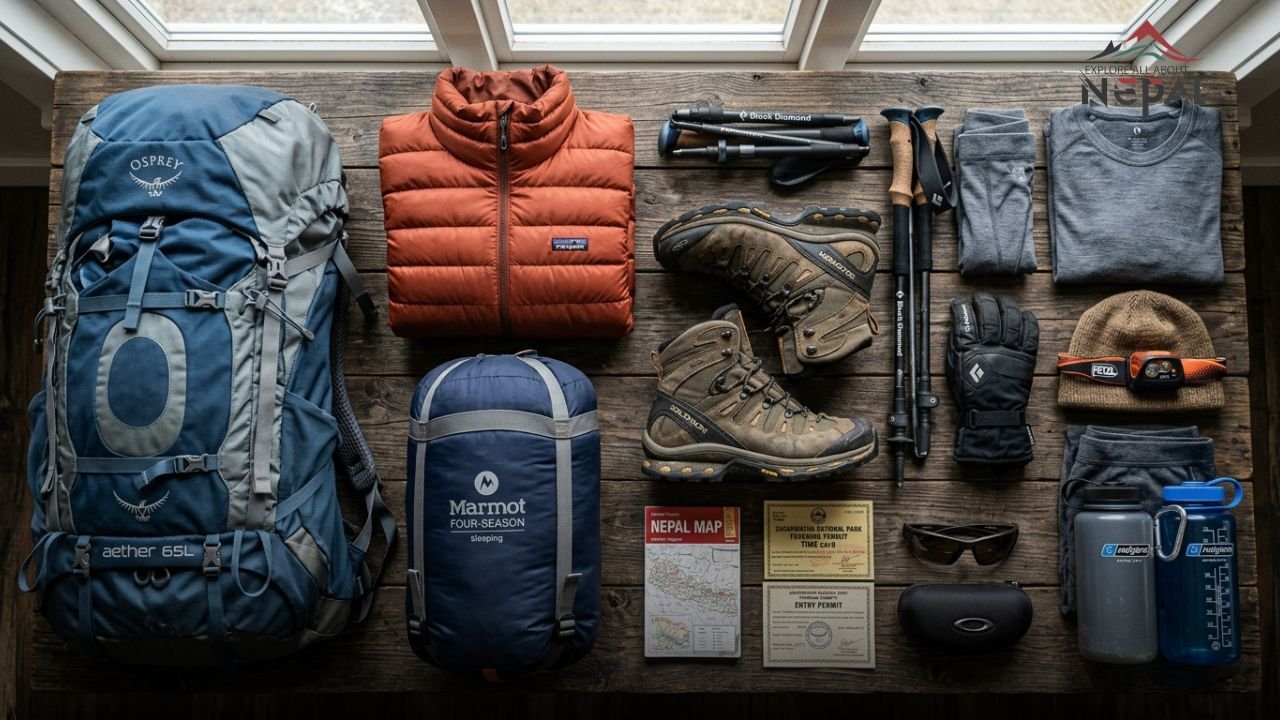
Everest Base Camp Trek List
Clothing System
Base layers (2 sets): Moisture-wicking synthetic or merino wool worn directly against skin during trekking days.
Insulating mid-layer: Fleece or lightweight down jacket for evenings in tea houses above Namche.
Heavy down jacket: Essential above Dingboche, non-negotiable for Kala Patthar pre-dawn departure.
Waterproof outer shell: Even in dry season, afternoon snow showers occur above 4,000m a quality waterproof jacket is necessary, not optional.
Trekking trousers (2 pairs): Convertible zip-off style works well given the temperature range between Lukla (daytime t-shirt weather in October) and Gorak Shep (-20°C overnight).
Warm hat, gloves, buff/neck gaiter: Essential from Namche upward.
Trekking socks: 4–5 pairs merino wool the single item worth buying quality on rather than skimping.
Footwear
Waterproof trekking boots: Broken in before the trek this is the one non-negotiable. New boots on Day 1 of EBC is a genuine trip-ender through blistering. Wear your boots on multiple long walks before Nepal.
Camp sandals or lightweight shoes: For tea house evenings your feet need the break from boots.
Gear
Trekking poles: Strongly recommended particularly valuable on the steep descents from Namche and the moraine terrain near base camp.
Headlamp with spare batteries: Essential for Kala Patthar pre-dawn departure and early morning starts throughout.
Sleeping bag rated to -15°C minimum: Tea house blankets exist but are unreliable above Lobuche your sleeping bag is your primary warmth source for 6+ nights above 4,000m.
Daypack (25–35L): You carry this daily; your main bag goes with your porter.
Water purification: Filter bottle or purification tablets significantly cheaper and more environmentally responsible than buying bottled water throughout the Khumbu.
Pulse oximeter: Clip-on finger device measuring blood oxygen saturation $20–$40, genuinely useful for monitoring your acclimatization progress objectively.
Camera with extra batteries: Cold temperatures drain batteries fast at altitude carry spares warm against your body.
Health and Safety
Travel insurance with helicopter evacuation coverage to 5,500m: Non-negotiable. A helicopter from Gorak Shep to Kathmandu costs $5,000–$8,000 without coverage. See our Nepal trekking insurance guide for the best policies.
Personal first aid kit: Including blister treatment, ibuprofen, antihistamine, rehydration salts, and any prescription medications.
Diamox: If prescribed carry enough for the full trek above Namche.
The Lukla Flight: What You Need to Know
The Tenzing-Hillary Airport at Lukla has a 527m runway that ends at a cliff edge it’s consistently listed among the world’s most challenging airports to operate. Mountain weather closes the airstrip frequently, and weather-related delays of 1–3 days are standard in peak season.
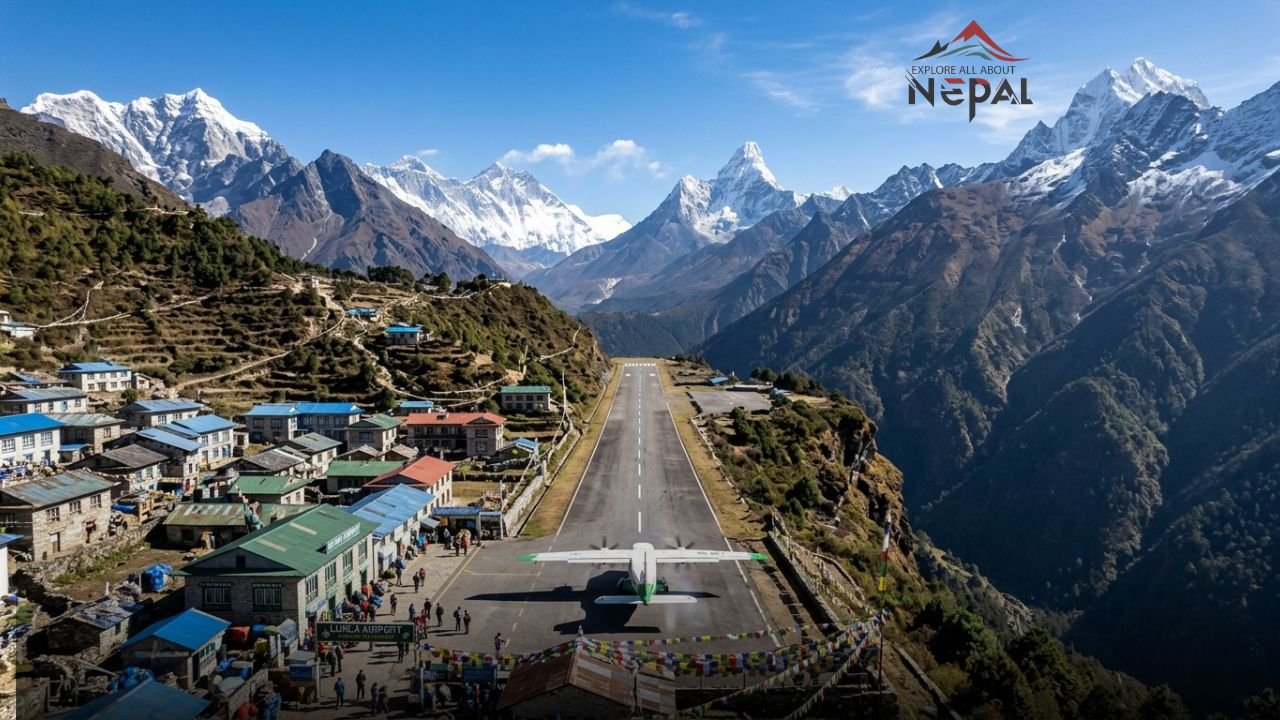
Lukla Flight
What this means practically:
- Never book an international flight departing Kathmandu within 48 hours of your planned Lukla return
- A minimum 2-night Kathmandu buffer after your Lukla return date is the standard recommendation
- EBC packages that include a “contingency day” at Lukla are genuinely worth the extra cost
The Ramechhap alternative: In peak October season, many agencies route clients through Manthali (Ramechhap) airport, roughly 5 hours from Kathmandu by road, to reduce Tribhuvan airport congestion. This means a very early morning departure from Kathmandu (3–4am) for the road transfer worth knowing before assuming all Lukla flights depart from TIA.
EBC vs ABC: Which Should You Choose?
A question that comes up constantly and the honest answer is that they’re genuinely different experiences rather than better/worse.
| Factor | EBC | ABC |
|---|---|---|
| Maximum altitude | 5,364m | 4,130m |
| Duration | 12–16 days | 7–12 days |
| Cost | $2,500–$6,000+ | $1,400–$3,000 |
| Domestic flight required | Yes — Lukla ($350–$450) | No |
| Cultural character | Sherpa, Buddhist, expedition culture | Gurung, Magar, rhododendron forests |
| Scenery variety | More remote and stark | More varied (forest to alpine) |
| Crowds in peak season | Extreme | High but manageable |
| Best for | Everest specifically, altitude seekers | First Himalayan trek, better value |
Choose EBC if the mountain its history, its scale, the Khumbu culture is the primary draw. Choose ABC if you want a comparable Himalayan experience at lower cost, shorter duration, and more scenic variety on the lower route. See our complete Annapurna Base Camp trek guide for the ABC alternative.
How Hard Is It, Honestly?
No technical climbing. No ropes. The difficulty is three things stacked: altitude, repetition, and cold.
You walk 5–7 hours daily for 12 days. Any healthy person who trains for two months regular hill walks with a loaded pack can do the walking. What training cannot fix is how your body handles 5,000 m. Fit marathon runners get altitude sickness while retirees stroll past them. The only defenses are going slow, sleeping low, and being honest about symptoms.
Full breakdown in our EBC difficulty guide including who genuinely should not attempt this trek.
The Lukla Flight Problem (Read This Before Booking)
Here is what agency itineraries gloss over. During peak seasons (March–May, October–November), Lukla flights do not leave from Kathmandu. They leave from Manthali/Ramechhap a 4–5 hour drive from Kathmandu that starts around 1 a.m.
Off-peak months fly direct from Kathmandu. Either way, weather cancels Lukla flights regularly. Build at least one buffer day into your international flight booking, and treat two as sensible. We wrote a full survival guide: Lukla Flights 2026: Manthali vs Kathmandu.
Frequently Asked Questions
Can beginners do the EBC trek?
Yes, with two months of hill training and a sensible itinerary. First-timers finish this trek every day of the season.
Can you see Mount Everest from Base Camp?
No the summit is hidden behind Nuptse. Kala Patthar on Day 9 is where the Everest photo happens.
Is there phone signal on the trail?
Yes, patchy NTC/Ncell coverage most of the route, plus paid Wi-Fi in teahouses. Details in our Nepal SIM card guide.
How much cash should I carry?
NPR 30,000–50,000 for an independent trek. The last reliable ATM is in Namche and it runs dry in peak season.
Do I need to book teahouses ahead?
In peak October, your guide calls ahead another reason the guide earns their fee. Independent walk-ins can end up in dining-room beds.
Planning between EBC and other treks? Start with EBC vs Kilimanjaro.
