
The once-promising Herbs processing plants established in the buffer zone of Shuklaphanta National Park are now lying abandoned and unused as local farmers struggle with collapsing markets, declining prices, and lack of institutional support.
The herbal processing facilities, built to improve local livelihoods and reduce dependency on forest resources, were originally introduced as part of a community-based conservation and income-generation initiative in the buffer zone areas of Shuklaphanta Municipality in far-western Nepal.
However, years after their establishment, the plants have largely fallen into disuse, with deteriorating infrastructure, idle machinery, and abandoned herb cultivation fields becoming common across the region. The decline has raised concerns among local communities, conservation groups, and agricultural stakeholders who once viewed medicinal herb farming as a sustainable economic alternative for buffer zone residents.
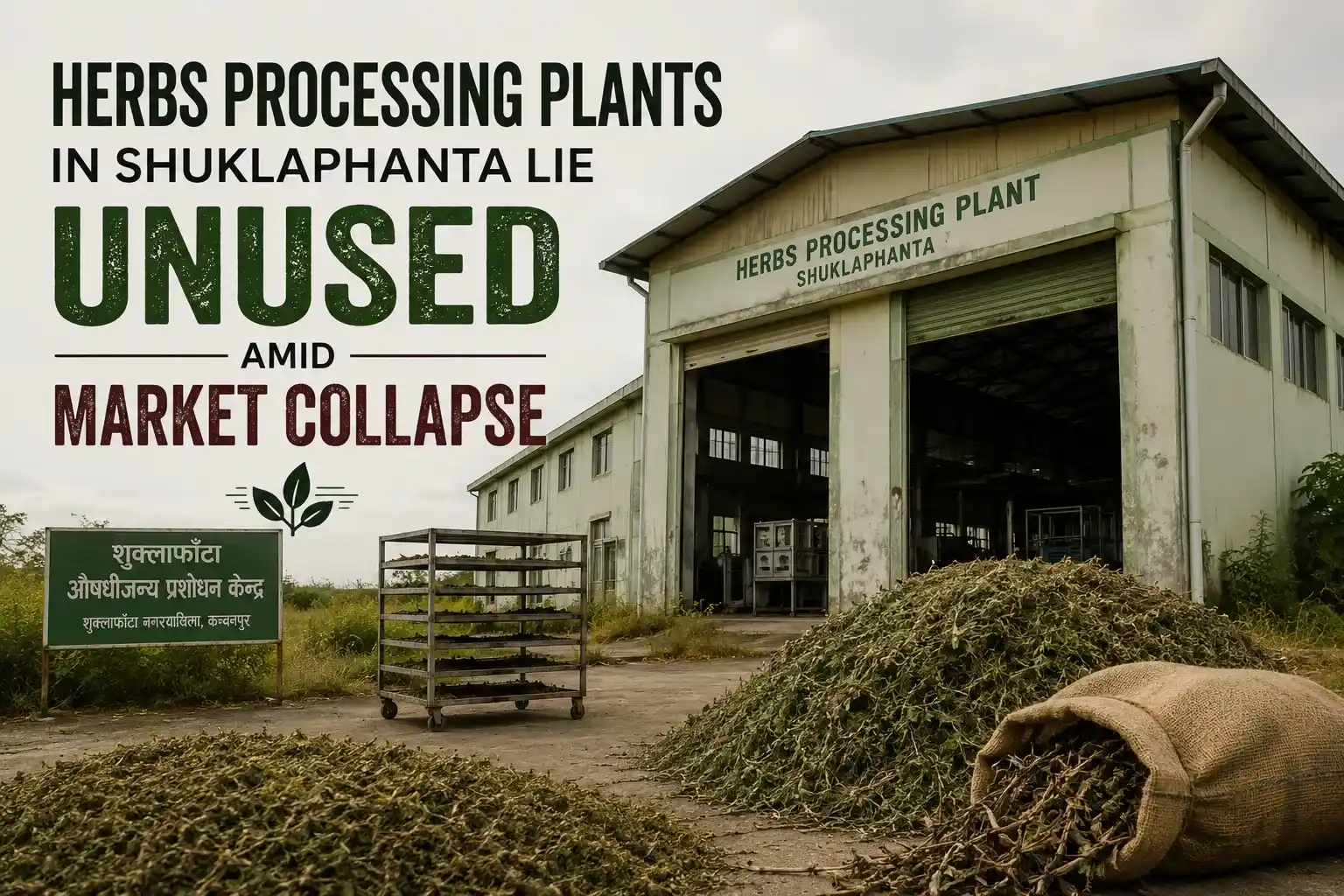
Herbs Processing Plants in Shuklaphanta Buffer Zone Lie Unused Amid Market Collapse
Herbs Processing Plants Established to Support Local Communities
The Herbs processing plants were established in:
- Kasaraul (Ward No. 6)
- Juda (Ward No. 7)
- Beldandi (Ward No. 8)
within the buffer zone region of Shuklaphanta Municipality. The project was introduced with donor assistance and aimed to create long-term livelihood opportunities for communities living near protected forest areas. The initiative focused on:
- Promoting medicinal herb cultivation
- Creating employment opportunities
- Supporting value-added herbal production
- Reducing human–wildlife conflict
- Encouraging sustainable land use practices
Local residents were encouraged to cultivate medicinal and aromatic plants instead of relying heavily on forest extraction or wildlife-sensitive agricultural activities. At the time, the project was considered one of the major rural livelihood diversification efforts in the Shuklaphanta buffer zone region.
Medicinal Herb Cultivation Initially Showed Strong Potential
During the early years of the project, local farmers reported strong demand for medicinal herbs such as:
- Chamomile
- Mint
- Aromatic medicinal plants
Farmers say the business initially generated optimism throughout the area. According to local stakeholders, essential oils extracted from chamomile and mint once sold for between Rs 25,000 and Rs 40,000 per litre, making herb cultivation highly profitable compared to traditional farming.
Local trader demand also remained strong during the beginning stages of the initiative. Farmers say traders regularly visited villages to purchase herbal oil directly from producers. This encouraged many residents to expand cultivation and invest more time and resources into medicinal herb farming.
According to Bharat Bahadur Bista, chairperson of the Sundevi Consumer Group in the buffer zone area, the market initially created significant enthusiasm among local communities. Farmers began viewing herbal cultivation as a sustainable source of long-term income, especially in regions where agriculture is often affected by wildlife intrusion and limited economic opportunities.
Sharp Price Decline Triggered the Collapse
Despite the promising beginning, the situation changed rapidly after the first few years. Farmers reported that prices for herbal essential oils started declining sharply. According to local farmers:
- Prices first dropped from Rs 40,000 to around Rs 10,000 per litre
- Later declined further to nearly Rs 5,000 per litre
- Buyers gradually disappeared from the market entirely
The dramatic fall in prices severely affected local producers who had already invested in cultivation, processing, and transportation. Many farmers say the business became financially unsustainable.
Janak Saud, a local farmer involved in herb cultivation, explained that producers were unable to recover their investments after traders stopped purchasing products. According to farmers, the lack of stable buyers became one of the biggest reasons behind the collapse of the Herbs processing plants. Without proper market access, local production could not continue.
Farmers Faced Major Market Access Problems
Local producers say one of the biggest challenges was the absence of reliable marketing systems.
Even when farmers transported products to larger market centers such as Nepalgunj, they often struggled to secure fair prices. Many returned home without selling their products. Farmers also reported long-term storage problems.
Since herbal oils could not be sold immediately, producers were forced to store them for extended periods, creating additional financial burdens. According to local farmer Jaya Bahadur Air, producers faced repeated difficulties in finding dependable buyers despite significant effort and transportation costs.
The market uncertainty discouraged more farmers from continuing cultivation. Over time, large numbers of local residents abandoned medicinal herb farming entirely.
Infrastructure Now Falling Into Disrepair
Today, much of the infrastructure associated with the Herbs processing plants has reportedly become inactive or damaged. Local stakeholders say:
- Processing machinery remains unused
- Shade houses for drying herbs are deteriorating
- Cultivation areas have been abandoned
- Community facilities are no longer maintained properly
Several structures established under the project are now viewed as symbols of failed rural market planning. Residents estimate that each processing plant may have cost more than Rs 70 million to establish. However, due to poor market management and lack of long-term planning, the investment has failed to generate sustainable economic returns for local communities.
Weak Market Management Blamed for Failure
Local residents and stakeholders believe the collapse of the project was not caused by lack of production capacity, but rather by poor market linkage systems.
Farmers argue that:
- There was insufficient coordination with buyers
- No long-term pricing mechanism was introduced
- Product marketing strategies remained weak
- Value chain development was poorly managed
- Producers lacked institutional protection from market fluctuations
Many believe the project focused heavily on production infrastructure while failing to establish reliable commercial partnerships. Without strong supply-chain management, the herbal industry in the buffer zone struggled to survive after initial market demand weakened.
Importance of Medicinal Herb Cultivation in Nepal
Nepal has long been recognized for its rich biodiversity and potential for medicinal herb production. Several regions across the country cultivate medicinal and aromatic plants used in:
- Ayurvedic products
- Essential oils
- Herbal medicine
- Cosmetics
- Wellness products
- Organic health industries
Medicinal herb farming is often promoted as a sustainable livelihood option for rural and buffer zone communities because it can:
- Generate higher-value income
- Require smaller cultivation areas
- Reduce environmental pressure on forests
- Support eco-friendly agriculture
In protected areas such as Shuklaphanta, alternative income sources are particularly important because communities frequently face challenges from crop damage caused by wildlife. Projects like the Herbs processing plants were therefore designed not only for economic development but also for conservation support.
Why the Shuklaphanta Buffer Zone Matters
The buffer zone surrounding Shuklaphanta National Park plays a major role in balancing conservation and local livelihoods. The area is home to communities living close to forests and wildlife habitats. Residents often face:
- Crop damage from wild animals
- Limited economic opportunities
- Seasonal agricultural uncertainty
- Human–wildlife conflict
Alternative livelihood projects such as medicinal herb cultivation were expected to reduce pressure on natural resources while improving income opportunities. The failure of the Herbs processing plants has therefore become a broader concern for both conservation and rural development sectors.
Can the Herbs Processing Plants Be Revived?
Despite the decline, many local farmers remain hopeful that medicinal herb cultivation can still be revived in the region. Stakeholders say the sector still has strong potential if proper systems are introduced, including:
- Guaranteed market access
- Fair pricing mechanisms
- Long-term buyer partnerships
- Government support programs
- Improved value-chain development
- Export-oriented herbal product strategies
Experts believe Nepal’s growing wellness and herbal products industry could create new opportunities for rural producers if managed properly. Farmers say they are willing to restart cultivation if stable markets and institutional support can be ensured.
Growing Global Demand for Herbal Products
Globally, demand for natural wellness products, essential oils, and herbal medicine continues to grow. Markets for:
- Organic products
- Natural oils
- Herbal cosmetics
- Wellness therapies
- Plant-based medicine
have expanded significantly in recent years. Nepal’s climate and biodiversity provide strong potential for producing high-quality medicinal herbs. However, experts say Nepal still struggles with:
- Weak commercialization systems
- Limited export infrastructure
- Poor branding of herbal products
- Lack of large-scale processing industries
The situation in Shuklaphanta reflects many of the wider structural challenges facing Nepal’s herbal sector. The decline of the Herbs processing plants in the buffer zone of Shuklaphanta National Park highlights the challenges of sustaining rural livelihood projects without long-term market planning and institutional support.
What once began as a promising initiative to support local communities, reduce human–wildlife conflict, and promote medicinal herb cultivation has now largely fallen into disrepair due to collapsing market demand and weak value-chain systems. Still, local farmers and stakeholders believe the potential remains alive.
With better policy support, stronger market access, and sustainable pricing mechanisms, medicinal herb cultivation in the Shuklaphanta region could once again become an important source of income for local communities while supporting Nepal’s broader conservation and rural development goals.
