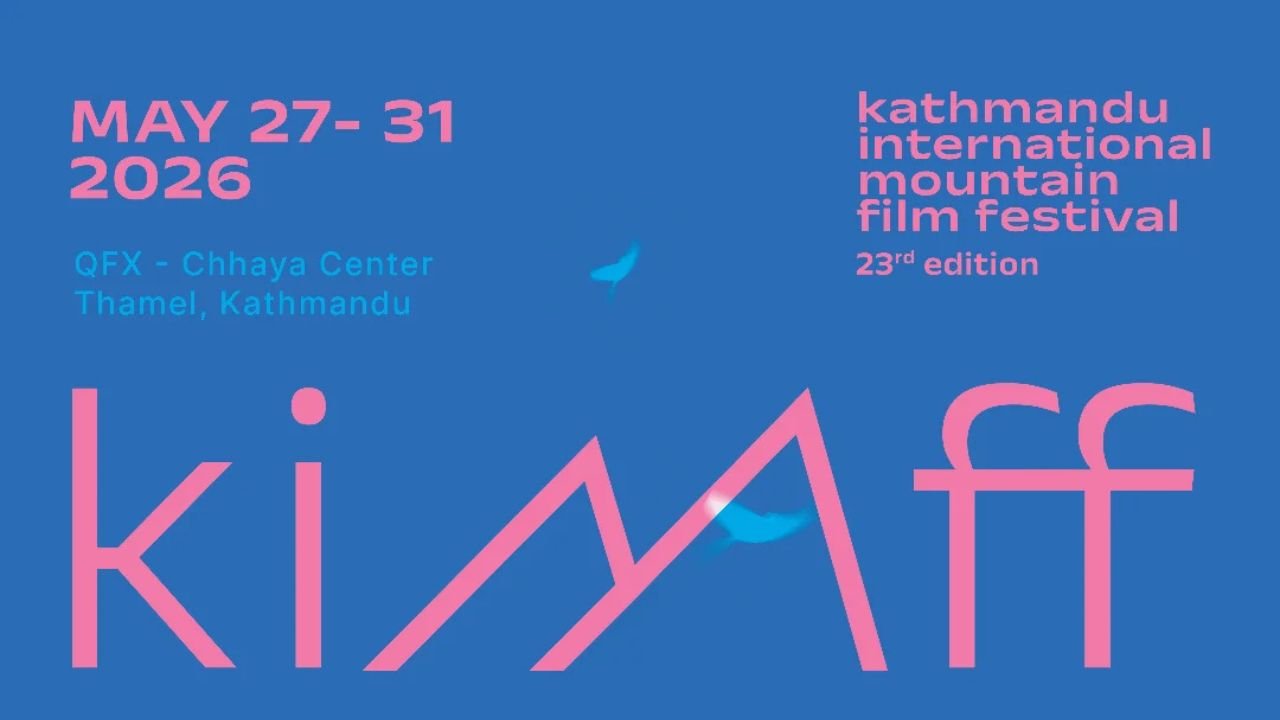
The Kathmandu International Mountain Film Festival (KIMFF) is set to return for its 23rd edition in Kathmandu from May 27 to May 31, 2026, bringing together filmmakers, storytellers, critics, and audiences from across the world for one of Nepal’s most significant cinematic events.
Hosted at QFX Chhaya Centre in the heart of Thamel, the festival will screen more than 50 films representing 29 countries, making Kathmandu a temporary global hub for mountain cinema, documentary storytelling, and socially engaged filmmaking.
Over the years, the Kathmandu International Mountain Film Festival has evolved from a niche cultural gathering into a respected international platform that highlights mountain cultures, environmental issues, identity, migration, gender, and human resilience through the medium of film.
Kathmandu International Mountain Film Festival
The 2026 edition continues this legacy with a diverse lineup of screenings, panel discussions, industry labs, and cross-cultural collaborations designed to connect Nepal’s Himalayan narratives with global cinematic voices.
A Festival Rooted in Mountains, Stories, and Human Experience
Unlike mainstream film festivals that focus broadly on entertainment cinema, the Kathmandu International Mountain Film Festival is deeply rooted in the landscapes, cultures, and lived experiences of mountain communities.
From the Himalayas to global highland regions, the festival curates films that reflect how geography shapes human life physically, socially, and emotionally.
The 2026 edition continues this tradition by presenting films that explore:
- Mountain survival and climate change
- Cultural identity and indigenous communities
- Migration and displacement
- Gender roles in traditional societies
- Adventure and exploration
- Environmental conservation
- Personal transformation narratives
Festival organizers emphasize that KIMFF is not just about screening films but also about creating dialogue between filmmakers and audiences on issues that affect both Nepal and the wider world.
Opening Film: Shape of Momo Sets the Tone for 2026 Edition
The festival will open with the Nepal premiere of Shape of Momo, an award-winning feature film by Indian filmmaker Tribeny Rai.
The film tells the story of Bishnu, a young woman who leaves city life behind and returns to her Himalayan hometown. Upon her return, she faces an emotional and cultural conflict between adhering to traditional expectations and pursuing personal independence.
The story reflects broader themes relevant to many Himalayan communities, where modernization, migration, and generational shifts are reshaping social structures.
By selecting this film as the opening feature, the Kathmandu International Mountain Film Festival signals its continued focus on stories that balance personal narrative with social transformation.
Kathmandu Becomes a Global Cinema Hub for Five Days
During the five-day festival, Kathmandu will transform into a vibrant meeting point for global cinema.
Filmmakers from Asia, Europe, Africa, North America, and South America will present their work, making KIMFF one of South Asia’s most diverse film events.
The festival lineup includes:
- Feature fiction films
- Documentary films
- Short films
- Experimental cinema
- Adventure and mountain films
This diversity reflects the growing international recognition of the Kathmandu International Mountain Film Festival as a space where cinema intersects with activism, environment, and cultural storytelling.
Festival director Ramyata Limbu highlighted that KIMFF aims not only to entertain but to encourage critical reflection.
She emphasized that films in the festival are selected to spark meaningful conversations around issues affecting Nepali society and global communities alike.
Nepal Panorama: A Platform for Nepali Filmmakers
A central component of the festival is the Nepal Panorama section, dedicated entirely to Nepali filmmakers.
This section showcases stories that reflect contemporary Nepal, including urban transformation, rural life, youth aspirations, gender dynamics, cultural identity, and social challenges.
For many emerging filmmakers, Nepal Panorama serves as a critical launching platform, providing visibility and access to international audiences and industry professionals.
It also helps strengthen Nepal’s growing independent film movement, which has seen increased participation from young directors, documentary creators, and experimental storytellers.
Through Nepal Panorama, the Kathmandu International Mountain Film Festival reinforces its role in nurturing domestic talent while connecting it to global cinema networks.
Special Focus: Switzerland and Japan in KIMFF 2026
The 2026 edition will also highlight two major international cultural milestones.
Nepal–Switzerland: 70 Years of Diplomatic Relations
To mark 70 years of Nepal–Switzerland relations, KIMFF will host a special program titled:
“Alpine Alliances: New Wave of Nepali Cinema”
This session explores how Swiss film institutions, labs, and festivals have supported Nepali filmmakers over the years.
The discussion will include Nepali filmmakers who have participated in Swiss cultural programs, focusing on international collaboration, training opportunities, and global festival exposure.
This initiative highlights how cross-border partnerships are shaping the evolution of Nepali cinema.
Nepal–Japan: Celebrating Mountain Heritage
In collaboration with Japanese cultural institutions, KIMFF will also celebrate 70 years of Nepal–Japan diplomatic ties with a special screening of Climbing for Life, directed by Sakamoto Junji.
The film tells the inspiring story of Junko Tabei, the first woman to climb Mount Everest.
This screening creates a symbolic connection between Japan’s cinematic storytelling and Nepal’s mountaineering heritage, both deeply linked through the Himalayas.
Panels That Go Beyond Cinema
One of the strongest aspects of the Kathmandu International Mountain Film Festival is its focus on dialogue and industry conversations.
KIMFF 2026 will host several panel discussions exploring critical topics in film, society, and storytelling.
Key sessions include:
🎬 What’s In a Story Cinema and Censorship
A discussion on creative freedom, regulation, and artistic expression in filmmaking.
🎬 Redefining Women’s Stories in Cinema
A conversation about how women are represented in contemporary film narratives and production spaces.
These sessions bring together filmmakers, critics, journalists, and scholars to explore how cinema interacts with politics, culture, and identity. Such discussions have made KIMFF a space not just for watching films but for understanding how stories are created and controlled.
International Jury and Film Selection Process
The festival maintains a strong international jury system to ensure diversity and fairness in film selection.
International Jury Panel:
- Deepti DCunha (India) – Jury Head, film programmer
- Chalida Uabumrungjit (Thailand) – Film Archive Director
- Kumar Nagarkoti (Nepal) – Writer and poet
- Luca Bich (Italy) – Festival Director, Cervino CineMountain Festival
They will evaluate films across categories including:
- Feature Fiction
- Feature Documentary
- Short Fiction
- Short Documentary
Nepal Panorama Jury:
- Lucie De Barros (France)
- Nabin Chauhan (Nepal)
- Reena Moktan (Nepal)
They will judge Nepali films across fiction and documentary categories. The structured jury system strengthens the credibility of the Kathmandu International Mountain Film Festival in the global film festival circuit.
Awards and Recognition
KIMFF 2026 offers significant recognition for filmmakers in both international and Nepal Panorama categories.
International Awards:
- Best Feature Documentary: $1500
- Best Feature Fiction: $1500
- Best Short Documentary: $1000
- Best Short Fiction: $1000
Nepal Panorama Awards:
- Best Fiction Film: NPR 100,000
- Best Documentary Film: NPR 100,000
- Audience Award: NPR 100,000
These awards not only provide financial support but also enhance visibility for filmmakers in global markets.
Kathmandu DocLab: Building the Next Generation of Filmmakers
One of the most important industry initiatives at KIMFF 2026 is the return of Kathmandu DocLab, now in its second edition. This program is designed to mentor emerging documentary filmmakers from South Asia. Mentors include:
- Anam Abbas (Pakistan–Canada)
- Arun Bhattarai (Bhutan)
- Sarvnik Kaur (India)
Eight selected projects will undergo development and receive direct mentorship during the festival, culminating in a live pitching session. This initiative plays a crucial role in connecting South Asian filmmakers to global funding and distribution networks.
Short Fiction Lab and Script Development
In collaboration with Chalachitra Lab, KIMFF will also host a short fiction lab and script pitching forum for six Nepali projects.
This initiative aims to address a long-standing gap in Nepal’s film ecosystem: the lack of structured development and investment platforms for early-stage projects.
By offering mentorship and industry access, the Kathmandu International Mountain Film Festival is actively contributing to the professionalization of Nepal’s film industry.
Youth, Climate, and Social Storytelling
KIMFF 2026 also emphasizes socially relevant storytelling through special curated programs.
🌱 Asha: Dreams in Motion
A youth-focused screening supported by EU and UNICEF, showcasing aspirations of young people across Nepal.
🌍 Her Climate Story
A screening and discussion organized by YUWA and Plan International focusing on climate change and gender perspectives.
These programs highlight how cinema can function as a tool for awareness, education, and advocacy.
Accessibility and Ticket Pricing
To ensure accessibility for all audiences, ticket prices are kept affordable:
- General Public: NPR 150
- Students: NPR 100
This pricing strategy reflects KIMFF’s commitment to inclusivity, especially for young audiences and emerging filmmakers.
Organizers and Global Partnerships
The Kathmandu International Mountain Film Festival is organized by the KIMFF Foundation and is part of the International Alliance of Mountain Film (IAMF), based in Turin.
The festival is supported by a wide network of organizations, including:
- Swiss Development Cooperation (SDC)
- Film Development Board Nepal
- European Union Delegation to Nepal
- UNICEF
- French Ministry for Europe and Foreign Affairs
- Institut Français en Inde
- Nepal Tourism Board
- Nepal Mountaineering Association
- Plan International
- YUWA
- QFX Cinemas and other cultural partners
This extensive support network highlights KIMFF’s global relevance and institutional credibility.
Why Kathmandu International Mountain Film Festival Matters
The Kathmandu International Mountain Film Festival is more than a cultural event it is a platform where cinema, geography, identity, and global dialogue intersect.
It plays a vital role in:
- Promoting mountain and environmental cinema
- Supporting Nepali filmmakers
- Encouraging international collaboration
- Building South Asia’s documentary ecosystem
- Creating spaces for social and political storytelling
As Kathmandu prepares to host the 2026 edition, the festival continues to strengthen Nepal’s position as a global hub for mountain storytelling and documentary cinema.
For filmmakers, audiences, and industry professionals alike, KIMFF represents not just a festival but a conversation between mountains and the world.
