
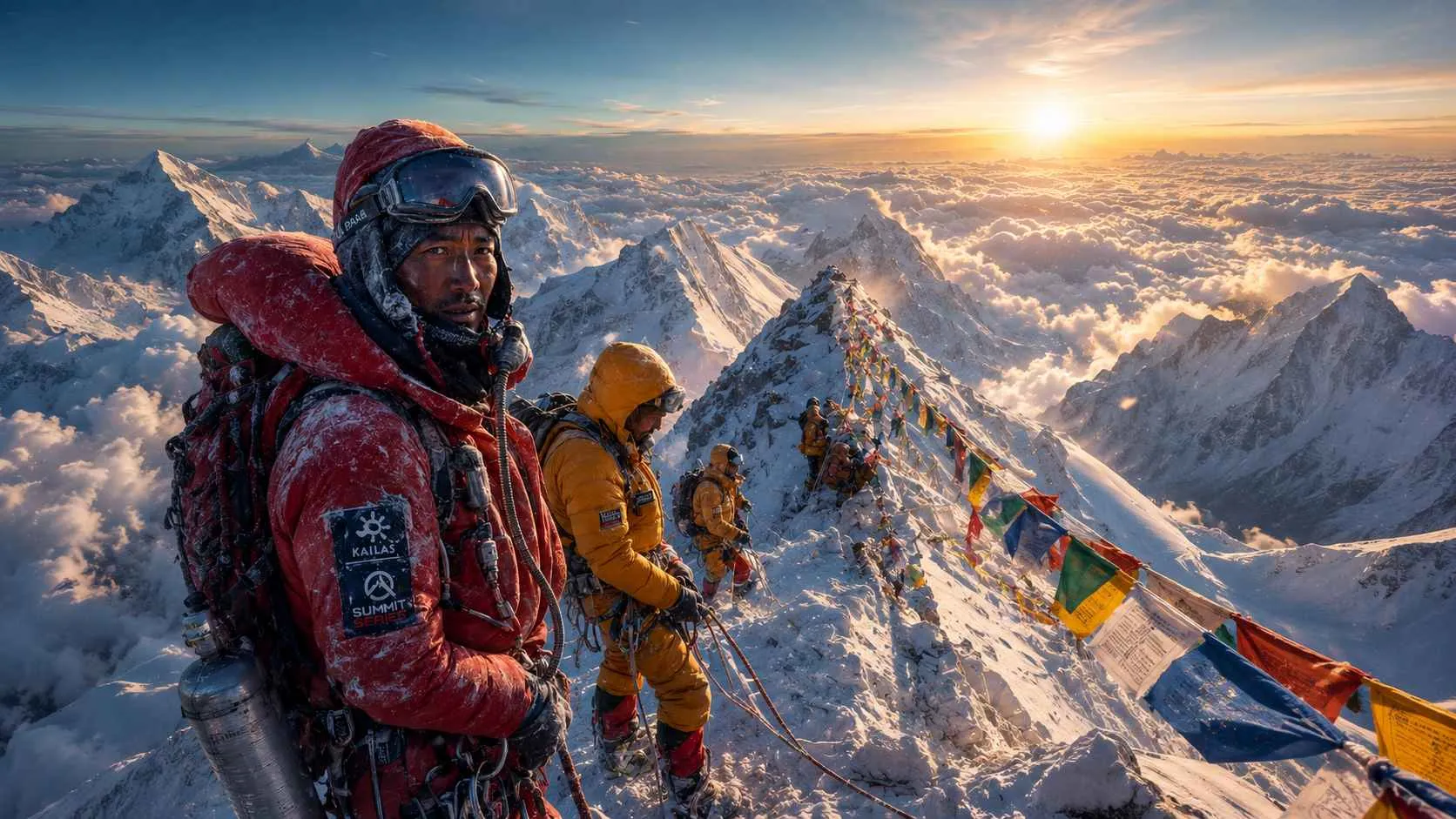
The climbing route to Mount Everest has officially opened for the Spring 2026 climbing season after an elite Nepali Sherpa fixing team successfully reached the 8,848.86-metre summit on Wednesday morning, marking one of the most important milestones of the Himalayan expedition calendar.
According to the Expedition Operators’ Association Nepal (EOAN), the 11-member rope-fixing team led by Mingma Dorchi Sherpa reached the summit at approximately 10:25 AM on May 13, officially completing the route and rope-fixing operation for the Everest Expedition 2026 season.
The achievement officially signals that summit pushes on Mount Everest can now begin, as hundreds of climbers from around the world prepare for their final ascent after spending weeks acclimatising in the Khumbu Region.
The Spring 2026 Everest Climbing Season has already become one of the most closely watched and challenging seasons in recent years due to dangerous weather conditions, route delays, overcrowding concerns, and multiple fatalities reported on the mountain.
Sherpa Team Opens the Everest Summit Route
The Everest Route Open announcement came after the highly skilled Sherpa Team battled severe winds, deep snow, unstable ice sections, and extreme high-altitude conditions to establish a safe climbing line to the summit.
The 11-member Rope Fixing Team included:
- Mingma Dorchi Sherpa
- Pam Dorjee Sherpa
- Pasang Tashi Sherpa
- Lopsang Bhutia
- Ming Nurbu Sherpa
- Chhomba Tenji Sherpa
- Guru Bhote
- Mingma Tenje Sherpa
- Ming Temba Sherpa
- Dendi Sherpa
- Pasang Nurbu Sherpa
After reaching the summit, the team hoisted the flags of Nepal, the Department of Tourism, and EOAN at the top of Mount Everest, officially declaring the climbing route open for the season.
EOAN General Secretary Rishi Bhandari praised the efforts of the Sherpa climbers, saying the Nepali mountaineering community once again showed exceptional courage, professionalism, and dedication despite dangerous mountain conditions.
The route-fixing process on Everest is among the most dangerous jobs in Himalayan mountaineering. Sherpas carry ropes, ladders, oxygen cylinders, and technical climbing equipment through hazardous terrain including the Khumbu Icefall, the Lhotse Face, Camp III, Camp IV, and the summit ridge.
Without the successful completion of rope-fixing operations, commercial Everest expeditions cannot safely proceed toward the summit.
Everest Expedition 2026 Enters Summit Push Phase
With the climbing route now secured, the Everest Expedition 2026 season is entering its busiest period as climbers begin moving toward higher camps for summit attempts.
Nearly 490 international climbers have already spent more than a month acclimatising in the Khumbu Region, waiting for favourable weather windows to attempt the summit of Mount Everest.
Expedition operators are now closely monitoring jet stream movements, snowfall patterns, and wind speeds before launching the first major summit waves of the season.
The coming days are expected to see heavy traffic between Camp II, Camp III, the South Col, and the Everest summit as teams attempt to take advantage of stable weather conditions.
Despite the excitement surrounding the Everest Route Open announcement, the 2026 Everest Climbing Season has already turned deadly.
Why the 2026 Everest Season Has Become So Dangerous
The Everest Climbing Season in 2026 has faced multiple challenges that experts say contributed to the increased risks on the mountain.
Record Number of Everest Permits
Nepal reportedly issued a record-breaking 492 Everest climbing permits for Spring 2026. Combined with Sherpa guides, support staff, and expedition crews, the total number of people on the mountain has become extremely high.
Large numbers of climbers can create dangerous traffic jams in narrow sections near the summit, increasing exposure to exhaustion, frostbite, and oxygen depletion.
Delays in Opening the Khumbu Icefall Route
The Everest Route Open process was delayed by nearly two weeks after a massive ice block complicated route establishment through the Khumbu Icefall.
The Khumbu Icefall remains one of the deadliest sections of Mount Everest due to constantly shifting glaciers, deep crevasses, collapsing seracs, and unstable ladders.
Because of the delay, many climbers are now expected to push for the summit within a shorter weather window, potentially increasing congestion on the mountain.
High-Altitude Risks Near Camp III and Hillary Slope
Several incidents this season have occurred above Camp III and near the Hillary Slope, where climbers face extreme altitude, exhaustion, severe winds, and rapidly changing weather.
At altitudes above 7,000 metres, even minor mistakes can quickly become fatal due to low oxygen levels and harsh environmental conditions.
Sherpas Remain the Backbone of Nepal Mountaineering
Despite the dangers, Nepali Sherpas continue to play the most critical role in Himalayan expeditions.
From route fixing and carrying oxygen to rescuing stranded climbers at extreme altitude, the Sherpa community remains at the centre of Nepal Mountaineering and Everest operations every year.
The successful summit by the Rope Fixing Team once again highlights the expertise and resilience of Nepal’s high-altitude workers, whose efforts make Everest expeditions possible for climbers from around the world.
As summit bids begin across Mount Everest, the global climbing community will now closely watch weather conditions, crowd movement, and safety operations during what is expected to be one of the busiest summit periods of the Everest 2026 season.
