
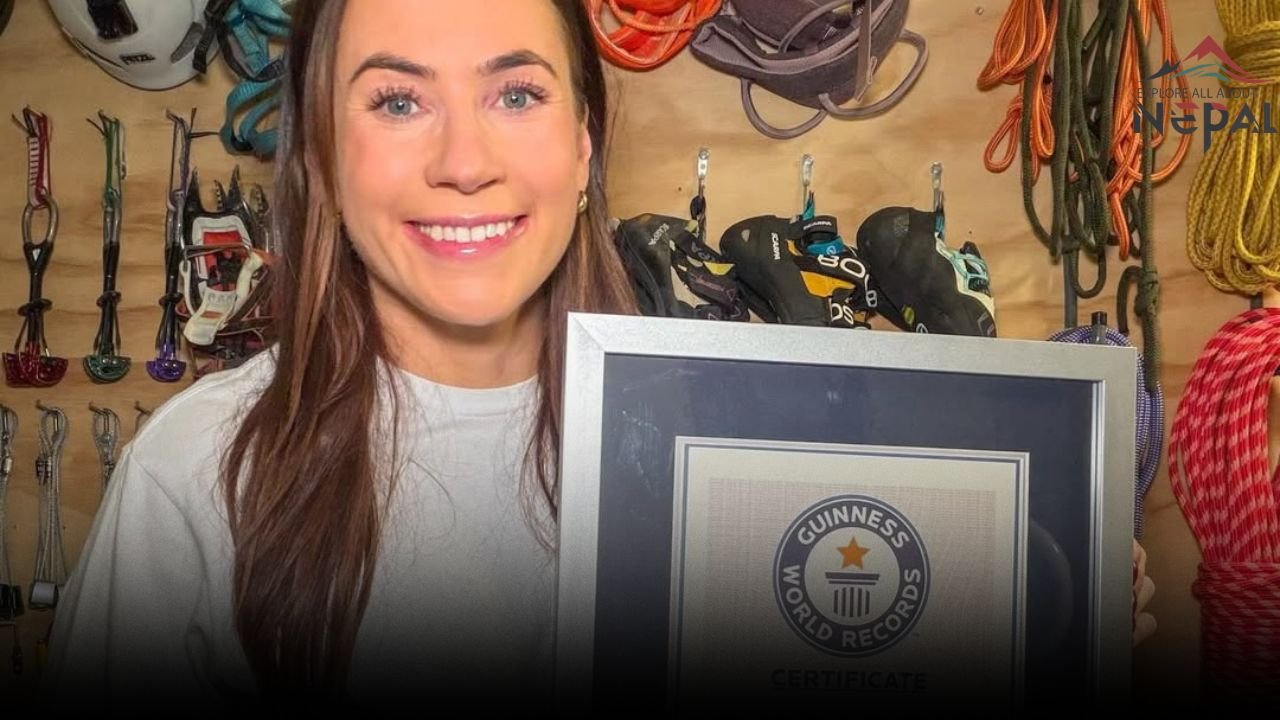
The story of Kristin Harila is one of the most striking transformations in modern expedition history. She is widely recognized for becoming part of the fastest team to complete all 14 of the world’s mountains above 8,000 meters, a feat that reshaped discussions around high-altitude climbing, logistics, and endurance.
Before entering the world of extreme mountaineering, Kristin Harila lived a very different life in Norway. She worked as a corporate executive, managing large teams and building a structured professional career. Like many in leadership roles, her life was defined by schedules, responsibility, and long-term stability rather than physical risk or exploration.
However, everything changed after she experienced high-altitude trekking for the first time. Her early exposure to mountains particularly her 2015 climb of Kilimanjaro sparked a deeper interest in endurance challenges and extreme environments. This experience marked the beginning of a gradual but determined shift toward serious mountaineering.
By 2019, Kristin Harila made a decisive move that would define her future. She left her corporate career entirely and committed herself to high-altitude climbing. This decision was not driven by fame or financial reward but by a personal desire to push physical and mental limits in some of the most demanding environments on Earth.
What followed was an extraordinary progression into Himalayan climbing. Within a few years, she was attempting some of the most dangerous peaks in the world, including Everest, K2, and other 8,000-meter giants. Her rapid rise was supported by strong endurance training and a disciplined mindset developed during her earlier professional life.
Today, Kristin Harila Everest story is often discussed in global mountaineering circles not only because of her records but also because of the broader conversations her journey has sparked. These include the evolving nature of commercial expeditions, the role of Sherpa climbers, and the physical limits of human performance in extreme altitude environments.
Her journey represents a new era of Himalayan exploration one where speed, logistics, teamwork, and global collaboration are redefining what is possible in the world’s highest mountains.
From Corporate Life to the Himalayas: The Turning Point
The early career of Kristin Harila was built far from the icy slopes of the Himalayas. Based in Norway, she worked in a demanding corporate environment where she eventually became a senior-level manager responsible for large teams. Her professional life was stable, structured, and focused on organizational leadership.
Despite this success, she gradually began to feel a strong pull toward more physically challenging experiences. Like many endurance athletes, she was drawn to activities that tested mental resilience and physical limits. Her background in cross-country skiing and mountain running already gave her a strong foundation in endurance sports.
A major turning point came in 2015 when she completed her first major high-altitude expedition on Mount Kilimanjaro. While not technically difficult compared to Himalayan peaks, Kilimanjaro exposed her to altitude, cold conditions, and the psychological demands of long ascents.
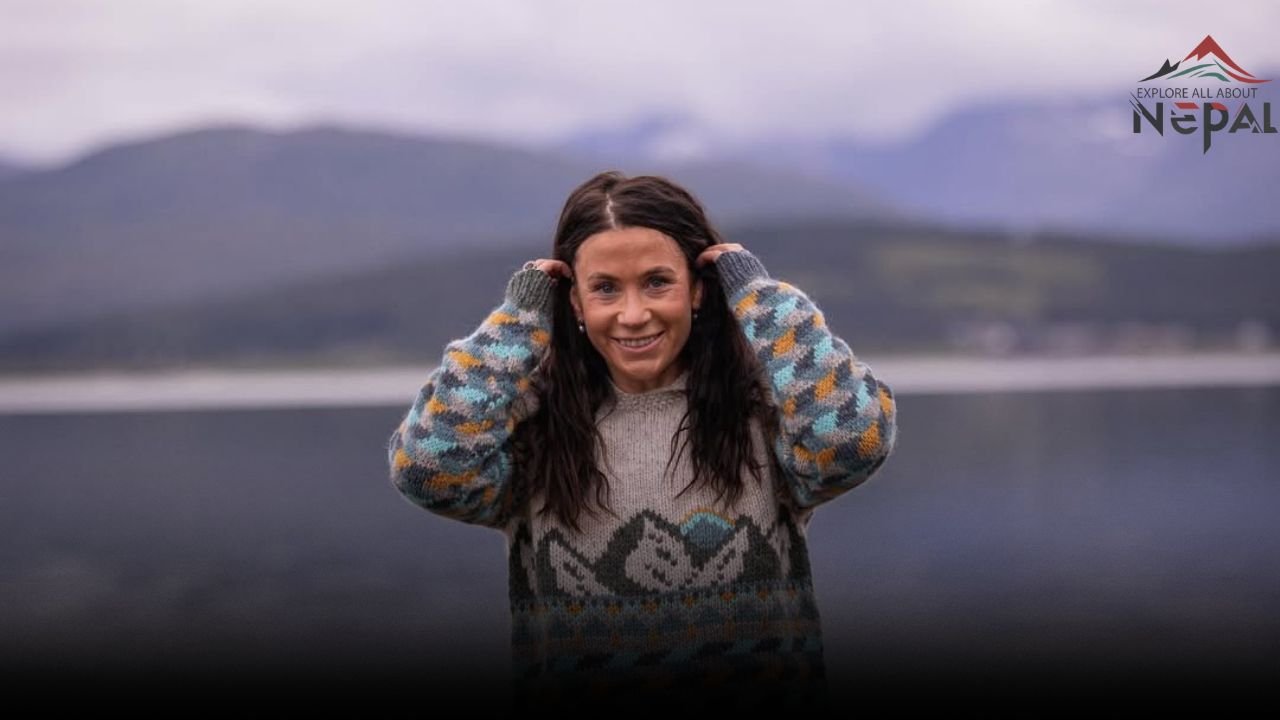
Kristin Harila
This experience had a lasting impact. It was not just about reaching a summit it was about discovering a completely new identity as an adventurer. Over the next few years, her interest in mountaineering grew steadily, eventually becoming a central focus in her life.
By 2019, Kristin Harila made a life-changing decision: she left her corporate job. This step marked the beginning of a full transition into professional climbing. Unlike many elite climbers who start in childhood or early adulthood, she entered high-altitude mountaineering relatively late, at around 29 years old.
This late start did not slow her progress. Instead, her structured mindset, discipline from corporate leadership, and endurance training helped her adapt quickly to expedition life. She began focusing on Himalayan peaks and building experience in extreme environments.
Her transition is often highlighted in discussions about modern climbing because it demonstrates how diverse backgrounds can now enter elite mountaineering. In the case of Kristin Harila, determination and strategic training allowed her to rapidly move from beginner expeditions to some of the world’s highest and most dangerous mountains.
Entry Into Himalayan Climbing and Early Expeditions
The early phase of Kristin Harila’s Himalayan journey was marked by rapid learning, adaptation, and exposure to extreme conditions. After transitioning from her corporate career, she began focusing on high-altitude expeditions across Nepal and surrounding regions.
Her first experiences in the Himalayas involved gradual acclimatization climbs, which are essential for understanding altitude physiology. These early expeditions allowed her to learn how the human body responds to low oxygen levels, extreme cold, and unpredictable weather conditions.
One of the most important aspects of this phase was learning expedition logistics. Unlike lower-altitude trekking, Himalayan climbing requires careful planning around weather windows, oxygen supply, route safety, and coordination with Sherpa teams. These elements are critical for success on 8,000-meter peaks.
During this period, Kristin Harila also developed close working relationships with experienced Sherpa climbers. The Sherpa community plays a central role in Himalayan expeditions, providing navigation expertise, load carrying, route fixing, and safety support. These partnerships became crucial to her later success.
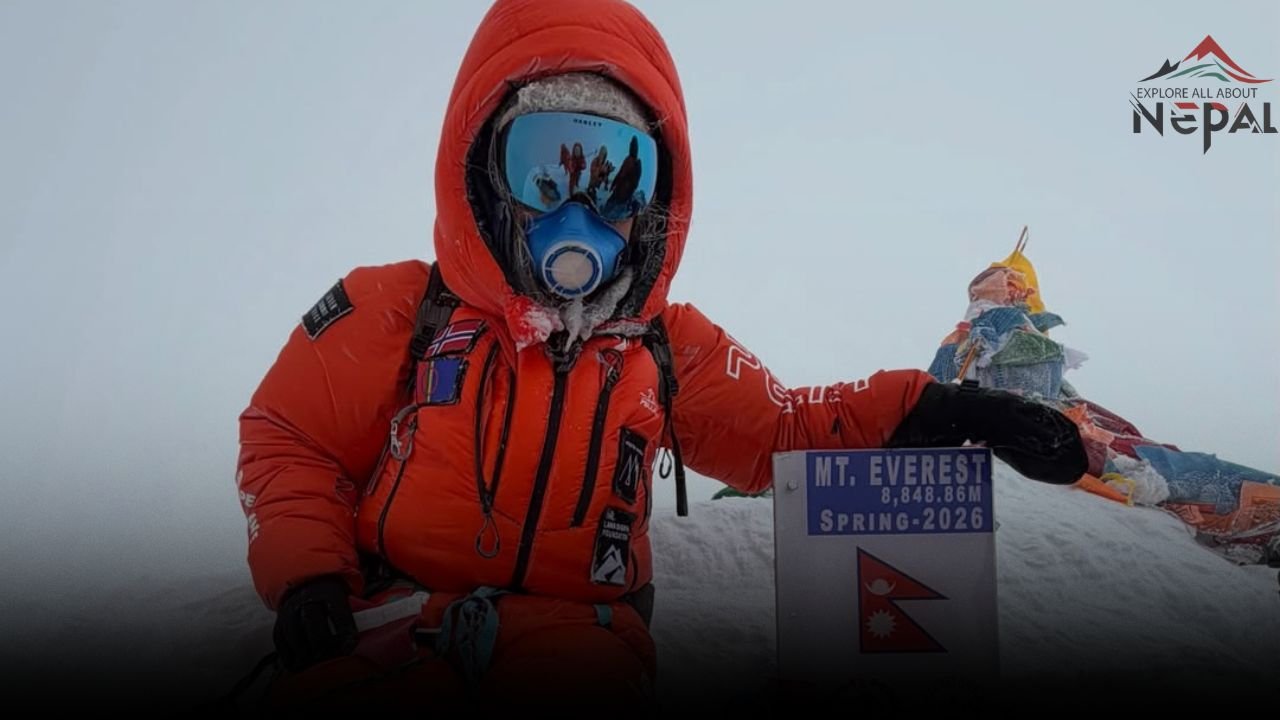
Her early climbs were not focused on speed or records. Instead, they were focused on survival, adaptation, and experience-building. This foundation allowed her to gradually progress toward more technical and dangerous peaks.
Over time, she began attempting higher mountains, including peaks above 8,000 meters. These expeditions are significantly more dangerous due to the “death zone,” where oxygen levels are insufficient for sustained human survival.
It was during this phase that she began to transition from an emerging climber into a serious contender in high-altitude expedition circles. Her performance, discipline, and rapid adaptation to extreme conditions set the stage for her later record-breaking achievements.
This early Himalayan phase is essential to understanding her journey, as it demonstrates how structured training and determination can accelerate progress in one of the world’s most dangerous sports.
The 14 Peaks Challenge and Record-Breaking Himalayan Ascent
Understanding the 14 Peaks Challenge in Mountaineering
The name Kristin Harila became globally recognized largely because of her involvement in one of the most extreme endurance challenges in the world the ascent of all 14 mountains above 8,000 meters, commonly known as the 14 peaks challenge.
These 14 mountains are located across Nepal, Pakistan, and China (Tibet region), and include some of the most dangerous and technically demanding peaks on Earth. Among them are Mount Everest, K2, Kangchenjunga, Lhotse, Makalu, Annapurna I, and Nanga Parbat. Each of these mountains presents unique challenges such as extreme altitude, avalanche risk, unpredictable weather, and long technical climbing routes.
Unlike standard mountaineering expeditions, the 14 peaks challenge requires not only physical endurance but also complex logistics. Climbers must move between multiple countries, secure permits, coordinate with expedition teams, and wait for short weather windows that may last only a few days per season.
For Kristin Harila, this challenge was not just about climbing individual peaks but completing them in rapid succession. This approach requires a very different strategy compared to traditional mountaineering, where climbers may spend weeks or months acclimatizing before a single summit attempt.
A major factor in modern 14 peaks expeditions is the use of experienced Sherpa climbers, advanced weather forecasting, and coordinated logistics teams. These elements make it possible to attempt multiple summits within a short timeframe, but they also introduce debates about commercialization and risk management in high-altitude environments.
Despite these challenges, the 14 peaks challenge remains one of the most respected achievements in global mountaineering. It represents the highest level of endurance climbing, requiring not only physical strength but also mental resilience, teamwork, and precision timing.
Kristin Harila’s participation in this challenge placed her among a very small group of elite climbers who have attempted—and completed all 14 of the world’s highest mountains.
The Historic 92-Day Record That Changed Mountaineering
The defining moment in Kristin Harila’s Everest story came when she, alongside Nepali Sherpa climber Tenjen Lama Sherpa, completed all 14 eight-thousand-meter peaks in just 92 days. This achievement is widely recognized as one of the fastest completions of the 14 peaks challenge in modern history.
The journey included a carefully planned sequence of ascents across multiple mountain ranges. Each summit required precise timing, as weather conditions in the Himalayas can change rapidly, often making summit attempts impossible within hours.
The final and most critical climb of this record-breaking journey was K2, widely considered one of the most dangerous mountains in the world. Reaching its summit marked the completion of the 14 peaks challenge and secured their place in mountaineering history.
This achievement broke the previous record held by Nirmal Purja, who completed the same 14 peaks in approximately six months and six days. Kristin Harila and her team significantly reduced that timeline, demonstrating how modern expedition logistics and high-performance climbing strategies have evolved.
However, this record was not achieved without debate. Some members of the mountaineering community praised the efficiency, planning, and execution behind the climb. Others raised questions about the increasing speed of high-altitude expeditions and whether such rapid ascents increase risks for climbers and Sherpa teams.
Despite differing opinions, the 92-day record remains one of the most significant milestones in Himalayan climbing records. It highlights how modern mountaineering has shifted from long, seasonal expeditions to fast, highly coordinated summit pushes.
For Kristin Harila, this achievement was not only a personal milestone but also a demonstration of what is possible when preparation, endurance, and teamwork align under extreme conditions.
Everest, Lhotse, and Nuptse: The Triple Crown Without Oxygen
Beyond the 14 peaks challenge, Kristin Harila also achieved another rare mountaineering milestone known as the Himalayan Triple Crown. This involves summiting three of the most iconic peaks in the Everest region: Everest, Lhotse, and Nuptse.
What makes this achievement particularly significant is that it was completed without the use of supplemental oxygen. Climbing above 8,000 meters without oxygen is extremely rare and physically demanding, as the human body struggles to survive in what is known as the “death zone.”
Mount Everest, the highest mountain in the world, presents severe challenges including extreme cold, thin air, and long summit routes. Lhotse shares much of the same climbing route as Everest but diverges into steep technical terrain near the summit. Nuptse, although slightly lower in altitude, is considered highly technical due to its steep ridges and unpredictable snow conditions.
Completing all three peaks without supplemental oxygen requires exceptional physical conditioning, acclimatization, and mental resilience. Only a very small number of climbers in history have achieved this combination.
For Kristin Harila, this accomplishment further reinforced her position as one of the leading figures in modern high-altitude mountaineering. It also placed her among a select group of climbers who have pushed the limits of human endurance in extreme environments.
This achievement is often discussed in the context of evolving Everest expedition strategies, where climbers are increasingly attempting faster ascents and more technically demanding combinations of peaks within a single season.
The Triple Crown, combined with her 14 peaks record, highlights the scale of her accomplishments and the rapid evolution of Himalayan climbing in recent years.
Partnership, Loss, and the Human Side of Kristin Harila’s Journey
Partnership With Tenjen Lama Sherpa: The Core of the 14 Peaks Success
Behind the record-breaking achievements of Kristin Harila stands one of the most important relationships in modern Himalayan mountaineering the partnership with Nepali Sherpa climber Tenjen Lama Sherpa.
Tenjen was not simply a high-altitude guide. In the context of their expeditions, he functioned as an equal partner, sharing responsibility for route decisions, pacing, logistics, and summit timing. Their collaboration became one of the most efficient climbing partnerships ever recorded in the 14 peaks challenge.
In modern Himalayan expeditions, especially above 8,000 meters, teamwork is essential. Conditions are extreme, oxygen levels are dangerously low, and decisions often need to be made within minutes. In such environments, trust becomes more important than technical skill alone.
Kristin Harila and Tenjen Lama Sherpa developed a system that allowed them to move rapidly between mountains while maintaining a consistent summit rhythm. This efficiency was a key factor in completing all 14 eight-thousanders in just 92 days.
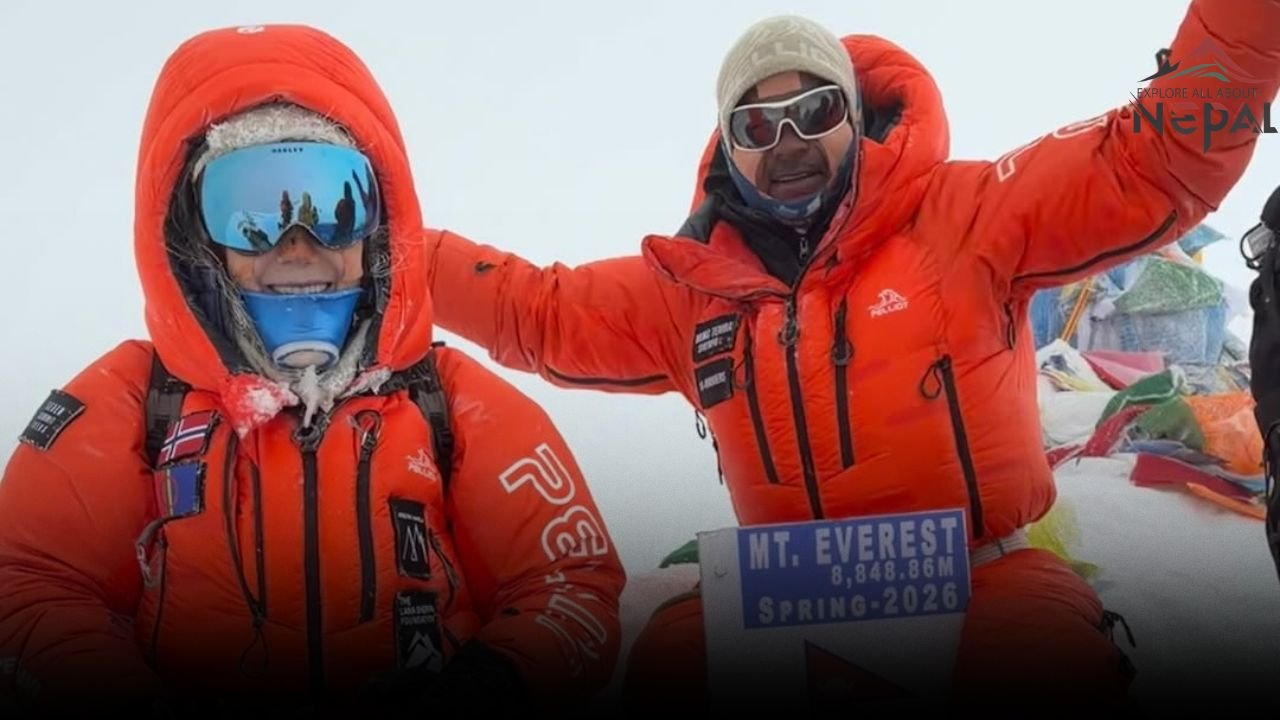
Their teamwork also reflected the evolving role of Sherpa climbers in global expeditions. Traditionally viewed as support staff in early Himalayan exploration history, Sherpas today are recognized as highly skilled climbers, often equal contributors in record-breaking ascents.
Tenjen Lama Sherpa was widely respected within the climbing community for his strength, experience, and ability to operate in extreme conditions. His collaboration with Kristin Harila demonstrated how modern mountaineering increasingly depends on shared leadership rather than traditional expedition hierarchies.
Together, they became one of the most talked-about climbing teams in recent history, not just for their speed, but for the precision and coordination required to achieve such a demanding goal.
Tragic Loss of Tenjen Lama Sherpa
The story of Kristin Harila and her record-breaking ascent is deeply marked by tragedy. Shortly after completing the 14 peaks challenge, Tenjen Lama Sherpa lost his life in a fatal avalanche on Shishapangma in Tibet.
This incident occurred while he was guiding another expedition, highlighting the constant danger faced by Sherpa climbers even outside record attempts. Avalanches, icefall collapses, and sudden weather shifts are persistent risks in Himalayan mountaineering, especially above 8,000 meters.
Tenjen’s death sent shockwaves through the global climbing community. He was widely regarded as one of the strongest and most reliable high-altitude Sherpa climbers of his generation. His loss also brought renewed attention to the risks faced by Sherpas, who often spend far more time in dangerous terrain than foreign climbers.
Following the incident, Kristin Harila publicly expressed grief and respect for her climbing partner. Efforts were made to organize recovery operations, and fundraising campaigns were initiated to support the mission. However, due to logistical and political restrictions, the recovery of his body was not possible.
Tenjen Lama Sherpa left behind a family in Nepal, including his wife and children. His death highlighted the deeply human cost behind high-altitude expeditions, especially for local climbing professionals who form the backbone of Himalayan tourism.
The tragedy also shifted the perception of Kristin Harila’s journey. What was initially seen as a record-breaking success story became a more complex narrative involving achievement, loss, and emotional responsibility. In discussions about modern mountaineering, the partnership between Kristin Harila and Tenjen is now remembered not only for speed records but also for its emotional depth and human connection.
K2 Controversy: Ethics, Responsibility, and Global Debate
One of the most widely discussed aspects of Kristin Harila’s Everest story is the controversy surrounding the K2 expedition during the final stage of the 14 peaks record.
During the summit push on K2, an incident occurred involving Pakistani climber and porter Muhammad Hassan, who fell near the Bottleneck section at approximately 8,200 meters. This section is one of the most dangerous parts of K2 due to its narrow ice chute and high risk of falling debris and avalanches.
Reports from the mountain, including drone footage and climber accounts, showed multiple teams passing through the area during the incident. This led to intense global debate about whether climbers should prioritize rescue attempts over summit goals in extreme conditions.
Kristin Harila and her team stated that they attempted to assist during the situation. According to expedition accounts, efforts included stopping, providing oxygen, and assessing whether a rescue was physically possible under the conditions. However, the extreme altitude, narrow terrain, and ongoing summit congestion made a full evacuation extremely difficult.
Despite these explanations, the incident sparked widespread criticism on social media and within parts of the mountaineering community. Some argued that the increasing commercialization of K2 and Everest expeditions has created overcrowding and ethical challenges in decision-making during emergencies.
The situation also led to an official inquiry by Pakistani authorities to better understand what happened on the mountain that day. It was noted that multiple expeditions were operating in the same corridor, making coordinated response extremely complex.
This controversy does not define Kristin Harila’s entire career, but it has become an important part of the broader discussion about modern Himalayan ethics. It raises questions about responsibility, risk-sharing, and how climbers should act in life-threatening situations above 8,000 meters.
The K2 incident continues to be studied as part of ongoing debates about safety standards, expedition management, and the future of commercial high-altitude climbing.
Sherpa Safety, Climate Change, and Expedition Responsibility
Beyond records and controversy, Kristin Harila has also become part of wider conversations about Sherpa safety and environmental change in the Himalayas.
Modern Himalayan expeditions depend heavily on Sherpa climbers, who perform some of the most dangerous tasks in mountaineering, including fixing ropes, carrying loads, and leading summit pushes through hazardous terrain. As expedition numbers increase, so does the exposure of Sherpas to risk.
Kristin Harila has supported initiatives that highlight improved safety measures, better equipment, and fair compensation for high-altitude workers. These issues have become increasingly important as commercial climbing on Everest and surrounding peaks continues to grow.
At the same time, climate change is having a visible impact on the Himalayan environment. Glacial regions such as the Khumbu Icefall are becoming more unstable, with changing ice formations, increased rockfall, and shifting weather patterns.
These environmental changes are not only affecting climbing conditions but also increasing the unpredictability of expedition planning. Many experienced climbers have noted that conditions on Everest and surrounding peaks are changing year by year.
Kristin Harila’s experience reflects this evolving landscape of Himalayan mountaineering, where success is influenced not only by human endurance but also by environmental instability and logistical pressure. Her journey sits at the intersection of achievement, risk, and responsibility, reflecting the complex reality of modern high-altitude exploration.
Why Kristin Harila Stepped Back From Elite Mountaineering
After years of continuous high-altitude expeditions, Kristin Harila made the decision to step away from elite-level mountaineering. This was not the result of a single event, but rather a gradual realization shaped by physical exhaustion, emotional experiences, and personal priorities.
Over a span of just a few years, she completed dozens of summits across the Himalayas, including all 14 peaks above 8,000 meters. This intense schedule involved constant travel between countries, repeated exposure to extreme altitude, and minimal recovery time between expeditions.
While her achievements placed her among the most recognized figures in modern mountaineering, the lifestyle itself came with significant personal cost. Long periods away from family in Norway created emotional strain. She spent weeks at a time in remote mountain environments with limited communication and constant physical risk.
Following her record-breaking phase, Kristin Harila publicly acknowledged the importance of family and personal life. She expressed that she had not spent enough time with her parents, siblings, and extended family, and that this realization influenced her decision to step back from continuous expeditions.
Her withdrawal from elite climbing does not represent an end to her connection with the mountains. Instead, it reflects a transition toward a more balanced relationship with adventure. She has indicated continued interest in trekking and returning to Nepal in a less extreme capacity, particularly to maintain her emotional ties with the region and the family of Tenjen Lama Sherpa.
This shift is also reflective of a broader pattern in extreme sports, where athletes eventually step back after periods of intense performance due to long-term physical and psychological demands.
Legacy in Modern Himalayan Mountaineering
The legacy of Kristin Harila in Himalayan mountaineering is complex, significant, and widely discussed. On one hand, she is recognized for being part of the fastest recorded ascent of all 14 peaks above 8,000 meters. On the other hand, her career is also associated with debates about ethics, safety, and commercialization in high-altitude climbing.
From a performance perspective, her achievements represent a major milestone in the evolution of modern expedition climbing. The ability to complete the 14 peaks challenge in just 92 days demonstrates how advancements in logistics, weather forecasting, and coordinated Sherpa support have transformed what is possible in the Himalayas.
Her success also highlights the increasing role of women in extreme mountaineering. Historically dominated by male climbers, high-altitude expeditions are now seeing more female athletes pushing the limits of endurance and technical skill. Kristin Harila has become part of this broader shift.
However, her legacy is not defined by records alone. It also includes important conversations about responsibility in extreme environments. The K2 controversy and discussions around expedition safety have contributed to ongoing debates about how modern climbing should be regulated and managed.
In addition, her partnership with Tenjen Lama Sherpa has reshaped how teamwork is understood in high-altitude climbing. Their collaboration demonstrated that success in the Himalayas is not an individual achievement but a coordinated effort involving multiple skilled professionals.
Ultimately, Kristin Harila’s place in mountaineering history reflects both achievement and complexity. She represents a new generation of climbers operating in a rapidly changing Himalayan environment shaped by technology, tourism, and climate change.
Interesting Facts About Kristin Harila
There are several notable facts that help explain the uniqueness of Kristin Harila’s Everest story and her rise in the mountaineering world.
One of the most remarkable aspects of her journey is that she began serious high-altitude climbing relatively late, in her late 20s. Unlike many elite climbers who start in early childhood or adolescence, she transitioned from a corporate career into professional mountaineering.
Another key fact is her record-breaking achievement of completing all 14 peaks above 8,000 meters in approximately 92 days. This remains one of the fastest known completions of the 14 peaks challenge.
She also achieved the rare Himalayan Triple Crown Everest, Lhotse, and Nuptse without the use of supplemental oxygen, a feat accomplished by only a very small number of climbers in history. Her partnership with Nepali climber Tenjen Lama Sherpa played a central role in her success, highlighting the importance of collaboration in modern Himalayan expeditions.
Despite her achievements, she has also become part of broader discussions about expedition ethics, safety, and the impact of commercial climbing on high-altitude environments. These combined elements make her one of the most discussed figures in contemporary mountaineering.
FAQs About Kristin Harila
Who is Kristin Harila?
Kristin Harila is a Norwegian mountaineer known for completing all 14 peaks above 8,000 meters in record time.
What is Kristin Harila famous for?
She is famous for being part of the fastest ascent of the 14 peaks challenge in approximately 92 days.
Did Kristin Harila climb Everest?
Yes, she summited Everest as part of her Himalayan climbing achievements.
Who was Tenjen Lama Sherpa?
He was her climbing partner and a Nepali Sherpa who co-completed the 14 peaks challenge with her.
What is the K2 controversy?
It refers to the 2023 incident on K2 involving a climber fatality and ethical debate during summit conditions.
Did Kristin Harila climb without oxygen?
Yes, she completed Everest, Lhotse, and Nuptse without supplemental oxygen as part of the Himalayan Triple Crown.
Why did she stop climbing?
She stepped back from elite expeditions due to family priorities and long-term personal considerations.
A Complex Legacy in the Himalayas
The story of Kristin Harila represents one of the most complex narratives in modern Himalayan mountaineering. Her achievements place her among the fastest and most successful climbers in the history of the 14 peaks challenge, while her experiences also reflect the evolving challenges of high-altitude expeditions.
From a corporate executive in Norway to a record-breaking Himalayan climber, her transformation demonstrates how modern mountaineering is increasingly accessible to individuals from diverse backgrounds. Her journey highlights the importance of discipline, endurance, and strategic planning in extreme environments.
At the same time, her career is deeply connected to broader discussions about safety, ethics, and environmental change in the Himalayas. The K2 controversy and the loss of her climbing partner Tenjen Lama Sherpa add emotional and ethical depth to her story.
Ultimately, Kristin Harila’s legacy is not defined by a single achievement but by a combination of records, relationships, and reflection. Her story continues to shape how the world views Everest, K2, and the future of high-altitude exploration.
For Nepal and the broader Himalayan region, her journey also reinforces the central role of Sherpa climbers, environmental challenges, and the global fascination with the world’s highest mountains.
