
Among the many legendary mountaineers who have shaped the history of the Himalayas, few names are as respected as Apa Sherpa. Known around the world as the “Everest Record Breaker,” Apa Sherpa rose from humble beginnings in Nepal’s remote Khumbu region to become one of the most accomplished high-altitude climbers in history. His story is not only about climbing mountains but also about perseverance, sacrifice, leadership, and a commitment to helping future generations.
For many years, Apa Sherpa held the world record for the most successful ascents of Mount Everest. Between 1990 and 2011, he reached the summit an astonishing 21 times, a feat that earned him international recognition and established him as one of the greatest mountaineers of all time.
However, what makes his story truly remarkable is that his success did not come from privilege or wealth. Born into a poor Sherpa family in the mountain village of Thame, he faced significant hardships during childhood. The death of his father at a young age forced him to leave school and begin working to support his family. Like many young Sherpas, he entered the mountaineering industry not out of passion for records but out of economic necessity.
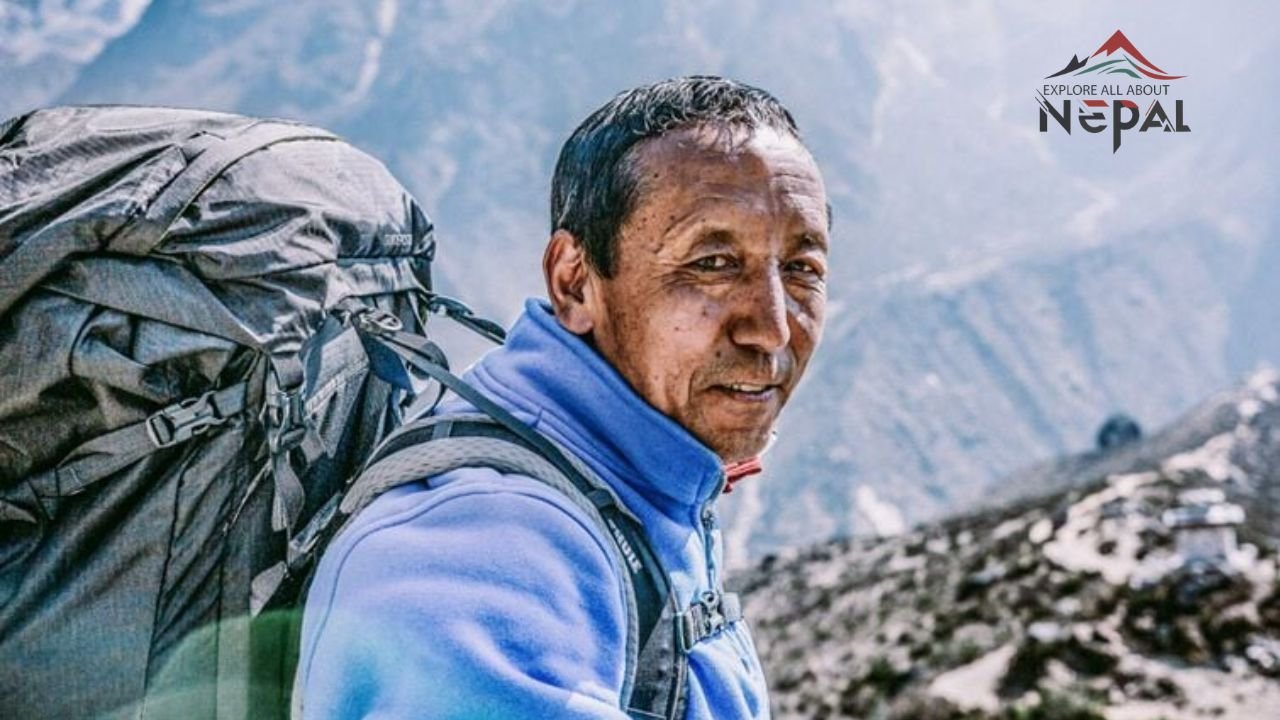
Apa Sherpa Biography
Over time, his extraordinary talent, endurance, and determination transformed him into a global icon. Yet even after achieving worldwide fame, Apa Sherpa remained deeply connected to his roots. He used his platform to advocate for education in Himalayan communities and to raise awareness about climate change in the Everest region.
Today, Apa Sherpa is celebrated not only for his climbing records but also for his humanitarian efforts and environmental activism. His life demonstrates how determination and hard work can overcome even the most difficult circumstances. His journey from a remote Himalayan village to international recognition remains one of Nepal’s most inspiring success stories.
Who Is Apa Sherpa?
Apa Sherpa is a legendary Nepali mountaineer best known for climbing Mount Everest 21 times, a record that stood as the highest number of Everest summits achieved by any individual for several years. His remarkable climbing career helped redefine what was possible in high-altitude mountaineering and brought global attention to the skill and endurance of Sherpa climbers.
Born in the village of Thame in Nepal’s Solukhumbu District, Apa Sherpa grew up in one of the most mountainous regions in the world. Thame is located near the Everest region and has produced many famous Sherpa climbers. From an early age, he became familiar with the rugged terrain, harsh weather conditions, and mountain culture that would later shape his career.
Apa Sherpa’s rise to international fame was gradual. Like many Sherpas, he began working as a porter and expedition assistant, carrying loads and supporting climbing teams. Over time, he gained experience and developed the technical skills needed for high-altitude climbing.
His first successful Everest summit came in 1990. What followed was one of the most extraordinary climbing careers in history. Over the next two decades, he repeatedly returned to Everest, helping guide expeditions and achieving summit after summit.

Beyond his climbing accomplishments, Apa Sherpa became an ambassador for the Himalayan region. He traveled internationally, spoke about climate change, and highlighted the environmental challenges facing the Everest region.
His work also extended into education and community development through the Apa Sherpa Foundation, which supports educational opportunities for children in remote Himalayan communities.
Today, Apa Sherpa is recognized not only as one of the greatest Everest climbers ever but also as a humanitarian and advocate for positive change in Nepal’s mountain regions.
Early Life in Thame, Solukhumbu
The story of Apa Sherpa begins in the remote Himalayan village of Thame, a small settlement located in the Khumbu region of Nepal. Surrounded by towering peaks and ancient trekking routes, Thame has long been known for producing some of the world’s most skilled high-altitude climbers.
Apa Sherpa was born in 1960 into a Sherpa family that depended on farming and livestock for survival. Life in the Himalayas during that period was extremely challenging. Roads were nonexistent, modern infrastructure was limited, and economic opportunities were scarce. Families relied heavily on agriculture and seasonal work connected to trekking and mountaineering.
From an early age, Apa experienced the realities of mountain life. Children in the region often walked long distances across steep trails, helped care for animals, and contributed to household responsibilities. These daily activities naturally developed physical strength and endurance.
Despite the hardships, the Sherpa culture provided a strong sense of community and resilience. Buddhist traditions, respect for nature, and cooperation among families played important roles in daily life.
As a young boy, Apa dreamed of receiving an education and building a better future. However, circumstances would soon change the direction of his life. The death of his father created severe financial difficulties for the family, forcing him to leave school and begin working at a young age.
Although these challenges limited his opportunities, they also helped shape the determination that would later define his climbing career. The values he learned growing up in Thame—hard work, perseverance, and humility—remained central to his character throughout his life.
His childhood experiences provided the foundation for one of the most remarkable journeys in mountaineering history.
The Tragedy That Changed His Life
One of the most significant turning points in Apa Sherpa’s life occurred when he was still a child. The death of his father placed enormous pressure on the family and forced him to assume responsibilities far beyond his years.
In many rural Himalayan communities, the loss of a parent can have devastating economic consequences. For Apa Sherpa’s family, this tragedy meant losing an important source of income and support. As a result, he was forced to leave school and focus on helping provide for his family.
This decision was difficult because education represented one of the few opportunities for social mobility in remote mountain regions. Yet survival had to come first.
The experience taught him important lessons about responsibility, sacrifice, and resilience. While many children his age were focused on school, Apa was working to support his family and contribute to household needs.
These hardships also introduced him to the realities of economic inequality in Nepal’s mountain communities. Opportunities were limited, and many young Sherpas entered physically demanding jobs out of necessity rather than choice.
Eventually, these circumstances led him toward the mountaineering industry. What began as a practical means of earning income would later become a historic career.
The loss of his father remained one of the defining events of his life. It shaped his determination to succeed and later influenced his commitment to education. Having experienced the challenges of leaving school at a young age, he became passionate about helping future generations gain access to educational opportunities.
This difficult chapter in his life ultimately became the foundation for both his mountaineering success and his humanitarian work.
How Apa Sherpa Entered Mountaineering
The journey of Apa Sherpa into mountaineering began not with dreams of world records but with the need to support his family. Following the death of his father and the financial hardships that followed, Apa had few opportunities available in the remote Khumbu region. Like many young Sherpas during the 1970s and 1980s, he turned to the growing trekking and expedition industry that was transforming Nepal’s mountain economy.
Tourism in the Everest region was expanding rapidly. Every year, climbers and trekkers from around the world arrived in Nepal hoping to experience the Himalayas and attempt some of the world’s highest peaks. These expeditions required extensive logistical support, creating employment opportunities for local Sherpas.
Apa initially worked as a porter, carrying equipment, food, and supplies across difficult mountain trails. The work was physically exhausting, often requiring the transportation of heavy loads through steep terrain and harsh weather. However, it also provided him with valuable experience and introduced him to the world of high-altitude climbing.
Over time, he gained practical skills that went far beyond carrying loads. He learned route finding, rope techniques, glacier travel, camp management, and mountain safety. More importantly, he developed a deep understanding of how the human body responds to extreme altitude.
Foreign climbers and expedition leaders quickly noticed his work ethic, discipline, and reliability. These qualities earned him opportunities to take on greater responsibilities within climbing teams.

As his experience grew, he progressed from porter to climbing support staff and eventually became a high-altitude guide. This transition marked a major turning point in his life. He was no longer simply supporting expeditions—he was becoming an accomplished mountaineer in his own right.
The mountains that had once represented economic survival were now becoming the stage for an extraordinary career. Without realizing it at the time, Apa Sherpa was beginning a journey that would eventually make him one of the most famous climbers in Everest history.
First Everest Summit
For many climbers, reaching the summit of Everest is the ultimate achievement. For Apa Sherpa, it was the beginning of a remarkable legacy. In 1990, he successfully reached the summit of Mount Everest for the first time. Standing at 8,848.86 meters above sea level, Everest is the highest mountain on Earth and presents some of the most extreme conditions found anywhere on the planet.
The climb demanded months of preparation, acclimatization, and teamwork. Climbers had to navigate dangerous icefalls, deep crevasses, avalanche-prone slopes, and the notorious death zone above 8,000 meters, where oxygen levels are insufficient to sustain human life for extended periods.
For Apa, the summit represented much more than personal success. It validated years of hard work and sacrifice. Coming from a humble background in Thame, he had overcome enormous obstacles to stand on the highest point on Earth.
The experience also changed the direction of his career. Many climbers complete one Everest ascent and move on to other goals. Apa discovered that he possessed exceptional skills and endurance at extreme altitude. Expedition leaders valued his experience, and he quickly became one of the most trusted members of Everest teams.
His first summit also provided confidence that would fuel future achievements. Rather than viewing Everest as a single accomplishment, he began seeing it as a mountain he could continue climbing safely and successfully.
This first ascent laid the foundation for a record-breaking career that would eventually make him one of the most celebrated mountaineers in history.
Building an Everest Legacy
After his first successful Everest summit, Apa Sherpa continued returning to the mountain year after year. What started as a professional responsibility gradually evolved into one of the most extraordinary climbing careers ever recorded.
Throughout the 1990s and 2000s, he participated in numerous Everest expeditions, guiding climbers from around the world and contributing to successful summit attempts. Each season brought new challenges, from unpredictable weather to changing ice conditions and increasing numbers of climbers.
What distinguished Apa from many others was consistency. While some climbers achieved a single notable ascent, he repeatedly demonstrated his ability to perform at the highest level. His experience, judgment, and physical endurance made him one of the most respected figures on Everest.
As the number of his summits increased, so did international attention. Media organizations, climbing magazines, and mountaineering experts began tracking his achievements. Each successful ascent brought him closer to breaking records that many had assumed would stand for decades.
At the same time, he remained deeply committed to helping others succeed. Much of his work involved supporting expedition members, ensuring safety, and contributing to the overall success of climbing teams.
This combination of personal achievement and professional service helped build his reputation. He was admired not only for the number of times he reached the summit but also for his reliability, humility, and dedication to the climbing community.
By the early 2000s, Apa Sherpa had become one of the most recognizable names in mountaineering. His growing list of Everest summits was transforming him into a global symbol of Himalayan endurance and Sherpa excellence.
Breaking the Everest Record
As Apa Sherpa continued climbing Everest, it became increasingly clear that he was approaching a historic milestone. Each successful summit brought him closer to setting a new standard for high-altitude achievement. By the mid-2000s, he had already surpassed many of the most accomplished climbers in Everest history. His repeated success demonstrated not only physical strength but also remarkable consistency in one of the most dangerous environments on Earth.
Breaking the Everest summit record required more than endurance. It demanded years of commitment, careful preparation, and the ability to manage risks across multiple expeditions. Every climb exposed him to avalanches, storms, altitude sickness, and countless other hazards.
Despite these challenges, Apa continued returning to Everest season after season. His achievements captured the attention of international media, which increasingly referred to him as the Everest record holder.
Each new summit strengthened his reputation and highlighted the extraordinary capabilities of Sherpa climbers. For many observers, his success represented more than an individual accomplishment it showcased the expertise and resilience of Nepal’s mountain communities.
The record also carried symbolic importance. It demonstrated that greatness in mountaineering is not always measured by a single dramatic ascent. Sometimes it is defined by sustained excellence over many years. By repeatedly succeeding where others struggled, Apa Sherpa established a benchmark that inspired climbers around the world. His record became one of the most respected achievements in the history of Everest.
Apa Sherpa’s 21 Everest Summits Explained
The achievement that made Apa Sherpa famous around the world was his remarkable total of 21 Everest summits.
From his first successful ascent in 1990 to his record-breaking climbs in the following decades, he demonstrated an unparalleled ability to perform consistently in the extreme environment of Everest. Each summit required months of preparation, physical conditioning, and acclimatization.
What makes 21 summits particularly impressive is the cumulative risk involved. Everest is dangerous on any given day. Completing one ascent requires skill, luck, and favorable conditions. Repeating that success 21 times means managing those risks across decades of climbing.
Throughout his career, Apa witnessed dramatic changes on Everest. He saw advances in equipment, improvements in communication technology, and a sharp increase in the number of climbers attempting the mountain. Yet despite these changes, the fundamental dangers of Everest remained the same.
His 21 summits were not simply a record they represented thousands of hours spent at altitude, countless kilometers traveled across glaciers and ridges, and decades of dedication to mountaineering. For many years, the achievement stood as the highest number of Everest summits ever recorded by a single individual. It became a defining part of his identity and earned him worldwide admiration.
More importantly, the record inspired future generations of climbers and demonstrated the extraordinary contribution Sherpas have made to Everest history. Through these 21 summits, Apa Sherpa secured his place among the greatest mountaineers who have ever lived.
Life Above the Death Zone
For most people, surviving above 8,000 meters is nearly impossible for extended periods. This region of the world’s highest mountains is known as the Death Zone, an environment where oxygen levels are so low that the human body slowly begins to deteriorate. Yet for decades, Apa Sherpa repeatedly entered this hostile environment and returned safely, eventually becoming one of the most experienced climbers ever to operate at such extreme altitude.
The Death Zone begins at approximately 8,000 meters and includes the upper sections of Mount Everest. At this elevation, climbers face severe risks including frostbite, cerebral edema, pulmonary edema, dehydration, exhaustion, and impaired decision-making. Even simple actions such as walking, drinking water, or adjusting equipment require enormous effort.
Apa Sherpa experienced these conditions more times than almost anyone else in history. Through his 21 Everest summits, he spent hundreds of hours in the Death Zone, guiding climbers and navigating some of the mountain’s most dangerous sections.
One of the most challenging aspects of high-altitude climbing is the unpredictability of conditions. Weather can change rapidly, turning a clear day into a life-threatening storm within hours. Avalanches, falling ice, and strong winds add further dangers.
Apa’s success was not based solely on physical strength. His ability to make good decisions under pressure, recognize hazards, and manage risk played a major role in his long career. Expedition members frequently relied on his experience when making critical choices on the mountain.
Over the years, he witnessed both triumph and tragedy on Everest. He saw climbers achieve lifelong dreams, but he also witnessed accidents and fatalities that underscored the mountain’s dangers.
These experiences gave him a deep respect for Everest and reinforced his belief that preparation, humility, and caution are essential for anyone attempting the world’s highest peak.
Witnessing Climate Change on Everest
While Apa Sherpa became famous for his climbing achievements, he also became one of the most influential voices drawing attention to climate change in the Himalayas.
Because he climbed Everest repeatedly over more than two decades, he had a unique perspective on environmental changes occurring in the region. Few people spent as much time observing the mountain and its glaciers as he did.
Over the years, Apa noticed dramatic changes in snow cover, glacier conditions, and weather patterns. Areas that were once permanently covered in snow began showing exposed rock. Glaciers appeared to be shrinking, and seasonal conditions became less predictable.
These observations deeply concerned him. The Himalayan region is often called the “Third Pole” because it contains some of the largest concentrations of ice outside the Arctic and Antarctic. Millions of people across Asia depend on rivers fed by Himalayan glaciers for drinking water, agriculture, and energy production.
Apa recognized that the environmental changes occurring in the Everest region were not isolated events but part of a larger global challenge. As a result, he began using his international profile to raise awareness about climate change and its impact on mountain communities.
His concerns extended beyond mountaineering. Many Sherpa families depend on natural resources and stable environmental conditions for their livelihoods. Changes in weather and glacier systems could have significant consequences for future generations.
Through interviews, documentaries, and public speaking engagements, Apa helped bring global attention to these issues. His firsthand observations provided powerful evidence of how climate change was affecting some of the world’s most iconic landscapes. By sharing his experiences, he transformed himself from a record-breaking climber into an important environmental advocate.
Apa Sherpa the Environmental Advocate
As his international reputation grew, Apa Sherpa increasingly used his platform to advocate for environmental protection and climate awareness.
Unlike many athletes who focus exclusively on their personal achievements, Apa recognized that his experiences on Everest gave him an opportunity to speak about issues affecting both Nepal and the world. His repeated observations of changing glacier conditions convinced him that environmental challenges required urgent attention.
One of his most significant contributions was participation in awareness campaigns that connected climate change with the future of Himalayan communities. By sharing stories from Everest, he helped audiences understand that climate change was not an abstract scientific concept but a reality affecting real people and ecosystems.
Apa participated in environmental expeditions and educational initiatives designed to highlight the importance of protecting mountain environments. These efforts often involved collaboration with scientists, conservation organizations, and community leaders.
He also emphasized the importance of responsible tourism in the Everest region. As visitor numbers increased, issues such as waste management, environmental degradation, and overcrowding became growing concerns. Apa encouraged climbers and expedition companies to adopt sustainable practices and respect the fragile Himalayan environment.
His advocacy work earned recognition beyond the mountaineering community. Environmental organizations valued his ability to communicate complex issues through personal experience, making climate change more relatable and understandable for general audiences.
By combining his climbing achievements with environmental activism, Apa demonstrated that mountaineers can play an important role in conservation efforts. His voice helped ensure that discussions about Everest included not only records and summits but also the long-term health of the mountain ecosystem.
Today, he is remembered not only as an Everest record holder but also as a champion for environmental awareness and responsible stewardship of the Himalayas.
The Apa Sherpa Foundation and Education Mission
Perhaps the most meaningful part of Apa Sherpa’s legacy lies not on Everest but in his commitment to education and community development.
Having been forced to leave school after his father’s death, Apa understood firsthand how poverty can limit opportunities for young people. Throughout his life, he believed that education was one of the most powerful tools for improving the future of Himalayan communities.
This belief led to the creation of the Apa Sherpa Foundation, an organization dedicated to supporting educational opportunities for children in Nepal’s mountain regions.
The foundation focuses on improving access to schools, scholarships, educational resources, and community development projects. Its mission reflects Apa’s desire to ensure that future generations have opportunities that were not available to him as a child.
Through the foundation’s work, many students from remote Himalayan communities have received support that helps them continue their education and pursue careers beyond traditional economic limitations.
Apa viewed education as a way to create long-term change. While climbing records eventually fade, educational opportunities can transform families and communities for generations.
The foundation also reflects a broader vision of development that balances cultural preservation with modern opportunities. Rather than encouraging young people to abandon their heritage, it seeks to empower them with skills and knowledge while maintaining strong connections to their communities.
For many supporters, the educational work carried out in Apa’s name is as important as his Everest achievements. It demonstrates that true success involves using personal accomplishments to create positive change for others.
Through these efforts, Apa Sherpa’s influence extends far beyond mountaineering and continues to impact lives throughout Nepal.
Awards, Honors, and Global Recognition
The extraordinary achievements of Apa Sherpa brought him international recognition and established him as one of the most respected figures in mountaineering history.
His Everest record attracted attention from media organizations around the world. Newspapers, television networks, documentaries, and climbing publications frequently featured his story, highlighting both his athletic accomplishments and his personal journey from poverty to global recognition.
Over the years, he received numerous honors for his contributions to mountaineering and environmental awareness. His achievements were celebrated not only within Nepal but also internationally, where he became a symbol of perseverance and excellence.
Apa was invited to speak at conferences, educational events, and environmental forums, where audiences were inspired by his experiences on Everest and his advocacy for Himalayan communities.
Perhaps most importantly, he earned the respect of fellow climbers. In mountaineering, reputation is often based on skill, reliability, and integrity rather than publicity. Apa’s long career and consistent performance made him one of the most admired individuals in the climbing world.
Within Nepal, he became a national icon whose success brought pride to the country and highlighted the contributions of Sherpas to global mountaineering. His story helped challenge stereotypes and demonstrated the extraordinary capabilities of Nepal’s mountain communities.
Today, his name remains synonymous with Everest excellence, environmental responsibility, and dedication to helping others. The honors he received reflect not only his achievements as a climber but also his broader impact as a humanitarian and advocate for positive change.
Family Life and Personal Values
While the world knows Apa Sherpa as one of the greatest Everest climbers in history, those closest to him often describe him as a devoted family man whose values were shaped by his upbringing in the Khumbu region of Nepal.
Growing up in a Sherpa community taught Apa the importance of hard work, humility, and collective responsibility. These principles remained central to his life even after he achieved international fame. Unlike many public figures who become disconnected from their roots, Apa remained deeply connected to his family, culture, and community.
His experiences as a child, particularly the loss of his father and the responsibility of supporting his family, influenced many of his later decisions. He understood the importance of opportunity because he had personally experienced what it meant to have limited choices. This understanding fueled his commitment to education and community development.
Family has always been an important part of Sherpa culture. In mountain communities, survival often depends on cooperation and mutual support. These traditions shaped Apa’s approach to leadership both on and off the mountain. Fellow climbers frequently described him as patient, supportive, and willing to help others succeed.
Despite holding one of the most remarkable records in mountaineering history, Apa remained known for his humility. He rarely sought attention for himself and often emphasized the collective efforts required for successful expeditions.
His values also extended to environmental stewardship. He believed that protecting the Himalayas was not only important for mountaineering but also for the future of communities that depend on mountain ecosystems.
Through his actions and achievements, Apa demonstrated that success is not measured solely by personal accomplishments. It is also reflected in how individuals contribute to their families, communities, and future generations.
These values helped define his legacy and continue to inspire people both within Nepal and around the world.
Retirement from Everest
After more than two decades of climbing Everest and setting records that seemed almost impossible, Apa Sherpa eventually made the difficult decision to retire from Everest expeditions.
By the time he stepped away from climbing, he had already achieved what many considered one of the greatest careers in mountaineering history. His 21 successful Everest summits had established a benchmark that few believed could be matched.
Retirement was not driven by a lack of ability. Instead, it reflected a desire to focus on other priorities, including family, education, environmental advocacy, and community development. After spending years facing the risks of high-altitude climbing, he wanted to dedicate more time to creating lasting change beyond the mountains.
Apa also recognized that Everest was evolving. The mountain had become increasingly crowded, with growing numbers of commercial expeditions and climbers attempting the summit each season. While advances in technology and logistics improved access, they also introduced new challenges related to safety and environmental management.
Rather than continuing to pursue records, Apa chose to use his experience to educate others about responsible climbing and sustainable tourism. He became an ambassador for the Himalayas, sharing lessons learned from decades on Everest.
Retirement did not diminish his influence. In many ways, it expanded his impact by allowing him to focus on advocacy and philanthropy. Through speaking engagements, educational programs, and environmental initiatives, he continued to contribute to the mountaineering world without needing to stand on the summit.
His decision demonstrated another important lesson: knowing when to step away can be just as important as knowing when to push forward.
Apa Sherpa’s Legacy in Mountaineering
The legacy of Apa Sherpa extends far beyond statistics and summit counts. While his 21 Everest ascents remain extraordinary, his broader contribution to mountaineering may be even more significant.
For decades, Sherpas played essential roles in Himalayan expeditions but often received less recognition than foreign climbers. Apa’s achievements helped change that perception. By setting records and earning international respect, he highlighted the expertise, endurance, and professionalism of Sherpa climbers.
His success also inspired a new generation of Nepali mountaineers. Young climbers saw in him proof that individuals from remote mountain villages could achieve global recognition through hard work and determination.
Beyond climbing, Apa helped broaden discussions about Everest. He encouraged people to think not only about records and achievements but also about environmental protection, community development, and educational opportunities.
His advocacy for climate awareness brought international attention to the challenges facing Himalayan ecosystems. His foundation created educational opportunities that continue to benefit students in mountain communities.
In this way, Apa’s legacy operates on multiple levels. He is remembered as:
- An Everest record holder.
- A pioneering Sherpa climber.
- An environmental advocate.
- An education supporter.
- A global ambassador for Nepal.
Few mountaineers have managed to combine athletic excellence with humanitarian impact as effectively as Apa Sherpa. His life demonstrates that true greatness is measured not only by personal achievements but also by the positive influence left behind.
Interesting Facts About Apa Sherpa
The life of Apa Sherpa contains many fascinating details that highlight why he remains one of the most respected figures in mountaineering history.
1. He Climbed Everest 21 Times
For many years, Apa Sherpa held the world record for the most successful Everest summits, reaching the top of the world’s highest mountain 21 times.
2. He Started as a Porter
Like many Sherpas, his career began with carrying supplies and equipment for expeditions before becoming a high-altitude guide.
3. He Grew Up in Poverty
His childhood in Thame was marked by economic hardship, and he left school at a young age after the death of his father.
4. He Witnessed Major Changes on Everest
Over more than two decades of climbing, he observed dramatic environmental changes in glaciers, snow cover, and weather patterns.
5. He Became an Environmental Advocate
His experiences on Everest motivated him to speak internationally about climate change and conservation.
6. He Founded an Educational Organization
The Apa Sherpa Foundation helps improve educational opportunities for children in Nepal’s mountain communities.
7. He Inspired Thousands of Climbers
His story continues to motivate both professional mountaineers and ordinary people pursuing difficult goals.
8. He Is One of Nepal’s Most Recognized Mountaineers
Alongside legends such as Tenzing Norgay and Ang Rita Sherpa, Apa Sherpa is considered one of the most influential figures in Everest history.
Frequently Asked Questions (FAQ)
Who is Apa Sherpa?
Apa Sherpa is a legendary Nepali mountaineer best known for climbing Mount Everest 21 times and becoming one of the most accomplished high-altitude climbers in history.
Where was Apa Sherpa born?
He was born in Thame, a village in Nepal’s Khumbu region.
How many times did Apa Sherpa climb Everest?
Apa Sherpa successfully summited Everest 21 times.
Why is Apa Sherpa famous?
He is famous for holding the Everest summit record for many years and for his work as an environmental advocate and education supporter.
What challenges did Apa Sherpa face during childhood?
He grew up in poverty and was forced to leave school after the death of his father to help support his family.
What is the Apa Sherpa Foundation?
The foundation supports education and community development projects in Nepal’s mountain regions.
Why did Apa Sherpa retire from Everest?
After achieving numerous records, he chose to focus on family, environmental advocacy, and educational initiatives.
What does Apa Sherpa say about climate change?
He has repeatedly spoken about visible environmental changes in the Himalayas, including glacier retreat and changing weather patterns.
What is Apa Sherpa’s greatest achievement?
Most people consider his 21 successful Everest summits to be his greatest mountaineering accomplishment.
What is Apa Sherpa doing today?
He remains involved in advocacy, education, and environmental awareness efforts while continuing to inspire people around the world.
Conclusion
The life of Apa Sherpa is one of the most inspiring stories in Nepal’s modern history. From a childhood marked by poverty and hardship in the remote village of Thame to becoming an internationally recognized Everest legend, his journey demonstrates the power of perseverance and determination.
His record of 21 Everest summits remains one of the most remarkable achievements in mountaineering. Yet his impact extends far beyond the mountain. Through environmental advocacy, educational initiatives, and community development work, he transformed personal success into a force for positive change.
Apa Sherpa’s story also highlights the broader contribution of Sherpas to Himalayan exploration. His achievements helped bring global recognition to the expertise and resilience of Nepal’s mountain communities.
Today, he is remembered not only as an Everest record holder but also as a humanitarian, educator, and advocate for the Himalayas. His legacy continues to inspire climbers, students, environmentalists, and dreamers around the world.
For Nepal, Apa Sherpa represents the best of the Sherpa spirit courage, humility, endurance, and an unwavering commitment to helping others. His story will remain an important part of Everest history and a lasting source of inspiration for generations to come.
