
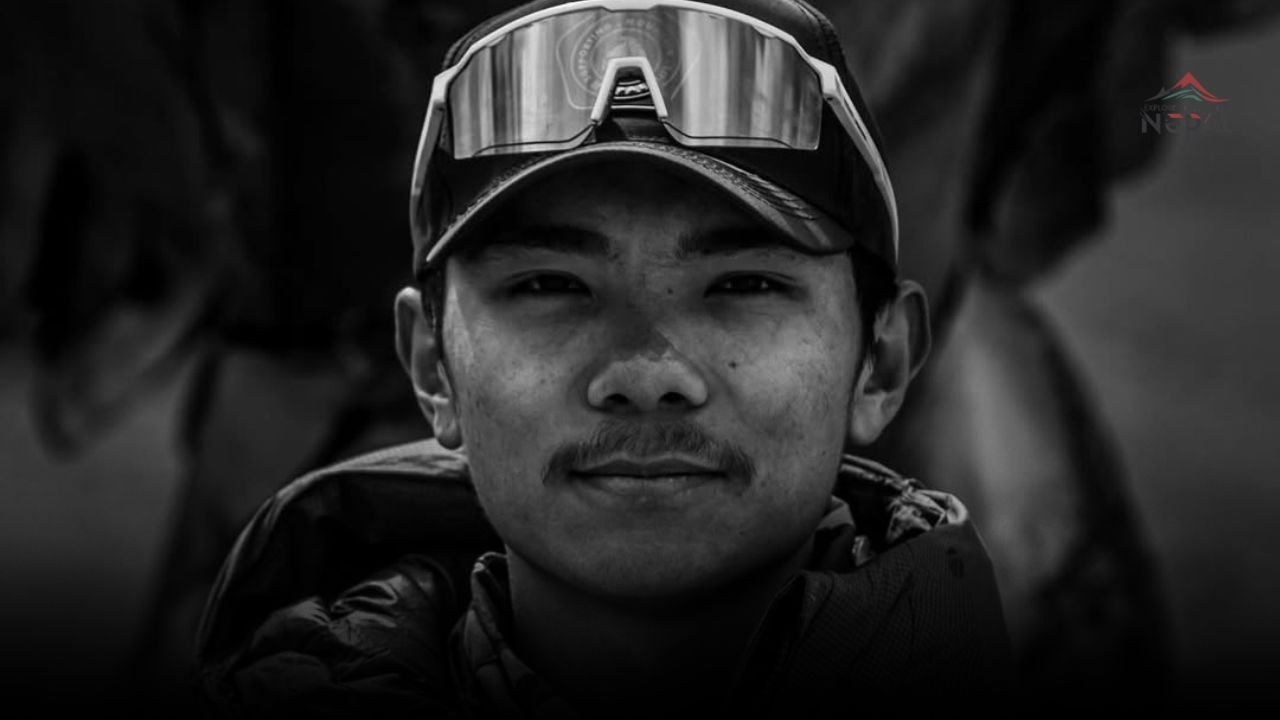
Nima Rinji Sherpa Biography tells the remarkable story of one of Nepal’s youngest and most extraordinary mountaineers, who made global history by becoming the youngest person to climb all 14 of the world’s 8,000-meter peaks. His achievement is officially recognized by Guinness World Records, placing him among the most elite high-altitude climbers in modern mountaineering history.
Born into a legendary Sherpa family from Nepal’s Khumbu region, Nima Rinji Sherpa grew up surrounded by the world of Himalayan expeditions, where mountains are not just landscapes but a way of life. However, what makes his journey unique is not only his family background but also the speed, discipline, and determination with which he completed all fourteen peaks before turning 19.
His final summit, Shishapangma (8,027m) in Tibet, China, on October 9, 2024, marked the completion of a historic journey that began with Manaslu in 2022. By completing all 14 peaks at just 18 years, 5 months, and 21 days, he broke the previous record and set a new global benchmark in high-altitude mountaineering.
This Biography is not just a record of summits it is a story of legacy, risk, resilience, and a new generation of Sherpa climbers redefining global perceptions of mountaineering excellence.
Quick Facts About Nima Rinji Sherpa
- Full Name: Nima Rinji Sherpa
- Nationality: Nepali
- Known For: Youngest person to climb all 14 eight-thousanders
- Date of Birth: (Exact DOB not publicly confirmed in many sources)
- Age at Record: 18 years, 5 months, 21 days
- First 8,000m Peak: Manaslu (2022)
- Final Peak: Shishapangma (2024)
- Total 8,000m Peaks: 14
- Guinness World Record: Youngest climber of all 14 eight-thousanders
- Climbing Partner: Pasang Nurbu Sherpa
- Support Teams: Seven Summit Treks, Fourteen Peaks Expedition
Early Life of Nima Rinji Sherpa
Nima Rinji Sherpa was born into one of the most respected Sherpa mountaineering families in Nepal. Growing up in the high Himalayas of the Khumbu region, he was surrounded by stories of Everest expeditions, rescue missions, and the extreme challenges faced by climbers who attempt the world’s highest peaks.
Unlike many athletes who discover their passion later in life, Nima was exposed to mountaineering culture from early childhood. His father, Tashi Lakpa Sherpa, is a highly accomplished climber who made history as one of the youngest Nepali climbers to summit Mount Everest without supplemental oxygen and has successfully climbed Everest multiple times.
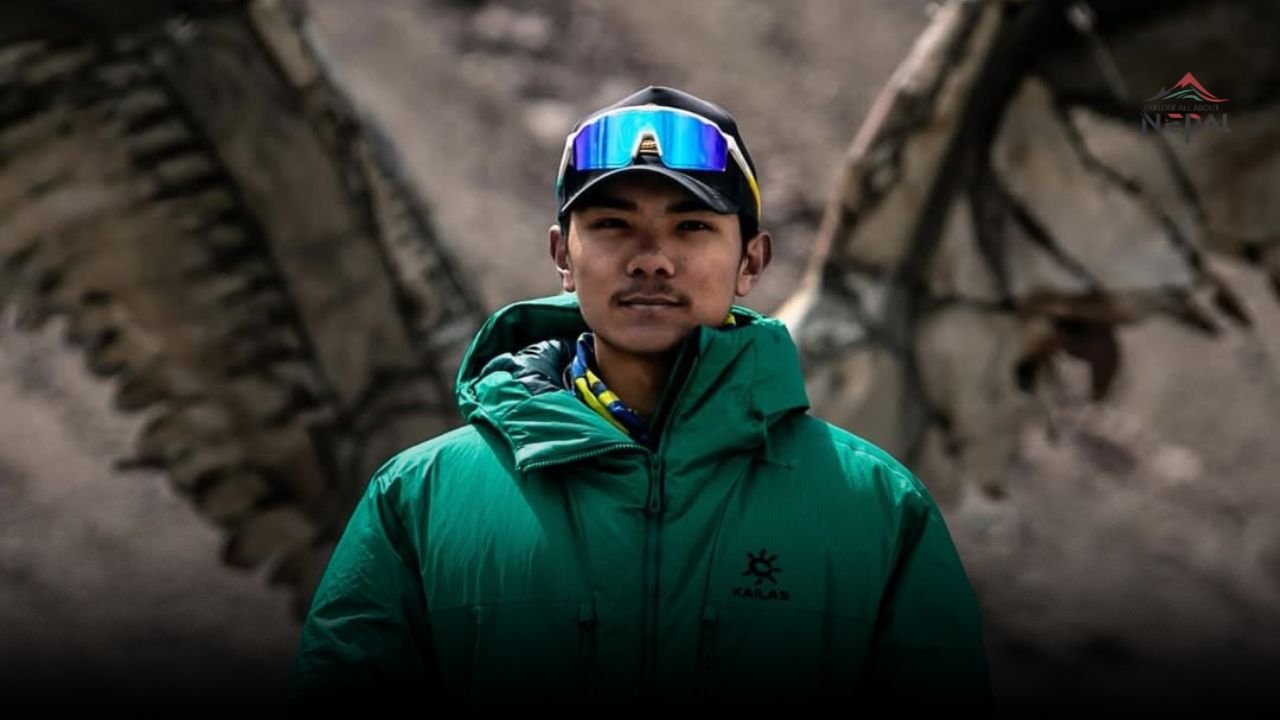
Nima Rinji Sherpa Biography
His uncles, Mingma Sherpa and Chhang Dawa Sherpa, are among the most famous high-altitude climbers in the world, being the first siblings to complete all 14 eight-thousanders and the Seven Summits. This strong family legacy played a major role in shaping his understanding of mountains not just as challenges, but as lifelong commitments.
However, the Nima Rinji Sherpa Biography is not only about privilege or legacy. From a young age, he also witnessed the harsh realities of mountaineering. Reports and interviews indicate that he saw the dangers of high-altitude climbing firsthand, including fatalities and avalanche incidents during expeditions. These experiences shaped his mindset early, giving him both respect and caution for the mountains he would later conquer.
By his teenage years, Nima had already decided to pursue mountaineering seriously, beginning his structured climbing journey at around 16 years of age. This marked the beginning of one of the fastest ascents in modern mountaineering history.
In this continuation of the Nima Rinji Sherpa Biography, we move deeper into the foundation that shaped his identity as a world-record-holding mountaineer. While his achievements on the 8,000-meter peaks are widely celebrated, his early life, family environment, and education played an equally important role in shaping the mindset required for such an extreme accomplishment.
Family Background: A Legacy Built on the Himalayas
The story of Nima Rinji Sherpa cannot be told without understanding the extraordinary mountaineering legacy of his family. He was born into one of Nepal’s most respected Sherpa families from the Khumbu region, an area globally known as the gateway to Everest expeditions.
His father, Tashi Lakpa Sherpa, is a renowned mountaineer who became one of the youngest Nepali climbers to summit Mount Everest without supplemental oxygen at just 19 years old. He has successfully climbed Everest multiple times and has built a respected career in high-altitude expedition leadership.
On the broader family side, Nima’s uncles, Mingma Sherpa and Chhang Dawa Sherpa, are internationally recognized figures in mountaineering history. They made global headlines as the first siblings in the world to successfully climb all 14 eight-thousand-meter peaks and complete the Seven Summits challenge. Their achievements established the Sherpa family as one of the most accomplished climbing dynasties in the world.
This environment naturally exposed Nima to expedition culture from an early age. However, the Nima Rinji Sherpa Biography is not simply a continuation of family success it is an evolution of it. Rather than only following in the footsteps of his predecessors, he aimed to redefine what was possible for a new generation of Sherpa climbers.
Childhood in the Himalayas
Growing up in the Everest region meant that mountains were not distant landmarks for Nima—they were part of daily life. The high-altitude environment of Khumbu is physically demanding, and children growing up there are often familiar with trekking routes, expedition logistics, and the constant movement of climbers from around the world.
From a young age, Nima observed expedition teams preparing for major climbs, witnessing both the excitement of success and the sorrow of loss. These early experiences played a significant role in shaping his emotional resilience and respect for the mountains.
Unlike romanticized perceptions of mountaineering, his upbringing also exposed him to the harsh realities of high-altitude risks. Avalanche dangers, altitude sickness, and expedition failures were not abstract ideas—they were real events he encountered during formative years. This exposure would later become a defining part of his mental preparation for the 14 peaks journey.
Education and SEE Examination Journey
Alongside his exposure to mountaineering, Nima Rinji Sherpa also pursued formal education in Nepal. Like many students in the country, he worked toward completing his SEE (Secondary Education Examination), a critical academic milestone in Nepal’s education system.
A key turning point in his life came after completing his SEE examinations, when he made a decisive shift toward full-time mountaineering pursuits. This transition marked the beginning of his structured expedition journey, where education and climbing ambitions began to overlap.
Unlike conventional career paths, his trajectory required balancing academic responsibilities with physical preparation for extreme high-altitude environments. Training for 8,000-meter peaks demands not only physical endurance but also logistical planning, acclimatization training, and mental conditioning—factors that require long-term commitment even at a young age.
The Nima Rinji Sherpa Biography highlights this phase as the moment where academic life gradually gave way to professional expedition life, signaling the beginning of his transformation into a global mountaineering figure.
Early Decision to Pursue Mountaineering Professionally
By the age of 16, Nima Rinji Sherpa had already made the life-changing decision to pursue mountaineering at a professional level. This was not a casual interest but a structured commitment toward attempting the world’s highest peaks.
His decision was influenced by both family legacy and personal ambition, but also by a growing awareness of how Sherpa climbers are perceived globally. Through his later advocacy project, often referred to as “Sherpa Power”, he aimed to shift global perception from viewing Sherpas only as support climbers to recognizing them as elite athletes and record-breaking mountaineers.
This mindset became the foundation of his rapid ascent through the world’s highest peaks, where within just a short span of time, he would go on to complete all 14 eight-thousanders.
Transition to Professional Expeditions
After completing his school-level education, Nima entered the structured world of commercial and expedition climbing, working alongside experienced climbers and professional guiding teams. His early expeditions helped him build technical expertise, high-altitude survival skills, and strategic climbing experience across different Himalayan and Karakoram ranges.
This phase marks the transition from preparation to execution the point at which the Nima Rinji Sherpa Biography moves from background story into one of the fastest and most historic climbing journeys ever recorded.
In this section of the Nima Rinji Sherpa Biography, we move into the most dynamic phase of his life—the start of his professional mountaineering journey and his entry into the world of 8,000-meter peaks. This period marks the transformation from a young Sherpa with strong family legacy into one of the fastest high-altitude climbers in modern history.
The First Step: Manaslu (2022)
The true beginning of Nima Rinji Sherpa’s 8,000-meter journey started with Mount Manaslu (8,163m) in Nepal. He successfully summited Manaslu on September 30, 2022, marking his first entry into the elite group of high-altitude climbers.
Manaslu is known as one of the most technically challenging peaks in Nepal due to its avalanche-prone slopes and unpredictable weather conditions. For many climbers, it serves as a test of endurance and acclimatization before attempting Everest or other higher peaks.
For Nima, however, Manaslu was more than just a test it was the beginning of a record-breaking journey.
This climb is widely considered the starting point in the Nima Rinji Sherpa Biography, as it officially introduced him into the global 8,000-meter climbing circuit. Completing this peak shortly after his SEE examinations also highlights how rapidly he transitioned from student life to extreme expedition climbing.
Rapid Progress into Elite Expeditions
After Manaslu, Nima Rinji Sherpa entered a phase of extremely fast progression in high-altitude mountaineering. Unlike traditional climbers who take years between major peaks, his expedition schedule intensified within months.
This rapid progression was supported by experienced guiding teams such as Seven Summit Treks and Fourteen Peaks Expedition, both of which are among Nepal’s leading expedition organizations.
During this period, Nima began climbing multiple 8,000-meter peaks across Nepal and Pakistan, establishing himself as one of the youngest and fastest climbers in the world to operate at this altitude range.
Everest (2023): The Symbolic Peak
A major milestone in the Nima Rinji Sherpa Biography came in May 2023, when he successfully summited Mount Everest (8,848.86m). Everest is not only the highest mountain in the world but also the ultimate benchmark for climbers globally. Reaching its summit is often considered a defining achievement in any mountaineering career.
For Nima, Everest was part of a larger progression rather than an endpoint. His climb of Everest and Lhotse (8,516m) during the same season demonstrated his ability to perform under extreme physical and environmental pressure.
This period also showed his growing efficiency in high-altitude logistics, acclimatization cycles, and rapid summit strategies.
The 2023 Karakoram Breakthrough (Pakistan Expeditions)
One of the most intense phases in his career came during his expeditions in Pakistan’s Karakoram range in 2023. Within a very short timeframe, he summited multiple 8,000-meter peaks, including:
- K2 (8,611m) – 27 July 2023
- Broad Peak (8,051m) – 23 July 2023
- Gasherbrum I (8,080m) – 18 July 2023
- Gasherbrum II (8,034m) – 19 July 2023
- Nanga Parbat (8,125m) – 26 June 2023
This sequence of climbs is a critical part of the Nima Rinji Sherpa Biography, as it demonstrates one of the fastest transitions between major 8,000-meter peaks in modern mountaineering history.
The Karakoram region is known for its extreme weather conditions, technical difficulty, and high fatality rates. Successfully completing multiple peaks in this region within a single climbing season highlights both physical endurance and strategic expedition planning.
Cho Oyu and Dhaulagiri: Strengthening the Himalayan Core
In addition to his Karakoram success, Nima also expanded his Himalayan record by summiting:
- Dhaulagiri (8,167m) – 29 September 2023
- Cho Oyu (8,188m) – 6 October 2023
These climbs further strengthened his position as a rapidly rising high-altitude climber. Cho Oyu, often considered one of the more accessible 8,000-meter peaks, still requires strong acclimatization and technical capability due to extreme altitude conditions.
By the end of 2023, Nima had already completed a significant portion of the world’s 8,000-meter peaks, placing him on a trajectory toward a historic record.
Annapurna and Technical Mastery
One of the most important milestones in the Nima Rinji Sherpa Biography is his ascent of Annapurna I (8,091m) in April 2024.
Annapurna is widely regarded as one of the most dangerous 8,000-meter peaks in the world due to its high avalanche risk and unstable terrain. Nima’s successful summit reportedly completed without supplemental oxygen—demonstrated advanced technical skill and extreme endurance.
This achievement further solidified his reputation as not just a fast climber, but a highly capable high-altitude athlete.
Transition Toward Completion of the 14 Peaks
By early 2024, Nima Rinji Sherpa had already completed most of the world’s highest peaks. His climbing schedule became more intense and strategic as he approached the final stages of the 14 eight-thousander challenge.
At this stage, he had already climbed multiple peaks across Nepal, Pakistan, and China, and was rapidly closing in on completing the full list of 14 mountains. This phase marks the shift from progression to completion in the Nima Rinji Sherpa Biography, where each summit was no longer just an achievement but a step toward a world record.
In this core section of the Nima Rinji Sherpa Biography, we analyze the full completion phase of his historic achievement when he systematically climbed all 14 of the world’s 8,000-meter peaks and officially entered mountaineering history as the youngest person to do so.
Unlike gradual mountaineering careers that span decades, Nima’s 14-peak journey was compressed into an extremely short timeline between 2022 and 2024, making it one of the fastest completions ever recorded in high-altitude climbing.
What Are the 14 Eight-Thousanders?
The “14 eight-thousanders” are the 14 mountains in the world that exceed 8,000 meters in elevation, all located in the Himalayas and Karakoram ranges across Nepal, China (Tibet), India, and Pakistan.
These peaks represent the highest level of difficulty in mountaineering due to:
- Extreme altitude (low oxygen levels)
- Unpredictable weather systems
- Avalanche and icefall risks
- Technical climbing sections
- Long exposure above 8,000m “death zone”
Completing all 14 is considered one of the greatest achievements in human endurance sports.
Full List of Nima Rinji Sherpa’s 14 Peaks
The following table forms the backbone of the Nima Rinji Sherpa Biography, documenting his complete summit history:
| No | Mountain | Height | Date Summited |
|---|---|---|---|
| 1 | Manaslu | 8,163m | 30 Sep 2022 |
| 2 | Everest | 8,848.86m | 24 May 2023 |
| 3 | Lhotse | 8,516m | 24 May 2023 |
| 4 | Nanga Parbat | 8,125m | 26 Jun 2023 |
| 5 | Gasherbrum I | 8,080m | 18 Jul 2023 |
| 6 | Gasherbrum II | 8,034m | 19 Jul 2023 |
| 7 | Broad Peak | 8,051m | 23 Jul 2023 |
| 8 | K2 | 8,611m | 27 Jul 2023 |
| 9 | Dhaulagiri | 8,167m | 29 Sep 2023 |
| 10 | Cho Oyu | 8,188m | 06 Oct 2023 |
| 11 | Annapurna I | 8,091m | 12 Apr 2024 |
| 12 | Makalu | 8,485m | 04 May 2024 |
| 13 | Kangchenjunga | 8,586m | 08 Jun 2024 |
| 14 | Shishapangma | 8,027m | 09 Oct 2024 |
2024: The Final Push Toward History
The year 2024 represents the most decisive phase in the Nima Rinji Sherpa Biography, where he completed the final stretch of his 14-peak mission.
Annapurna I (April 2024)
Annapurna I is widely considered one of the most dangerous mountains in the world due to its high avalanche frequency and unstable snow conditions. Nima’s successful ascent marked a major technical milestone in his career and demonstrated his ability to operate in extreme risk environments.
Makalu (May 2024)
Makalu, the fifth-highest mountain in the world, is known for its sharp ridges and steep sections. Completing this peak added momentum toward the final stages of his record attempt.
Kangchenjunga (June 2024)
At 8,586 meters, Kangchenjunga is the third-highest mountain in the world and one of the most remote. Its completion brought Nima extremely close to finishing all 14 peaks, with only one remaining.
Final Summit: Shishapangma (October 9, 2024)
The final chapter of the Nima Rinji Sherpa Biography was written on October 9, 2024, when he successfully summited Shishapangma (8,027m) in Tibet, China.
This summit officially completed his journey of all 14 eight-thousanders at the age of:
18 years, 5 months, and 21 days
This achievement set a new world record, surpassing the previous record held by Mingma David Sherpa.
Shishapangma, although the lowest among the 8,000-meter peaks, is still highly technical due to its weather volatility and avalanche risk. Completing this peak marked the culmination of a two-year expedition journey that changed global mountaineering records.
Record-Breaking Achievement
With the completion of Shishapangma, Nima Rinji Sherpa officially became:
- The youngest person in history to climb all 14 eight-thousanders
- One of the fastest climbers to complete the full list
- A Guinness World Record holder in high-altitude mountaineering
This milestone placed him among elite mountaineers who have completed all 14 peaks, but his age and speed of completion set him apart globally.
Speed and Strategy of His Ascents
One of the most remarkable aspects of the Nima Rinji Sherpa Biography is not just what he achieved, but how fast he achieved it.
Between 2023 and 2024, he completed multiple 8,000-meter peaks in a single climbing season, including back-to-back ascents in Pakistan’s Karakoram range. This level of efficiency requires:
- Rapid acclimatization cycles
- Expert logistical planning
- High physical conditioning
- Strong expedition support teams
- Deep experience with altitude adaptation
This strategy is what allowed him to compress what usually takes 10–15 years into a two-year period.
Transition to Record Recognition
After completing all 14 peaks, Nima Rinji Sherpa’s achievements were officially recognized by international mountaineering authorities and record institutions, including Guinness World Records.
This recognition solidified his status not just as a young climber, but as a global record-holder redefining the limits of human endurance at extreme altitude.
In this section of the Nima Rinji Sherpa Biography, we move beyond the summits themselves and focus on what followed after the completion of all 14 eight-thousanders global recognition, record validation, and his rising influence in the international mountaineering community.
While climbing the world’s highest peaks is an extraordinary achievement on its own, formal recognition and historical comparison place Nima Rinji Sherpa’s accomplishment in a broader global context.
Guinness World Records Recognition
One of the most important milestones in the Nima Rinji Sherpa Biography is his official recognition by Guinness World Records as the youngest person in history to climb all 14 eight-thousand-meter peaks.
This certification is significant because Guinness World Records applies strict verification standards, including:
- Expedition evidence and summit confirmations
- Verified dates and GPS/log documentation
- Independent expedition company validation
- Cross-checking with mountaineering databases
Nima completed his 14th peak, Shishapangma (8,027m), on October 9, 2024, which finalized his record-breaking status at just 18 years, 5 months, and 21 days.
This achievement placed him in a very exclusive category of climbers who have completed all 14 eight-thousanders an elite group in global mountaineering history—but made him the youngest among them by a significant margin.
Comparison with Previous Record Holders
Before Nima Rinji Sherpa, the record for completing all 14 eight-thousanders at a young age was held by Mingma David Sherpa, a highly respected Nepali mountaineer.
The key difference in the Nima Rinji Sherpa Biography is not only breaking the age record but also the speed of completion. While previous climbers took many years or even decades to complete all 14 peaks, Nima achieved it in a condensed timeframe between 2022 and 2024.
This shift highlights a new era in high-altitude mountaineering, where:
- Modern logistics and expedition support are more advanced
- Climbing windows are more efficiently utilized
- Athletes are increasingly specialized at younger ages
- Sherpa climbers are gaining stronger global recognition
Nima’s achievement therefore represents both a personal milestone and an evolution in the sport itself.
Global Mountaineering Community Reaction
The international mountaineering community responded strongly to Nima Rinji Sherpa’s achievement. His record sparked discussions about:
- The future of high-altitude climbing
- The role of young climbers in extreme expeditions
- The evolving identity of Sherpa athletes in global sports
- Ethical and safety considerations in rapid 8,000-meter ascents
Experienced climbers and expedition organizers widely acknowledged the technical difficulty of completing all 14 peaks within such a short timeframe, especially across different mountain ranges including the Himalayas and Karakoram.
Within this context, the Nima Rinji Sherpa Biography is often discussed not only as a record story but also as a case study in modern expedition efficiency and youth achievement in extreme environments.
Media Attention and International Coverage
Following the completion of his 14 peaks, Nima Rinji Sherpa received significant attention from international media outlets, mountaineering publications, and adventure-focused platforms.
Coverage often highlighted:
- His age at completion
- The speed of his expedition timeline
- His Sherpa family background
- His role in redefining Sherpa identity in mountaineering
Global adventure media increasingly positioned him as part of a new generation of Himalayan climbers who are not only supporting expeditions but leading record-breaking ascents.
This media attention significantly increased global search interest in “Nima Rinji Sherpa Biography”, especially after his final summit announcement in 2024.
Sherpa Identity and “Sherpa Power” Narrative
An important aspect of the Nima Rinji Sherpa Biography is his contribution to changing global perceptions of Sherpa climbers.
Traditionally, Sherpas have been recognized primarily as expedition support staff in Himalayan climbing. However, modern Sherpa climbers like Nima are increasingly recognized as:
- Elite high-altitude athletes
- Record-holding mountaineers
- Expedition leaders
- Global sports figures
Through his journey, Nima has been associated with a broader movement often described as “Sherpa Power”, which emphasizes recognition, identity, and leadership in high-altitude sports.
This narrative adds cultural and social depth to his achievements beyond just physical endurance.
Influence on Young Climbers in Nepal
One of the most important impacts of Nima Rinji Sherpa’s success is its influence on younger generations in Nepal.
His story has become an example of:
- Early specialization in mountaineering
- Combining education with extreme sports
- Building international careers from local Himalayan regions
- Achieving global recognition from Nepal
For many aspiring Nepali climbers, his journey demonstrates that world records in mountaineering are no longer limited to older, long-career athletes, but can also be achieved by younger generations with the right training and support.
In this section of the Nima Rinji Sherpa Biography, we move into the psychological and human dimension behind his record-breaking achievement. While summit lists and records define the outcome, it is mindset, discipline, and risk tolerance that define how such an extreme career is even possible at a young age.
Climbing Mindset and Mental Discipline
A defining feature of Nima Rinji Sherpa’s mountaineering profile is his unusually high level of mental discipline for his age. High-altitude climbing is not only a physical challenge but also a sustained psychological test involving isolation, oxygen deprivation, and constant exposure to risk.
The Nima Rinji Sherpa Biography shows a climber who developed early awareness of these realities. Growing up in a professional Sherpa expedition environment, he was repeatedly exposed to the operational side of Himalayan climbing—planning, weather forecasting, risk assessment, and summit decision-making.
Unlike recreational trekking, 8,000-meter expeditions require climbers to make life-or-death decisions in extreme conditions. Nima’s rapid success across multiple peaks suggests a strong ability to process risk under pressure and maintain composure in unpredictable environments.
Emotional Strength and Exposure to Risk
One of the most important yet rarely discussed aspects of the Nima Rinji Sherpa Biography is his exposure to the dangers of high-altitude climbing from a very early age.
During various expeditions, he witnessed the harsh realities of the Himalayas, including accidents and fatalities that are unfortunately part of extreme mountaineering. These experiences are often cited by climbers as emotionally defining moments that permanently change their perception of risk and mortality.
Instead of discouraging him, these experiences appear to have strengthened his respect for the mountains and reinforced a disciplined approach toward climbing. This psychological balance between fear and control is essential in high-altitude environments above 8,000 meters, commonly referred to as the “death zone.”
Physical Endurance and Adaptation
The physical demands of completing all 14 eight-thousanders in a short period are extraordinary. Each expedition requires:
- Acclimatization cycles at increasing altitude
- Multiple rotations between base camp and higher camps
- Endurance in oxygen-depleted environments
- Recovery management between consecutive climbs
In the Nima Rinji Sherpa Biography, his ability to complete multiple peaks in rapid succession across Nepal and Pakistan demonstrates a highly efficient adaptation process to extreme altitude conditions.
This efficiency is one of the key reasons he was able to compress a decade-long challenge into a two-year timeline.
Witnessing the Harsh Reality of the Himalayas
High-altitude mountaineering is often romanticized in media, but the reality is significantly more complex. Nima’s expeditions across Everest, K2, Annapurna, and Nanga Parbat exposed him to some of the most dangerous environments on Earth.
Peaks such as:
- Annapurna I – one of the highest fatality-rate mountains in the world
- K2 – known for extreme technical difficulty and unpredictable weather
- Nanga Parbat – historically referred to as the “Killer Mountain”
These environments are not only physically demanding but also mentally exhausting, requiring constant vigilance. The Nima Rinji Sherpa Biography highlights that success in these regions is not only about reaching the summit but also about making safe descent decisions, which are often considered more dangerous than the ascent itself.
Leadership and Team Dependency
Despite his individual record, mountaineering is fundamentally a team-based activity. Nima’s success was supported by experienced Sherpa guides, expedition leaders, and logistics companies such as Seven Summit Treks and Fourteen Peaks Expedition.
A key characteristic of his career is his ability to function effectively within highly coordinated expedition teams. This includes:
- Synchronizing with rope-fixing teams
- Following weather window strategies
- Coordinating summit pushes with teammates
- Managing altitude rotation schedules
The Nima Rinji Sherpa Biography therefore reflects not just individual capability but also strong integration within professional expedition systems.
Personality Traits and Public Image
While detailed personal psychological profiles are naturally limited, public narratives around Nima Rinji Sherpa consistently describe him as:
- Focused and disciplined
- Calm under pressure
- Highly goal-oriented
- Deeply connected to mountain culture
- Respectful toward expedition risks
Unlike many modern athletes who build strong social media personas, his public image remains primarily centered around his climbing achievements rather than personal branding. This reinforces the perception of him as a performance-driven mountaineer rather than a media-focused personality.
Risk vs Achievement Balance
A central theme in the Nima Rinji Sherpa Biography is the balance between speed and safety. Rapid ascents of multiple 8,000-meter peaks can increase exposure to cumulative fatigue and environmental risk.
However, his expedition record shows structured pacing across different mountain ranges and seasons, suggesting a carefully managed approach rather than uncontrolled acceleration. This balance is essential in high-altitude climbing, where even minor miscalculations can have severe consequences.
In this final section of the Nima Rinji Sherpa Biography, we focus on his long-term legacy, cultural impact, and the significance of his achievement beyond mountaineering records. While his ascent of all 14 eight-thousanders is already historic, the broader importance lies in how it reshapes perceptions of Sherpa climbers, youth achievement, and Nepal’s role in global high-altitude sports.
Legacy of Nima Rinji Sherpa in Mountaineering History
The completion of all 14 eight-thousanders at just 18 years of age places Nima Rinji Sherpa in a unique position in mountaineering history. His achievement is not only a record but also a symbolic shift in how modern climbing careers are developing.
Traditionally, completing the 14 peaks was viewed as a lifelong pursuit, often achieved over 10–20 years. However, the Nima Rinji Sherpa Biography demonstrates how modern expedition systems, improved logistics, and high-altitude expertise can accelerate this timeline significantly.
His legacy can be summarized in three major dimensions:
- Speed: One of the fastest completions of all 14 eight-thousanders
- Age: The youngest person ever to achieve this milestone
- Representation: A new global face of Sherpa mountaineering excellence
This combination ensures his place in modern Himalayan history is both statistical and symbolic.
Impact on Sherpa Identity and Global Perception
A major theme in the Nima Rinji Sherpa Biography is the evolving identity of Sherpa climbers in global mountaineering.
Historically, Sherpas were often viewed primarily as support climbers assisting foreign expeditions. However, over the past decades, this perception has shifted significantly as Sherpa athletes began achieving independent world records. Nima Rinji Sherpa represents a new generation of Sherpa climbers who are:
- Record holders, not only support climbers
- Expedition leaders and decision-makers
- Internationally recognized athletes
- Central figures in Himalayan mountaineering narratives
His success contributes to redefining Sherpa identity as elite high-altitude athletes who compete at the highest level of global mountaineering.
Impact on Nepal and Adventure Tourism
The Nima Rinji Sherpa Biography also carries national significance for Nepal. His achievement enhances Nepal’s global image as the home of the world’s highest peaks and the most skilled high-altitude climbers. Key impacts include:
- Increased global visibility for Nepali mountaineering talent
- Strengthening Nepal’s position in adventure tourism
- Inspiring young climbers from Himalayan regions
- Highlighting the professionalism of Nepali expedition companies
This also contributes indirectly to tourism branding for Nepal’s Everest region and other Himalayan trekking destinations.
Inspirational Value for Young Climbers
One of the strongest outcomes of his journey is its motivational impact. The Nima Rinji Sherpa Biography has become an inspiration for:
- Young Nepali climbers
- High-altitude expedition trainees
- Adventure sports enthusiasts worldwide
- Students balancing education and extreme ambition
His story demonstrates that age is no longer a limiting factor in achieving global mountaineering milestones, provided there is discipline, training, and structured support.
Interesting Facts About Nima Rinji Sherpa
Here are key highlights that summarize his extraordinary journey:
- He became the youngest person to climb all 14 eight-thousanders
- He completed the full set at just 18 years old
- His journey began with Manaslu in 2022
- His final summit was Shishapangma in 2024
- He climbed multiple 8,000m peaks in Pakistan within a single season
- He is part of a legendary Sherpa mountaineering family
- His father and uncles are also world-class mountaineers
- He completed Everest and Lhotse in the same season
- He climbed K2 at a very young age during his rapid ascent phase
- He is associated with the “Sherpa Power” movement
Frequently Asked Questions (FAQs)
Who is Nima Rinji Sherpa?
Nima Rinji Sherpa is a Nepali mountaineer who became the youngest person in history to climb all 14 eight-thousand-meter peaks.
What is Nima Rinji Sherpa famous for?
He is famous for completing all 14 of the world’s highest mountains before the age of 19.
When did Nima Rinji Sherpa complete all 14 peaks?
He completed his final peak, Shishapangma, on October 9, 2024.
What is Nima Rinji Sherpa’s record?
He holds the Guinness World Record as the youngest person to climb all 14 eight-thousanders.
What was his first 8,000-meter mountain?
His first 8,000-meter peak was Manaslu in 2022.
Which is his final mountain submit by Nima Ranji?
Shishapangma (8,027m) in Tibet, China is one of the final mountains submited by Nima on October 09 2024.
The Nima Rinji Sherpa Biography is more than a record-breaking story it is a generational shift in Himalayan mountaineering, where youth, speed, and professional expedition systems are redefining what is possible in the world’s highest mountains.
