
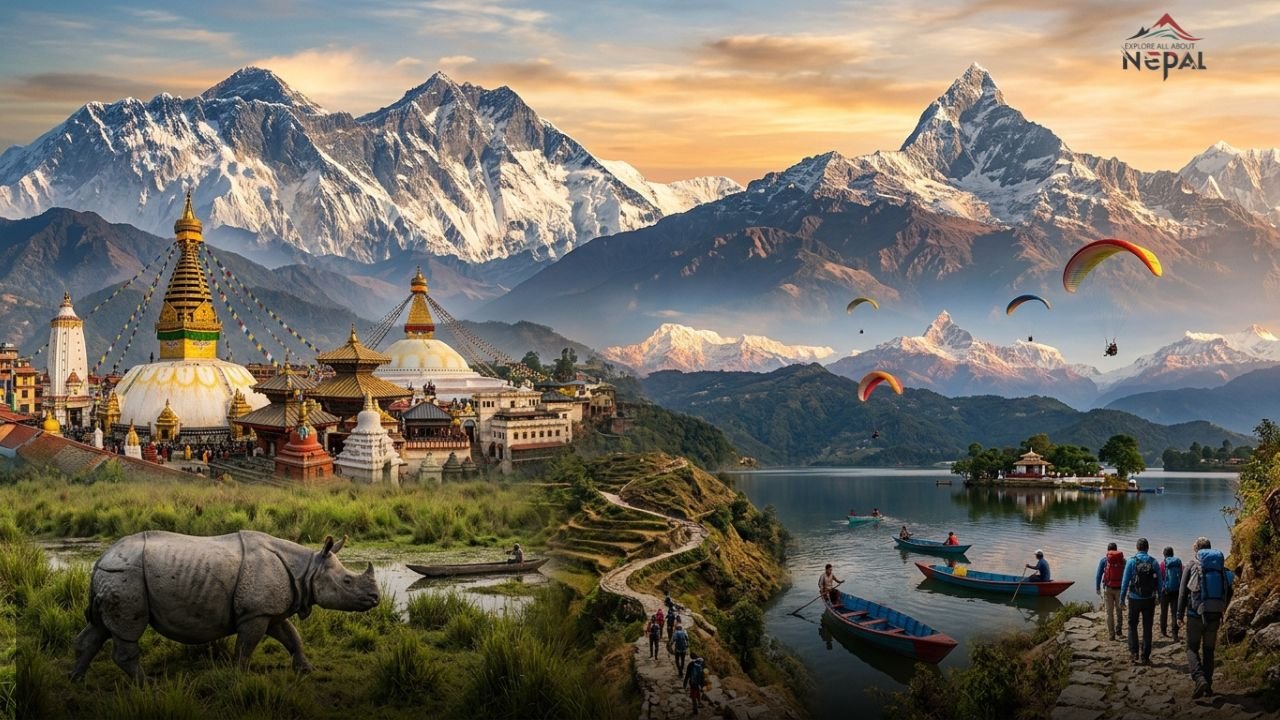
2 weeks in Nepal is the sweet spot for a first Nepal trip long enough to combine Kathmandu’s cultural depth, a proper high-altitude trek, and a wildlife safari, without feeling rushed between experiences. This itinerary covers 14 days from arrival to departure, built around the Annapurna Base Camp trek as the central experience, with Kathmandu, Pokhara, and Chitwan National Park completing the picture.
If you’ve got two weeks and you’re visiting Nepal for the first time, this is the trip.
Quick Reference: 2 Weeks in Nepal Itinerary Overview
| Days | Location | Main Experience |
|---|---|---|
| Days 1–2 | Kathmandu | Arrival, cultural sightseeing |
| Day 3 | Kathmandu | Day trip to Bhaktapur/Patan |
| Day 4 | Kathmandu → Pokhara | Travel day, lakeside evening |
| Days 5–12 | Annapurna Base Camp Trek | 8-day ABC trek |
| Day 13 | Pokhara | Rest, paragliding, lakeside |
| Day 14 | Pokhara → Kathmandu → Departure | Final day, fly home |
This itinerary uses the 7-day ABC trek. For a 10-day ABC version, adjust by reducing Kathmandu or Chitwan days. For a Chitwan addition, extend to 16–17 days total.
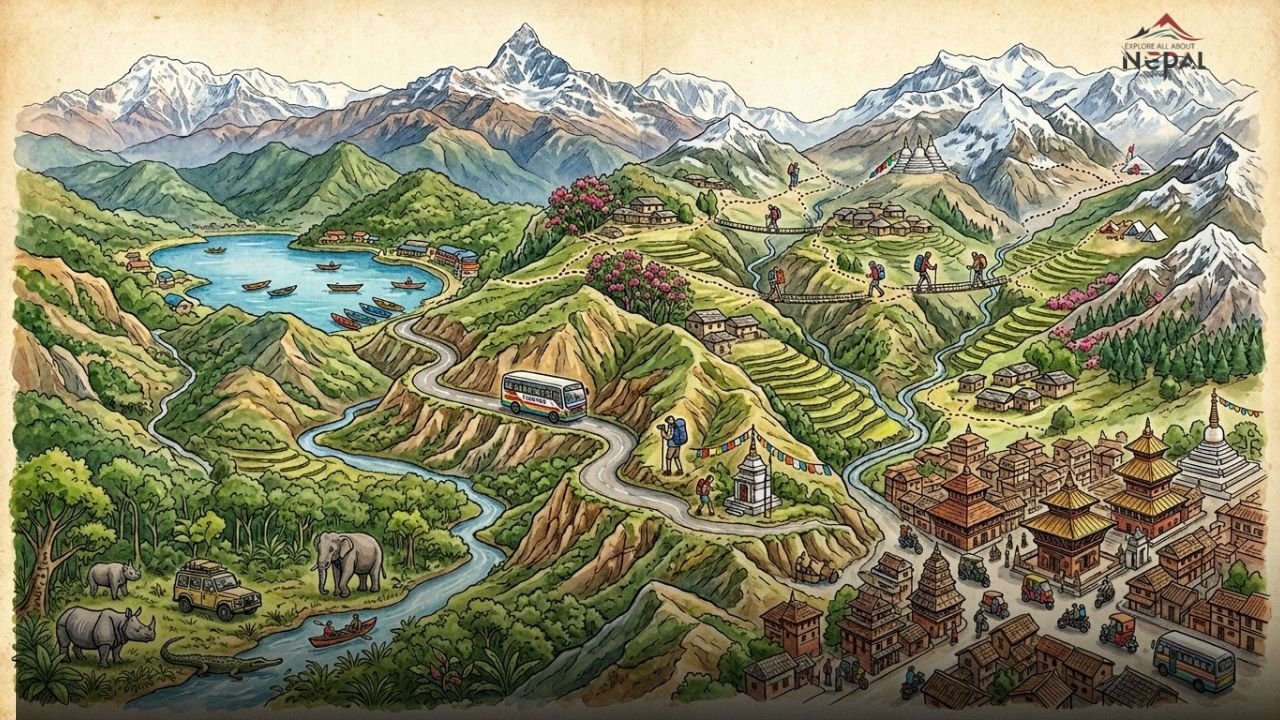
2 Weeks in Nepal
Why This Specific Itinerary Structure
Before diving into day-by-day detail, it’s worth explaining the logic behind this order since the sequence matters more than it might look.
Kathmandu first, not last. Most first-timers arrive jet-lagged and need 1–2 days to adjust to the altitude (1,400m) and the sensory intensity of the city before heading anywhere else. Kathmandu also has the permit offices for your trek sorting TIMS and ACAP in Kathmandu or Pokhara before you start trekking is far less stressful than scrambling at the trailhead.
Pokhara as the trek base. The ABC trek starts from Nayapul, roughly 1.5 hours from Pokhara flying or bussing to Pokhara before the trek is standard, and it gives you a day to organize last-minute gear, meet your guide, and rest before multi-day walking begins.
Trek in the middle, not at the end. Placing the trek centrally means you return to Pokhara for a proper recovery day before flying home, rather than arriving exhausted in Kathmandu with a departure the next morning. Post-trek recovery day in Pokhara is not a luxury it’s practically necessary.
Day-by-Day Itinerary
Day 1: Arrive in Kathmandu
Most long-haul flights from the US, UK, and Australia arrive in Kathmandu in the morning or early afternoon via a hub connection (Doha, Dubai, Delhi, or Singapore are the most common). Clear immigration, collect your 30-day visa on arrival ($50), and get to your Thamel accommodation.
What to do on Day 1: Minimal. Walk Thamel’s lanes in the afternoon, eat well, and sleep early. Altitude adjustment (Kathmandu sits at 1,400m) is real for some travelers don’t plan anything strenuous.
Accommodation: Thamel is the practical choice convenient, well-served, and walking distance from most booking offices and gear shops.
Budget: $40–$80/night mid-range Thamel hotel.
Day 2: Kathmandu Sightseeing — The Core Sites
A full day covering Kathmandu’s four essential UNESCO-listed sites, walkable or easily connected by taxi.
Morning: Boudhanath Stupa arrive early for the quietest experience and best light on the stupa’s gold spire. Follow the local kora (clockwise circuit) at your own pace.
Mid-morning: Pashupatinath Temple a 20-minute taxi from Boudhanath. Allow 1.5 hours for the temple complex and riverside area.
Afternoon: Kathmandu Durbar Square the historic royal palace complex, best with a guide for context on the Malla-era architecture. The adjacent Taleju Temple and Kumari Ghar (home of the living goddess) are within the same complex.
Late afternoon: Swayambhunath (Monkey Temple) climb the 365 steps before sunset for sweeping valley views.
Tip: Arrange your trek permits today if your agency is based in Thamel TIMS and ACAP can be sorted in an hour if you have your passport and photos ready.
See our complete Kathmandu sightseeing guide for hours, entry fees, and insider tips.
Day 3: Bhaktapur and Patan Day Trip
A full day exploring the two outer Kathmandu Valley UNESCO cities genuinely different in character from central Kathmandu and worth the effort.
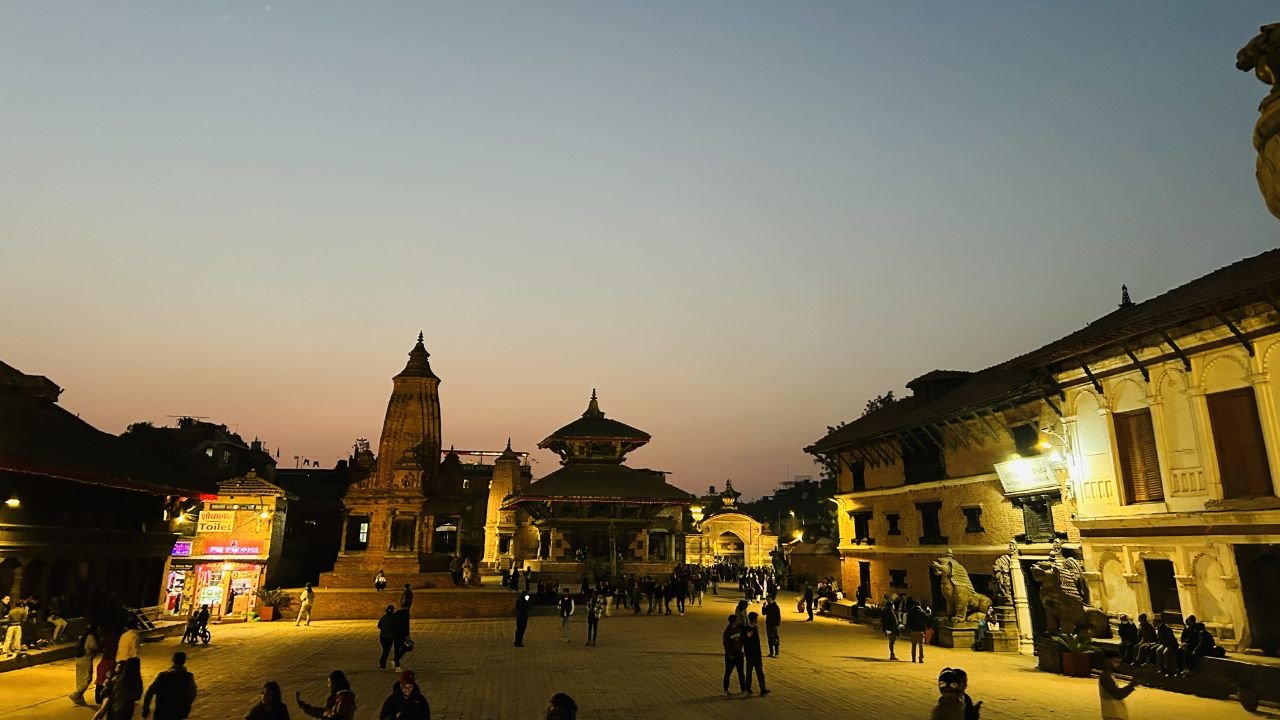
Bhaktapur Durbar Square
Morning: Bhaktapur (1 hour by taxi) the most atmospheric of the three Durbar Squares, with medieval lanes, pottery workshops, and red-brick architecture largely intact after 2015. Budget 3–4 hours minimum.
Afternoon: Patan Durbar Square (30 minutes back toward Kathmandu) the finest Newari metalwork in the valley, and the Patan Museum for context on what you’ve been seeing across all three Durbar Squares.
Evening: Return to Thamel for a final Kathmandu dinner Thamel has a strong rooftop restaurant scene with good views.
See our UNESCO World Heritage Sites in Nepal guide for what makes each site historically significant.
Day 4: Kathmandu to Pokhara
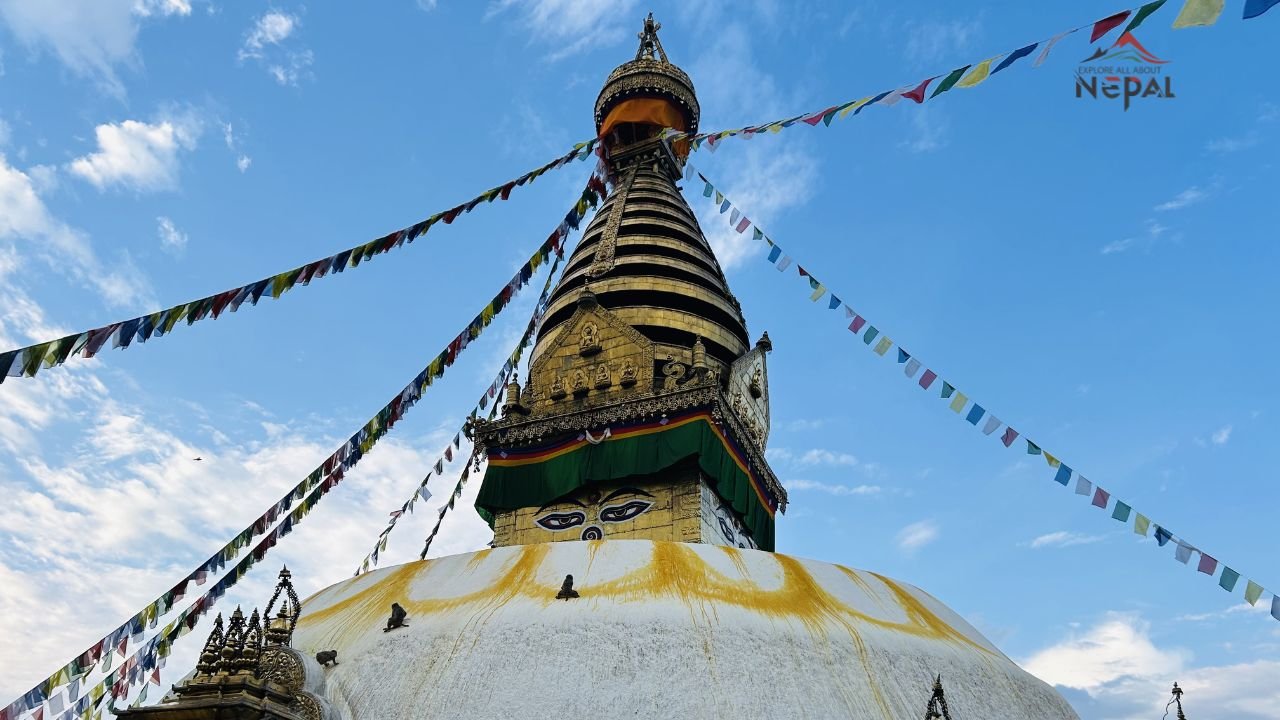
Swayambhunath
Option A Domestic flight: 25 minutes, $80–$120. Recommended for time efficiency and the mountain views from the right-hand window seat.
Option B Tourist bus: 6–7 hours, $8–$12. Scenic route along the Prithvi Highway following the Trishuli River gorge genuinely beautiful but long.
Afternoon in Pokhara: Check in to Lakeside, rent a boat on Phewa Lake, or simply walk the lakeside strip. Brief your guide if meeting today.
Evening: An early night is worthwhile trekking starts tomorrow.
See our Pokhara sightseeing guide for what to do with extra Pokhara time if your schedule allows.
Days 5–12: Annapurna Base Camp Trek (8 Days)
The central and defining experience of this itinerary. Eight days in the Annapurna Sanctuary, from subtropical river gorge to high alpine amphitheater at 4,130m.
Day 5: Drive Pokhara to Nayapul (1.5 hrs) → Trek to Tikhedhunga (1,540m) — 3–4 hours walking
Day 6: Tikhedhunga → Ghorepani (2,860m) — 5–6 hours, the long staircase day through rhododendron forest
Day 7: Pre-dawn Poon Hill sunrise (3,210m) → Trek to Tadapani (2,630m) — the iconic sunrise viewpoint, then onward
Day 8: Tadapani → Chhomrong (2,170m) — descent into the Modi Khola valley, Gurung village cultural immersion
Day 9: Chhomrong → Bamboo (2,310m) — the famous 2,500-step staircase descent, into the bamboo gorge
Day 10: Bamboo → Deurali (3,230m) — altitude building, first Machhapuchhre views appear
Day 11: Deurali → Annapurna Base Camp (4,130m) → Machapuchare Base Camp — the sanctuary itself, surrounded by 7,000m+ peaks
Day 12: ABC → descend to Bamboo or Chhomrong → drive back to Pokhara
See our complete Annapurna Base Camp trek guide for the full itinerary, permit costs, and day-by-day detail.
Day 13: Pokhara Recovery and Sightseeing
A genuine rest day that most first-timers genuinely need after 8 days of continuous trekking and Pokhara earns it.
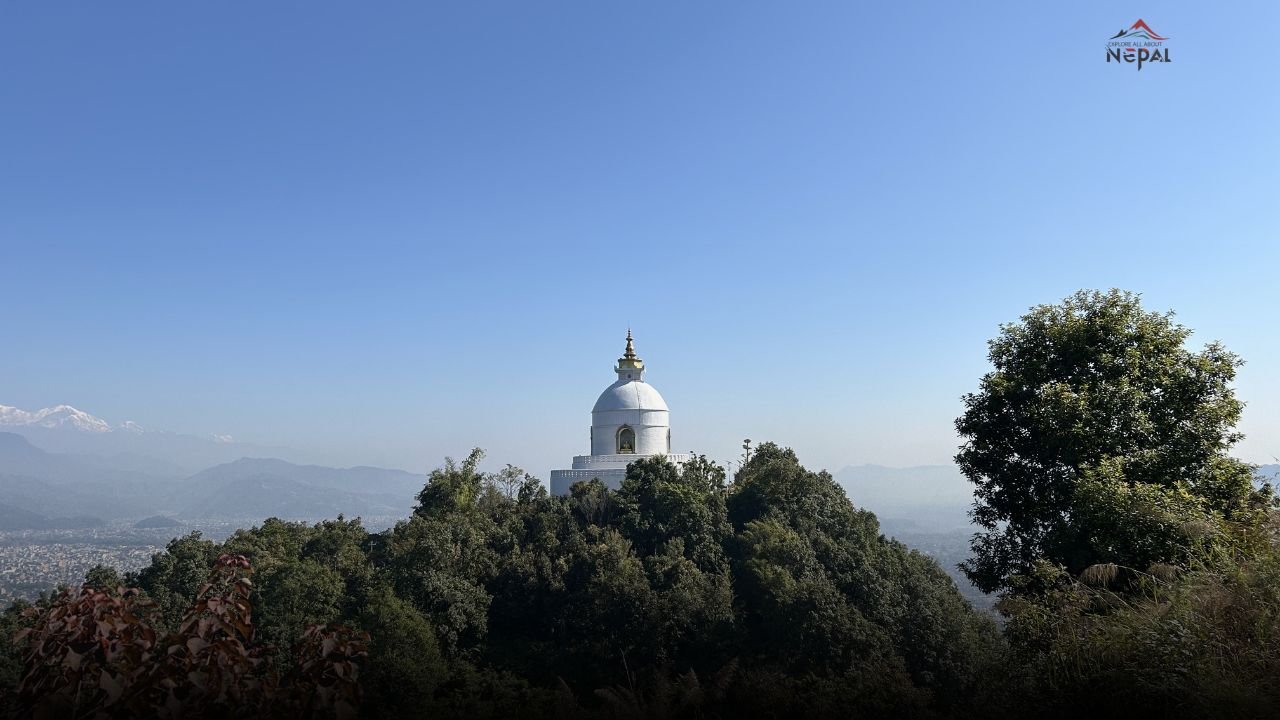
World Peace Pagoda
Morning options:
- Paragliding tandem flight from Sarangkot (25–30 minutes, genuinely spectacular post-trek activity)
- World Peace Pagoda boat across Phewa Lake then 45-minute hike up
Afternoon: Lakeside restaurants, Davis Falls and Gupteshwor Cave if not already done
Evening: Lakeside’s best dinner this is the celebratory meal
See our Pokhara sightseeing guide for the full list of activities and what to prioritize with limited time.
Day 14: Pokhara to Kathmandu to Departure
Morning: Fly Pokhara to Kathmandu (25 minutes) check flight timing against your international departure carefully. Most international flights from Kathmandu depart in the late evening or early morning, giving you an afternoon in Kathmandu.
Afternoon in Kathmandu: Last-minute shopping in Thamel (pashmina, lokta paper, singing bowls), or the Garden of Dreams for a final quiet hour before the airport.
Evening: Tribhuvan International Airport check in 3 hours before departure for international flights.
Alternative: Adding Chitwan National Park (Extends to 16–17 Days)
If you have 2–3 extra days, inserting Chitwan National Park between Pokhara and Kathmandu transforms this itinerary into a true Nepal trifecta mountains, culture, and wildlife.
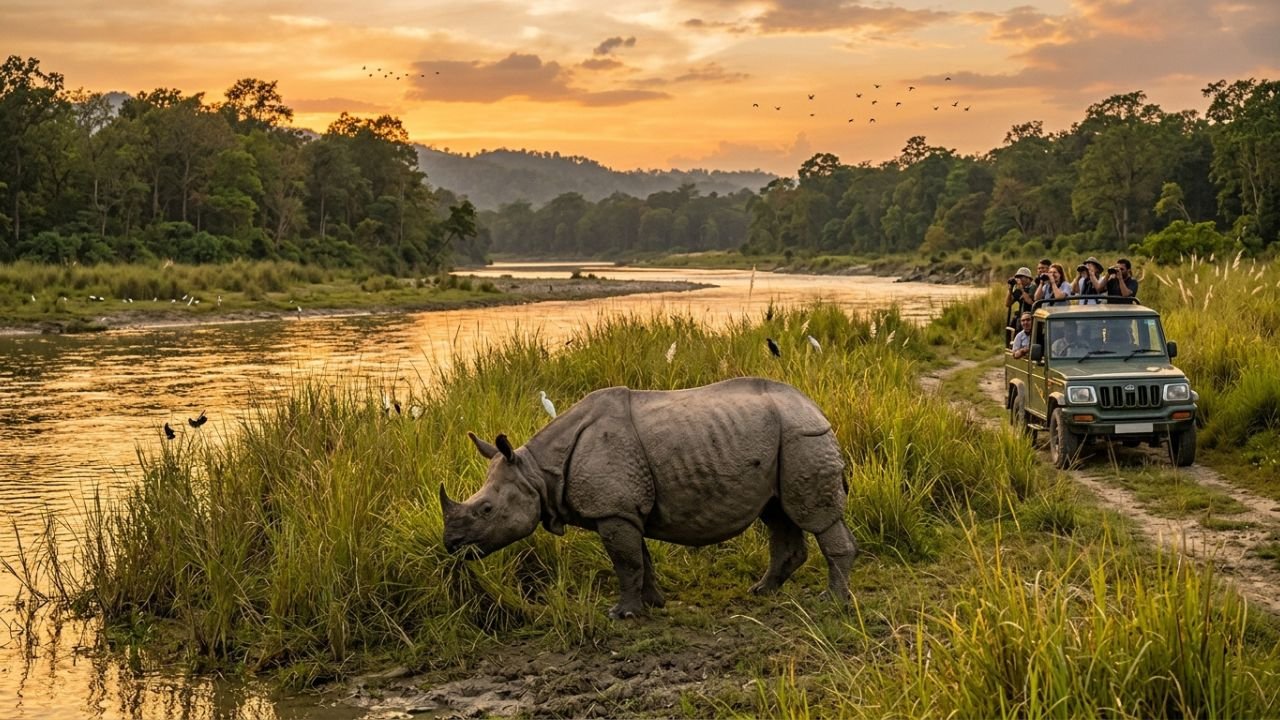
Chitwan: 2 Weeks in Nepal
How it fits: After the trek and Pokhara recovery day, drive or fly from Pokhara directly to Chitwan (3–4 hours by road, or a short domestic flight). Spend 2 nights on safari jeep safaris, canoe trips on the Rapti River, jungle walks with rhino and tiger sighting opportunities. Then drive to Kathmandu (5–6 hours) for your international departure.
Who this addition suits: Anyone with 16+ days who wants wildlife as part of their Nepal experience particularly Western travelers who’ve been to Africa and want to compare, or families where not everyone is keen on pure trekking.
Total Cost Estimate: 2 Weeks in Nepal
| Category | Budget | Mid-Range |
|---|---|---|
| Visa (30 days) | $50 | $50 |
| Kathmandu accommodation (3 nights) | $60 | $180 |
| Kathmandu sightseeing/meals | $80 | $150 |
| Kathmandu–Pokhara flight | $90 | $100 |
| ABC guided package (8 days) | $800 | $1,400 |
| Pokhara accommodation (2 nights) | $30 | $100 |
| Pokhara–Kathmandu flight | $90 | $100 |
| Travel insurance | $130 | $160 |
| Gear (if buying) | $200 | $400 |
| Tips and incidentals | $150 | $250 |
| Total (excl. international flights) | ~$1,680 | ~$2,890 |
Add $700–$1,600 for international flights depending on departure country and booking timing. See our complete Nepal trip cost guide for a full country-wide expense breakdown.
Practical Tips for This Specific Itinerary
Get your trek permits in Kathmandu or Pokhara before Day 5. Don’t leave permit sorting until you’re at the trailhead TIMS and ACAP offices in Thamel and Lakeside are efficient and take under an hour if you have your passport and photos.
Book your guide before arriving in Nepal if possible. October–November peak season sees guides book up 4–6 weeks ahead. See our guide to the best trekking agencies in Nepal for how to choose a reliable operator.
Buy travel insurance before you fly. Most reputable providers require purchase from your home country, not on arrival. See our travel insurance for Nepal trekking guide for the best policies.
Pack for both heat and cold. The first two days in Kathmandu are warm (25°C+), the trek peaks at 4,130m where nights drop to -5°C. Your packing list needs to span this full range layers, not just cold-weather gear.
Carry Nepali Rupees on the trek. Tea houses and guides work in cash ATMs don’t exist once you leave Pokhara. Withdraw enough before the trek starts. See our guide to the best debit and credit cards for Nepal for ATM fee strategies.
Frequently Asked Questions
Is 2 weeks enough for Nepal?
Yes two weeks is genuinely the ideal window for a first Nepal trip. It’s enough to combine Kathmandu’s cultural sites, a proper high-altitude trek, and a rest day in Pokhara, without feeling rushed between experiences.
Can I do the Everest Base Camp trek in 2 weeks instead of ABC?
EBC requires 12–16 days for the trek alone, leaving almost no time for Kathmandu or Pokhara in a 14-day trip. ABC at 8–10 days fits a 2-week itinerary far better. If EBC is your primary goal, plan for 3 weeks minimum.
What is the best time of year for this 2-week Nepal itinerary?
October–November for the clearest mountain views on the ABC trek, or March–April for rhododendron forests and spring scenery. Both windows offer reliable weather across all elements of this itinerary.
Do I need to pre-book everything for a 2-week Nepal trip?
Book your trekking agency and guide at least 4–6 weeks ahead for October–November travel. International and domestic flights should be booked 2–3 months ahead. Most accommodation in Kathmandu and Pokhara can be booked closer to the date, though peak-season Thamel fills quickly.
How fit do I need to be for this itinerary?
The ABC trek is the physically demanding element 5–7 hours of walking per day for 8 consecutive days. Reasonable cardiovascular fitness, built through regular cardio exercise for 4–6 weeks before departure, is the realistic preparation requirement.
Can I do this itinerary solo?
Yes solo travelers are well-catered for throughout Nepal. The 2023 mandatory guide rule means you’ll have a licensed guide on the trek regardless, so solo trekking safety is less of a concern than it once was. Kathmandu and Pokhara are straightforward solo travel destinations.
