Nepal has more than a dozen world-class trekking routes. Most first-time visitors book the same one, and not all of them should.
The runway at Lukla is 527 meters long about 1,729 feet and tilts uphill at nearly 12 percent. It sits at 2,845 meters (9,334 feet) on a shelf above the Dudh Koshi river. On clear October mornings, small planes land here every few minutes, most of them carrying trekkers bound for Everest Base Camp.
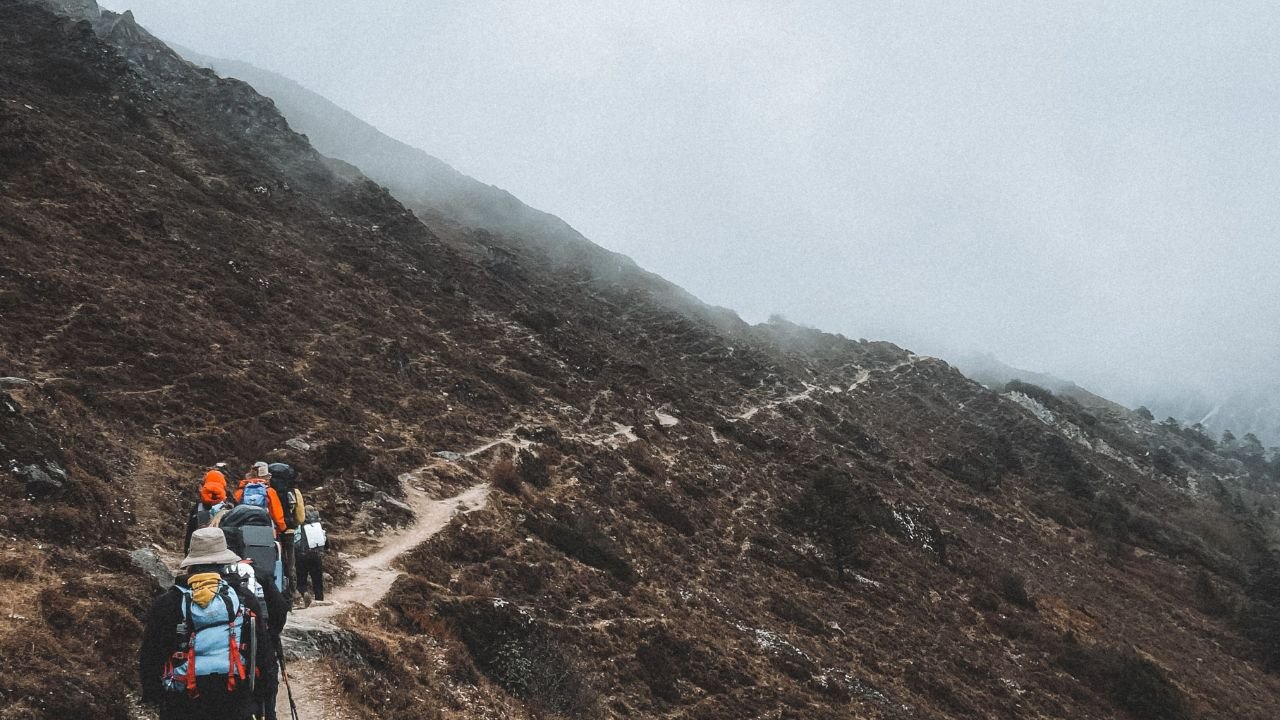
The best treks in Nepal: Photo by Marina Zvada
Many of those trekkers chose this route for one reason. It has Everest in the name.
That is not a bad reason. The Everest Base Camp trek is a genuinely great walk. But Nepal’s trails run from three-day foothill hikes to three-week crossings of restricted border valleys, and the differences between them are larger than most agency websites admit. The crowds differ by a factor of a hundred. The permit costs differ by a factor of twenty. Whether Everest Base Camp is the right trek for you is a separate question from whether it is famous.
This guide answers the first question. I live in Nepal and have no packages to sell you, so the verdicts below include the parts booking sites leave out.
Four questions before you pick a trek in Nepal
How many days do you actually have?
Count door to door from Kathmandu, then add two buffer days if your route uses the Lukla flight, which cancels often in bad weather. A “12-day trek” with international flights on either end is a 16-day trip.
Have you slept above 4,000 meters before?
If not, routes that gain altitude slowly (Everest Base Camp, Manaslu Circuit) are safer first choices than routes that spike quickly. Altitude sickness does not care how fit you are.
How much company do you want?
In October, the Everest and Annapurna trails carry hundreds of trekkers a day. Manaslu carries a fraction of that. Dolpo and Kanchenjunga carry almost nobody.
What do you want to remember?
Some routes are about mountains. Some are about villages and monasteries. Some are about being genuinely far from everything. No single trek does all three best.
Everest Base Camp: the default, and when it’s the right one
12–14 days | Max 5,545 m / 18,192 ft (Kala Patthar) | Teahouses | Moderate–hard
Everest Base Camp sits at 5,364 meters (17,598 feet) beside the Khumbu Icefall. The classic route flies to Lukla, climbs to Namche Bazaar, and follows the valley past Tengboche Monastery to the camp itself. Most itineraries add a pre-dawn walk up Kala Patthar, the black ridge that gives the view of Everest the base camp itself does not.
Choose it if you want the most complete famous-mountain experience Nepal offers: Sherpa villages, the busiest and best-supplied teahouse network in the country, and the summit pyramid of the highest mountain on earth filling the horizon.
Be honest with yourself about two things. First, the trail is crowded in October–November and March–May, and teahouses in Gorak Shep book out. Second, the Lukla flight is the least reliable link in the plan. In peak season most Lukla flights leave from Ramechhap, a four-to-five-hour drive from Kathmandu, not from Kathmandu itself. Budget for delays.
Full route details, costs and acclimatization schedule: Everest Base Camp Trek guide
Annapurna Base Camp: the most scenery per day
7–11 days | Max 4,130 m / 13,550 ft | Teahouses | Moderate
Annapurna Base Camp is the efficient choice. From Pokhara you can be at the base camp — a natural amphitheater ringed by Annapurna I, Annapurna South, Hiunchuli and the fluted spire of Machhapuchhre — in five to six days of walking. No internal flight. Lower maximum altitude than Everest. Hot springs at Jhinu Danda on the way out.
The tradeoff is that the route is a corridor, not a wilderness. Stone staircases, busy lodges, and in spring and autumn, a steady line of other trekkers. The section between Deurali and the base camp crosses known avalanche paths; in winter and early spring, ask locally before proceeding, and cross early in the day.
Choose it if you have under two weeks, want big mountains without flight roulette, or are trekking in Nepal for the first time and want a proven route with escape options.
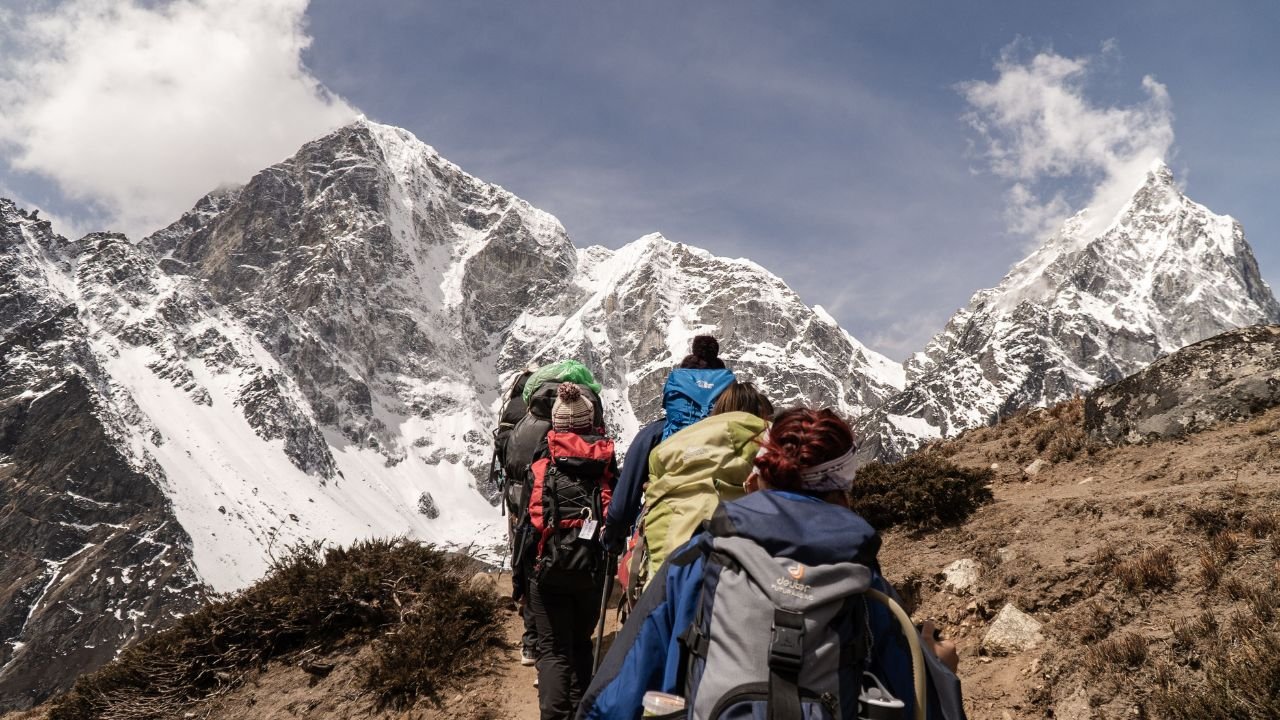
The best treks in Nepal: Photo by Bisesh Gurung
Manaslu Circuit: what experienced trekkers pick now
12–14 days | Max 5,106 m / 16,752 ft (Larkya La) | Teahouses | Hard
Ask people who have done several Nepal treks which one they would repeat, and the Manaslu Circuit comes up more than any other. It circles the world’s eighth-highest mountain (8,163 m / 26,781 ft), climbing from subtropical river gorge to the Tibetan Buddhist villages of the Nubri valley before crossing the Larkya La. The teahouses are simpler than Everest’s and the trail is far quieter, but the route is fully lodge-supported. You no longer need to camp.
Manaslu is a restricted area. You need a licensed guide and a registered agency, and the restricted-area permit is priced by season: USD 100 for the first week from September to November, USD 75 from December to August, plus a daily charge after seven days. Add the Manaslu and Annapurna conservation permits and the paperwork runs roughly USD 150–200 per person in autumn. Since March 2026, solo travelers can obtain restricted-area permits the old two-person minimum is gone but the guide requirement stands.
Choose it if you want the Annapurna Circuit as it was thirty years ago, before the road. Skip it if this is your first time above 4,000 meters; the Larkya La crossing is a long, exposed day.
Langtang Valley: the quiet one close to Kathmandu
7–10 days | Max ~4,984 m / 16,352 ft (Tserko Ri, optional) | Teahouses | Easy–moderate
Langtang is the only major trek that starts with a bus, not a flight: a rough seven-to-eight-hour drive from Kathmandu to Syabrubesi. From there the trail climbs through bamboo and rhododendron forest to Kyanjin Gompa at 3,830 meters (12,566 feet), a village of stone lodges below the ice wall of Langtang Lirung.
In April 2015, an earthquake-triggered avalanche destroyed Langtang village and killed more than 300 people, including most of the village’s residents. The village has been rebuilt slightly uphill of the debris field, and its lodges are run by survivors and their families. Trekking here puts money directly into that rebuilding. The valley remains the least crowded of Nepal’s three classic regions.
Choose it if you have about a week, want to acclimatize gently, or want your spending to matter locally. The optional day hike to Tserko Ri gives a 5,000-meter viewpoint without a high pass.
Upper Mustang: the desert kingdom, newly affordable
10–14 days | Max ~4,200 m / 13,780 ft | Teahouses | Moderate
Upper Mustang is not a mountain trek. It is a walk through a high-altitude desert of eroded red cliffs, cave systems and walled villages, ending at Lo Manthang (3,840 m / 12,598 ft), capital of the former Kingdom of Lo. The region sits in the Himalayan rain shadow, which makes it Nepal’s best monsoon-season trek it stays dry in July when everywhere else is mud.
The news for 2026 is the price. For decades the restricted-area permit was a flat USD 500 covering ten days, whether you stayed ten days or four. In late 2025 the government replaced it with USD 50 per person per day, and in March 2026 it scrapped the two-trekker minimum. A seven-day itinerary inside the restricted zone now costs USD 350 in permit fees instead of 500. You still need a licensed guide and a registered agency; that has not changed. Many websites including some updated in mid-2026 still list the old rules, so confirm with your agency at booking.
Choose it if you have trekked in Nepal before and want somewhere that looks like nowhere else in the country, or if monsoon is the only season you can travel.
The short treks: Poon Hill and Mardi Himal
4–8 days | Max 3,210 m / 4,200 m | Teahouses | Easy / easy–moderate
If you have less than a week, two routes near Pokhara do the job honestly. The Ghorepani–Poon Hill loop is Nepal’s classic beginner trek: three to five days, a sunrise ridge at 3,210 meters (10,531 feet) facing Dhaulagiri and the Annapurnas, and rhododendron forest that flowers spectacularly in March–April. It is also busy, and its trail is largely stone steps thousands of them.
Mardi Himal is the quieter alternative. Opened to lodges only in 2012, it climbs a forested ridge to a high viewpoint under Machhapuchhre at around 4,200 meters (13,780 feet). Fewer teahouses, fewer people, closer mountains. It has grown popular fast; in peak season, book lodges ahead or start walking early.
Neither trek requires acclimatization days. Both work as a first Himalayan trek or as a short add-on to a Nepal trip built around something else.
The remote tier: Kanchenjunga, Makalu, Dolpo
18–25 days | Strenuous | Basic lodges and camping
Beyond the teahouse circuits, three regions reward the trekkers who can afford the time. Kanchenjunga Base Camp (about 20–22 days) reaches the world’s third-highest mountain (8,586 m / 28,169 ft) through the Rai and Limbu villages of the far east. Makalu Base Camp (18–20 days) climbs through Makalu Barun National Park to the foot of the fifth-highest (8,481 m / 27,825 ft). Upper Dolpo (up to 25 days) crosses the trans-Himalayan west past Shey Phoksundo, a lake of implausible turquoise, through country that still practices the pre-Buddhist Bon religion.
All three are restricted or semi-restricted, all three require guides, and Dolpo’s permits are the most expensive in Nepal. Lodges are basic where they exist at all; parts of Dolpo remain camping-only. These are not better treks than the classics. They are different ones, for people who have already done the classics and want the Nepal that existed before trekking tourism.
What permits actually cost in 2026
Figures below are for non-SAARC foreign nationals, in USD at approximate current conversion. Last verified: 2026/08/05
| Trek | Required permits | Approx. total (USD) |
|---|---|---|
| Everest Base Camp | Sagarmatha NP entry (NPR 3,000) + Khumbu municipality fee (NPR 2,000–3,000). No TIMS. | $37–45 |
| Annapurna BC / Circuit / Poon Hill / Mardi | ACAP (NPR 3,000) + TIMS where checked (NPR 2,000) | $22–37 |
| Langtang | Langtang NP entry (NPR 3,000) + TIMS | $22–37 |
| Manaslu Circuit | RAP ($100/wk Sep–Nov, $75/wk Dec–Aug, + per-day after 7 days) + MCAP + ACAP (NPR 3,000 each) | $150–200 (autumn) |
| Upper Mustang | RAP $50 per person per day (changed from flat $500/10 days) + ACAP | $50/day + ~$22 |
| Upper Dolpo | Upper Dolpo RAP + Shey Phoksundo NP entry | Highest in Nepal; quote via agency |
Two rule changes matter for 2026 planning. Upper Mustang’s daily-rate permit makes short itineraries meaningfully cheaper than before. And the removal of the two-trekker minimum for restricted areas (22 March 2026) means solo travelers can now trek Manaslu, Mustang and Dolpo without paying for a “ghost” second permit though a licensed guide remains mandatory in every restricted area. Nepal’s tourism board has required guides on major routes since April 2023; enforcement varies by region, so check the current position for your specific route rather than assuming either way.
One more cost note agencies rarely volunteer: standard travel insurance often excludes trekking above 4,000 or 5,000 meters. Every trek in this guide except Poon Hill crosses that line. Buy a policy that explicitly covers high-altitude trekking and helicopter evacuation, and read the altitude ceiling before you pay.
The planes out of Lukla leave as they came in, weather permitting, a few minutes apart. The trekkers on board mostly made the default choice, and most of them had a great trip anyway. Nepal is forgiving that way.
But the ones who come back a second time almost never book the same trek. They book the one that fits.
