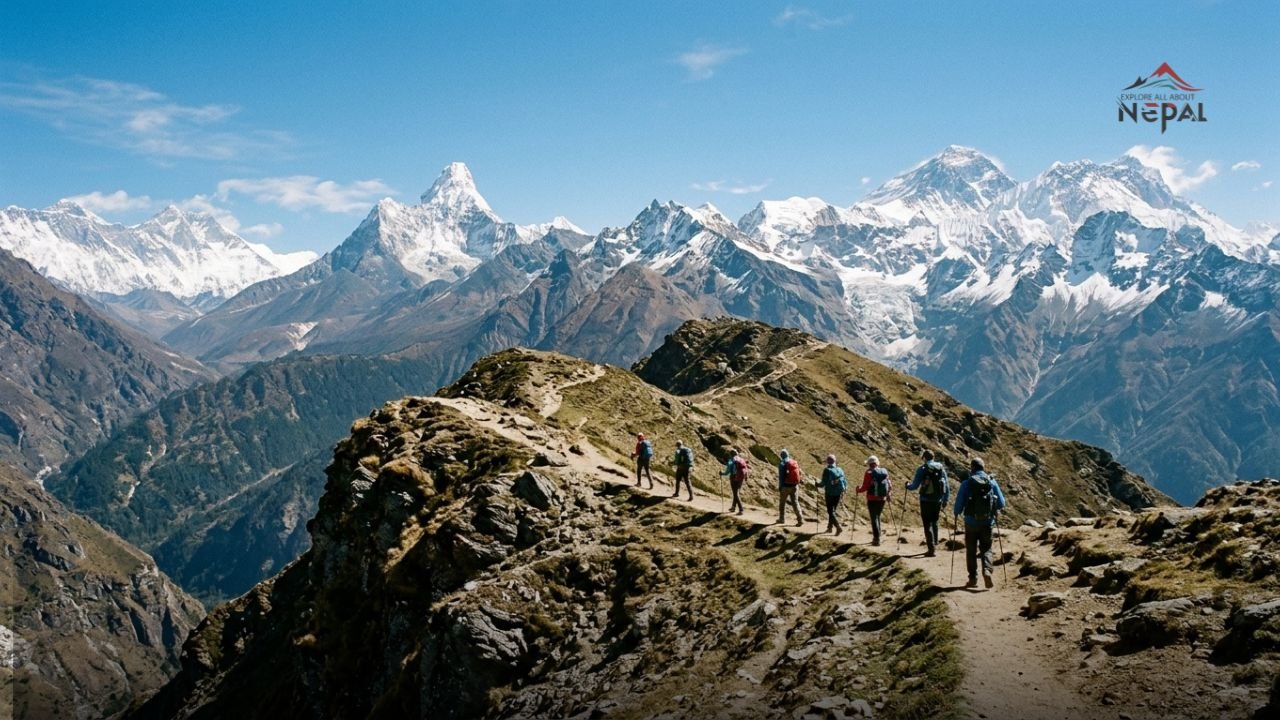
If you just want the answer: for a first trip, book a small-group guided tour of 8–12 days that combines Kathmandu Valley sightseeing, a short Himalayan trek (Poon Hill or Mardi Himal), and a Chitwan jungle safari. Expect to pay $700–$1,800 per person for a land-only package depending on comfort level, with mid-range tours clustering around $1,000–$1,300. Avoid the rock-bottom $400 deals and the over-padded “18 destinations in 10 days” itineraries both are first-timer traps. Below is exactly how to tell a genuinely good operator from a polished website with nothing behind it.
Why a guided tour makes sense for your first time
I’m not anti-independent travel I’ve done plenty of it here. But Nepal has a specific learning curve that a good guide flattens on day one: the road chaos, the permit paperwork, the altitude judgment calls, the language gap once you leave Thamel, and the genuine difficulty of getting between regions efficiently. A guide turns a trip that could lose two days to a missed bus connection into one that runs smoothly.
nepal tours for beginners
There’s also a practical reason that’s changed recently. Solo trekking in Nepal’s national parks and conservation areas is now restricted, and many regions require a licensed guide regardless. So for the trekking portion of a first trip, you’re likely hiring a guide anyway a packaged tour just bundles that with everything else.
Here’s what most first-timers get wrong: they assume “guided tour” means a giant coach bus and a flag-waving leader. The tours worth booking in Nepal are small often 2 to 12 people and feel more like traveling with a knowledgeable local friend than a herded group.
What a genuinely good Nepal tour includes
Before you compare prices, know what “all-inclusive” should actually mean here. Cheap tours win on sticker price by quietly excluding the things that cost money. A solid land package should cover:
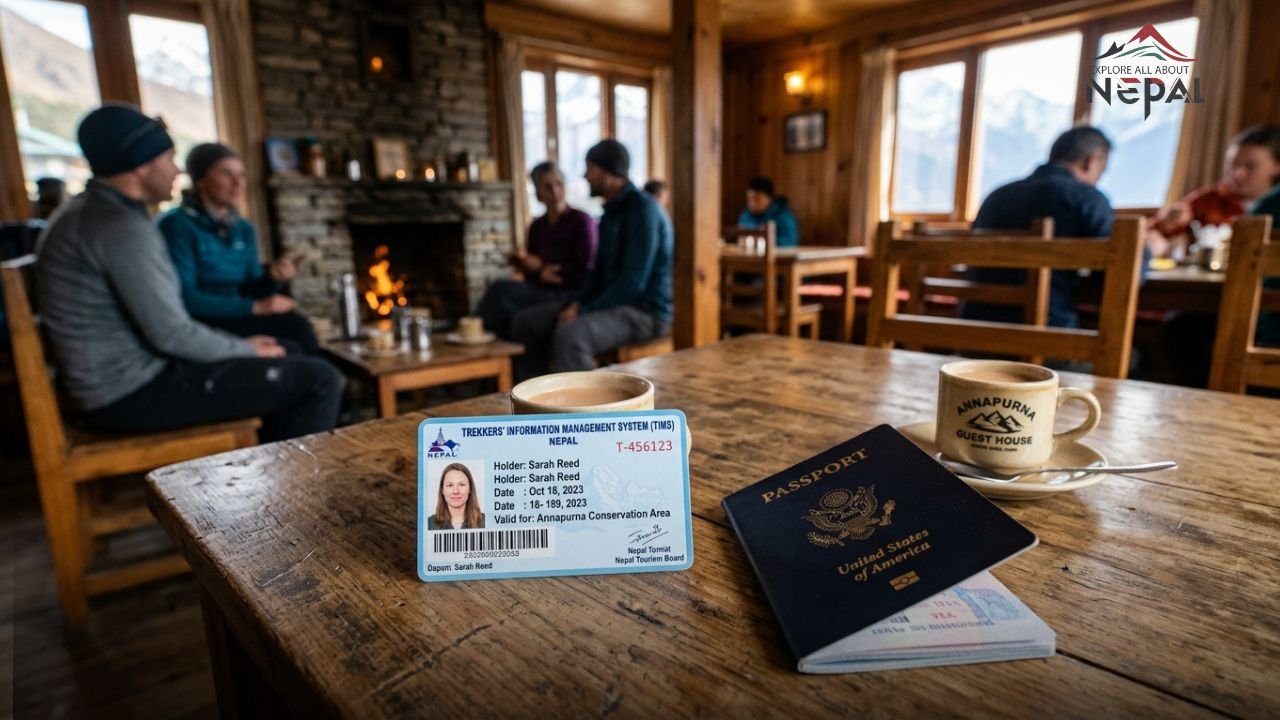
- All trekking permits: the TIMS card (Trekkers’ Information Management System, around NPR 2,000 / ~$15) and the relevant area permit for Annapurna that’s the ACAP (Annapurna Conservation Area Permit), NPR 3,000 / ~$22 for foreign nationals.
- A licensed, English-speaking guide, and a porter on trekking days.
- Accommodation: hotels in cities, teahouses on the trail.
- Domestic transport between regions (private vehicle or domestic flights).
- Most meals, especially all meals during the trek.
- National park entry for Chitwan (around NPR 2,000 / ~$15 per day).
What’s almost never included budget for it
Three things routinely sit outside the package, and surprise people:
International flights are on you reckon $900–$1,500 return from the US, £550–£850 from the UK, AUD $1,100–$1,800 from Australia, always with a connection through the Gulf, Delhi, or a Southeast Asian hub. Travel insurance is also extra and non-negotiable (more below). And tips are a real cost here, not optional: budget roughly $10–$15 per day for your guide and a bit less for porters. A good operator tells you all this upfront. One that hides it is telling you something about how the rest of the trip will go.
nepal tours for beginners
The best tour types for first-timers
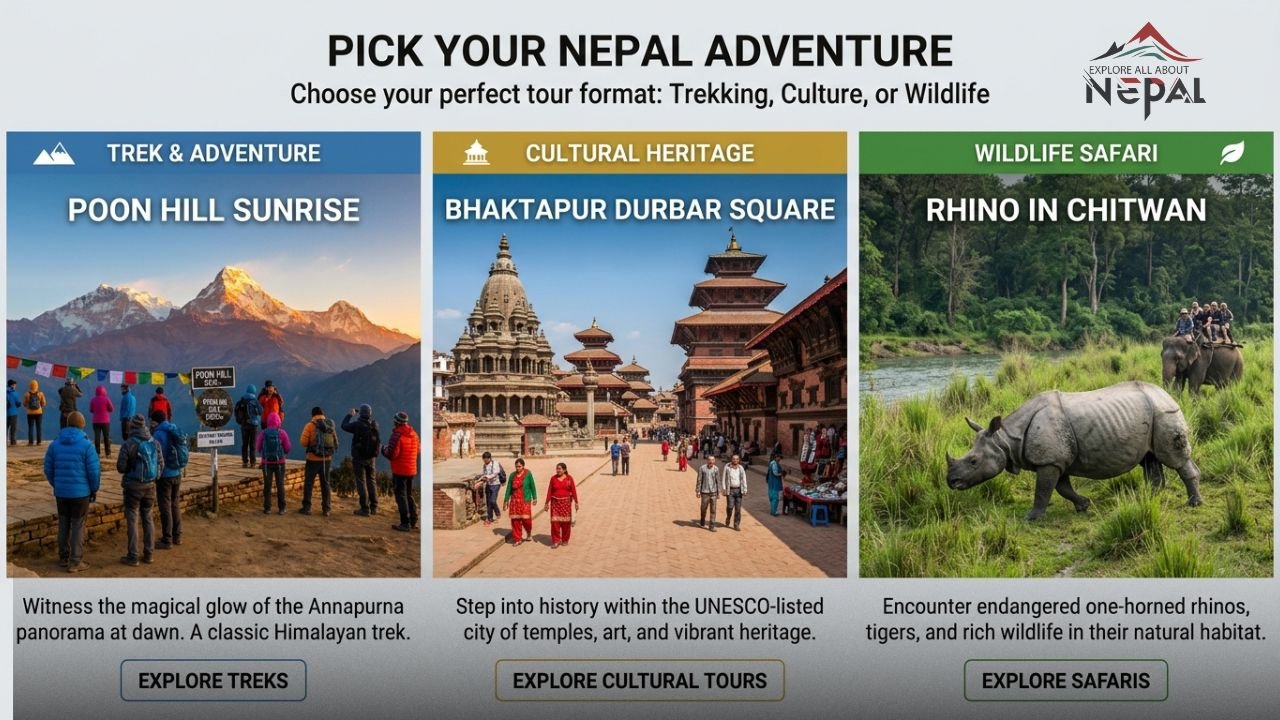
Rather than one “best tour,” match the trip to what you actually want. These are the three formats that work best for a first visit.
1. The classic combo tour (most first-timers should start here)
8–14 days. Roughly $900–$1,800 land-only. This is the Kathmandu + short trek + Chitwan loop I led with. You get the cultural heart of the country (Kathmandu Valley’s temples and Durbar squares), a real but achievable taste of the Himalaya, and the jungle lowlands for wildlife. It’s varied, it’s paced for someone not used to altitude, and it leaves you genuinely seeing Nepal rather than one slice of it.
The trek inside this combo is usually Poon Hill (4–5 days, tops out around 3,210 m) gentle, gorgeous sunrise over the Annapurnas, no serious altitude risk or Mardi Himal (4–5 days, ridgeline views, quieter). Both are ideal first treks.
2. The short trek-focused tour
5–8 days. Roughly $600–$1,200. If you’re fit and the mountains are the whole reason you’re coming, a dedicated trekking tour skips the jungle and gives you more days on the trail. Stick to Poon Hill or Mardi Himal for a first trek. Don’t let an operator upsell you to Everest Base Camp as a “beginner” trip it’s a 12-day commitment with real altitude, and squeezing it into a first visit with no buffer for the famously delayed Lukla flights is how people miss their flight home.
3. The no-trek cultural and wildlife tour
6–10 days. Roughly $700–$1,400. Not everyone wants to walk for a week, and that’s completely valid. This format goes deeper into the Kathmandu Valley Bhaktapur and Patan deserve real time adds Pokhara’s lakeside calm with a sunrise trip up Sarangkot, often a scenic Everest flight, and a longer Chitwan stay. You’ll feel like you saw the real Nepal without the altitude or the blisters.
How to vet a tour operator (the part that actually matters)
This is where your money is won or lost. A beautiful website costs $500; a competent, properly insured operation costs real money to run. Here’s how to tell them apart.
Check they’re government-registered. Legitimate Nepali operators are registered with the Department of Tourism and typically members of trade bodies like NMA (Nepal Mountaineering Association) or TAAN (Trekking Agencies’ Association of Nepal). Ask for it. Real ones answer instantly.
Confirm guides are licensed and insured. Your guide should hold a government trekking-guide license, and critically the operator should carry insurance for their own porters. Underinsured porters are a genuine ethical problem in this industry. A good operator volunteers this; a bad one gets vague.
Read recent, detailed reviews not the star average. Look for reviews that mention how the operator handled something going wrong: a weather delay, an altitude issue, a sick traveler. Anyone looks good when nothing goes wrong. You’re buying their judgment for when it does.
Get the itinerary in writing with inclusions listed line by line. “All-inclusive” means nothing until you see what’s on the list. Watch specifically for whether permits, all trek meals, and domestic flights are in or out.
Be suspicious of prices that are too low. A genuine Annapurna-region combo tour can’t be run well at $400. At that price, the savings come out of your guide’s wage, your porter’s insurance, or the quality of your teahouses. Pay the fair rate; the people carrying your bag at altitude are why it costs what it costs.
The red flags that should end the conversation
Walk away if an operator pressures you to pay the full amount in cash upfront, can’t produce a registration number, won’t name your actual guide before departure, or pads the itinerary with a dozen drive-by stops to look impressive. The “18 places in 10 days” itinerary is a classic first-timer trap it looks like value and delivers a blur of bus windows.
Don’t book the tour without sorting insurance
I’m going to be blunt because I’ve seen this go wrong. Even gentle first-timer treks like Poon Hill climb above 3,000 metres, and standard travel insurance frequently excludes trekking above that altitude. If something goes wrong up there, evacuation is by helicopter, billed at $3,000–$5,000+ before anyone discusses payment. Buy a policy that explicitly covers high-altitude trekking and helicopter evacuation, and read the altitude limit in the actual policy document not the marketing summary. Your tour operator won’t sell you this, and it’s the one piece of the trip you should never skip.
When to go book the right season
The season you choose matters more than the operator you choose. Get this wrong and even a great tour underdelivers.
- October–November (peak, best overall): Clear skies, stable weather, the Himalaya at its sharpest. Also the busiest—book your tour 2–3 months ahead, as the best small-group departures fill.
- March–April (excellent): Warm, clear, rhododendrons in bloom. My favorite for first-timers.
- December–February: Cold but quiet and cheaper; low treks like Poon Hill still work, high passes don’t, and Chitwan is pleasant.
- June–September (avoid for trekking): Monsoon rain, leeches, landslides, clouds where your mountain view should be, and grounded domestic flights. Cultural-and-Chitwan tours can still work; trekking tours can’t.
The mistake here: booking a cheap monsoon-season trek because it’s available and affordable, then standing in cloud where the Annapurnas should be. The discount is the warning.
What it really costs, all in
For a typical first trip, per person:
- Land tour package: $700–$1,800 (budget to comfortable)
- International flights: $900–$1,500 (US), £550–£850 (UK), AUD $1,100–$1,800 (AU)
- Travel insurance with altitude cover: $80–$200
- Tips: $100–$180 for a 10-day trip
- Personal spending, gear, drinks: $150–$400
So a realistic all-in first trip lands somewhere around $2,000–$3,500 per person, most of which is the tour and the flight. Knowing this stops the “why is the tour extra?” surprises that derail budgets.
FAQ
What is the best tour for first-time visitors to Nepal?
A small-group combo tour of 8–14 days covering Kathmandu sightseeing, a short trek like Poon Hill or Mardi Himal, and a Chitwan safari. It’s varied, paced for people new to altitude, and shows you the cultural, mountain, and jungle sides of Nepal in one trip. Budget $900–$1,800 land-only.
How much does a guided tour of Nepal cost?
Land-only packages run $700–$1,800 per person depending on comfort level, with mid-range tours around $1,000–$1,300. That typically excludes international flights, travel insurance, and tips, so plan for a realistic all-in cost of roughly $2,000–$3,500 including airfare.
Do beginners need a guide to trek in Nepal?
Yes, increasingly. Solo trekking in Nepal’s national parks and conservation areas is now restricted, and many regions require a licensed guide. For a first-timer, a guide also handles permits, altitude judgment, and logistics well worth it even where solo is still allowed.
Is Everest Base Camp good for first-time visitors?
For most beginners, no. EBC is a 12-day trek with serious altitude and unpredictable Lukla flights, leaving no buffer in a typical two-week trip. Start with Poon Hill or Mardi Himal; save Everest for a return visit with more days to spare.
When should I book a Nepal tour?
Book 2–3 months ahead for the October–November and March–April peak seasons, when the best small-group departures fill up. Off-season tours can be booked closer in, but avoid the June–September monsoon for any trekking-focused trip.
