
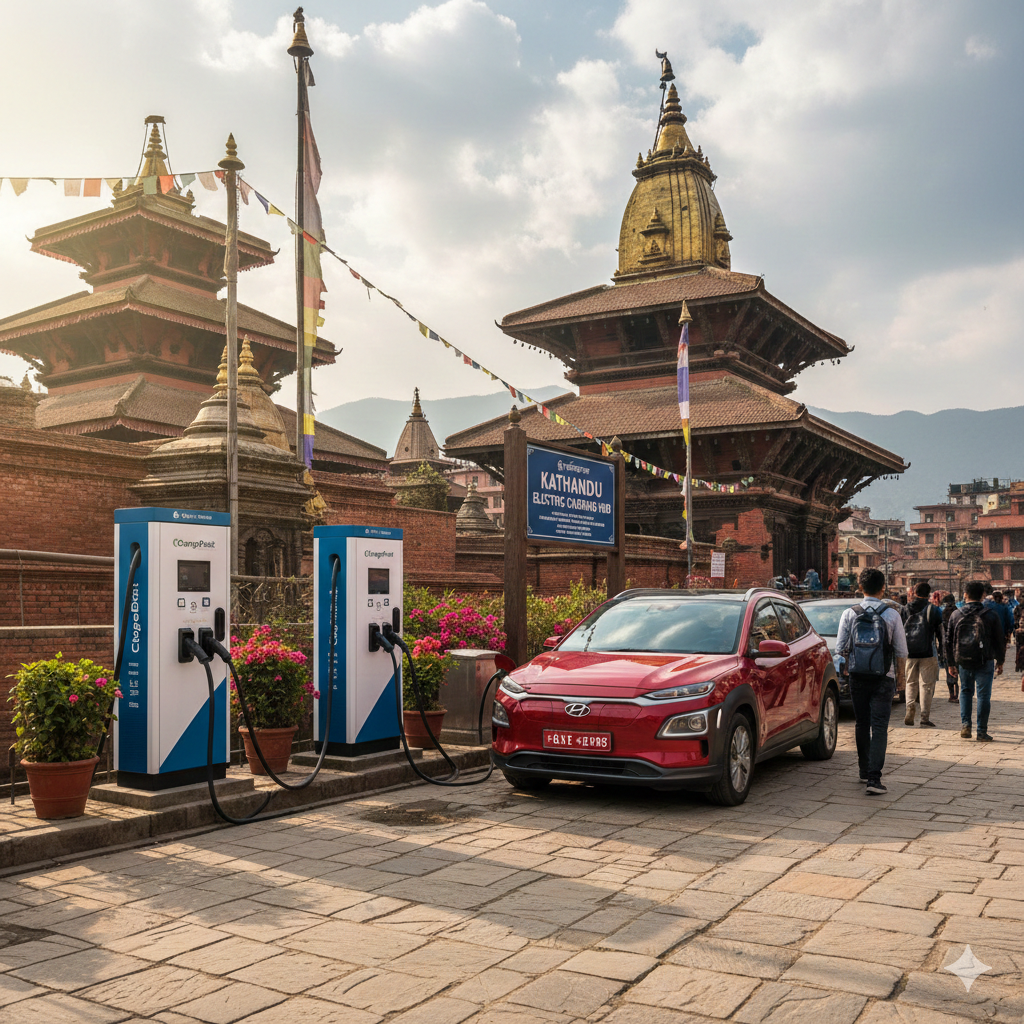

Electric vehicles (EVs) are rapidly transforming Nepal’s transportation sector, and the center of this change is Kathmandu. As fuel prices continue to rise, people are actively looking for affordable and sustainable alternatives. At the same time, increasing environmental awareness and supportive government policies are encouraging more individuals and businesses to shift toward electric mobility. Because of this growing adoption, the demand for charging station Kathmandu facilities has increased significantly in recent years.
Whether you already own an electric vehicle, are planning to purchase an EV soon, operate an electric taxi service, or manage a commercial or residential property, understanding the charging station Kathmandu ecosystem is extremely important. Reliable access to charging directly affects convenience, travel planning, and overall EV ownership experience. This comprehensive guide covers everything you need to know about charging station Kathmandu, including available locations, types of chargers, charging costs, future infrastructure plans, and practical tips for daily use.
Why Charging Station Kathmandu Is Becoming More Important
Kathmandu Valley is facing serious challenges such as air pollution, traffic congestion, and rising fuel dependency. Traditional fuel-powered vehicles contribute heavily to poor air quality, which affects public health and the environment. Electric vehicles provide a cleaner and more energy-efficient alternative, but they rely completely on a dependable charging network. This is why the development of charging station infrastructure has become a top priority for both government bodies and private investors.
Several key factors are driving the rapid growth of charging station:
Rapid increase in EV imports: More electric cars, scooters, and buses are entering Kathmandu every year, creating a higher demand for charging facilities.
Government tax incentives for electric vehicles: Reduced customs duties and supportive policies are making EVs more affordable for the public.
Rising fuel costs: High petrol and diesel prices are pushing people toward cost-effective electric options.
Demand for eco-friendly transportation: Citizens are becoming more conscious of pollution and climate change, increasing interest in EVs.
Expansion of ride-sharing and electric taxis: Commercial EV fleets require frequent and fast access to charging station locations.
Without a strong and well-distributed charging station Kathmandu network, the growth of electric vehicles would slow down, limiting their benefits. Fortunately, Kathmandu is making steady progress by expanding both public and private charging stations, ensuring a smoother transition toward clean and sustainable transportation.
Types of Charging Station Kathmandu Available Today
Understanding the different types of charging station options helps EV users plan their charging needs efficiently.
1. AC Charging Station Kathmandu
An AC charging station Kathmandu is the most commonly available type of electric vehicle charger in the city. These chargers are best suited for overnight charging or situations where the vehicle can remain parked for several hours. Because of their affordability and ease of installation, AC chargers form the foundation of the charging station Kathmandu network.
Features of AC Charging Station Kathmandu
Charging time: Usually takes around 6–8 hours to fully charge an electric vehicle, depending on battery size.
Ideal locations: Homes, apartment buildings, office parking areas, and hotels commonly use AC charging stations.
Lower installation cost: Compared to fast chargers, AC charging stations are more budget-friendly for individuals and businesses.
Wide availability: AC charging station facilities are spread across residential and commercial areas.
Many modern residential apartments and housing complexes in Kathmandu now include charging station Kathmandu AC chargers as a standard facility, making EV ownership more convenient for daily commuting.
2. DC Fast Charging Station Kathmandu
A DC fast charging station is designed to provide rapid and efficient charging for electric vehicles, making it a crucial part of the city’s growing EV infrastructure. As more people switch to electric cars for both personal and commercial use, DC fast chargers are becoming increasingly popular within the charging station Kathmandu network.
Features of DC Fast Charging Station Kathmandu
Charging time: DC fast chargers can recharge up to 80% of an electric vehicle’s battery within 30–60 minutes, depending on the battery capacity and charger power.
Ideal locations: Commonly installed along highways, at shopping malls, fuel stations, bus terminals, and high-traffic areas where quick turnaround is needed.
Higher installation cost: These chargers require advanced electrical systems and higher power input, making them more expensive to install than AC chargers.
Essential for commercial EV fleets: Electric taxis, ride-sharing services, delivery vehicles, and public transport depend heavily on DC charging station facilities to stay operational throughout the day.
As EV usage continues to grow across the valley, DC charging station Kathmandu locations are expanding rapidly. This expansion is helping reduce range anxiety, support commercial EV operations, and make long-distance electric travel more practical and reliable in and around Kathmandu.