
Janakpur rewards travelers who know where to look.
Most visitors see the Janaki Mandir and leave. But Sita’s city holds sacred ponds, a mural-covered railway station, living art studios, and temples with stories most guidebooks never mention.
Here are the 12 best things to do from the essential to the hidden.
Quick Reference: Janakpur’s Top Sights
| # | Attraction | Best For | Time Needed |
|---|---|---|---|
| 1 | Janaki Mandir | The essential visit | 1–2 hours |
| 2 | Evening aarti | Spiritual atmosphere | 45 min |
| 3 | Ram Sita Vivah Mandap | Ramayana pilgrimage | 30 min |
| 4 | Ram Mandir | Nepali pagoda architecture | 30 min |
| 5 | Dhanush Sagar | Sacred bathing tank | 30 min |
| 6 | Ganga Sagar | Dawn atmosphere | 30–45 min |
| 7 | Mithila art workshops | Living culture, souvenirs | 1–2 hours |
| 8 | Railway station murals | Photography | 30–45 min |
| 9 | Rickshaw city loop | Local life | 2–3 hours |
| 10 | Dolakha Bhimsen Mandir | Hidden gem | 30 min |
| 11 | Ratna Sagar Temple | Peaceful escape | 30 min |
| 12 | Maithili food crawl | Local flavors | 1–2 hours |
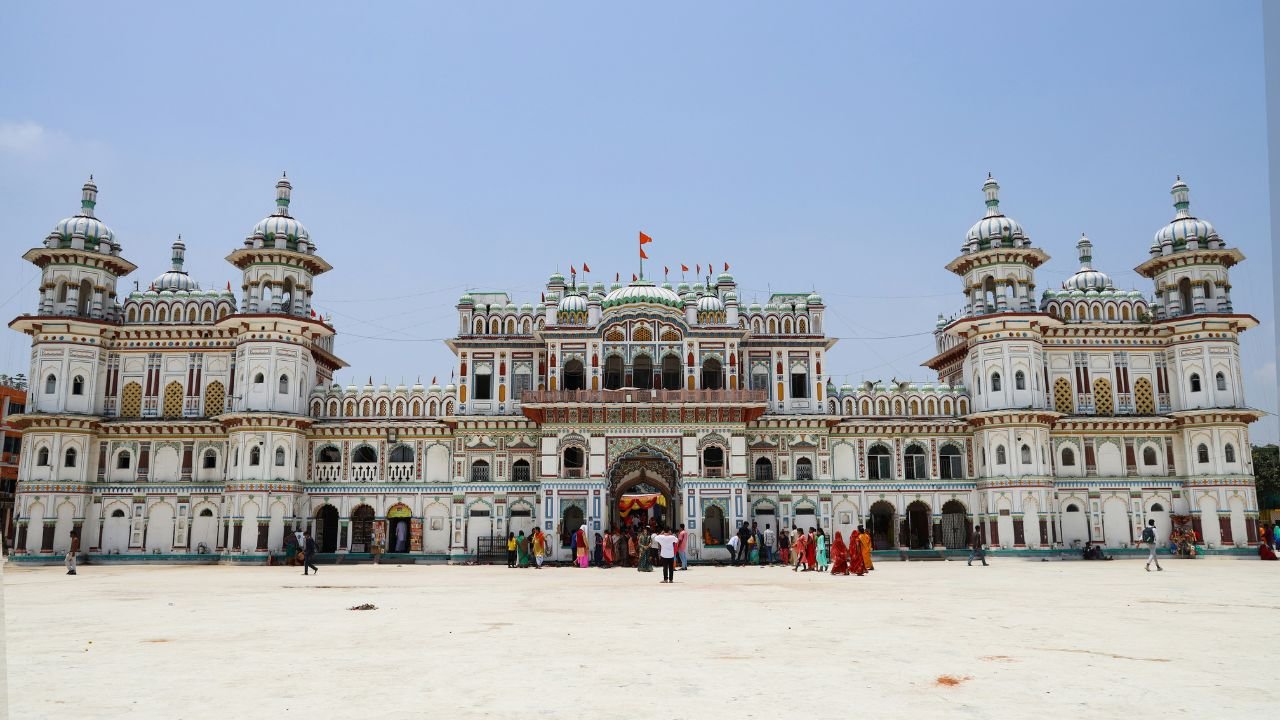
Best Things to Do in Janakpur: Photo by Janak Shrestha on Unsplash
1. Visit the Janaki Mandir — Nepal’s Largest Temple
Start where everyone starts because nothing prepares you for it.
The Janaki Mandir rises in gleaming white marble, blending Mughal domes and Rajput arches into the most architecturally unusual temple in Nepal. Built in 1910 for nine lakh rupees hence its nickname, the Nau Lakha Mandir it marks the spot where Goddess Sita is believed to have been born.
This is an active place of devotion, not a museum. Pilgrims stream through all day, and respectful visitors of any faith can watch or join the worship rituals.
Best times: Early morning (5–7 AM) for calm darshan. Entry is free.
2. Experience the Evening Aarti
Come back at dusk. This is Janakpur’s magic hour.
Around 6–7:30 PM, the evening aarti fills the Janaki Mandir with lamplight, bells, and chanting. The white marble glows orange. Pilgrims sing. The whole courtyard becomes something you feel rather than photograph.
If you do only two things in Janakpur, this is the second.
3. Stand at the Ram Sita Vivah Mandap
A short walk southwest of the main temple stands a marble pavilion marking the very spot where, according to tradition, Ram and Sita were married.
Life-size statues recreate the divine wedding. During Vivah Panchami (November–December), thousands of pilgrims gather here as the marriage is reenacted in one of Nepal’s great religious festivals.
4. See Ram Mandir — The City’s Oldest Temple
Built in the late 1700s, Ram Mandir predates the Janaki Mandir by more than a century.
And it looks completely different classic Nepali pagoda architecture, tiered and wooden, standing in quiet contrast to the Janaki Mandir’s Indian-influenced marble. The two temples, minutes apart, tell the story of a city between two cultures.
Visit during Ram Navami or Dashain to see it at its liveliest.
5. Walk Around Dhanush Sagar
The largest ceremonial tank in the city sits near Ram Mandir, ringed by small shrines.
Pilgrims take ritual baths in its sacred water legend links the pond to fragments of Shiva’s mighty bow, which Ram broke to win Sita’s hand. Combine it with Ram Mandir as one easy stop.
6. Catch Dawn at Ganga Sagar
Of Janakpur’s dozens of sacred ponds, Ganga Sagar is the most atmospheric.
Come at sunrise, when bathers descend the ghats and prayers drift across the water. Beside the pond stands a quiet treasure a 70-year-old library, a small echo of Mithila’s ancient reputation as a kingdom of scholars.
During Chhath festival (October–November), this pond becomes the spiritual heart of the entire region.
7. Watch Mithila Artists at Work
Janakpur’s art tradition is alive and you can watch it happen.
Mithila painting has been passed from mother to daughter for centuries: bold geometric patterns, Ramayana scenes, and nature motifs, traditionally painted on home walls with fingers and bamboo twigs.
Visit the Janakpur Women’s Development Center to see artists at work and buy authentic pieces your money goes directly to the women who painted them. Smaller studios near the temple offer the same, and some run short painting classes.
A genuine Mithila painting is the best souvenir in Nepal almost nobody brings home.
8. Photograph the Railway Station
Nepal has exactly one operational railway and it starts here.
Janakpur Dham station connects the city to Jaynagar across the Indian border. But even non-travelers should visit: the heritage station is covered in bright Mithila murals, with colorful trains and busy platform life making it one of the city’s best photography stops.
Morning light is best.
9. Take a Rickshaw Loop Through the City
The best way to see everyday Janakpur is from a cycle-rickshaw.
Hire one for a half-day (around NPR 500–800) and loop through the city past Sita Chowk in the Mills Area, through the bazaars, between the ponds. The ride itself is the experience: street life, temple glimpses, chai stops, and a Terai city moving at its own rhythm.
10. Find the Triangular Idol at Dolakha Bhimsen Mandir
Here’s one almost no visitor sees.
This temple is dedicated to Bhim of the Mahabharata a rarity in a city built entirely around the Ramayana and houses a unique triangular idol. A short rickshaw detour, and you’ll likely have it to yourself.
11. Relax at Ratna Sagar Temple
Dedicated to Ram and Sita together, Ratna Sagar sits beside its own sacred pond and garden.
It’s peaceful, uncrowded, and beautiful in late-afternoon light the perfect quiet counterpoint to the main temple’s energy.
12. Eat Your Way Through Maithili Cuisine
End with the food. Janakpur eats differently from the rest of Nepal.
What to try:
- Maithili thali — the regional plate, blending Nepali and Bihari flavors
- Malpua — syrup-soaked sweet pancakes from street stalls
- Peda and jalebi — temple-town sweets at their best
- Chai — everywhere, constantly, correctly
Vegetarian food dominates and excels. The stalls around the Janaki Mandir are the place to graze between sights.
Suggested One-Day Route
Dawn: Ganga Sagar → Morning: Janaki Mandir + Vivah Mandap → Late morning: Mithila art workshops → Lunch: Maithili thali → Afternoon: Rickshaw loop (railway station, Sita Chowk, Dolakha Bhimsen, Ratna Sagar) → Dusk: Dhanush Sagar + Ram Mandir → Evening: Aarti at Janaki Mandir
Two days? Slow everything down and add a ride on Nepal’s only train.
Frequently Asked Questions
What are the best things to do in Janakpur?
The essentials are the Janaki Mandir (Nepal’s largest temple), the evening aarti, the Ram Sita Vivah Mandap wedding site, the sacred ponds Dhanush Sagar and Ganga Sagar, Mithila art workshops, and the mural-covered railway station of Nepal’s only operational railway.
How many days do you need in Janakpur?
One full day covers the highlights comfortably. Two days lets you slow down, add the train experience, and catch both dawn and dusk at the ponds and temples.
Is Janaki Mandir free to enter?
Yes entry is free for respectful visitors of all faiths. Dress modestly and avoid photography inside the inner sanctum.
What is Janakpur famous for shopping?
Authentic Mithila paintings bought directly from women artists at the Janakpur Women’s Development Center or studios near the temple. It’s one of Nepal’s most meaningful souvenirs.
What festivals are best in Janakpur?
Vivah Panchami (Nov–Dec) reenacts Ram and Sita’s wedding and is the city’s biggest event. Chhath (Oct–Nov) transforms Ganga Sagar, and Ram Navami (Mar–Apr) fills Ram Mandir. Book accommodation months ahead for Vivah Panchami.
Can you visit Janakpur’s attractions on foot?
The temple zone Janaki Mandir, Vivah Mandap, Ram Mandir, and both main ponds is fully walkable. For the railway station, Sita Chowk, and outlying temples, a half-day cycle-rickshaw (NPR 500–800) is the classic option.
