
Janakpur is the Nepal almost no Western traveler sees.
No mountains. No trekking. No Thamel-style tourist strip.
Instead: the most architecturally unusual temple in Nepal, a living art tradition painted by women’s hands for centuries, over 100 sacred ponds, and the birthplace of one of Hinduism’s most beloved figures Goddess Sita.
If Lumbini is where Buddhism began, Janakpur is where the Ramayana lives.
This is the guide to Nepal’s most underrated city.
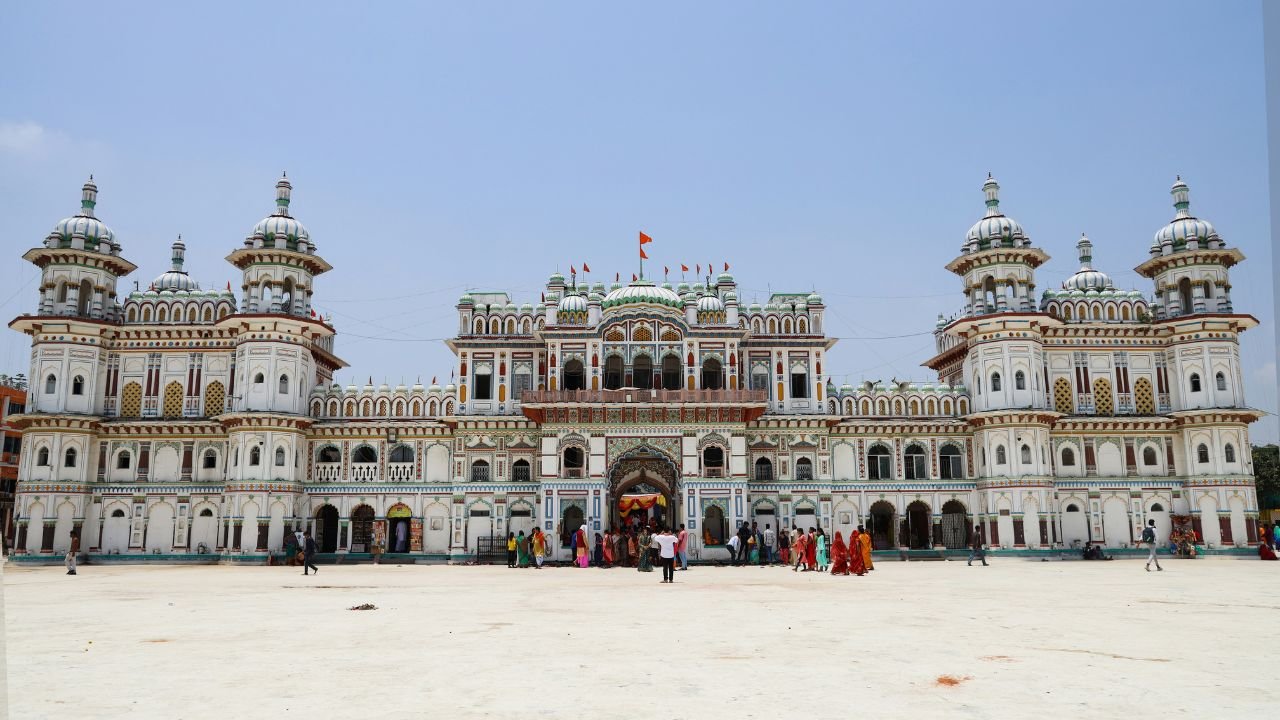
janakpur Photo by Janak Shrestha on Unsplash
Quick Reference: Janakpur at a Glance
| Detail | Info |
|---|---|
| Famous as | Birthplace of Goddess Sita (Ramayana) |
| Star attraction | Janaki Mandir (built 1910) |
| Location | Southern Terai, near Indian border |
| From Kathmandu | 35–40 min flight or 8–10 hr drive |
| Best months | October–March |
| Biggest festival | Vivah Panchami (Nov–Dec) |
| Temple entry | Free |
| Unique claim | Nepal’s only operational railway |
Why Janakpur Matters
Three thousand years ago, this region was Mithila capital of the Videha kingdom, ruled by King Janak, famed as a center of learning and philosophy.
According to the Ramayana, King Janak found a baby girl in a furrow while plowing a field. He raised her as his daughter. Her name Sita literally means “furrow.”
Sita grew up here. And here, Lord Ram won her hand by lifting and breaking Shiva’s mighty bow. Their wedding the divine marriage at the heart of the Ramayana happened in Janakpur.
For hundreds of millions of Hindus, this isn’t just mythology. It’s sacred geography. And Janakpur is its capital.
The Janaki Mandir: Nepal’s Most Unusual Temple
Nothing else in Nepal looks like this building.
The Janaki Mandir rises 50 meters in gleaming white a fusion of Mughal and Rajput architecture with domes, arches, latticed windows, and 60 interior rooms. It looks transported from Rajasthan, not built in Nepal.
The story: Queen Vrisha Bhanu of Tikamgarh (in today’s India) built it in 1910 at a cost of nine lakh rupees a fortune so famous the temple is still nicknamed “Nau Lakha Mandir” (the Nine Lakh Temple).
It marks the spot where Sita is believed to have been born. The inner sanctum holds her image; the walls are painted with Ramayana scenes.
Visiting essentials:
- Entry: Free, all respectful visitors welcome regardless of religion
- Best times: Early morning (5–7 AM) for peaceful darshan, or evening (6–7:30 PM) for the grand aarti
- The aarti is the moment — lamps, chanting, and the white marble glowing in flame light. Do not miss it
- Photography: Fine in outer areas; not inside the sanctum
- Dress: Shoulders and knees covered
Right beside the temple stands the Ram Sita Vivah Mandap a pavilion with life-size statues marking the exact spot of the divine wedding.
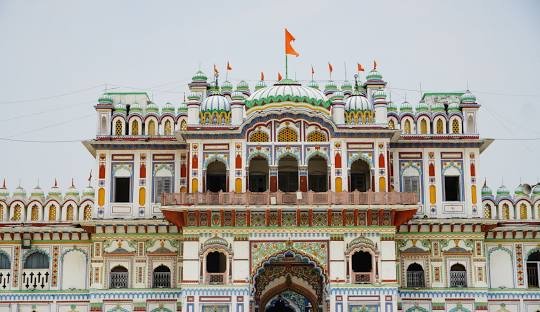
Janakpur: Image credit goes to original creator
Mithila Art: Painted by Women’s Hands
Janakpur’s second treasure isn’t a building. It’s a living tradition.
Mithila painting (also called Madhubani art) is one of South Asia’s great folk art forms intricate geometric patterns, Ramayana scenes, and nature motifs in bold color. Traditionally, women painted them on the mud walls of homes using fingers and bamboo twigs, passing designs from mother to daughter for generations.
In Janakpur, this tradition is alive and working:
Janakpur Women’s Development Center — the essential stop. Watch artists at work, learn the symbolism, and buy authenticated pieces where money goes directly to the women who painted them.
Artist studios and cooperatives near the temple small workshops where you can watch, buy originals, or even join a short class.
The city itself murals cover walls across Janakpur, including the famously painted railway station.
A genuine Mithila painting is the best souvenir in Nepal that almost no tourist brings home.
The City of Ponds
Janakpur holds a remarkable count of sacred ponds legend says 72 were created for the celestial guests attending Ram and Sita’s wedding; today over 100 exist across the city.
The two essentials, both walkable from the temple:
Dhanush Sagar — where pieces of Shiva’s broken bow are said to have fallen.
Ganga Sagar — the most atmospheric, especially at dawn prayers or during evening lamp-floating. During Chhath festival, this pond becomes the spiritual center of the entire region.
Nepal’s Only Railway
Here’s a fact that surprises even Nepalis’ visitors: Nepal has exactly one operational railway and it runs from Janakpur.
The line connects Janakpur to Jaynagar across the Indian border. The station itself is a photo destination heritage architecture covered in bright Mithila murals, with colorful trains to match.
Even if you don’t ride it, visit the station. Morning light, painted trains, and platform life make it one of Janakpur’s best photography stops.
Festivals: When Janakpur Explodes
Vivah Panchami (November–December)
The big one. Janakpur reenacts the wedding of Ram and Sita, and the entire city becomes the venue processions, music, rituals, and pilgrims by the tens of thousands from Nepal and India.
Book accommodation months ahead. The city fills completely.
Ram Navami (March–April)
Lord Ram’s birth celebration massive gatherings at the temples.
Chhath (October–November)
The Terai’s most visually stunning festival. Women stand in the sacred ponds offering prayers to the sun at dawn and dusk. Ganga Sagar during Chhath is unforgettable.
Parikrama (February–March)
Up to 100,000 pilgrims circumambulate the city on the full moon day.
Getting to Janakpur
By air (recommended): Daily flights from Kathmandu, 35–40 minutes, landing at Janakpur Airport (JKR).
By road: 8–10 hours from Kathmandu (about 390 km). Doable but long the flight is worth it.
Combining with Chitwan: Janakpur sits 5–6 hours’ drive from Chitwan. Wildlife safari + Ramayana pilgrimage makes a natural Terai arc many travelers never think of.
[Planning Chitwan too? See our Chitwan National Park guide.]
Where to Stay and What to Eat
Stay near the Janaki Mandir everything essential is walkable, and you’re steps from morning puja and evening aarti. Hotels are simple and honest; this is a pilgrimage city, not a resort town. Expect $15–$50/night.
Eat like a pilgrim:
- Maithili thali — the local plate, blending Nepali and Bihari flavors
- Street sweets — malpua, peda, and jalebi from stalls around the temple
- Vegetarian food dominates and excels here
Nightlife means the evening aarti, glowing night markets, and chai and that’s exactly right for this city.
Suggested One-Day Itinerary
5:30 AM — Dawn at Ganga Sagar, morning prayers
7:00 AM — Janaki Mandir morning darshan
9:00 AM — Breakfast: chai and malpua in the bazaar
10:00 AM — Janakpur Women’s Development Center (Mithila art)
1:00 PM — Maithili thali lunch
3:00 PM — Railway station murals + Ram Mandir
5:00 PM — Dhanush Sagar walk
6:00 PM — Evening aarti at Janaki Mandir the finale
Frequently Asked Questions
What is Janakpur famous for?
Janakpur is the birthplace of Goddess Sita and the site of her marriage to Lord Ram in the Ramayana. Its landmarks include the magnificent Janaki Mandir, living Mithila art traditions, over 100 sacred ponds, and Nepal’s only operational railway.
Is the Janaki Mandir open to non-Hindus?
Yes the temple welcomes all respectful visitors regardless of religion. Entry is free. Dress modestly with shoulders and knees covered, and avoid photography inside the inner sanctum.
How do I get to Janakpur from Kathmandu?
Fly (35–40 minutes, daily flights) or drive/bus (8–10 hours, about 390 km). The flight is strongly recommended for most travelers.
When is the best time to visit Janakpur?
October to March for comfortable Terai weather. Time your visit for Vivah Panchami (Nov–Dec) to witness the spectacular reenactment of Ram and Sita’s wedding but book accommodation months ahead.
What is Mithila art?
A centuries-old folk painting tradition of the Mithila region, traditionally created by women on home walls using fingers and bamboo twigs geometric patterns and Ramayana scenes in bold color. Janakpur’s Women’s Development Center is the best place to see artists at work and buy authentic pieces.
What is the Nau Lakha Mandir?
The Janaki Mandir’s nickname “Nine Lakh Temple” from its legendary construction cost of nine lakh rupees in 1910, a massive fortune at the time.
Does Nepal really have only one railway?
Yes the Janakpur–Jaynagar line connecting to India is Nepal’s only operational railway. The mural-covered heritage station is a destination in itself.
Is Janakpur safe for tourists?
Yes it’s a welcoming pilgrimage city with good basic infrastructure. It’s conservative and spiritual in character; dress modestly and expect simple (not luxury) tourist amenities.
