
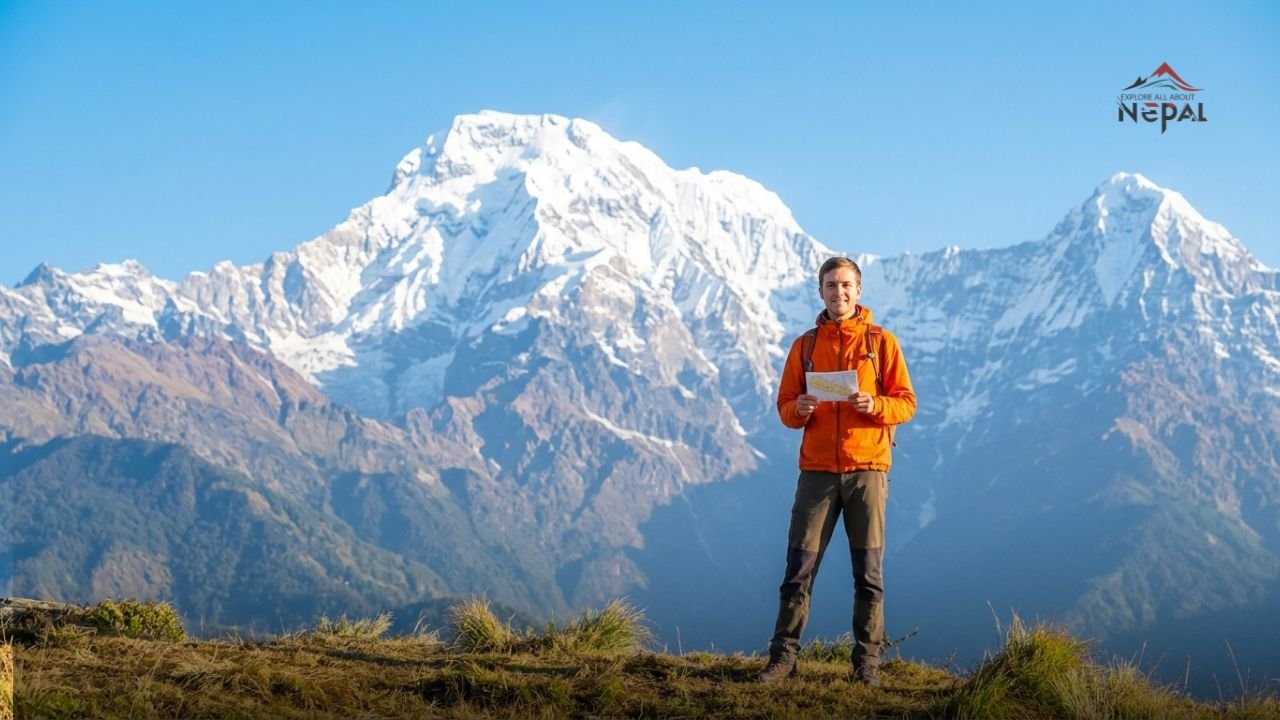
Here’s the short version, so you can stop scrolling: fly into Kathmandu, spend two days there, fly to Pokhara, trek the Annapurna Base Camp route for seven days, recover by the lake for a day, then drop down to Chitwan for a safari before flying home. That’s the route that works for most first-timers with 14 days, average fitness, and a desire to see mountains and jungle without spending the whole trip in a jeep. Budget roughly $1,200–$2,200 per person excluding international flights, depending on whether you trek independently or with a guided company.
Now the details that actually matter because the difference between a great Nepal trip and a miserable one usually comes down to four or five decisions people make badly before they leave home.
The two-week Nepal itinerary at a glance
Here’s the skeleton. I’ll defend each choice below.
- Days 1–2: Kathmandu (arrive, acclimatize to the chaos, sort permits)
- Day 3: Fly or drive to Pokhara
- Days 4–10: Annapurna Base Camp (ABC) trek
- Day 11: Pokhara rest day
- Day 12: Drive to Chitwan National Park
- Days 13–14: Chitwan safari, then fly back to Kathmandu for your departure
That’s tight but not punishing. It assumes you land with no jet-lag buffer if you can add a 15th day, put it at the front in Kathmandu, not the back.
Why this route, and not the Everest one
Most people arrive fixated on Everest Base Camp. I get it. But EBC eats your whole two weeks and then some it’s a 12-day trek minimum, plus the notoriously delayed Lukla flights that can strand you for a day or two each direction. Build a 14-day trip around EBC and one bad weather window means you miss your flight home.
Annapurna Base Camp gives you the same “standing in a glacial amphitheatre surrounded by 7,000-metre peaks” payoff in seven walking days, with a road-accessible trailhead an hour from Pokhara. No mountain flight roulette. This is the single biggest thing most first-timers get wrong: choosing a trek that doesn’t fit the calendar they actually have.
If you’re a confident hiker and want something quieter, swap ABC for the Mardi Himal trek (4–5 days, ridgeline views, far fewer people). If you don’t want to trek at all, see the no-trek variation further down.
Nepal Itinerary 2 Weeks
Days 1–2: Kathmandu without wasting them
You’ll land at Tribhuvan International Airport (TIA) tired and a little overwhelmed. That’s normal. Base yourself in Thamel it’s touristy and loud, but it’s where the gear shops, trekking agencies, and permit logistics live, and that’s exactly what you need on day one.
Mid-range rooms in Thamel run $25–$45 a night; clean guesthouses go for $12–$18. Spend the daylight hours at Boudhanath Stupa (entry NPR 400, about $3) and Patan Durbar Square (NPR 1,000, about $7.50) both are walkable, photogenic, and don’t demand a full day. Skip trying to “see everything.” You’ll be back through Kathmandu at the end.
Use day two to handle your permits and gear, not sightseeing.
Permits you actually need
For the Annapurna region you need two:
- ACAP (Annapurna Conservation Area Permit): NPR 3,000 for foreign nationals (about $22), or NPR 1,000 for SAARC nationals.
- TIMS card (Trekkers’ Information Management System): NPR 2,000 (about $15) for individual trekkers; cheaper if you go through an agency.
You can get both at the Nepal Tourism Board office in Kathmandu or in Pokhara. Bring two passport photos and your passport. Here’s what trips people up: as of recent rule changes, solo trekking in Nepal’s national parks and conservation areas is officially restricted many regions now require a licensed guide. Rules shift year to year and enforcement varies, so confirm the current requirement before you bank on going fully solo. If you’re planning to trek independently to save money, check this first; it may make the guided-tour math change.
Sort your gear here if you didn’t bring it
Thamel is full of gear shops selling both real and convincingly fake brand-name kit. Genuine gear is a fraction of Western prices; the knockoffs are cheaper still and fine for a single trek. The items worth getting right because being cold or blistered at altitude ruins everything are your boots, a proper down jacket, and a sleeping bag rated to at least -10°C. If you’ve invested in good boots at home, break them in before you fly; new boots on day one of a seven-day trek is a classic, avoidable mistake.
Day 3: Getting to Pokhara
Two options. The tourist bus is $10–$30 and takes 6–8 hours on a road that’s scenic, winding, and occasionally maddening. The 25-minute flight is $100–$130 and saves you most of a day. If your two weeks are tight and they are fly. The time you save is worth more than the money.
Pokhara is the launchpad for Annapurna and a genuinely pleasant lakeside town. Arrive, finalize permits if you didn’t in Kathmandu, eat well, and sleep. Lakeside guesthouses run $15–$40.
Days 4–10: The Annapurna Base Camp trek
This is the heart of the trip. Seven days, roughly 70 km round trip, climbing from around 1,100 m to 4,130 m at base camp. You’ll pass through terraced farmland, rhododendron forest, and Gurung villages before the valley narrows into the high mountain sanctuary.
A rough daily shape:
- Day 4: Drive to trailhead (Nayapul or Siwai), trek to Chhomrong or Jhinu
- Days 5–6: Climb through Bamboo, Dovan, Himalaya to Deurali and Machhapuchhre Base Camp
- Day 7: Reach Annapurna Base Camp sunrise here is the reason you came
- Days 8–10: Descend, often via the hot springs at Jhinu Danda
You’ll sleep in teahouses simple lodges with a bed and a shared dining room. Reckon on $25–$40 a day all-in for a bed, three meals, and the inevitable tea, with prices climbing the higher you go (everything up there is carried in on someone’s back). Bring cash; there are no ATMs on the trail.
Guided, porter, or fully independent?
Three models, and the right one depends on your budget and the current solo-trekking rules:
A full guided package through a reputable agency runs $700–$1,400 for the ABC trek and bundles your guide, permits, teahouse stays, and often transport. It’s the least hassle and, given the guide requirement, increasingly the default.
Hiring just a porter-guide independently costs around $25–$35 a day and is the sweet spot for fit, experienced trekkers someone to carry the heavy load and read the weather, without a full package price.
Going fully independent is cheapest but, as noted, may no longer be permitted in this region. Don’t plan around it without confirming.
Don’t skip travel insurance this is where it earns its keep
I’m blunt about this because I’ve watched it go wrong for people. Standard travel insurance often excludes trekking above 3,000 metres, and ABC tops out above 4,000. If you have an altitude emergency at base camp, the way down is a helicopter, and that helicopter is billed at $3,000–$5,000+ before anyone asks how you’ll pay. Buy a policy that explicitly covers high-altitude trekking and helicopter evacuation. Read the altitude limit in the fine print—not the marketing page. This is the one expense on the whole trip you should not cut.
Altitude is real even on this “easy” trek
ABC isn’t technical, but you gain serious elevation. Mild headaches and breathlessness are normal; worsening headache, nausea, confusion, or a wet cough are not those mean descend, now. Build the itinerary above as written (it has built-in gradual gain), drink far more water than feels necessary, and don’t let summit-fever push you up when your body’s telling you no. The mountain will still be there next year.
Day 11: Pokhara, and you’ve earned it
Come down, drop your pack, and do nothing demanding. Rent a rowboat on Phewa Lake, get the best meal you’ve had in a week, sleep in an actual bed. If you’ve got restless energy, paragliding off Sarangkot is world-class here around $80–$90 for a tandem flight with a Himalayan backdrop.
Day 12: Down to Chitwan
A 4–5 hour drive (or short flight to Bharatpur) drops you from mountains to subtropical lowland. The contrast is the point Nepal isn’t only Himalaya. Chitwan National Park is where you trade fleece for a sun hat.
Days 13–14: Chitwan safari
Spend your last full days on jeep safaris and guided walks looking for one-horned rhinos, gharial crocodiles, and if you’re lucky a Bengal tiger. Park entry is around NPR 2,000 ($15) per day, and most people book a 2-night lodge package ($150–$350) that bundles guides, meals, and activities, which is genuinely the easier way to do it here. Then fly Bharatpur–Kathmandu (about 25 minutes) for your international departure.
The no-trek variation
Not everyone wants seven days of walking, and that’s fine. Swap the trek for a slower cultural-and-wildlife loop: more time in the Kathmandu Valley (Bhaktapur deserves a full day), the lakeside calm of Pokhara with day hikes to Sarangkot for sunrise, a flightseeing trip past Everest, and a longer Chitwan stay. You’ll still feel like you saw the real Nepal, minus the altitude and the blisters.
When to go this makes or breaks the trip
Season isn’t a detail here; it determines whether you see anything at all.
- October–November (best): Clear skies, stable weather, prime mountain views. Also the busiest book teahouses and guides ahead.
- March–April (excellent): Rhododendrons in bloom, warm, clear. My personal favorite for ABC.
- December–February: Cold and quiet; ABC is doable but high passes get snowed in and nights are brutal. Lowland Chitwan is lovely.
- June–September (avoid for trekking): Monsoon. Leeches, landslides, clouds where your mountain view should be, and grounded flights. Chitwan-and-culture trips can still work, but skip the high trek.
The mistake here: booking the trip around your own calendar without checking Nepal’s. A two-week itinerary in late July will deliver mostly rain and disappointment no matter how well you plan the logistics.
What this trip actually costs
Per person, two weeks, excluding international airfare:
- Budget independent (where permitted): $1,000–$1,400
- Mid-range with porter-guide and better rooms: $1,500–$2,000
- Comfortable, mostly guided/packaged: $2,200–$3,000+
International flights from the US run $900–$1,500 return depending on season and how early you book; from the UK, often £550–£850; from Australia, AUD $1,100–$1,800. There’s no way to fly Western-carrier nonstop you’ll connect through the Gulf, Delhi, or a Southeast Asian hub. Book early for October–November; those seats vanish.
FAQ
Is two weeks enough for Nepal?
Yes comfortably, if you don’t try to do everything. Two weeks is enough for one good trek plus a cultural and wildlife taste of the country, which is the itinerary above. It is not enough for Everest Base Camp plus everything else; pick one big trek and build around it.
Can I do Everest Base Camp in a two-week Nepal itinerary?
Technically, just barely EBC is a 12-day trek, which leaves almost nothing for arrival buffers or Lukla flight delays. One weather day and you miss your flight home. If EBC is non-negotiable, plan for 16–18 days total, not 14.
Do I need a guide to trek in Nepal?
Increasingly, yes. Solo trekking in Nepal’s national parks and conservation areas has been restricted in recent years, and many regions now require a licensed guide. Rules and enforcement change, so confirm the current requirement for your specific trek before assuming you can go solo.
How much should I budget for two weeks in Nepal?
Plan on $1,200–$2,200 per person on the ground (excluding international flights), depending on whether you trek independently or take a guided package. Add your international airfare on top—$900–$1,500 from the US.
What’s the best time of year for a two-week trip?
October–November for the clearest mountain views, or March–April for spring blooms and warm, stable weather. Avoid June–September monsoon brings rain, landslides, leeches, and grounded flights that wreck mountain itineraries.
