
Long before sunrise touches the snow-covered peaks of the Himalayas, Nepal’s wilderness is already awake.
In the misty grasslands of Chitwan National Park, one-horned rhinos move silently through tall elephant grass dripping with dew. Somewhere deep inside the forest, a Bengal tiger disappears into shadow while the distant cry of peacocks echoes across riverbanks wrapped in morning fog. Far to the west, in the untouched jungles of Bardia National Park, fresh paw prints appear beside muddy trails where wild elephants roam beneath towering sal trees.
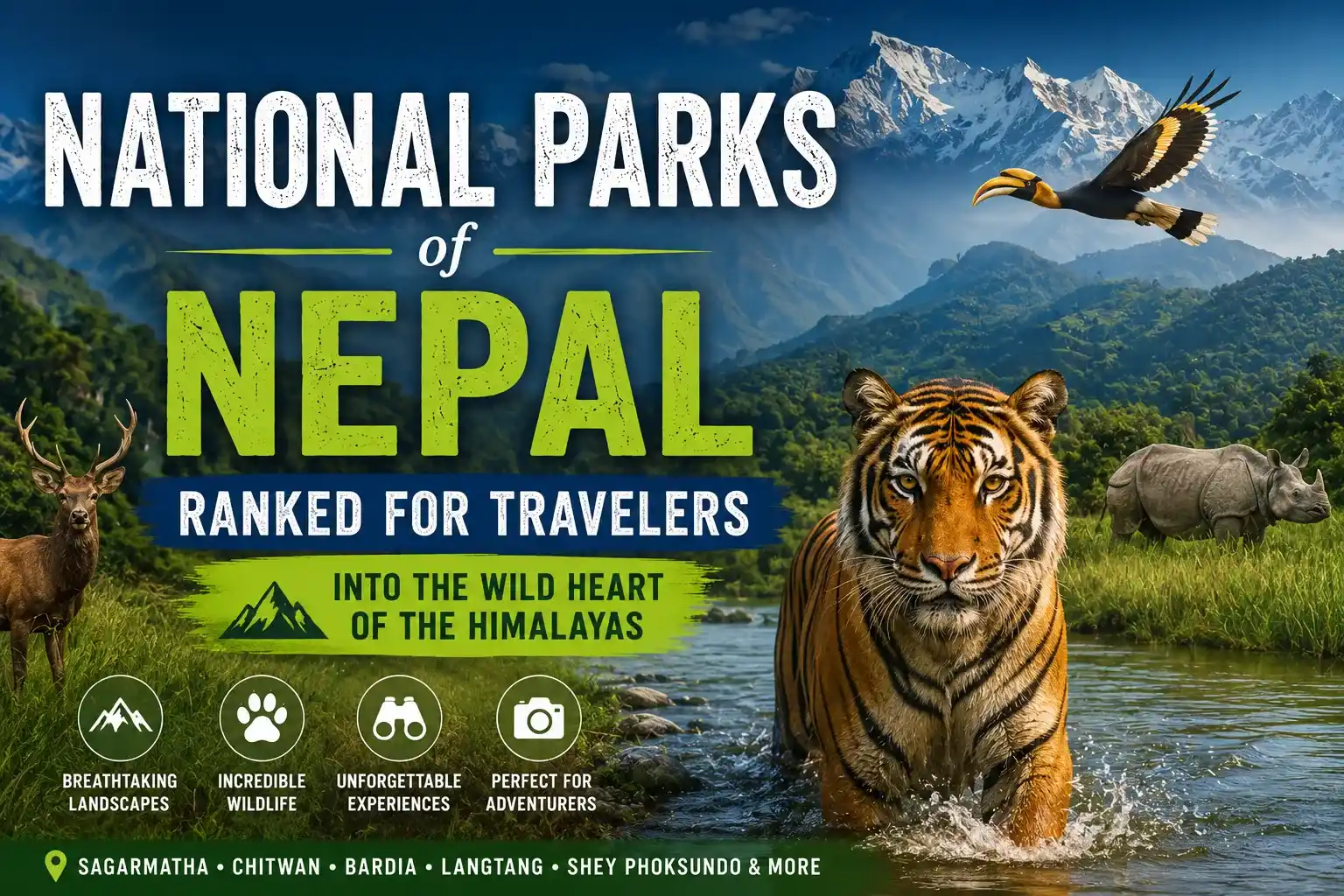
National Parks of Nepal Ranked for Travelers: Into the Wild Heart of the Himalayas
Meanwhile, high above the clouds in Sagarmatha National Park, prayer flags flutter in freezing Himalayan wind as trekkers begin walking beneath Mount Everest. Yaks move slowly along ancient mountain paths connecting remote Sherpa villages where Buddhist monasteries cling to cliffs beneath glaciers and icefalls. In Nepal’s hidden alpine valleys, snow leopards remain invisible among jagged Himalayan ridges while red pandas sleep inside moss-covered forests thousands of meters above sea level.
This extraordinary contrast is what makes the National Parks of Nepal unlike anywhere else on Earth.
Within a single country, travelers can experience dense subtropical jungles, glacial mountain deserts, sacred Himalayan lakes, wetlands filled with migratory birds, and remote valleys where ancient cultures still survive largely unchanged by modern life. Nepal may be geographically small, but its biodiversity, landscapes, and wilderness experiences are immense.
For adventure travelers, wildlife photographers, trekkers, and nature lovers, Nepal offers one of the most emotionally powerful travel experiences in Asia. The country’s national parks are not simply protected areas they are living worlds where wildlife, spirituality, mountains, rivers, and human culture continue to exist in remarkable balance.
This guide ranks the best National Parks of Nepal for travelers, exploring everything from legendary jungle safaris to remote Himalayan expeditions hidden deep within the world’s highest mountains.
Why National Parks of Nepal Are So Special
Nepal is one of the world’s most geographically diverse countries.
In only a few hundred kilometers, the land rises from tropical lowlands near sea level to the summit of Mount Everest at 8,848 meters. This dramatic altitude range creates an astonishing variety of ecosystems that support some of Asia’s rarest wildlife and most spectacular landscapes.
The National Parks of Nepal protect:
- Tropical jungles
- Alpine forests
- Himalayan glaciers
- High-altitude deserts
- Wetlands and river systems
- Sacred lakes and valleys
These protected areas are home to extraordinary wildlife including:
- Bengal tigers
- One-horned rhinoceroses
- Snow leopards
- Red pandas
- Wild elephants
- Gharial crocodiles
- Himalayan black bears
- Hundreds of bird species
Several parks also hold international recognition as UNESCO sites in Nepal because of their ecological and cultural importance.
But what truly separates Nepal from many global wildlife destinations is the relationship between nature and culture.
Inside these protected regions, travelers encounter:
- Sherpa villages beneath Everest
- Tharu communities near jungle forests
- Buddhist monasteries hidden in mountains
- Ancient trade routes
- Indigenous traditions preserved for centuries
This blend of wilderness and living culture creates deeply immersive travel experiences that feel far richer than ordinary tourism. For eco-tourism, trekking, wildlife photography, and spiritual adventure, the National Parks of Nepal rank among the most extraordinary protected landscapes in the world.
National Parks of Nepal Ranked for Travelers
1. Chitwan National Park Nepal’s Ultimate Jungle Experience
For most travelers, Chitwan National Park delivers the most complete wildlife experience in Nepal.
Located in Nepal’s subtropical Terai lowlands, the park protects dense jungle, wetlands, grasslands, and river ecosystems famous for rare wildlife and jungle safaris. It is also Nepal’s first national park and a UNESCO World Heritage Site.
Why Travelers Love It
Everything about Chitwan feels cinematic. Morning fog drifts across rivers while rhinos emerge from elephant grass only meters away from safari jeeps. Crocodiles rest silently on muddy riverbanks while jungle birds fill the forest with sound after sunrise.
Unlike African safaris focused on vast open plains, a Nepal jungle safari feels dense, mysterious, and immersive.
Wildlife Highlights
- One-horned rhinoceros
- Bengal tiger
- Wild elephants
- Sloth bears
- Gharial crocodiles
- Over 500 bird species
Best Activities
- Jeep safari
- Canoe rides
- Jungle walks
- Birdwatching
- Cultural village tours
Best Time to Visit
October to March offers cooler temperatures and better wildlife visibility.
Cultural Experiences
The nearby Tharu communities add extraordinary cultural depth. Travelers can experience traditional dances, indigenous cuisine, and centuries-old jungle lifestyles deeply connected to the forest.
What Makes It Unique
Among all National Parks of Nepal, Chitwan offers the best balance of wildlife, accessibility, culture, and safari adventure.
2. Sagarmatha National Park The Kingdom of Everest
Home to Mount Everest, Sagarmatha National Park is one of the world’s most iconic mountain landscapes. The park protects glaciers, icefalls, alpine valleys, and some of the tallest peaks on Earth.
Why Travelers Love It
This is not simply a trekking destination.
Walking through Sagarmatha feels like entering another world:
- Suspension bridges covered in prayer flags
- Sherpa villages beneath giant peaks
- Buddhist monasteries surrounded by snow
- Thin mountain air filled with silence
Every step deeper into the Khumbu region becomes emotionally unforgettable.
Wildlife Highlights
- Himalayan tahr
- Musk deer
- Snow leopard habitat
- Himalayan monal
Best Activities
- Everest Base Camp Trek
- Gokyo Lakes Trek
- Mountain photography
- Monastery visits
Best Time to Visit
Spring and autumn provide the clearest mountain conditions.
Cultural Experiences
The Sherpa culture of the Everest region is deeply spiritual and resilient. Ancient monasteries like Tengboche remain central to life in the mountains.
What Makes It Unique
Among the National Parks of Nepal, Sagarmatha offers one of the most legendary trekking experiences on Earth.
3. Bardia National Park Nepal’s Wild Frontier
Less crowded and more remote than Chitwan, Bardia National Park offers Nepal’s rawest jungle experience.
Why Travelers Love It
Bardia feels truly wild. Dense forests stretch endlessly beside river systems where tiger sightings have increased dramatically in recent years. Safaris here feel quieter, more personal, and less commercialized.
Wildlife Highlights
- Bengal tigers
- Wild elephants
- One-horned rhinos
- Dolphins
- Crocodiles
Best Activities
- Tiger tracking
- Jeep safari
- River safari
- Nature walks
What Makes It Unique
For serious wildlife tourism in Nepal, Bardia offers one of the country’s best safari experiences.
4. Langtang National Park Nepal’s Hidden Himalayan Gem
Langtang National Park combines mountain trekking, Himalayan culture, and biodiversity within relatively easy reach of Kathmandu.
Why Travelers Love It
The landscapes change constantly:
- Bamboo forests
- Waterfalls
- Glacial valleys
- Yak pastures
- Snow-covered peaks
Compared to Everest, Langtang feels quieter and more intimate.
Wildlife Highlights
- Red pandas
- Himalayan black bears
- Musk deer
- Snow leopard habitat
Best Activities
- Langtang Valley Trek
- Kyanjin Gompa exploration
- Mountain photography
Cultural Experiences
The Tamang communities preserve rich Himalayan Buddhist traditions influenced by Tibetan culture.
What Makes It Unique
Among national parks in Nepal for travelers, Langtang offers exceptional scenery without extreme logistical challenges.
5. Rara National Park Nepal’s Most Peaceful Landscape
Rara National Park protects Nepal’s largest lake surrounded by forests and alpine hills.
Why Travelers Love It
Rara is about atmosphere.
The silence feels enormous. Mist rises from the lake at sunrise while forests reflect perfectly across dark blue water.
Wildlife Highlights
- Himalayan black bears
- Musk deer
- Rare birdlife
Best Activities
- Lake walks
- Camping
- Photography
- Horse riding
What Makes It Unique
Rara offers one of the most emotionally calming experiences among the National Parks of Nepal.
6. Shey Phoksundo National Park The Hidden Kingdom of Dolpo
Shey Phoksundo National Park protects Nepal’s largest national park and one of the Himalayas’ most remote landscapes.
Why Travelers Love It
Everything here feels ancient and isolated.
Turquoise lakes, Tibetan Buddhist villages, barren Himalayan cliffs, and hidden valleys create an atmosphere unlike anywhere else in Nepal.
Wildlife Highlights
- Snow leopards
- Blue sheep
- Himalayan wolves
Best Activities
- Dolpo trekking
- Monastery visits
- Wildlife tracking
- Landscape photography
What Makes It Unique
Few places in Asia feel as untouched as Dolpo.
7. Khaptad National Park Nepal’s Spiritual Highlands
Khaptad National Park is famous for rolling meadows, spiritual retreat sites, and peaceful forests.
Why Travelers Love It
Unlike dramatic Himalayan parks, Khaptad feels gentle and meditative. Fog drifts across grasslands while wildflowers bloom during monsoon.
What Makes It Unique
This park offers serenity rather than adrenaline.
8. Shivapuri Nagarjun National Park Kathmandu’s Wilderness Escap
Located beside Kathmandu Valley, Shivapuri Nagarjun National Park provides easy access to forests, hiking routes, and mountain viewpoints.
Best Activities
- Day hikes
- Birdwatching
- Monastery visits
- Sunrise photography
What Makes It Unique
It is Nepal’s most accessible national park for travelers with limited time.
9. Makalu Barun National Park Extreme Himalayan Wilderness
Makalu Barun National Park protects one of Nepal’s wildest and least explored Himalayan ecosystems.
Why Travelers Love It
Treks here feel genuinely remote. Massive waterfalls, deep valleys, glaciers, and untouched forests create epic adventure travel experiences.
What Makes It Unique
Makalu Barun is ideal for experienced trekkers seeking raw wilderness.
Best National Parks in Nepal for Wildlife Lovers
Wildlife experiences in Nepal rank among Asia’s finest.
Best Parks for Tigers
- Chitwan National Park
- Bardia National Park
Best Parks for Rhinos
- Chitwan National Park
Best Parks for Snow Leopards
- Shey Phoksundo National Park
- Sagarmatha National Park
Best Parks for Red Pandas
- Langtang National Park
- Makalu Barun National Park
Best Birdwatching Parks
- Chitwan
- Koshi Tappu region nearby
- Bardia
Nepal biodiversity is remarkable because of the country’s altitude range and protected ecosystems.
Best National Parks in Nepal for Trekking and Adventure
For mountain lovers, the National Parks of Nepal offer some of the world’s greatest trekking experiences.
Best Trekking Parks
- Sagarmatha National Park
- Langtang National Park
- Shey Phoksundo National Park
- Makalu Barun National Park
Adventure experiences include:
- Glacier trekking
- High mountain passes
- Remote wilderness camping
- Wildlife tracking
- Cultural immersion
Best National Parks in Nepal for Families and First-Time Travelers
Best Beginner-Friendly Parks
- Chitwan National Park
- Shivapuri Nagarjun National Park
- Langtang National Park
These destinations offer:
- Easier transportation
- Comfortable accommodations
- Guided tours
- Beginner trekking routes
- Safe safari options
Cultural Experiences Around Nepal’s National Parks
One of Nepal’s greatest strengths is the connection between culture and nature. Travelers can experience:
- Tharu dance performances in Chitwan
- Sherpa Buddhist culture in Everest
- Tamang villages in Langtang
- Tibetan traditions in Dolpo
- Spiritual retreats in Khaptad
These human stories transform the parks from scenic destinations into emotionally rich journeys.
Travel Guide to National Parks of Nepal
Best Seasons
- Autumn: Trekking and mountain views
- Winter: Wildlife safaris
- Spring: Rhododendron blooms
- Monsoon: Green landscapes and photography
Transportation
- Domestic flights
- Tourist buses
- Jeep routes
- Trekking access
Permits
Most parks require:
- National park entry permits
- Trekking permits in Himalayan regions
Safari Costs
A Nepal jungle safari generally costs:
- Budget: $40–$80 per day
- Mid-range: $100–$250
- Luxury lodges: higher
Photography Tips
- Carry telephoto lenses for wildlife
- Protect equipment from dust and rain
- Sunrise and sunset offer best lighting
Responsible Tourism
- Avoid disturbing wildlife
- Support local communities
- Use certified guides
- Minimize plastic waste
Conservation and Challenges
Despite conservation success, Nepal still faces challenges:
- Climate change
- Habitat loss
- Human-wildlife conflict
- Poaching threats
- Infrastructure pressure
However, Nepal is globally respected for wildlife conservation achievements, particularly in rhino and tiger population recovery. Community-based tourism continues helping protect ecosystems while supporting local livelihoods.
Long after travelers leave Nepal, its wilderness remains unforgettable.
Perhaps it is the sight of a rhino emerging from jungle fog at sunrise. Or the sound of prayer flags fluttering beneath Everest while snow clouds move across Himalayan peaks. Maybe it is the silence of Rara Lake at dawn or the distant roar of rivers flowing through remote mountain valleys.
The National Parks of Nepal are more than protected landscapes. They are places where:
- Wildlife still roams freely
- Ancient cultures survive
- Mountains shape human life
- Nature and spirituality coexist
In a rapidly changing world, Nepal still offers something increasingly rare:
true wilderness filled with emotional depth. For trekkers, wildlife lovers, photographers, families, and adventure travelers, Nepal is not simply a destination. It becomes a memory that never fully leaves.
Frequently Asked Questions About National Parks of Nepal
How many national parks are there in Nepal?
Nepal currently has 12 national parks protecting diverse ecosystems across the country.
Which is the best national park in Nepal?
Chitwan National Park is widely considered the best overall for wildlife and safari experiences.
Which national park is famous for tigers?
Bardia National Park and Chitwan National Park are famous for Bengal tiger sightings.
Is Chitwan National Park worth visiting?
Yes. It is one of Asia’s best jungle safari destinations and a UNESCO World Heritage Site.
Which national park is best for trekking?
Sagarmatha National Park is globally famous for Everest trekking.
Can you see rhinos in Nepal?
Yes. Chitwan National Park is home to one-horned rhinoceroses.
Are Nepal safaris safe?
Yes. Guided safaris are generally safe when following park regulations and expert instructions.
Which park is best for snow leopards?
Shey Phoksundo National Park offers strong snow leopard habitat.
What animals can you see in Nepal?
Travelers may see rhinos, tigers, elephants, crocodiles, red pandas, snow leopards, and hundreds of bird species.
Which national parks are UNESCO sites in Nepal?
Chitwan National Park and Sagarmatha National Park are UNESCO World Heritage Sites.
What is the best time to visit Nepal’s national parks?
Autumn and spring are generally the best seasons for travel.
How much does a Nepal jungle safari cost?
Budget safaris start around $40–$80 daily, while luxury experiences cost more.
Which park is closest to Kathmandu?
Shivapuri Nagarjun National Park is closest to Kathmandu Valley.
Are guides required in Nepal’s national parks?
Guides are strongly recommended, especially for safaris and remote trekking areas.
Why is Nepal important for biodiversity?
Nepal’s dramatic altitude range creates ecosystems supporting rare wildlife and extraordinary biodiversity.