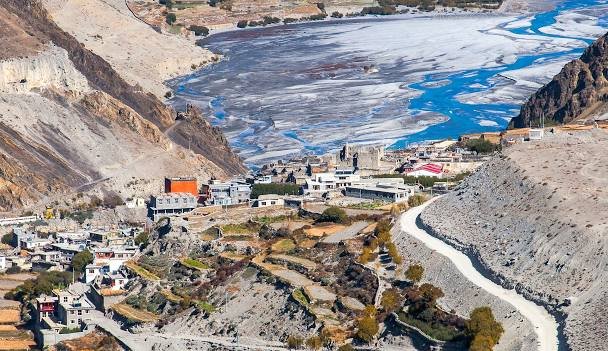
Mustang is Nepal’s most otherworldly destination a high-altitude desert kingdom on the Tibetan border that looks nothing like the rest of the country. Where most of Nepal is green, subtropical, and densely forested, Mustang is arid, wind-carved, and ancient red and ochre cliffs carved into shapes that seem impossible, 600-year-old walled cities still inhabited, and Buddhist monasteries containing artwork that predates the Renaissance.
It was closed to foreign visitors until 1992. Thirty years later, it still sees only a fraction of the tourists who visit Annapurna or Everest. That combination extraordinary visual drama, genuine cultural depth, and near-absence of crowds makes it one of the most compelling travel destinations in all of Asia.
This guide covers everything you need to plan a Mustang trip: Upper vs Lower Mustang, permits, how to get there, the best time to visit, cost, and what actually makes this region unlike anywhere else in Nepal.
Mustang Nepal Travel Guide
Quick Reference: Mustang Nepal at a Glance
| Detail | Info |
|---|---|
| Location | Mustang district, Gandaki Province, northern Nepal |
| Upper Mustang permit | $500 USD for 10 days ($50/day thereafter) |
| Best months | March–May, September–November |
| Getting there | Pokhara–Jomsom flight (25 min) or jeep (8–9 hrs) |
| Trek duration | 10–14 days (Upper Mustang) / 5–7 days (Lower) |
| Guide required | Yes — mandatory for Upper Mustang |
| Minimum group size | 2 people (Upper Mustang restricted area) |
| Accommodation | Tea houses ($10–$25/night), lodges ($25–$50/night) |
| ATMs | None above Jomsom carry all cash |
Upper Mustang vs Lower Mustang: Which Is Right for You?
This is the most important planning decision for a Mustang trip and the one most guides gloss over.
Upper Mustang is the restricted area north of Kagbeni, requiring the $500 special permit and a licensed guide. This is the Mustang of popular imagination Lo Manthang’s walled city, the sky caves, the ancient monasteries with 600-year-old frescoes, the high desert plateau that feels genuinely Tibetan. Getting here requires either a 10–14 day trek from Jomsom or a jeep safari on the same route. This is the experience worth traveling to Nepal specifically for.
Lower Mustang covers the more accessible southern section Jomsom, Marpha, Kagbeni, and Muktinath reachable without a special permit and open to independent travelers. It’s genuinely beautiful and worth seeing, but it’s a fundamentally different experience from Upper Mustang: more developed, more accessible, more tourists, and missing the walled city and cave culture that define the Upper region.
| Factor | Upper Mustang | Lower Mustang |
|---|---|---|
| Special permit | $500 USD (10 days) | Not required |
| Guide | Mandatory | Not required |
| Duration | 10–14 days | 3–5 days |
| Main highlight | Lo Manthang, sky caves | Muktinath, Marpha, Kagbeni |
| Crowd level | Very low | Moderate |
| Cost | $1,500–$2,500 total | $400–$700 total |
| Best for | Serious travelers, culture seekers | Short trips, pilgrims, budget travelers |
The Permits: What You Actually Need
Upper Mustang Restricted Area Permit
Cost: $500 USD for 10 days, $50 per additional day
Minimum group: 2 people
Guide: Mandatory licensed guide cannot enter independently
Where to get it: Through a registered Nepali trekking agency only cannot be self-issued
This permit was introduced when Upper Mustang opened to tourism in 1992, specifically designed to limit visitor numbers and preserve the region’s cultural integrity. The $500 fee is high by Nepal standards but has kept Upper Mustang genuinely uncrowded a rare thing in popular Himalayan trekking.
Important: You also need an ACAP (Annapurna Conservation Area Permit, Nepali citizens pay just NPR 100, SAARC nationals pay NPR 1,000, and other foreign nationals pay NPR 3,000) regardless of whether you’re doing Upper or Lower Mustang, since the entire region falls within the conservation area.
Lower Mustang (No Special Permit)
- ACAP permit: ~$30 USD
- TIMS card: ~$15 USD
- Total: approximately $45 no agency requirement, no minimum group
Getting to Mustang
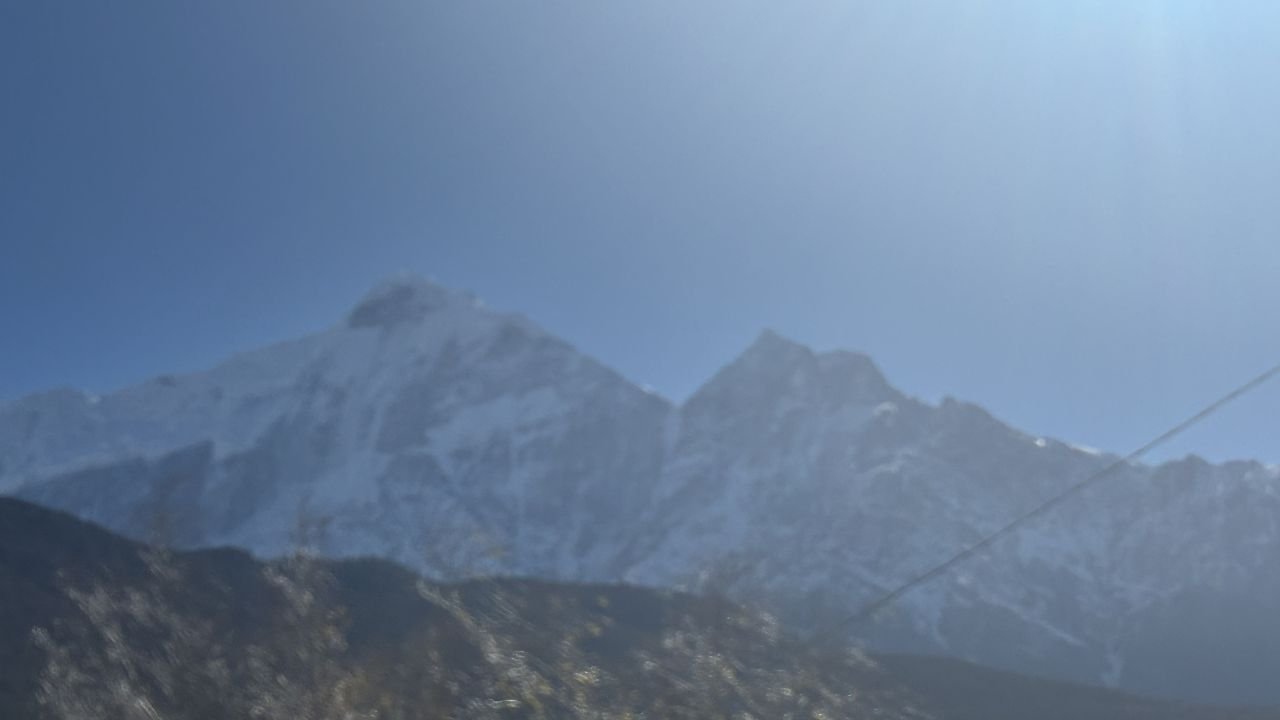
Nilgiri Mountains from Jomsom: During visit to Mustang in Dec 2025
By Domestic Flight (Recommended)
Pokhara to Jomsom: 25 minutes, $90–$150 USD one way. Jomsom is the gateway to both Upper and Lower Mustang and the starting point for all Mustang treks. Mountain Airport the landing approach between Nilgiri and Dhaulagiri is genuinely spectacular.
Important caveat: Jomsom is one of Nepal’s most weather-affected airports. Afternoon winds in the Kali Gandaki Valley regularly cancel or delay flights departures are almost always in the early morning (before 9am) and still frequently disrupted. Build buffer days around your Jomsom flights.
Kathmandu to Jomsom direct: Available but less common most travelers fly Kathmandu–Pokhara then Pokhara–Jomsom.
By Road
Kathmandu to Pokhara: 6–7 hours by tourist bus or private car.
Pokhara to Jomsom: 8–9 hours by jeep along the Kali Gandaki Valley a dramatic drive through the world’s deepest gorge, passing between Annapurna and Dhaulagiri.
The road option is significantly cheaper ($100–$150 total vs $200–$250 for flights) and gives you a completely different perspective on the landscape but it’s a long, dusty, and occasionally rough journey.
Best Time to Visit Mustang
March–May (Spring — Recommended)
Mustang’s spring season offers pleasant daytime temperatures (15–25°C in Jomsom, cooler above), clear morning skies, and the unique advantage of rhododendron blooms on the lower approach from Pokhara. The Tiji Festival Mustang’s most significant cultural celebration, featuring three days of masked dances in Lo Manthang falls in late April or May and is one of the most visually extraordinary festivals in Nepal.
September–November (Autumn Recommended)
Post-monsoon clarity delivers the sharpest mountain views of the year. October and November see stable weather and fully operational tea house infrastructure throughout the region.
June–August (Monsoon — Mustang’s Hidden Advantage)
This is genuinely the most underappreciated Mustang travel fact: Upper Mustang is trekable during Nepal’s monsoon season. The region sits in the rain shadow of the Annapurna and Dhaulagiri ranges the same mountain walls that dump heavy rainfall on the rest of Nepal block monsoon moisture from reaching Mustang. While ABC and EBC trekkers are sheltering from landslides, Mustang is dry, green (relatively), and almost completely tourist-free.
Monsoon Mustang is not for everyone winds can be strong, some facilities reduce services, and the approach road to Jomsom occasionally floods in heavy rain years. But for experienced travelers who want Upper Mustang without any crowds whatsoever, June–August is a genuine option.
December–February (Winter)
Cold Lo Manthang sits at 3,840m and temperatures drop to -15°C overnight in January. Many tea houses above Kagbeni reduce services or close temporarily. The landscape is dramatic under snow and the clarity is exceptional, but travel is meaningfully harder. Not recommended without serious cold-weather preparation.
What to Do in Mustang
Lo Manthang — The Walled City
The defining experience of Upper Mustang. A 600-year-old walled city at 3,840m still inhabited by approximately 150 families, with the former King of Mustang (a ceremonial role since Nepal’s monarchy ended in 2008) still residing within the walls. Inside: four ancient monasteries, whitewashed stone houses crowded along narrow alleys, and a palace that’s been standing for six centuries.
Most trekkers spend 2 full days in Lo Manthang one for the monasteries and palace, one for a side trip to the surrounding plateau and viewpoints.
The Sky Caves of Mustang
Over 10,000 man-made caves carved into the cliffs of Upper Mustang, some dating to 3,000 years ago their original purpose still debated between archaeological theories including burial, meditation, refuge, and storage. The most accessible and significant include:
- Chhoser Cave Monastery: Built inside a natural cave, accessible by short climb, with Buddhist paintings and statues
- Luri Gompa: 14th-century cave monastery with extraordinary frescoes, roughly 2 hours from Lo Manthang
- Tashi Kabum: Well-preserved Buddhist artwork in a cave setting
- The Sky Caves near Tsarang: The highest caves, genuinely dramatic in their cliff-face positioning
Ancient Monasteries
Jampa Gompa (Red Monastery): The oldest monastery in Lo Manthang, built in the 1400s. Contains some of the finest surviving medieval Buddhist frescoes in the Himalayan region comparable in cultural significance to what’s being preserved at Ajanta in India. The artwork here was unknown to the outside world until the 1990s.
Thubchen Gompa: The largest monastery in Lo Manthang, with a vast assembly hall and 500-year-old wall paintings covering every surface. Still in active religious use monks conduct ceremonies here that continue traditions maintained since the 15th century.
Muktinath Temple (Lower Mustang)
A Hindu-Buddhist pilgrimage site at 3,710m sacred to both traditions simultaneously, which is rare anywhere in the world. The 108 water spouts around the temple complex (sacred in Hindu numerology), an eternal natural gas flame that burns within the temple walls, and the confluence of Hindu and Tibetan Buddhist iconography throughout make this one of Nepal’s most genuinely significant religious sites. It draws pilgrims from across India, Nepal, and Tibet year-round.
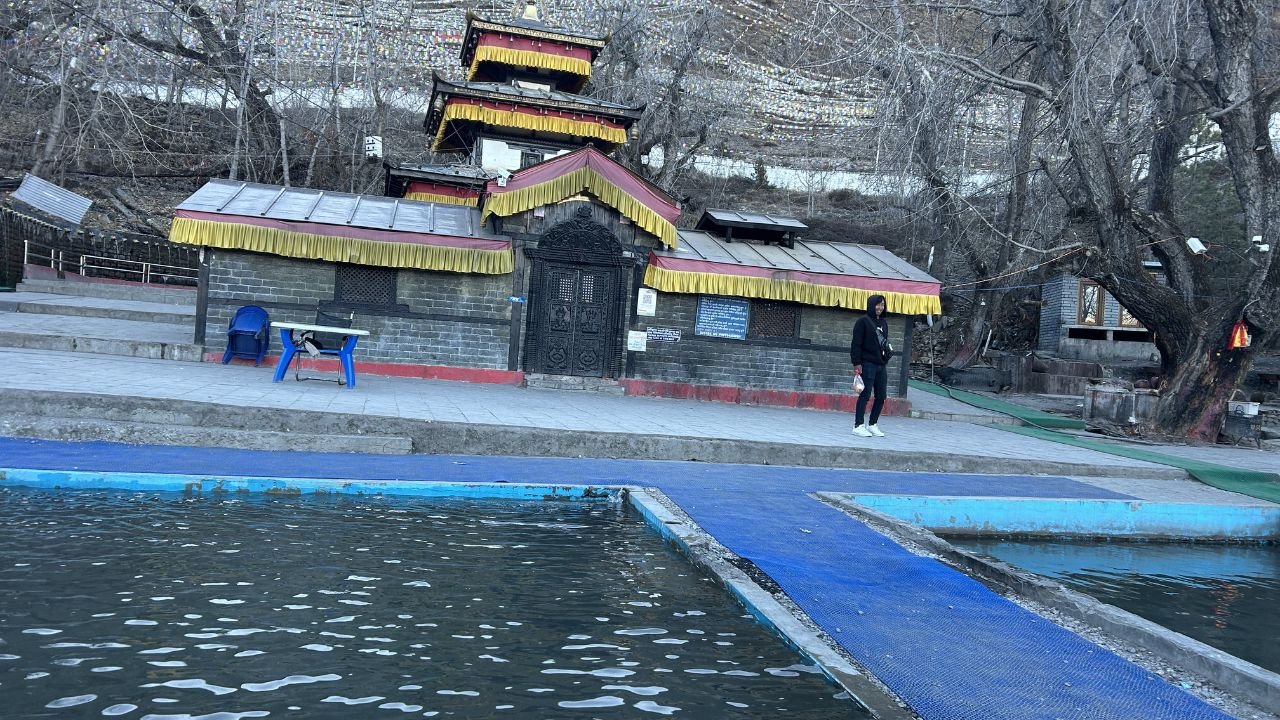
Muktinath Temple
Reachable by jeep from Jomsom or a 3–4 hour walk a realistic day trip from Lower Mustang accommodation.
The Kali Gandaki Valley
The river gorge separating Annapurna and Dhaulagiri is technically the world’s deepest gorge measured from the peaks to the river bottom, it exceeds the depth of the Grand Canyon significantly. Walking or driving through it, with 8,000m peaks rising on both sides, is one of those geographical experiences that recalibrates your sense of scale.
The riverbed is also the world’s primary source of shaligram fossils ammonite fossils sacred in Hinduism, found only here, carried down from ancient Tethys Sea deposits by the Kali Gandaki.
Kagbeni Village
The gateway to Upper Mustang and one of the most atmospheric villages in Nepal narrow stone alleyways, an ancient monastery in the village center, traditional mud-brick houses, and the last settlement before the restricted area begins. Most Upper Mustang trekkers spend a night here. Even without going further north, Kagbeni warrants a half-day exploration.
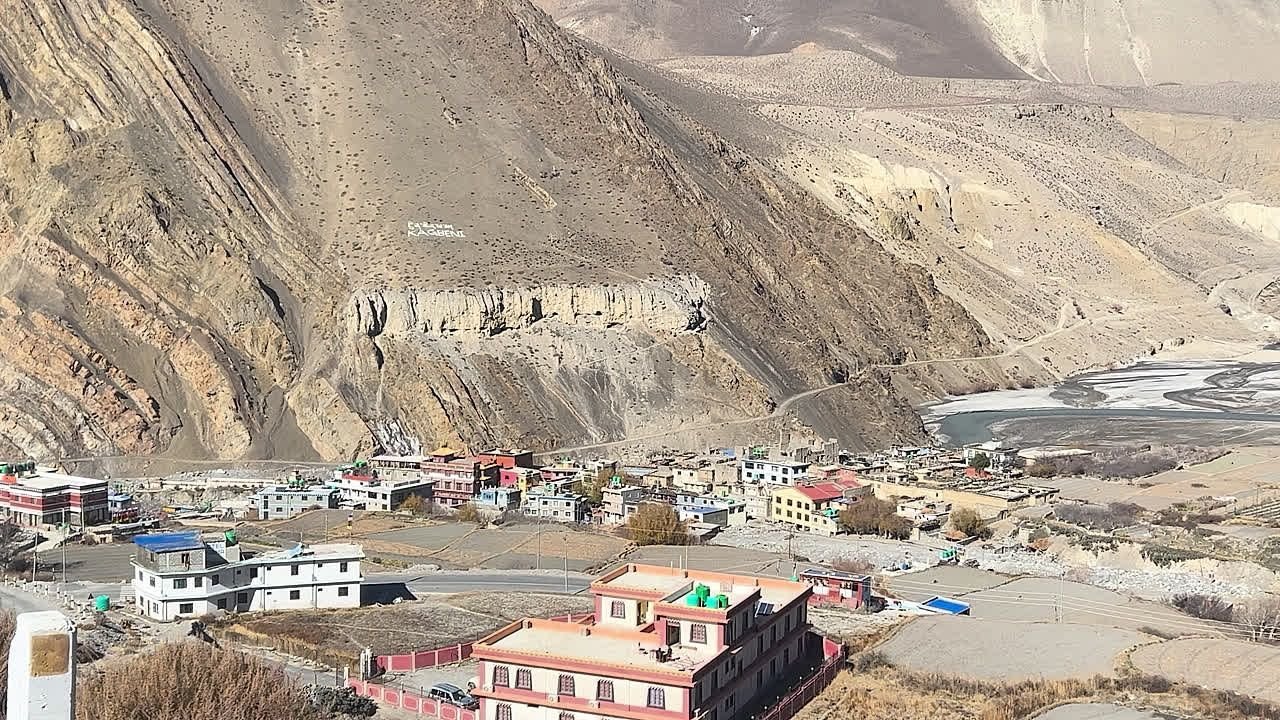
Kagbeni Village
Marpha Village (Lower Mustang)
Famous for its apple orchards and the apple brandy produced from them a local specialty that’s become one of Nepal’s more distinctive culinary products. Marpha is unusually well-organized for a Himalayan village: clean cobblestone streets, whitewashed houses, and a functioning community drainage system. The apple products (fresh, dried, brandy, cider, jam) are best bought directly from village families rather than from tourist shops in Jomsom.
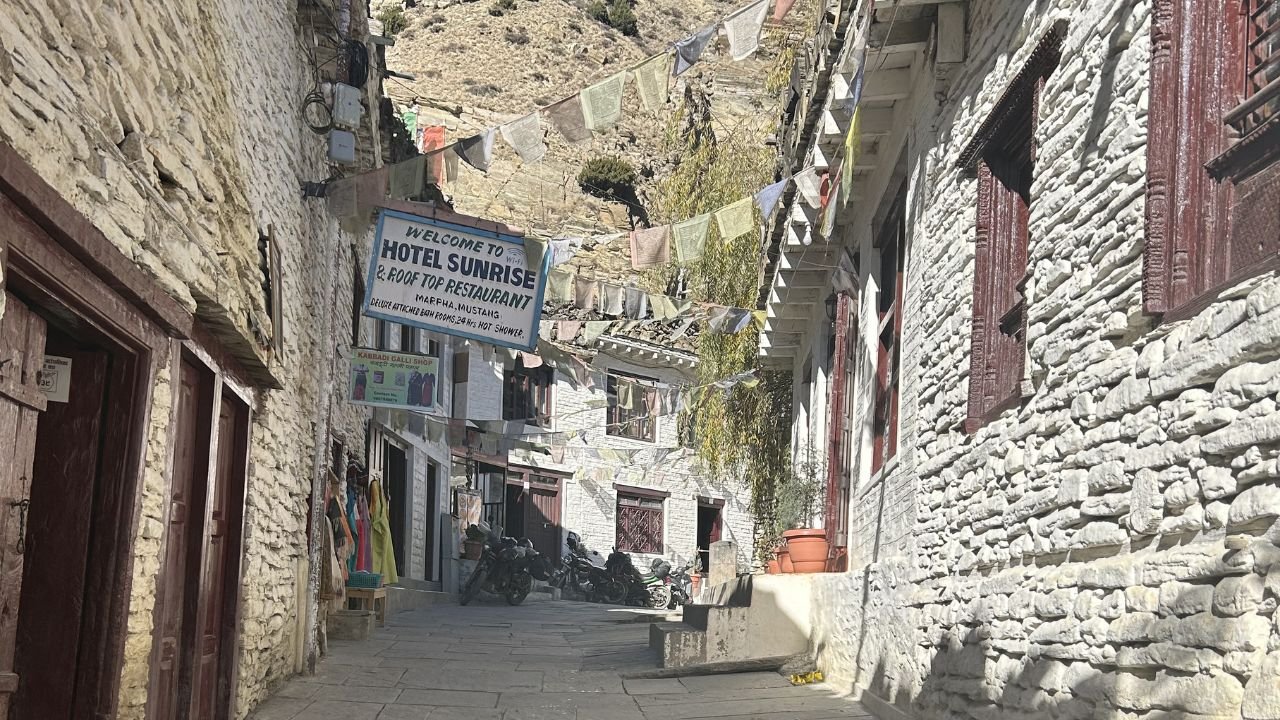
Marpha Village
Tiji Festival
If your travel dates align with late April or early May, Mustang’s Tiji Festival is worth specifically planning around. Three days of masked dance performances in Lo Manthang’s main courtyard, depicting the Tibetan Buddhist story of Dorji Sonam’s defeat of the demon Ma Tum Ru Ta. The costumes, music, and setting inside the walls of a 600-year-old city produce something genuinely different from any festival experience available elsewhere in Nepal.
Upper Mustang Trek Itinerary (12 Days)
Day 1: Fly Pokhara to Jomsom (25 min) → Trek to Kagbeni
Day 2: Kagbeni → Chele (3,050m)
Day 3: Chele → Syangboche (3,800m) via Taklam La Pass
Day 4: Syangboche → Ghami (3,520m)
Day 5: Ghami → Charang (3,657m) → Tsarang
Day 6: Tsarang → Lo Manthang (3,840m)
Day 7: Lo Manthang — full day exploration (Jampa Gompa, Thubchen Gompa, palace)
Day 8: Lo Manthang — side trip to Luri Gompa or surrounding plateau
Day 9: Lo Manthang → Charang
Day 10: Charang → Ghami → Syangboche
Day 11: Syangboche → Kagbeni → Jomsom
Day 12: Fly Jomsom to Pokhara
Some operators offer jeep safari versions of this itinerary in 7–10 days for those who prefer vehicle transport to trekking.
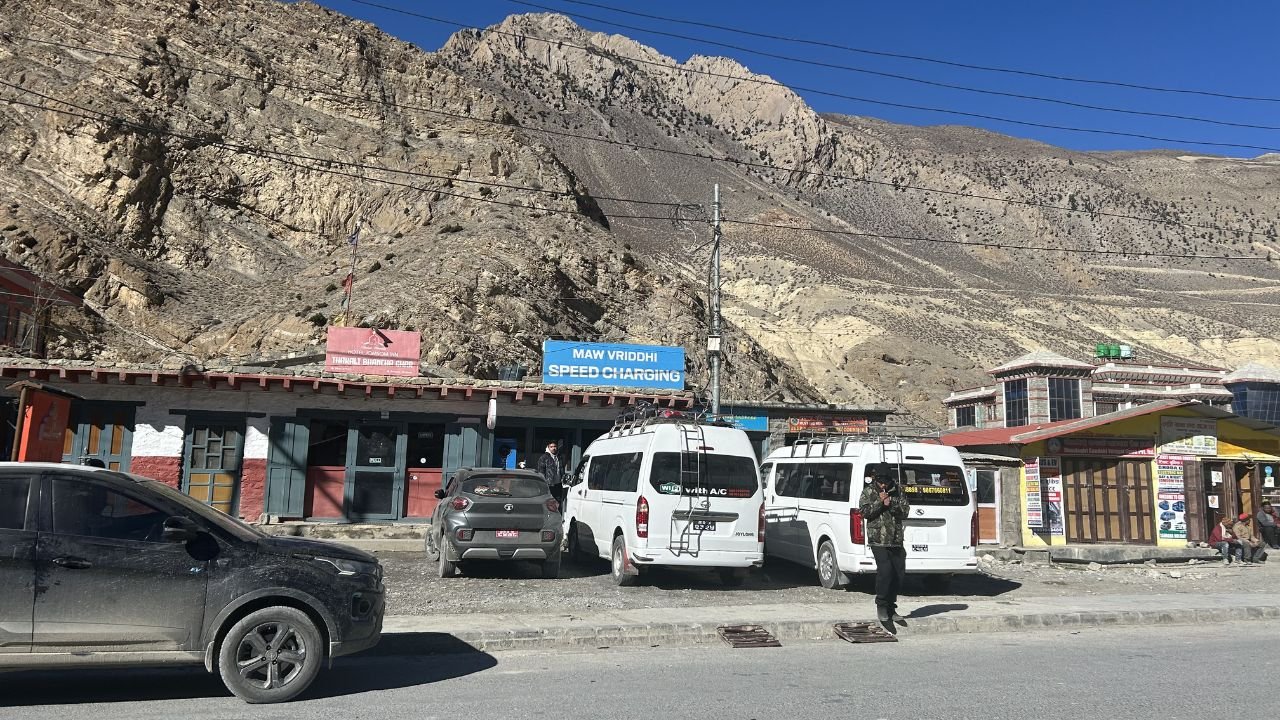
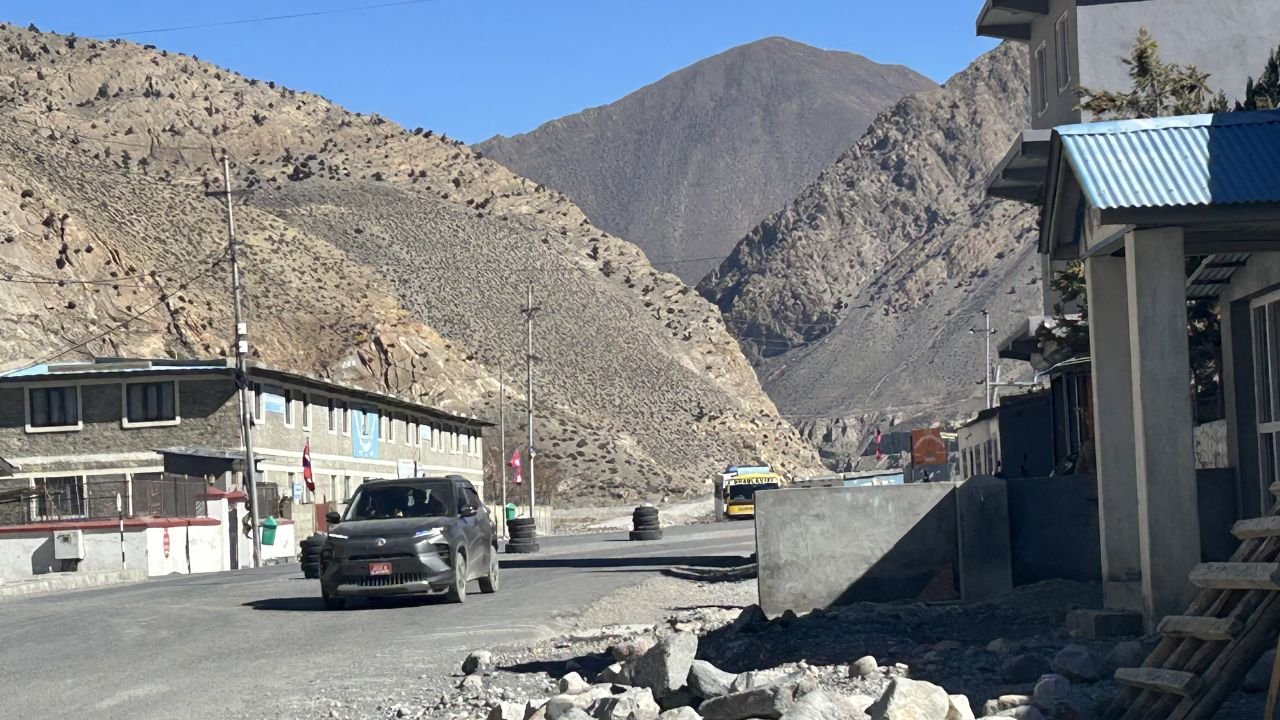
Ev Charging at Jomsom
Full Cost Breakdown
Upper Mustang (12 Days)
| Expense | Cost (USD) |
|---|---|
| Restricted Area Permit (10 days) | $500 |
| ACAP Permit | $30 |
| TIMS Card | $15 |
| Licensed guide (12 days × $30/day) | $360 |
| Guide accommodation + meals | $180 |
| Jomsom flights (round trip from Pokhara) | $200–$240 |
| Tea house accommodation ($15–$25/night) | $180–$300 |
| Meals ($20–$30/day) | $240–$360 |
| Tips and incidentals | $100–$150 |
| Total | $1,805–$2,135 |
Lower Mustang (5–7 Days)
| Expense | Cost (USD) |
|---|---|
| ACAP Permit | $30 |
| TIMS Card | $15 |
| Jomsom flights (round trip) | $200–$240 |
| Accommodation ($15–$30/night) | $75–$210 |
| Meals ($15–$25/day) | $75–$175 |
| Local transport (jeep) | $50–$100 |
| Total | $445–$770 |
What to Pack for Mustang
Clothing:
- Full layering system daytime temperatures are warm in spring/autumn, nights at altitude drop to -5°C to -10°C
- Windproof outer layer the Kali Gandaki Valley channels strong afternoon winds year-round
- Sun protection UV radiation at 3,000–4,000m is significantly stronger than at sea level
Practical essentials:
- Cash in Nepali Rupees no ATMs exist above Jomsom. Bring all the cash you’ll need for the entire trip before leaving Jomsom
- Water purification filter bottle or tablets
- Extra camera batteries cold temperatures drain batteries faster at altitude
Health:
- Altitude sickness awareness above 3,500m Lo Manthang at 3,840m is high enough for AMS symptoms to develop
- Basic first aid kit
- Travel insurance with helicopter evacuation coverage essential for any Mustang trip given the remoteness
[See our Nepal trekking travel insurance guide for policies covering remote restricted area travel.]
Frequently Asked Questions
How much does the Upper Mustang permit cost?
$500 USD for 10 days, with $50 per additional day. The permit must be arranged through a registered Nepali trekking agency it cannot be self-issued. You also need an ACAP permit (~$30) regardless of upper or lower Mustang travel.
Can I visit Upper Mustang without a guide?
No the Upper Mustang Restricted Area Permit specifically requires a licensed guide and a minimum group size of two people. Independent trekking in Upper Mustang is not permitted. This rule is enforced at the Kagbeni checkpoint.
What is the best time to visit Mustang Nepal?
March–May and September–November are the standard recommended seasons. Uniquely, June–August (monsoon) is also viable for Upper Mustang because the region sits in the rain shadow of the Annapurna and Dhaulagiri ranges and receives very little monsoon rainfall.
How do I get to Mustang from Kathmandu?
Fly Kathmandu to Pokhara (25 min, $80–$100) then Pokhara to Jomsom (25 min, $90–$120). Alternatively, drive Kathmandu to Pokhara (6–7 hours) then jeep Pokhara to Jomsom (8–9 hours). Total road journey: 14–16 hours.
Is Upper Mustang worth the $500 permit?
For travelers specifically seeking a genuine off-the-beaten-path cultural experience the walled city of Lo Manthang, the sky caves, the medieval monasteries yes, overwhelmingly. The $500 permit is what keeps Upper Mustang uncrowded, which is its defining advantage over more accessible Nepal destinations.
What is Lo Manthang?
The ancient capital of the Kingdom of Lo a 600-year-old walled city at 3,840m in Upper Mustang, still inhabited by approximately 150 families. It contains four medieval monasteries, a royal palace, and Tibetan-influenced architecture that has remained largely unchanged for centuries.
Can I visit Muktinath without an Upper Mustang permit?
Yes Muktinath is in Lower Mustang and doesn’t require the special restricted area permit. Standard ACAP and TIMS permits are sufficient. It’s reachable by jeep from Jomsom as a day trip.
How many days do I need for Upper Mustang?
A minimum of 10 days trekking (which is also the standard permit duration) to do Lo Manthang justice. Most operators recommend 12–14 days to include proper acclimatization, time at Lo Manthang, and side trips to Luri Gompa and surrounding sites.
