
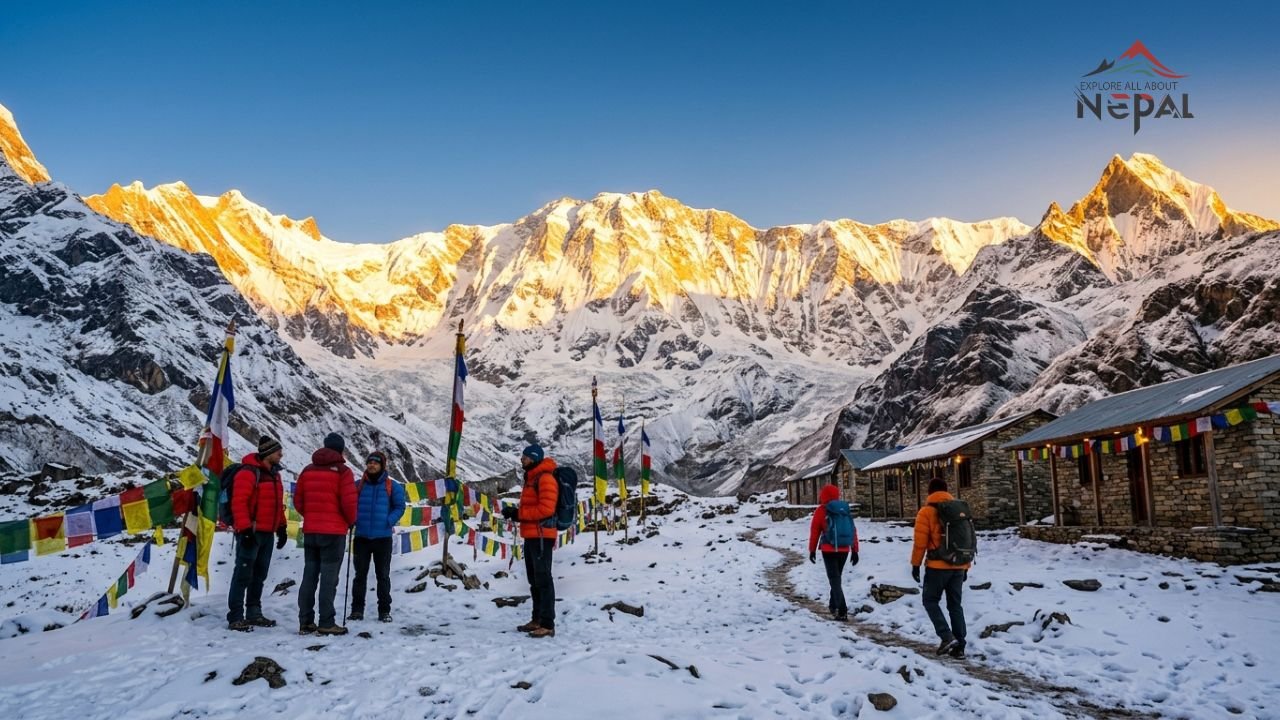
The Annapurna Base Camp Trek is Nepal’s most accessible high-altitude adventure a 7 to 12-day journey through rhododendron forests, Gurung villages, and glacial moraines that ends in a 360-degree amphitheater of 7,000m and 8,000m peaks. At 4,130m (13,550 ft), Annapurna Base Camp sits directly beneath Annapurna I (8,091m), the tenth-highest mountain on Earth.
No technical climbing skills are required. No ropes, no crampons, no mountaineering experience. What you need is a reasonable level of fitness, the right permits, and a clear plan. This guide gives you all three.
Annapurna Base Camp Trek is Nepal
Quick Reference: Annapurna Base Camp Trek at a Glance
| Detail | Info |
|---|---|
| Maximum elevation | 4,130m (13,550 ft) |
| Trek duration | 7–12 days |
| Total distance | ~115 km (round trip) |
| Difficulty | Moderate |
| Best months | March–May, October–November |
| Required permits | ACAP + TIMS card |
| Permit cost (2026) | ACAP: NPR 3,000 (~$22) / TIMS: NPR 2,000 (~$15) |
| Budget cost | $500–$750 (independent) |
| Guided cost | $1,200–$1,800 (full package) |
| Starting point | Nayapul or Phedi (from Pokhara) |
| Guide mandatory? | Yes mandatory since 2023 |
What Makes the Annapurna Base Camp Trek Special?
Most Himalayan treks offer mountain views. The ABC trek puts you inside the mountains.
The final section from Machapuchare Base Camp to Annapurna Base Camp is spent inside the Annapurna Sanctuary, a natural glacial amphitheater enclosed on nearly all sides by peaks above 6,000m. There is no comparable experience at this altitude without technical climbing anywhere else in Nepal.
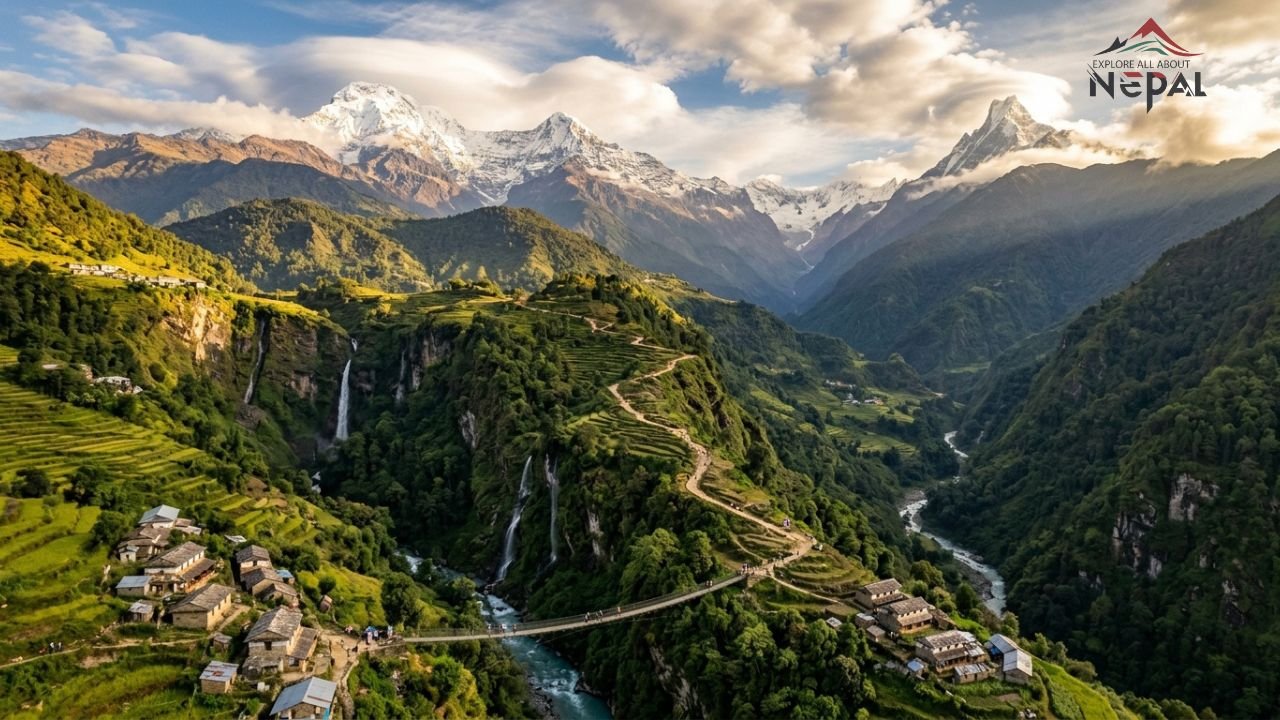
Beyond that defining feature, the route earns its popularity through variety. In ten days you move through sub-tropical forest, terraced farmland, rhododendron forest (the best in Nepal during March and April), bamboo groves, and high alpine terrain. You pass through active Gurung and Magar villages where trekking tourism and traditional life exist side by side. And you do it all on well-maintained trails with tea house accommodation every few hours.
For Western trekkers planning a first Himalayan adventure, the ABC trek is the standard benchmark. It’s harder than a day hike, easier than Everest Base Camp, and more scenically varied than either.
Is the Annapurna Base Camp Trek Right for You?
Difficulty: Moderate
The ABC trek does not require previous trekking experience or technical skills. What it does require is the ability to walk 5–7 hours per day on uneven terrain for multiple consecutive days, and the physical and mental resilience to ascend to 4,130m without rushing.
The most challenging section is the staircase ascent out of Chhomrong 2,500 stone steps down and then back up on the return leg. This is where underprepared trekkers struggle most.
Who this trek suits:
- First-time Himalayan trekkers with a reasonable fitness base
- Trekkers with 2–3 weeks in Nepal who want the benchmark high-altitude experience
- Groups and solo travelers (guide is now mandatory see Permits section)
- Anyone who wants genuine mountain immersion without technical risk
Who should consider alternatives:
- Trekkers with serious heart or respiratory conditions
- Anyone with a tight schedule of under 7 days (insufficient acclimatization time)
- Trekkers seeking complete solitude the ABC route is well-trafficked in peak season
2026 Mandatory Guide Rule What You Need to Know
Since April 2023, independent solo trekking is no longer permitted in the Annapurna region. All foreign trekkers must be accompanied by a licensed Nepali guide. This is enforced at permit checkpoints.
This means your cost calculation must include a guide regardless of your experience level. A licensed guide costs approximately $25–$35 per day. For a 10-day trek, budget $250–$350 for guide fees alone, plus their accommodation and meals (usually covered by you as the trekker, approximately $15–$20 per day extra).
Permits Required for the ABC Trek (2026 Costs)
You need two permits, both obtainable in Kathmandu (Thamel) or Pokhara (Lakeside):
1. Annapurna Conservation Area Permit (ACAP)
- Cost: NPR 3,000 (~$22 USD) per person
- Where to get it: Nepal Tourism Board offices in Kathmandu or Pokhara
2. Trekkers’ Information Management System (TIMS) Card
- Cost: NPR 2,000 (~$15 USD) for individual trekkers; NPR 1,000 (~$7.50) if booked through a registered agency
- Where to get it: TAAN (Trekking Agencies’ Association of Nepal) offices or Nepal Tourism Board
Total permit cost: approximately $30–$37 per person
Carry both permits and your passport at all times checkpoints are frequent on this route.
Note: Permit fees are subject to change. Verify current rates with the Nepal Tourism Board before your trek.
Best Time for the Annapurna Base Camp Trek
Autumn: October–November (Best Overall)
The premier trekking window. Post-monsoon skies are clear, mountain views are consistently excellent, and daytime temperatures at altitude sit between 5°C and 15°C. Trails are busy but well-maintained. October is peak season book accommodation ahead for the Chhomrong–Deurali section.
Spring: March–May (Best for Rhododendrons)
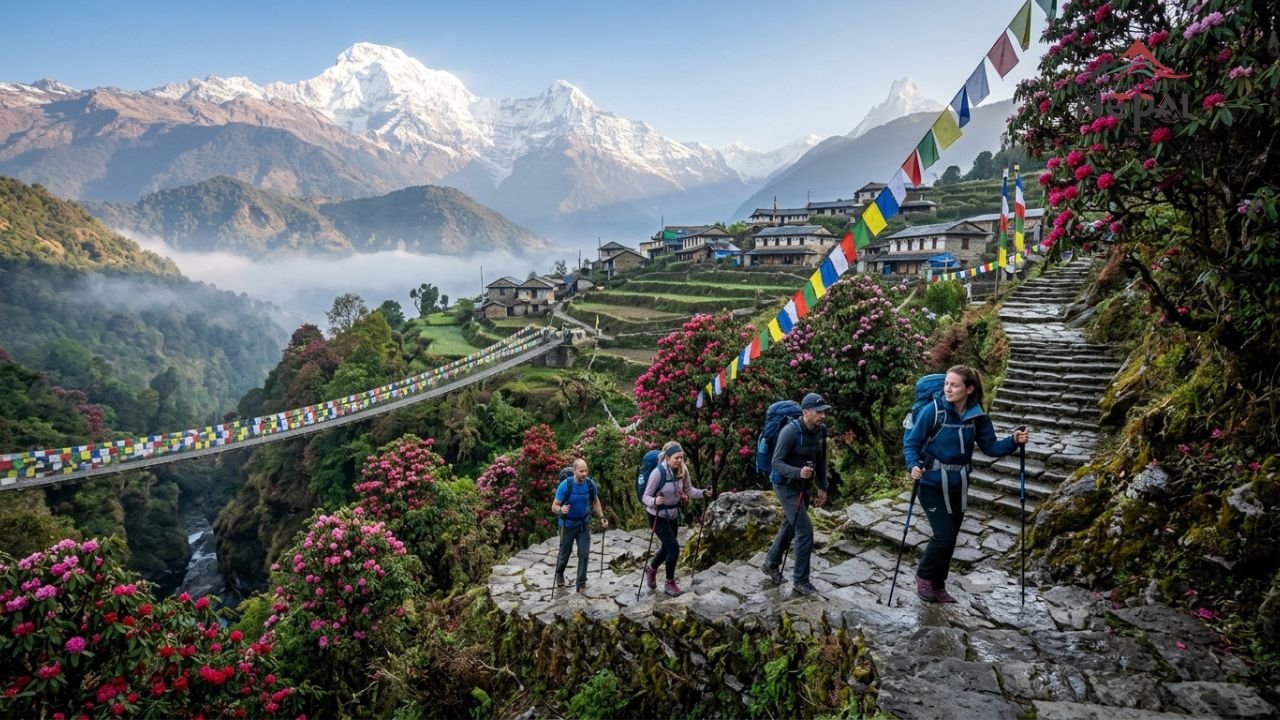
March and April bring blooming rhododendron forests Nepal’s national flower along the entire lower route. Views can be slightly hazier than autumn due to pre-monsoon dust, but the trail scenery is at its most dramatic. May is warmer and less crowded.
Monsoon: June–September (Avoid Unless Experienced)
Heavy rainfall (especially July–August) makes trails slippery and increases landslide risk in the Chhomrong–Sinuwa section. Cloud cover obscures mountain views for much of the day. Not recommended for first-time trekkers. The Annapurna Sanctuary can be subject to sudden snowfall at base camp even in summer.
Winter: December–February (Possible With Preparation)
Far fewer trekkers, crisp clear views, and a more authentic experience at tea houses. The main challenge is cold temperatures at Annapurna Base Camp can drop to -15°C to -20°C overnight. The trail above Machapuchare Base Camp can be snow-covered and require microspikes. Not recommended without cold-weather trekking experience.
annapurna Base Camp Trek
Annapurna Base Camp Trek Itinerary (10 Days)
This is the standard itinerary used by most experienced guides. The 7-day version (skipping Poon Hill) is possible but reduces acclimatization time and is not recommended.
Day 1: Fly or Drive Kathmandu to Pokhara
Pokhara is the base. If flying from Kathmandu (25 minutes), book ahead flights fill quickly in peak season. Use the afternoon to get your permits sorted in Lakeside if you haven’t already, and rest.
Day 2: Drive Pokhara to Phedi / Nayapul → Trek to Tikhedhunga (1,540m)
Drive 1–1.5 hours to the trailhead. The first day’s walking is gentle, through terraced fields and the Bhurungdi Khola valley. Tikhedhunga is a small village with basic but comfortable tea houses.
- Walking time: 3–4 hours
- Elevation gain: ~340m
Day 3: Tikhedhunga → Ghorepani (2,860m)
A long staircase ascent over 3,000 stone steps in sections through dense rhododendron and oak forest. This is the hardest day of the lower route but rewards with the first real mountain views on arrival at Ghorepani.
- Walking time: 5–6 hours
- Elevation gain: ~1,320m
Day 4: Sunrise at Poon Hill (3,210m) → Trek to Tadapani (2,630m)
The 4:30am pre-dawn hike to Poon Hill is non-negotiable. The 360-degree sunrise view over Dhaulagiri (8,167m), Annapurna South, Hiunchuli, and Machhapuchhre is the most photographed moment on this entire route. After sunrise, descend to Ghorepani for breakfast then continue through forest to Tadapani.
- Walking time: 6–7 hours total
- Elevation change: +350m to Poon Hill, then net descent
Day 5: Tadapani → Chhomrong (2,170m)
Descend through forest and cross the Modi Khola valley before the final steep climb to Chhomrong, the last major Gurung village on the route and the gateway to the Annapurna Sanctuary. Chhomrong has the best tea houses and food on the trek stock up on anything you need.
- Walking time: 5–6 hours
Day 6: Chhomrong → Bamboo (2,310m)
The infamous Chhomrong staircase descends 2,500 steps before the trail enters the Modi Khola gorge. The vegetation becomes subtropical bamboo groves, mossy forest, and waterfalls. Basic tea houses at Sinuwa and Bamboo.
- Walking time: 4–5 hours
Day 7: Bamboo → Deurali (3,230m)
As the valley narrows, the trail passes through Dovan and Himalaya (village) before reaching Deurali at the entrance to the Annapurna Sanctuary. The first clear views of Machhapuchhre’s distinctive fishtail summit appear here. The temperature drops noticeably.
- Walking time: 5–6 hours
- Elevation gain: ~920m
Day 8: Deurali → Annapurna Base Camp (4,130m)
The defining day. From Deurali the trail crosses the glacial moraine and enters the sanctuary. Machhapuchhre Base Camp (3,700m) is a milestone the mountain’s iconic south face looms directly overhead. The final 430m ascent to ABC is gradual but altitude makes it feel harder. On arrival, the Annapurna amphitheater reveals itself fully: Annapurna I (8,091m), Annapurna South (7,219m), Annapurna III (7,555m), Gangapurna (7,455m), and Glacier Dome surrounding you on all sides.
- Walking time: 4–5 hours
- Elevation gain: ~900m
Day 9: Annapurna Base Camp → Bamboo (or Chhomrong)
Begin descent. The return route reverses the ascent. Most trekkers push past Deurali to Bamboo or Sinuwa to make Day 10 more manageable. The views on the descent now facing outward rather than upward are completely different.
- Walking time: 6–7 hours
Day 10: Bamboo → Nayapul → Pokhara
Final descent through Chhomrong (the Chhomrong staircase is harder going up on tired legs than coming down) and on to Nayapul for the drive back to Pokhara. Celebrate in Lakeside.
- Walking time: 5–6 hours + 1.5 hour drive
Full Cost Breakdown: Annapurna Base Camp Trek (2026)
Budget Independent Trek (with mandatory guide)
| Expense | Cost (USD) |
|---|---|
| ACAP Permit | $22 |
| TIMS Card | $15 |
| Licensed guide (10 days × $30/day) | $300 |
| Guide accommodation + meals | $150–$200 |
| Tea house accommodation ($10–$15/night) | $100–$150 |
| Tea house meals ($15–$25/day) | $150–$250 |
| Pokhara–Nayapul transport | $15–$20 |
| Misc (tips, water, snacks) | $50–$80 |
| Total | $800–$1,050 |
Full Guided Package (agency booked)
| Package Type | Cost (USD) |
|---|---|
| Budget agency package (shared group) | $700–$1,000 |
| Standard agency package (private guide, porter) | $1,200–$1,600 |
| Premium / luxury lodge package | $2,500–$4,000 |
Budget packages typically include guide, porter, permits, accommodation, and meals. Premium packages replace tea houses with lodge accommodation and include airport transfers, insurance, and gear.
All costs are estimates for 2026 and should be verified before booking.
What to Pack: ABC Trek Packing List
Clothing
- Moisture-wicking base layers (2 sets)
- Insulating mid-layer (fleece or down jacket)
- Waterproof outer shell (essential even in dry season)
- Trekking trousers (2 pairs)
- Warm hat, gloves, buff/neck gaiter
- Trekking socks (4–5 pairs, merino wool recommended)
Footwear
- Waterproof trekking boots (broken in before the trek non-negotiable)
- Camp sandals or lightweight shoes for evenings
Gear
- Trekking poles (strongly recommended especially for the Chhomrong staircase)
- Headlamp with spare batteries (4:30am Poon Hill starts)
- Sleeping bag rated to -10°C (tea house blankets exist but are unreliable above Deurali)
- 35–45L daypack
- Water purification (tablets or filter reduces plastic and cost)
Health and Safety
- Diamox (acetazolamide) consult your doctor before the trek; useful for altitude acclimatization
- Personal first aid kit including blister treatment
- Sunscreen SPF 50+ and UV-protection sunglasses (UV radiation at altitude is intense)
- Travel insurance with helicopter evacuation coverage mandatory for responsible trekking at this altitude
Travel Insurance for the ABC Trek
At 4,130m, altitude sickness is a genuine risk. Helicopter evacuation from Annapurna Base Camp to Pokhara costs between $3,000 and $5,000 and is not covered by standard travel insurance policies.
You need a policy that explicitly covers:
- High-altitude trekking above 4,000m
- Emergency helicopter evacuation
- Medical repatriation
Policies from World Nomads, SafetyWing, and Battleface all offer Nepal trekking coverage with helicopter evacuation. Verify the altitude limit on your specific policy some cap at 4,000m, which barely covers ABC.
Our detailed guide to travel insurance for Nepal trekking covers the best policies for helicopter evacuation by price.
ABC Trek
Annapurna Base Camp vs. Everest Base Camp: Which Should You Choose?
| Factor | ABC | EBC |
|---|---|---|
| Max altitude | 4,130m | 5,364m |
| Duration | 7–12 days | 12–16 days |
| Difficulty | Moderate | Moderate–Hard |
| Scenery variety | Higher (forests, villages, alpine) | More remote and stark |
| Peak season crowds | High | Extreme |
| Cost | Lower | Higher |
| Best for | First Himalayan trek | Seasoned trekkers wanting higher altitude |
The ABC trek is the better first choice. EBC is harder, more expensive, more crowded in October, and the route itself is less scenically varied below Namche Bazaar.
Frequently Asked Questions
How difficult is the Annapurna Base Camp trek?
Moderate. No technical skills required, but you need to walk 5–7 hours daily for up to 10 days. The hardest single section is the Chhomrong staircase (2,500 steps). Fitness preparation cardio and leg strength for 4–6 weeks before departure is strongly recommended.
How many days does the ABC trek take?
The standard itinerary is 10 days including travel to and from Pokhara. A 7-day version skipping Poon Hill is possible but reduces acclimatization time. 12 days is ideal if you want a relaxed pace with rest days built in.
Can I do the Annapurna Base Camp trek without a guide?
No. Since April 2023, independent solo trekking is not permitted in the Annapurna Conservation Area. All foreign trekkers must be accompanied by a licensed Nepali guide. This is enforced at permit checkpoints along the route.
What permits do I need for the ABC trek?
Two permits: the Annapurna Conservation Area Permit (ACAP, ~$22) and the TIMS card (~$15). Both are available in Kathmandu or Pokhara. Total permit cost is approximately $37 per person.
What is the best time to do the Annapurna Base Camp trek?
October–November for the clearest mountain views. March–April for rhododendron forests and spring scenery. Both windows offer stable weather and fully operational tea houses.
How much does the Annapurna Base Camp trek cost?
With a mandatory guide, budget a minimum of $800–$1,050 for an independent trek. A full guided package from a trekking agency runs $1,200–$1,600 for a private guide and porter. Premium lodge experiences start at $2,500.
Do I need travel insurance for the ABC trek?
Yes — and it must explicitly cover helicopter evacuation above 4,000m. Standard policies often exclude high-altitude trekking. A helicopter rescue from ABC costs $3,000–$5,000 without coverage.
Is altitude sickness a risk on the ABC trek?
Yes. At 4,130m, altitude sickness (AMS) is a real possibility, particularly if you ascend too quickly. The key is pacing don’t skip acclimatization days and descend immediately if you develop severe headache, nausea, or loss of coordination. Carry Diamox as a precaution (consult your doctor).
What is the food like on the ABC trek?
Tea houses serve a consistent menu: dal bhat (rice and lentil soup the best energy meal on the route), pasta, noodle soup, momo (dumplings), porridge, and eggs. Food quality and variety decrease above Chhomrong but remains sufficient. Budget $15–$25 per day for meals.
Can beginners do the Annapurna Base Camp trek?
Yes it’s one of the best first Himalayan treks precisely because it doesn’t require prior experience. The mandatory guide rule actually benefits beginners, as you’ll have local expertise on the trail at all times.
