
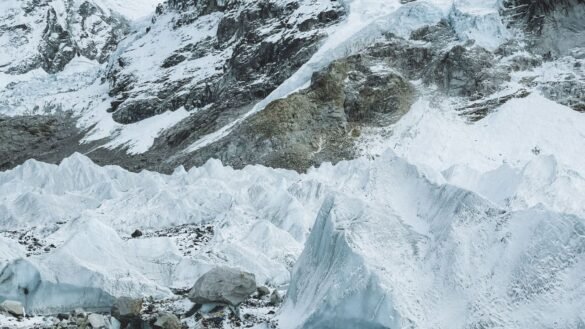
Before any climber sets foot on Everest each spring, a small team of Sherpas walks into the most dangerous stretch of the mountain on purpose, and before anyone else. They are the Icefall Doctors, and their job is to carve and maintain a safe route through the Khumbu Icefall, the shifting maze of ice towers and crevasses that every Everest climber must cross.
Almost no one who summits Everest could do it without them. Yet their names rarely appear in the summit stories. This is who they are, what they actually do, and why it’s considered one of the most dangerous jobs on Earth.
Details verified July 2026, including the 2026 season. We update this page each climbing season.
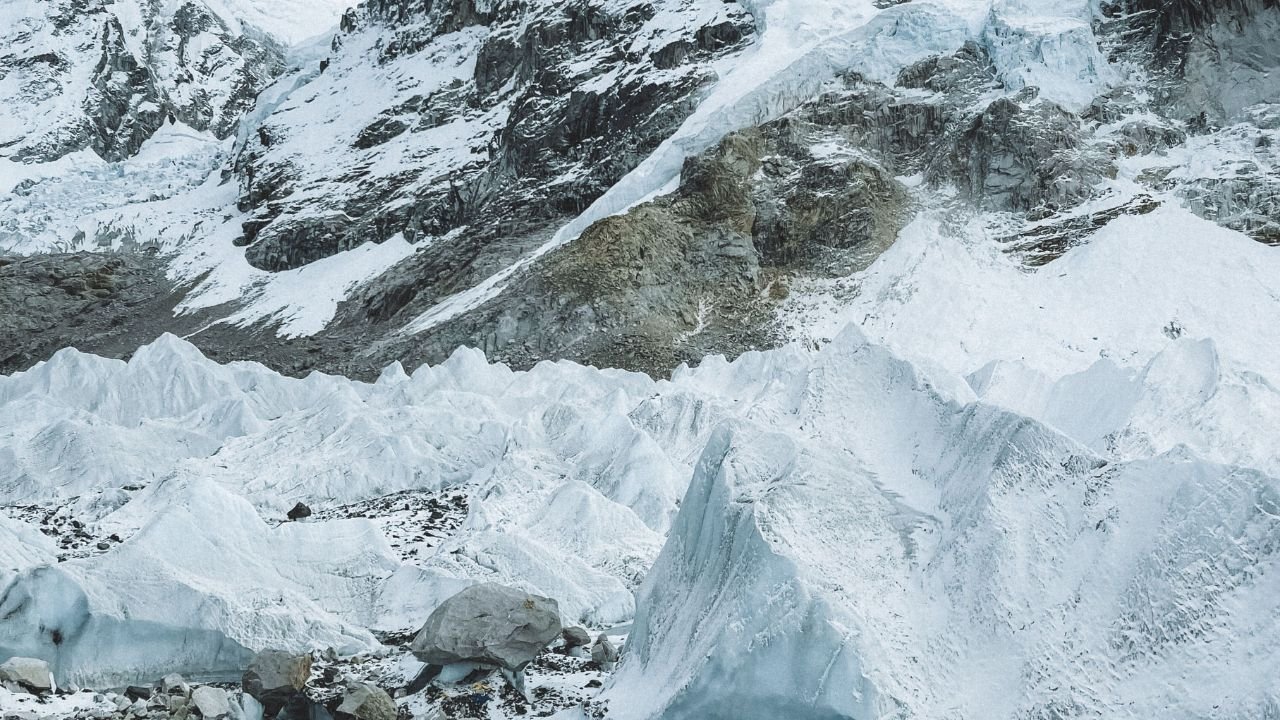
The Icefall Doctors: Photo by Marina Zvada
Quick Facts
| Who they are | A team of ~8 elite Sherpa climbers |
| Employer | Sagarmatha Pollution Control Committee (SPCC) |
| Job | Build & maintain the route through the Khumbu Icefall |
| Where | Between Base Camp (5,400 m) and Camp II (~6,100 m) |
| Season | March to late May, every year |
| Doing this since | 1993 (SPCC); route-fixing contract since 1997 |
| Who relies on them | Every Everest, Lhotse & Nuptse climber |
What Is the Khumbu Icefall?
To understand the job, you have to understand the terrain.
The Khumbu Icefall is a frozen river of broken glacier that sits just above Everest Base Camp, between roughly 5,400 and 6,100 metres. It’s where the Khumbu Glacier tumbles down a steep drop, shattering into enormous blocks of ice some the size of buildings separated by deep, often hidden crevasses.
Here’s what makes it lethal: the glacier moves about one metre every single day. Ice towers that were stable yesterday can collapse without warning. Crevasses widen. Anchors loosen. And unlike other hazards on Everest, the Icefall cannot be avoided it’s the only way up from the south side.
What the Icefall Doctors Actually Do
Their work is part engineering, part navigation, part nerve.
Each March, before the climbing season, the team scouts a route through the chaos and builds it fixing ropes for climbers to clip into, and bolting aluminium ladders across crevasses and up vertical ice walls. On difficult sections they lash several ladders together to bridge a single gap.
But building the route is only half the job. Because the glacier never stops moving, they spend the next three months constantly re-checking and repairing it resetting anchors that have shifted, replacing ladders swallowed by widening crevasses, and re-routing when a section becomes too dangerous. They stay at Base Camp from March until the ladders come down in late May.
They also carry a quieter responsibility: because their employer, the SPCC, manages waste on the mountain, the Icefall Doctors help keep the Everest route clean as well as safe.
Who Are They? The 2026 Team
The Icefall Doctors are not ordinary guides. They are among the most experienced high-altitude Sherpas in the Khumbu, chosen for years of glacier knowledge that can’t be taught quickly.
The 2026 team is led by chief leader Ang Sarki Sherpa, a veteran from Sewangma village who has worked as an Icefall Doctor since 2008, with Dawa Jangbu Sherpa as team leader. The eight-member crew undergoes refresher training at the Khumbu Climbing Center each season, and traditionally begins route-fixing only after a puja ceremony at Base Camp a Buddhist blessing asking the mountain for safe passage.
Who Employs Them?
The team works under the Sagarmatha Pollution Control Committee (SPCC) a non-profit created by the local Sherpa community of the Khumbu Valley in the early 1990s, originally to manage rubbish and protect the Everest environment.
Since 1993 the SPCC has organised the Icefall Doctors, and since 1997 it has held a formal contract from Nepal’s Department of Tourism to fix and maintain the Khumbu route every season. Over the years, the job has become better paid and better equipped than in the early days, when young Sherpas short on money or experience often took on the risk out of necessity.
Why It’s One of the Most Dangerous Jobs on Earth
The risk here isn’t abstract. The Icefall has killed even the most experienced people who work it.
In 2014, an avalanche in the Khumbu Icefall killed 16 mountain workers one of the deadliest single days in Everest’s history, and a turning point that led Sherpas to demand better pay and protections. Because the Icefall Doctors go first and stay longest, they are exposed to this danger more than almost anyone on the mountain.
The 2026 season showed how unpredictable it remains: a massive unstable serac an ice tower reported at roughly 180 feet wide and 90 feet tall blocked the route in early April. The Icefall Doctors halted work and waited over two weeks for it to crumble, scouting alternative passages before finally opening a safe route on 28 April, about two and a half weeks behind schedule. Deciding when not to proceed is as much a part of the job as the climbing itself.
How Drones Are Changing the Job (2026)
Something new is reshaping this ancient, dangerous work: drones.
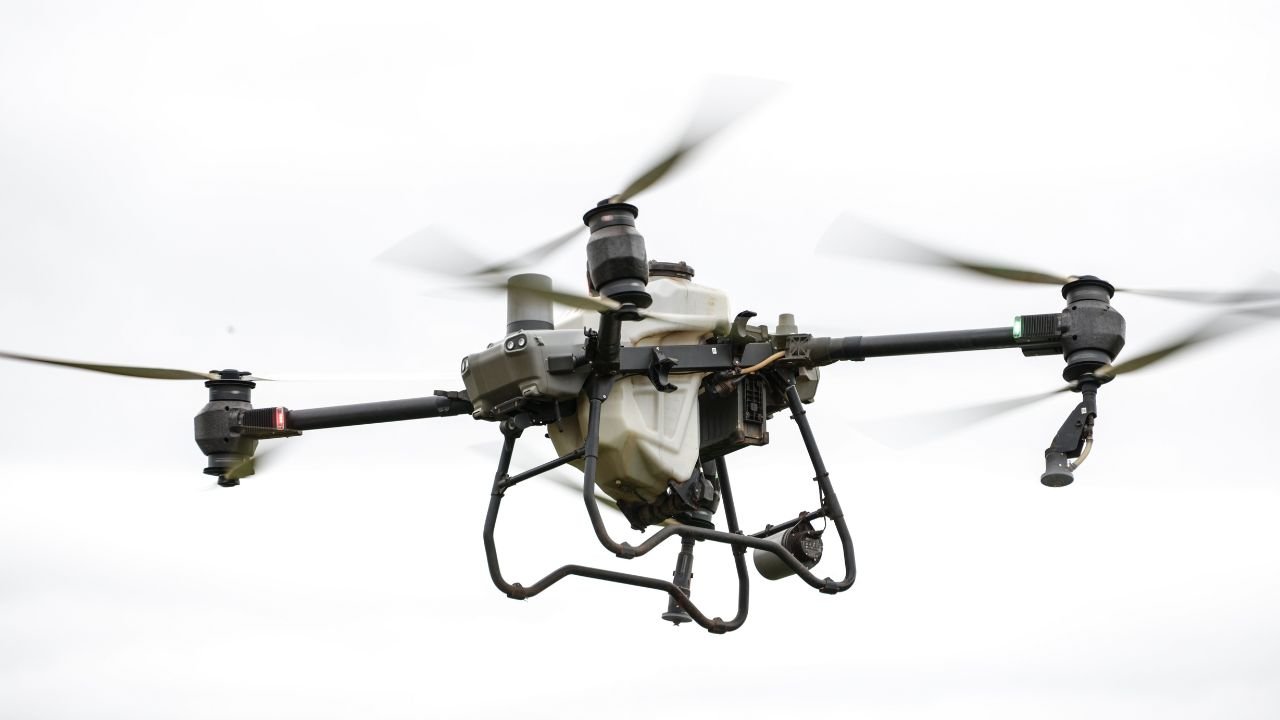
How Drones Are Changing the Job of Icefall Doctors: Photo by Magda Ehlers
As of 2026, the SPCC has the Icefall Doctors operating a drone cargo service, run with a company called Airlift Technology. Drones now ferry supplies aluminium ladders, rope, oxygen cylinders from Base Camp up to Camp I, and carry garbage and waste back down. In one 2026 operation, drones delivered four ladders and five rolls of rope to Camp I in a single day.
Why it matters: previously, all of that hauling was done by human power, meaning repeated trips through the deadly Icefall. Every load a drone carries is a crossing a person doesn’t have to make. It’s a rare case of technology directly reducing the risk borne by mountain workers and it may quietly reshape the profession in the years ahead.
The Point Worth Remembering
The Icefall Doctors are the clearest example of a truth about Everest: the mountain’s famous summits rest on the invisible labour of Sherpas who take the greatest risks for the least recognition.
Every year, the celebrated ascents the records, the flags, the summit photos are only possible because eight people walked into the most dangerous place on the mountain first, and stayed there for three months to keep everyone else safe. Their names deserve to be remembered alongside the climbers they carry.
FAQs
Who are the Icefall Doctors?
They are a team of about eight elite Sherpa climbers who build and maintain the route through the Khumbu Icefall on Everest each season, employed by the Sagarmatha Pollution Control Committee (SPCC).
What do the Icefall Doctors do?
They fix ropes and install ladders to create a safe path through the shifting Khumbu Icefall, then repair and re-route it constantly through the climbing season as the glacier moves.
Why are they called “doctors”?
The nickname reflects their specialist skill in “treating” and maintaining the dangerous, ever-changing Icefall route a role distinct from regular climbing guides.
Who employs the Icefall Doctors?
The Sagarmatha Pollution Control Committee (SPCC), a Sherpa-community non-profit that has held Nepal’s route-fixing contract since 1997.
How dangerous is the job?
Extremely. The Khumbu Icefall moves about a metre a day and can collapse without warning. A 2014 avalanche there killed 16 mountain workers, and the Icefall Doctors are the most exposed of anyone on the route.
When do the Icefall Doctors work?
From March, when they begin fixing the route, until late May, when the ladders are removed at the end of the climbing season.
Are drones replacing the Icefall Doctors?
No but as of 2026, drones now carry supplies and waste between Base Camp and Camp I, reducing how often workers must cross the dangerous Icefall on foot.
Where is the Khumbu Icefall?
It sits just above Everest Base Camp on the south (Nepal) side, between about 5,400 and 6,100 metres, on the route to Camp II.