
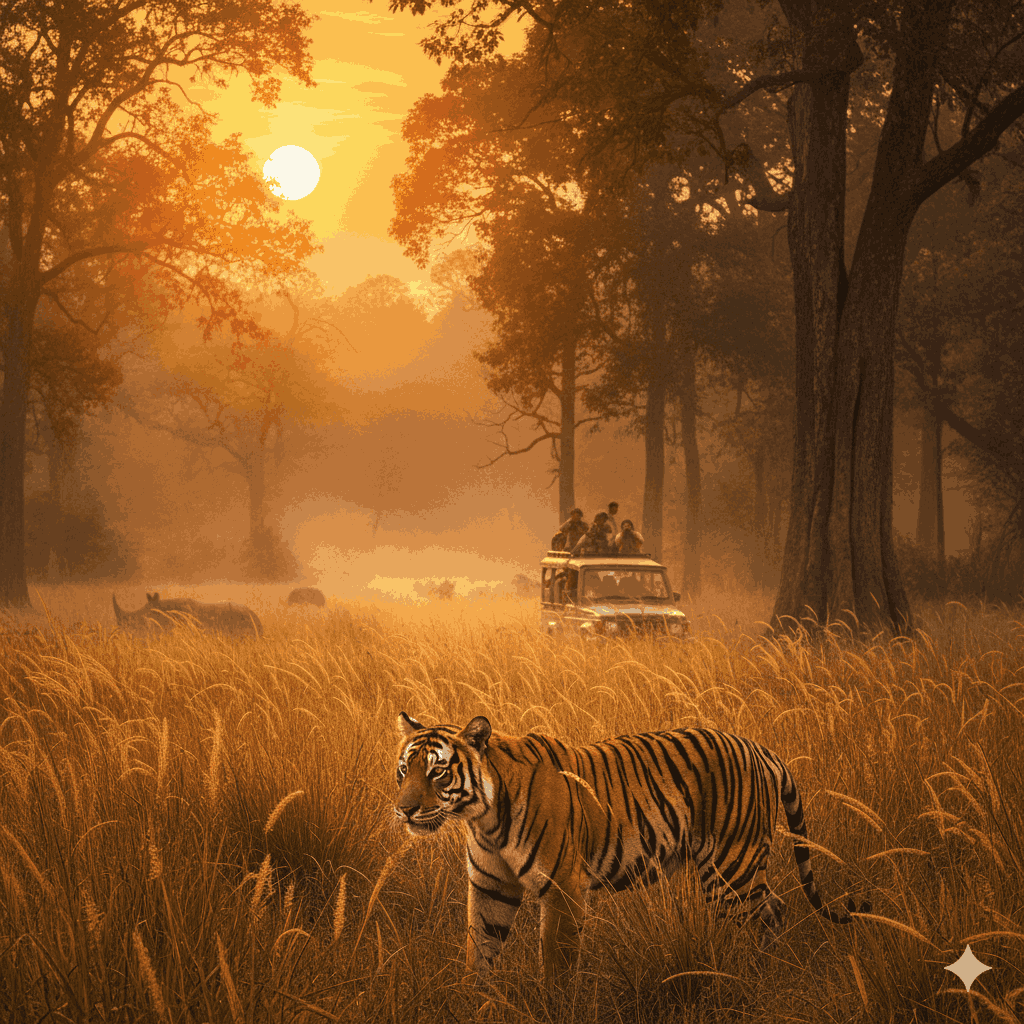
Spectacular wildlife safari in Nepal with a tiger in its natural habitat, showcasing the untamed beauty of Nepal’s jungles
Deep in the subtropical lowlands of the Terai, where the tall elephant grass sways in the breeze and the ancient Sal forests echo with the myriad sounds of the wild, lies a realm often overshadowed by the colossal peaks to the north. Yet, it is here that a wildlife safari in Nepal offers an experience as profoundly captivating as any mountain ascent. In 2026, Nepal stands as a shining example of successful conservation, having achieved remarkable milestones in protecting its endangered species. This guide delves into why a wildlife safari in Nepal is not just an adventure, but a journey into the vibrant heart of biodiversity, showcasing how tourism and conservation flourish hand-in-hand.
Nepal, globally celebrated for its eight of the world’s highest peaks, holds another incredible secret: its rich and thriving low-lying plains known as the Terai. Here, amidst dense forests, meandering rivers, and vast grasslands, lies the opportunity for an unforgettable wildlife safari in Nepal. Often overshadowed by its mountainous counterpart, the Terai offers a humid, vibrant, and utterly wild contrast to the icy heights of the Himalayas. In 2026, the success of Nepal’s conservation efforts, particularly with the booming populations of endangered species like the Royal Bengal Tiger and the Greater One-horned Rhinoceros, makes a wildlife safari in Nepal an exceptionally rewarding experience.
This comprehensive guide will take you deep into the heart of Nepal’s jungles, exploring the premier national parks and wildlife reserves that offer the most immersive wildlife safari in Nepal experiences. From the bustling ecosystems of Chitwan to the remote wilderness of Bardiya, and the avian paradise of Koshi Tappu, prepare to uncover the raw, untamed beauty that makes a wildlife safari in Nepal a bucket-list adventure.
The Terai: Nepal’s Unsung Wilderness
The Terai Arc Landscape, a transnational conservation area spanning Nepal and India, is a critical biodiversity hotspot. This region, characterized by its subtropical climate and diverse habitats, is home to a staggering array of wildlife. For centuries, its dense forests provided natural barriers and rich hunting grounds. Today, these same forests are protected national parks and wildlife reserves, offering unparalleled opportunities for a wildlife safari in Nepal.
The success of Nepal’s conservation strategy is a story of global significance. Through community-based anti-poaching units, habitat restoration, and strict protection laws, Nepal has achieved multiple “Zero Poaching Years” for rhinos and a significant increase in its tiger population. This makes a wildlife safari in Nepal not just a chance to see incredible animals, but to witness a genuine conservation success story unfold before your eyes.
Premier Destinations for a Wildlife Safari in Nepal
1. Chitwan National Park: The Grand Dame of Nepali Safaris

One-horned rhinos in Chitwan during a wildlife safari in Nepal, a conservation success story
Chitwan National Park, a UNESCO World Heritage site, is undoubtedly the most popular and accessible destination for a wildlife safari in Nepal. Spanning over 952 square kilometers of dense Sal forest, grasslands, and ox-bow lakes, Chitwan is a vibrant tapestry of ecosystems. It was Nepal’s first national park and remains the cornerstone of any wildlife safari in Nepal.
What makes Chitwan special for a wildlife safari in Nepal? The park is most famous for its thriving population of the Greater One-horned Rhinoceros. With consistently rising numbers (over 690 individuals recorded in the latest census), rhino sightings on a wildlife safari in Nepal in Chitwan are almost a certainty. Beyond the rhinos, Chitwan is home to the elusive Royal Bengal Tiger (though sightings are rarer than in Bardiya), Spotted Deer, Barking Deer, Sambar Deer, Wild Boar, Sloth Bear, Common Leopard, and an array of primates including Langurs and Rhesus Macaques. The Rapti and Narayani rivers, which border the park, teem with marsh mugger crocodiles and the critically endangered fish-eating gharial.
Activities on a Chitwan Wildlife Safari in Nepal:
Jeep Safari: The most common way to delve deep into the jungle. Jeeps navigate designated routes, allowing visitors to cover large areas and reach prime viewing spots like “Ghats” (river banks) and “Tals” (lakes) where animals congregate.
Canoe Safari: A silent and incredibly intimate way to experience the park. Gliding down the Rapti or Narayani rivers in a traditional dugout canoe offers exceptional birdwatching opportunities and close-up views of crocodiles basking on the banks.
Jungle Walk: Accompanied by experienced naturalists and often armed guards, a jungle walk is an exhilarating way to track animals on foot. It teaches you to read tracks, identify bird calls, and understand the intricate ecosystem.
Bird Watching: Chitwan boasts over 500 species of birds, making it a birdwatcher’s paradise. Early morning excursions are particularly rewarding.
Tharu Cultural Programs: Beyond wildlife, learn about the indigenous Tharu community through their traditional dances and cultural presentations.
Logistics & Accommodation: Chitwan is easily accessible by a 25-minute flight from Kathmandu to Bharatpur, followed by a short drive, or a 5-6 hour scenic bus ride from Kathmandu or Pokhara. Accommodation ranges from luxury resorts to comfortable mid-range lodges, many located on the park’s perimeter in Sauraha or Meghauli.
After a thrilling jungle experience, explore the serene beauty of the Most Beautiful Lakes in Nepal.
For current park regulations and entry fees, consult the Department of National Parks and Wildlife Conservation.
2. Bardiya National Park: The Tiger Tracking Haven

Tiger sighting during a wildlife safari in Nepal’s Bardiya National Park, a highlight of Nepal’s untamed jungles
For the truly adventurous seeking an immersive wildlife safari in Nepal, Bardiya National Park in the far-western Terai is unparalleled. This vast park, covering 968 square kilometers, is less developed and significantly less crowded than Chitwan, offering a wilder, more exclusive safari experience. Bardiya has earned its reputation as the premier destination for a wildlife safari in Nepal to track the elusive Royal Bengal Tiger.
Why Bardiya for a Wildlife Safari in Nepal? Bardiya’s tiger population has seen an exponential increase, making it one of the best places in Asia to spot this magnificent predator in its natural habitat. The latest census (2022) revealed over 125 tigers, a testament to the park’s successful conservation efforts and its rich prey base of spotted deer, sambar, barking deer, wild boar, and rhesus macaques. Beyond tigers, Bardiya is home to rhinos (reintroduced from Chitwan), wild elephants, marsh mugger crocodiles, and the critically endangered Gangetic River Dolphin in the Karnali River. The park’s open grasslands and riverine forests provide excellent visibility, enhancing the chances of wildlife encounters on your wildlife safari in Nepal.
Activities on a Bardiya Wildlife Safari in Nepal:
Tiger Tracking Walk: Bardiya offers the unique opportunity for full-day tiger tracking on foot with highly experienced guides. This is a thrilling, albeit challenging, activity that brings you closer to nature than any other wildlife safari in Nepal.
Jeep Safari: Explore the deep jungle, open grasslands, and river systems to spot a wide array of wildlife.
Rafting/Floating Safari: A tranquil way to spot crocodiles, birds, and potentially even Gangetic River Dolphins along the Karnali River.
Bird Watching: With over 400 species, Bardiya is also a fantastic destination for birders.
Village Walks: Experience the Tharu culture and local village life surrounding the park.
Logistics & Accommodation: Bardiya’s remote location adds to its allure. It is best reached by a 1-hour flight from Kathmandu to Nepalgunj, followed by a 2-3 hour drive to the park entrance. Alternatively, an overnight bus from Kathmandu takes 12-14 hours. Accommodation primarily consists of eco-lodges and resorts in the buffer zone, offering a rustic yet comfortable stay.
For other remote adventures, explore our guide on Least Crowded Places in Nepal.
Dive deeper into tiger conservation efforts in Bardiya at the National Trust for Nature Conservation.
3. Koshi Tappu Wildlife Reserve: The Avian Haven

Birdwatching during a wildlife safari in Nepal at Koshi Tappu, showcasing diverse birdlife in the wetlands
For bird enthusiasts, Koshi Tappu Wildlife Reserve in eastern Nepal offers a distinct and unparalleled wildlife safari in Nepal. This sprawling wetland ecosystem, covering 175 square kilometers, is primarily an avian paradise, home to over 500 species of birds, including many migratory species that arrive from Siberia and Tibet.
What makes Koshi Tappu unique for a wildlife safari in Nepal? Koshi Tappu is renowned as a Ramsar Site, an internationally important wetland. It is the last remaining habitat for the Arna (Wild Water Buffalo) in Nepal, with a population exceeding 450 individuals. Beyond its avian riches, the reserve also hosts Spotted Deer, Wild Boar, and a variety of smaller mammals. However, the stars of any wildlife safari in Nepal here are the birds – from various species of ducks, geese, herons, and storks to rare raptors and countless passerines.
Activities on a Koshi Tappu Wildlife Safari in Nepal:
Boat Safari: The best way to explore the wetlands and get close to the birdlife. Sunrise and sunset boat trips are particularly magical.
Bird Watching Walks: Guided walks with expert ornithologists are a must for serious birders.
Jeep Safari: Limited jeep trails provide access to different parts of the reserve for broader wildlife viewing.
Village Visits: Explore the nearby villages and learn about the local culture.
Logistics & Accommodation: Koshi Tappu is accessible by a 45-minute flight from Kathmandu to Biratnagar, followed by a 2-3 hour drive. Alternatively, an overnight bus from Kathmandu is also an option. Accommodation is available in a few eco-lodges and guesthouses in the buffer zone.
4. Shuklaphanta National Park: The Land of the Swamp Deer
Located in the far-western Terai, Shuklaphanta National Park is one of Nepal’s hidden gems for a wildlife safari in Nepal. This park, originally a hunting reserve, now protects 305 square kilometers of diverse habitats, including vast grasslands (known as ‘phantas’), Sal forests, and riverine ecosystems.
Why Shuklaphanta for a Wildlife Safari in Nepal?
Shuklaphanta is home to the largest herd of Swamp Deer (Barasingha) in the world, with numbers exceeding 2,000. Seeing these magnificent deer, especially males with their impressive antlers, graze across the open plains is a highlight of any wildlife safari in Nepal here. The park also boasts a significant population of Royal Bengal Tigers (over 30 individuals), rhinos, wild elephants, leopards, and around 450 species of birds. The open landscape provides excellent visibility for wildlife spotting.
Activities on a Shuklaphanta Wildlife Safari in Nepal:
Jeep Safari: Explore the vast grasslands and forests. The open ‘phantas’ make spotting wildlife relatively easier.
Jungle Walk: Guided walks offer a closer look at the smaller flora and fauna.
Bird Watching: The park’s diverse habitats support a rich variety of birdlife.
Dolphin Sightings: The Mahakali River, which forms the western boundary, occasionally offers sightings of Gangetic River Dolphins.
Logistics & Accommodation: Similar to Bardiya, Shuklaphanta is accessed by flying from Kathmandu to Nepalgunj (1 hr), then driving 3-4 hours to Mahendranagar, near the park. Limited accommodation is available within the park or in nearby towns.
5. High-Altitude Safaris: The Elusive Snow Leopard and Red Panda
While the Terai parks offer the traditional wildlife safari in Nepal, for a truly unique and challenging experience, venture into the high Himalayas for a chance to spot incredibly rare species. This is a different kind of wildlife safari in Nepal, requiring patience, dedication, and often multi-day treks.
Snow Leopard Tracking: In areas like Shey Phoksundo National Park (Dolpa) or Manang region (part of Annapurna Conservation Area), specialized expeditions are organized to track the elusive Snow Leopard. This requires trekking at high altitudes, often in winter, but offers an unparalleled adventure for a unique wildlife safari in Nepal.
Red Panda Spotting: In the eastern Himalayan foothills, particularly in protected areas like Makalu Barun National Park or parts of the Kanchenjunga Conservation Area, you can embark on treks specifically aimed at finding the adorable Red Panda. This gentle creature inhabits bamboo forests at elevations between 2,200m and 4,800m.
For more on these stunning high-altitude regions, explore our guide on the Best Viewpoints in Nepal that will take you to Dolpa and Manang.
Learn more about global efforts to protect the Snow Leopard from the Snow Leopard Trust.
Essential Aspects of a Wildlife Safari in Nepal (2026)
Key Activities & Experiences:
The Thrill of the Jungle Walk: One of the defining features of a wildlife safari in Nepal is the opportunity to walk through the jungle. Unlike many African safaris where you are confined to a vehicle, here, with expert guides, you can track animals on foot. This offers an incredibly visceral experience, sharpening your senses as you learn to identify pugmarks, alarm calls, and the subtle signs of the wild.
Jeep Safaris for Deeper Exploration: While walking offers intimacy, jeep safaris are essential for covering larger territories and reaching remote sections of the parks. These 4×4 vehicles navigate designated tracks, allowing you to access various habitats where wildlife congregates, such as watering holes or salt licks.
Serene Canoe Safaris: Drifting silently down a river in a hand-carved dugout canoe is a magical part of any wildlife safari in Nepal. It’s the best way to observe aquatic life ,marsh mugger crocodiles, the slender-snouted gharial, and numerous species of waterfowl – without disturbing them. The silence amplifies the sounds of the jungle, making for a truly immersive experience.
Tower Stays (Machan): Some parks offer overnight stays in ‘machans’ (watchtowers) strategically located near watering holes or open grasslands. This provides a unique opportunity for nocturnal wildlife viewing, a rare treat on a wildlife safari in Nepal.
Bird Watching Expeditions: Nepal’s Terai is a global hotspot for birdlife. Dedicated birdwatching tours, often in canoe or on foot with expert ornithologists, can reveal hundreds of species, making it a highlight of your wildlife safari in Nepal.
Ethical and Responsible Tourism:
In 2026, ethical considerations are paramount for a wildlife safari in Nepal.
No Elephant Back Safaris: Most reputable operators in Nepal have phased out elephant-back safaris due due to concerns over animal welfare. The emphasis is now on respectful, observational tourism through walking, jeep, and canoe safaris.
Community Involvement: Many lodges and safari operators work closely with local communities, particularly the Tharu people, ensuring that tourism benefits the indigenous populations and provides incentives for conservation.
Zero Poaching Initiatives: Nepal’s success in combating poaching, particularly for rhinos and tigers, is a direct result of strong government policies and community engagement. Your visit supports these crucial efforts.
Planning Your Wildlife Safari in Nepal (2026)
Best Time to Visit:
The ideal time for a wildlife safari in Nepal in the Terai region is during the dry season, from February to May.
Visibility: During these months, the tall elephant grass, which can grow over 8 feet high, is cut back by locals, greatly improving visibility for spotting animals.
Water Sources: The increasing heat drives animals to congregate around dwindling water sources, making them easier to find.
Bird Migration: Spring months also coincide with peak migratory bird activity, especially in Koshi Tappu. The monsoon season (June-August) brings heavy rains, making roads impassable and visibility poor. Winter (November-January) is pleasant but dense fog can sometimes obscure views.
Typical Safari Packages & Costs:
A standard 3-day/2-night wildlife safari in Nepal package in 2026 typically costs between $250 and $450 USD per person, depending on the park, lodge category, and included activities. This usually covers:
Accommodation: In a jungle lodge or eco-resort in the buffer zone.
Meals: Full board (Breakfast, Lunch, Dinner) with local and international cuisine.
Activities: National Park entry permits, guided jeep safaris, canoe trips, and jungle walks.
Guides: Services of experienced local naturalists.
Transportation: Transfers to/from the nearest airport or bus stop.
What to Pack:
Clothing: Lightweight, neutral-colored clothing (khaki, olive green, brown) to blend in. Long sleeves and trousers help protect against sun and insects.
Footwear: Comfortable walking shoes or light boots.
Essentials: Hat, sunglasses, sunscreen, insect repellent, re-usable water bottle.
Optics: Binoculars are essential for spotting distant wildlife and birds. A good camera with a zoom lens is highly recommended.
Rain Gear: A light waterproof jacket, even outside monsoon season.
Frequently Asked Questions (FAQs)
1. What are the “Big Five” equivalent for a wildlife safari in Nepal? While not an official term, the most sought-after sightings on a wildlife safari in Nepal are the Royal Bengal Tiger, Greater One-horned Rhinoceros, Asian Elephant, Sloth Bear, and Leopard.
2. Is it guaranteed I will see a tiger or rhino on a wildlife safari in Nepal?
No wildlife sighting is ever 100% guaranteed, as these are wild animals in their natural habitats. However, the chances of seeing a rhino in Chitwan are extremely high, and tiger sightings in Bardiya have significantly improved in recent years.
3. Are children allowed on a wildlife safari in Nepal?
Yes, most parks and lodges are child-friendly. However, certain activities like long jungle walks might be better suited for older children. Always check with your tour operator.
4. What vaccinations do I need for a wildlife safari in Nepal?
Consult your doctor for specific recommendations, but common vaccinations for Nepal include Hepatitis A & B, Typhoid, Tetanus, and Rabies. Malaria prophylaxis may also be recommended for the Terai region.
5. How do I choose a responsible safari operator for my wildlife safari in Nepal?
Look for operators that emphasize ethical practices (no elephant rides), employ local guides, contribute to conservation funds, and have positive reviews regarding their animal welfare and environmental policies.
6. Can I combine a wildlife safari in Nepal with a trek in the Himalayas?
Absolutely! This is a popular combination. You can easily fly from Kathmandu to Bharatpur (Chitwan) or Nepalgunj (Bardiya) for a safari, and then connect to another domestic flight for a trekking region like Pokhara or Lukla.
A wildlife safari in Nepal is a journey that transcends expectations. It’s an opportunity to witness the incredible resilience of nature and the profound impact of dedicated conservation efforts. From the heart-pounding anticipation of a tiger sighting in Bardiya to the serene beauty of a rhino bathing in the Rapti River, every moment spent in Nepal’s jungles is a powerful reminder of the planet’s irreplaceable biodiversity.
In 2026, as Nepal continues to celebrate its conservation victories, embark on a wildlife safari in Nepal to connect with the wild, support local communities, and create memories that will echo with the calls of the jungle long after you return home.
