
Shey Phoksundo Lake is widely regarded as one of the most extraordinary natural wonders in the Himalayas and one of the most visually striking lakes in all of Nepal. Located deep in the remote Dolpa region, this alpine lake is famous for its intense turquoise-blue color, dramatic cliffs, and untouched wilderness environment.
Unlike popular tourist lakes such as Phewa Lake in Pokhara or Rara Lake in western Nepal, Shey Phoksundo remains extremely isolated. There are no roads reaching the lake directly, and visitors must complete a multi-day trek through rugged Himalayan terrain. This isolation has played a key role in preserving its natural purity and cultural authenticity.
One of the most fascinating aspects of Shey Phoksundo Lake is its color. The lake appears deep blue or turquoise depending on sunlight and weather conditions. According to geological studies, this unique coloration is due to its mineral-rich waters and lack of aquatic vegetation. The lake’s clarity is also enhanced by its depth and glacial-fed ecosystem.
The lake lies within the protected boundaries of Shey Phoksundo National Park, Nepal’s largest national park, which is home to rare wildlife such as snow leopards, Himalayan tahr, and blue sheep. This combination of natural beauty and biodiversity makes the region ecologically significant.
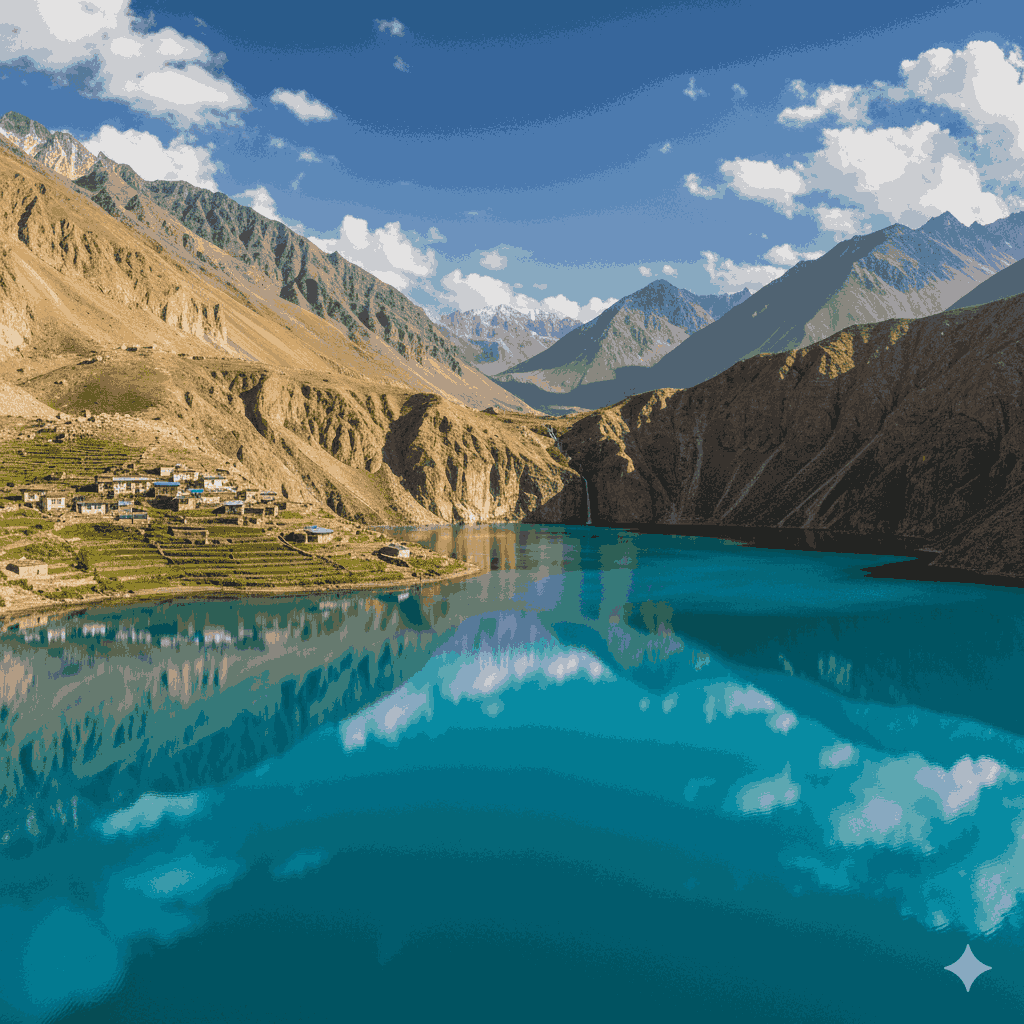
Shey Phoksundo Lake highlight of the Upper Dolpo Expedition route
For local communities, especially those influenced by the ancient Bon and Tibetan Buddhist traditions, the lake is considered sacred. Prayer flags, monasteries, and traditional villages surrounding the lake reflect a deep spiritual connection between nature and human life.
Today, Shey Phoksundo Lake is not just a trekking destination it is a symbol of untouched Himalayan wilderness, attracting adventure travelers, photographers, researchers, and cultural explorers from around the world.
Where Is Shey Phoksundo Lake Located?
Shey Phoksundo Lake is located in the Dolpa District of Karnali Province in western Nepal, one of the most remote and least developed regions in the country. It sits at an altitude of approximately 3,600 meters above sea level inside the protected zone of Shey Phoksundo National Park.
Geographically, Dolpa is part of the trans-Himalayan region bordering Tibet, China. This makes the lake part of a unique ecological and cultural transition zone where Himalayan and Tibetan influences blend together.
Reaching Shey Phoksundo is a major journey in itself. Travelers typically begin by flying from Kathmandu to Nepalgunj, followed by another flight to Juphal Airport in Dolpa. From Juphal, a multi-day trek is required to reach the lake. There are no motorable roads that lead directly to the lake, which is one of the reasons it remains so pristine.
The trek passes through the Phoksundo River valley, remote villages like Dunai and Chhepka, dense pine forests, suspension bridges, and steep mountain trails. As trekkers move closer to the lake, the landscape becomes increasingly dramatic, with rocky cliffs and waterfalls dominating the terrain.
The isolation of the region is both a challenge and a blessing. While accessibility is limited, it has helped preserve the lake’s natural environment and traditional culture. Unlike heavily commercialized trekking routes such as Everest or Annapurna, Shey Phoksundo remains relatively untouched by mass tourism.
This remoteness is also why Dolpa is often described as “the hidden Himalaya.” It offers a rare glimpse into a lifestyle and landscape that has remained largely unchanged for centuries.
Geological Formation: How Shey Phoksundo Lake Was Created
Shey Phoksundo Lake is not a glacial lake like many others in the Himalayas. Instead, it is a landslide-dammed lake, formed thousands of years ago when a massive landslide blocked the flow of a river valley, creating a natural dam.
This geological event resulted in the accumulation of water in a deep basin surrounded by steep cliffs. Over time, the trapped water formed what is now Nepal’s deepest lake, with estimated depths exceeding 600 meters in some studies.
One of the most scientifically interesting features of the lake is that it has no surface outlet stream. This means water does not flow out in a visible river. Instead, it drains through underground channels, contributing to its stability and clarity.
The lake’s famous turquoise-blue color is influenced by several factors:
- High mineral content in the water
- Fine sediment particles reflecting sunlight
- Extreme depth reducing light absorption
- Absence of aquatic plants or algae
These combined factors create a striking visual effect that changes depending on weather and sunlight conditions. The surrounding terrain also plays a role in its formation and preservation. The lake is enclosed by steep cliffs and rocky mountain walls, which protect it from sediment inflow and human interference.
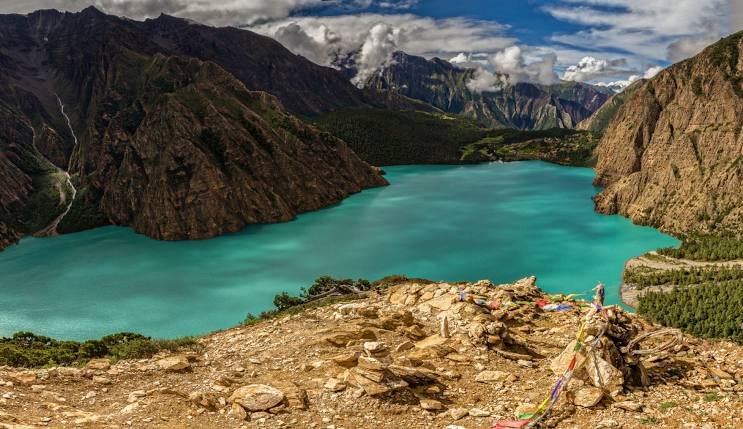
Shey Phoksundo Lake
Because of its unique formation, Shey Phoksundo is often studied by geologists as an example of natural damming processes in high-altitude environments. It also provides insights into long-term ecological stability in isolated alpine systems.
Shey Phoksundo National Park: Nepal’s Largest Protected Wilderness
Shey Phoksundo Lake lies inside the vast protected area of Shey Phoksundo National Park, which is Nepal’s largest national park, covering an enormous portion of the trans-Himalayan and high-mountain region of western Nepal.
Established in 1984, this national park plays a critical role in conserving Nepal’s rare alpine ecosystems. Unlike more accessible parks in Nepal, Shey Phoksundo National Park remains extremely remote, which has helped it preserve one of the most undisturbed natural environments in the Himalayas.
The park is home to a wide range of biodiversity. Some of the most iconic wildlife species found here include the elusive snow leopard, Himalayan black bear, blue sheep (bharal), musk deer, Himalayan tahr, and numerous species of high-altitude birds. Because of this biodiversity, the park is considered one of the most important ecological zones in Nepal.
The vegetation varies dramatically depending on altitude. Lower regions contain pine and fir forests, while higher elevations transition into alpine meadows and barren rocky landscapes. This variation creates a unique ecological gradient rarely seen in other parts of Nepal.
Shey Phoksundo National Park is also culturally significant. The region is home to communities influenced by Tibetan Buddhism and the ancient Bon religion, both of which are deeply connected to the natural landscape. Sacred monasteries and traditional villages exist within the park boundaries, adding a cultural layer to its ecological importance.
Because of its ecological sensitivity, strict conservation rules are enforced. Visitors are required to obtain permits, and trekking activities are regulated to minimize environmental impact. This ensures that the natural beauty of the park, including Shey Phoksundo Lake, remains preserved for future generations.
Trekking Route to Shey Phoksundo Lake (Complete Guide)
Reaching Shey Phoksundo Lake is one of the most rewarding trekking experiences in Nepal, but also one of the most remote and challenging.
The journey typically begins with a flight from Kathmandu to Nepalgunj, followed by a second short flight to Juphal Airport in Dolpa. From Juphal, the actual trekking route begins.
The main trail passes through Dunai, the administrative center of Dolpa, and then continues along the Phoksundo River valley. Trekkers gradually ascend through a series of remote villages such as Shyanta, Chhepka, and Jharana Hotel, each offering basic teahouse accommodation.
As the trail progresses, the landscape becomes increasingly dramatic. Dense pine forests give way to steep cliffs, suspension bridges, and waterfalls cascading from high rock walls. One of the most famous sights along the route is the stunning “Shey Phoksundo Waterfall,” one of the highest waterfalls in Nepal.
The final approach to the lake leads into Ringmo village, a traditional settlement located just above the lake shore. From here, trekkers descend to the lake itself, where the turquoise water appears suddenly against a backdrop of cliffs and mountains.
The trek usually takes between 7 to 10 days, depending on pace and acclimatization. The difficulty level is considered moderate to challenging due to altitude, remoteness, and limited infrastructure.
Unlike commercial trekking routes such as Everest or Annapurna, this journey is quiet, isolated, and deeply immersive. There are no crowded viewpoints or urban distractions only raw Himalayan wilderness.
Best Time to Visit Shey Phoksundo Lake
The best time to visit Shey Phoksundo Lake is during the pre-monsoon and post-monsoon seasons when weather conditions are most stable and trekking routes are accessible.
🌸 Spring (March to May)
Spring is one of the most popular seasons for trekking. During this time, temperatures are moderate, skies are generally clear, and the surrounding forests begin to bloom with alpine flowers. Snow at higher elevations gradually melts, making trails more accessible.
🍂 Autumn (September to November)
Autumn is considered the best overall season. After the monsoon, the skies become crystal clear, offering breathtaking views of the Himalayas and the lake’s turquoise waters. Temperatures are stable, and trekking conditions are ideal.
❄️ Winter (December to February)
Winter in Dolpa is extremely cold, with heavy snowfall blocking many trails. While the lake remains accessible in some lower regions, trekking becomes difficult and often requires advanced experience and equipment.
🌧️ Monsoon (June to August)
Monsoon is the least recommended season. Heavy rainfall causes landslides, slippery trails, and flight disruptions to Dolpa. However, the landscape becomes lush and green during this time.
Overall, autumn remains the peak season due to its perfect balance of weather, visibility, and safety.
Culture and People of Dolpa Region
The region surrounding Shey Phoksundo Lake is not only geographically remote but also culturally rich. The people of Dolpa have preserved ancient traditions that are deeply influenced by Tibetan Buddhism and the Bon religion.
One of the most important cultural centers near the lake is Ringmo village. This traditional settlement is known for its stone houses, yak herding lifestyle, and strong spiritual connection to the land. Life here remains simple and closely tied to nature.
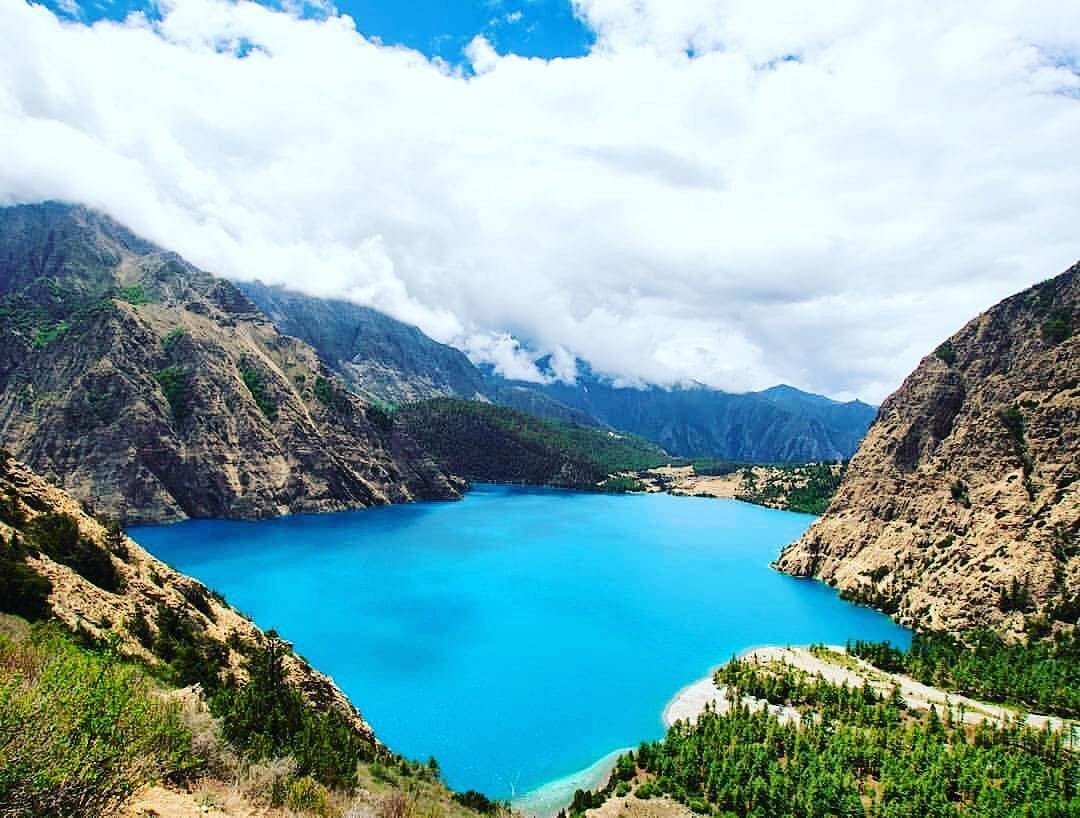
The Bon religion, which predates Buddhism in the Himalayas, still plays a significant role in local beliefs. Many rituals, festivals, and daily practices reflect a deep respect for mountains, rivers, and lakes. Shey Phoksundo Lake itself is considered sacred by local communities.
Monasteries such as Tshowa Gompa, located near the lake, serve as important spiritual centers. These monasteries are often decorated with prayer flags and religious symbols that reflect centuries of Himalayan spiritual tradition. Life in Dolpa is challenging due to isolation, limited infrastructure, and harsh weather conditions. However, the cultural richness and strong community bonds make it one of the most fascinating regions in Nepal.
Things to Do at Shey Phoksundo Lake
Once trekkers finally reach Shey Phoksundo Lake, the experience shifts from a challenging journey to a deeply immersive natural and cultural encounter. Unlike commercial trekking destinations, activities here are not about adventure sports but about experiencing raw Himalayan wilderness.
🌊 1. Lakeside Exploration
The first and most iconic activity is simply walking along the shoreline of the lake. The surreal turquoise water changes color throughout the day depending on sunlight, making every moment visually different. The silence around the lake adds to its mystical atmosphere.
📸 2. Photography & Cinematic Views
Shey Phoksundo is one of the most photogenic locations in Nepal. The contrast between deep blue water, white cliffs, and rugged mountains creates perfect compositions for landscape photography. Sunrise and sunset are particularly dramatic.
🏞️ 3. Visit Ringmo Village
Nearby Shey Phoksundo National Park includes the traditional Ringmo village, where visitors can observe Tibetan-influenced architecture, stone houses, and yak herding culture.
🏔️ 4. Tshowa Monastery Visit
The ancient Tshowa Gompa (monastery) near the lake is a spiritual highlight. It is deeply connected to Bon and Buddhist traditions and offers insight into centuries-old Himalayan spirituality.
🧘 5. Meditation & Spiritual Experience
Many travelers describe the lake as a natural meditation space. The isolation, altitude, and silence make it ideal for reflection and mindfulness.
🐾 6. Wildlife Observation
The surrounding park is home to rare Himalayan species. While sightings are not guaranteed, travelers may encounter blue sheep or high-altitude birds during treks.
Flora and Fauna of Shey Phoksundo Region
The ecosystem around Shey Phoksundo Lake is one of the richest high-altitude biodiversity zones in Nepal.
Because it lies within Shey Phoksundo National Park, the area supports a rare combination of Himalayan and trans-Himalayan species.
🐆 Wildlife
The region is famously known as a habitat for the elusive snow leopard, one of the rarest big cats in the world. Other mammals include:
- Himalayan black bear
- Blue sheep (bharal)
- Himalayan tahr
- Musk deer
- Jackals and foxes
🐦 Birdlife
Bird enthusiasts may encounter species such as:
- Himalayan monal (Nepal’s national bird)
- Blood pheasant
- Himalayan griffon vulture
- Snow partridge
🌿 Vegetation
Vegetation changes sharply with altitude:
- Lower regions: pine, fir, and juniper forests
- Mid zones: rhododendron and oak forests
- Higher zones: alpine grasses and shrubs
This ecological diversity makes the region scientifically important and environmentally sensitive.
Travel Permits and Cost Guide
Traveling to Shey Phoksundo Lake requires special permits because it lies in a restricted and protected region.
🪪 Required Permits
- Shey Phoksundo National Park Entry Permit
- Restricted Area Permit (RAP) for Upper Dolpa region (if extended trekking)
These permits are issued through registered trekking agencies in Nepal.
💰 Estimated Trek Cost
The total cost depends on group size and itinerary:
- Budget trek: USD 700 – 1000
- Mid-range trek: USD 1000 – 1500
- Guided expedition: USD 1500+
🚁 Transportation Cost
- Kathmandu → Nepalgunj flight
- Nepalgunj → Juphal flight
- Trekking support logistics (guide/porter required in many cases)
👣 Guide Requirement
A licensed guide is strongly recommended due to the remote terrain, lack of infrastructure, and safety considerations.
Accommodation and Food During Trek
Accommodation around Shey Phoksundo Lake is basic but functional. Luxury facilities are not available due to the remote nature of the region.
🏠 Teahouses & Homestays
Most trekkers stay in small teahouses or homestays in villages like:
- Chhepka
- Jharana Hotel area
- Ringmo village
Rooms are simple, usually twin-sharing with basic bedding.
🍲 Food Availability
Food options are limited but filling:
- Dal Bhat (most common meal)
- Tibetan bread
- Noodles and soup
- Local butter tea
⚡ Facilities
- Limited electricity (mostly solar)
- Charging may cost extra
- No reliable internet in many areas
Trekkers are advised to carry essentials and power banks.
Interesting Facts About Shey Phoksundo Lake
Here are some powerful facts that perform well for SEO and Discover:
- It is the deepest lake in Nepal
- It has a stunning turquoise-blue color that changes with light
- It is a landslide-dammed lake, not a glacial lake
- The lake has no aquatic vegetation, making it extremely clear
- It lies inside Nepal’s largest protected area
- The region is influenced by ancient Bon religion
- There is no direct road access
- It is one of the least polluted lakes in Asia
- It is surrounded by snow leopard habitat
- It remains one of Nepal’s most remote trekking destinations
FAQs About Shey Phoksundo Lake
Is Shey Phoksundo Lake worth visiting?
Yes, it is considered one of the most beautiful and untouched lakes in Nepal.
How difficult is the trek?
Moderate to challenging due to altitude and remote trails.
Can beginners visit Shey Phoksundo?
Yes, with proper preparation and a guide.
Why is the lake blue?
Due to minerals, depth, and lack of aquatic plants.
Is there road access?
No, it is only accessible by trekking.
How many days is the trek?
Around 7 to 10 days depending on route.
Why Shey Phoksundo Is a Hidden Himalayan Treasure
Shey Phoksundo Lake is more than just a destination—it is one of Nepal’s last untouched natural wonders. Hidden deep within Shey Phoksundo National Park, it represents a rare combination of geological uniqueness, cultural depth, and raw Himalayan beauty.
From its deep turquoise waters to its sacred spiritual environment and isolated trekking routes, Shey Phoksundo offers an experience that is both physically challenging and emotionally rewarding. It is not a place for mass tourism but for explorers who seek authenticity and silence.
As Nepal continues to grow as a global travel destination, Shey Phoksundo remains a reminder of what the Himalayas once were—pure, untouched, and deeply connected to nature and spirituality.
For trekkers, photographers, and cultural travelers, it is not just a lake—it is a journey into one of the most mystical landscapes in the world.
