
📋 Festival Quick Reference
- Festival Name: Mani Rimdu (མཎི་རིམ་འདུ)
- Religion: Tibetan Vajrayana Buddhism
- Community: Sherpa people of the Khumbu and Solu-Khumbu regions
- Duration: Three public days (preceded by 18 days of private monastery ritual)
- 2026 Tengboche Dates: 🗓️ November 3–5, 2026
- 2026 Thame Dates: 🗓️ May 14–16, 2026
- Altitude: Tengboche 3,867m | Thame 3,800m
- Visitor Policy: Open to all respectful visitors no ticket required
There are festivals that entertain. There are festivals that impress. And then there are festivals that reach inside you and rearrange something fundamental about how you understand the world. Mani Rimdu is the third kind.
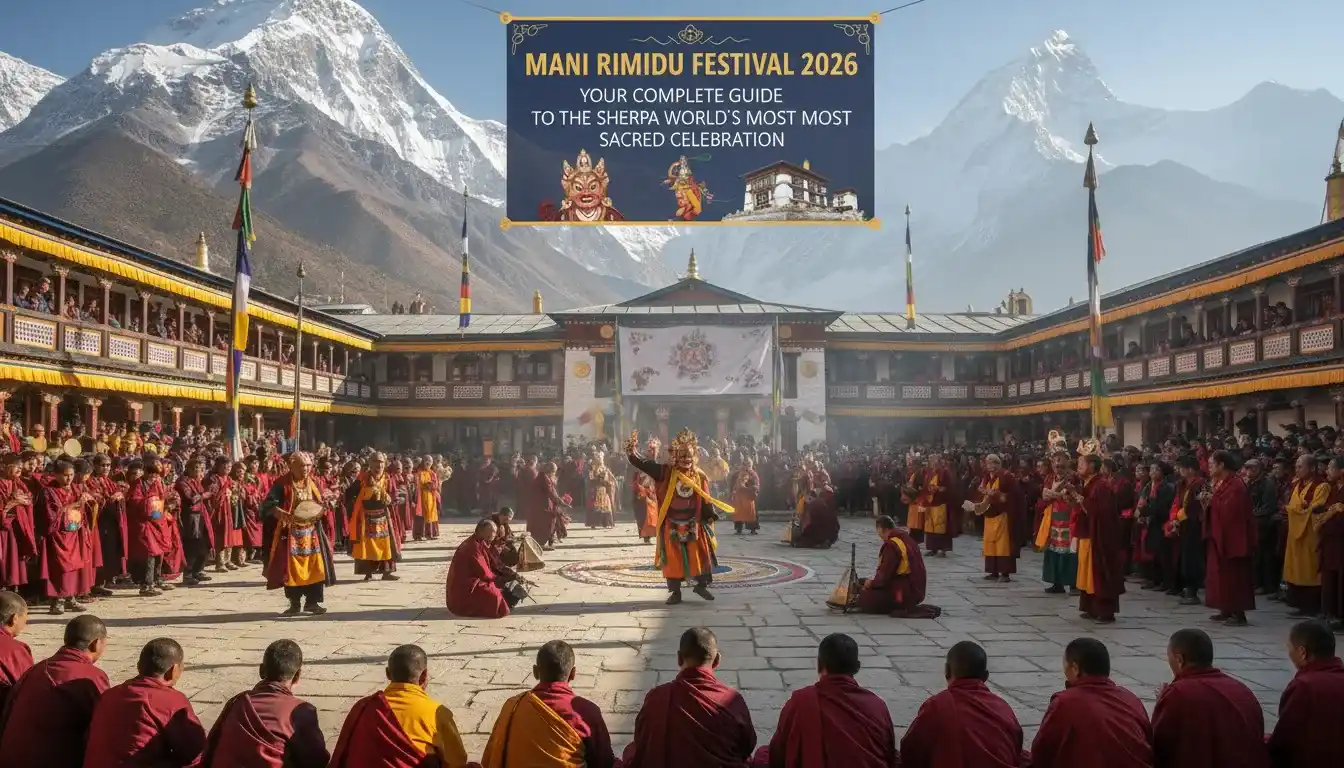
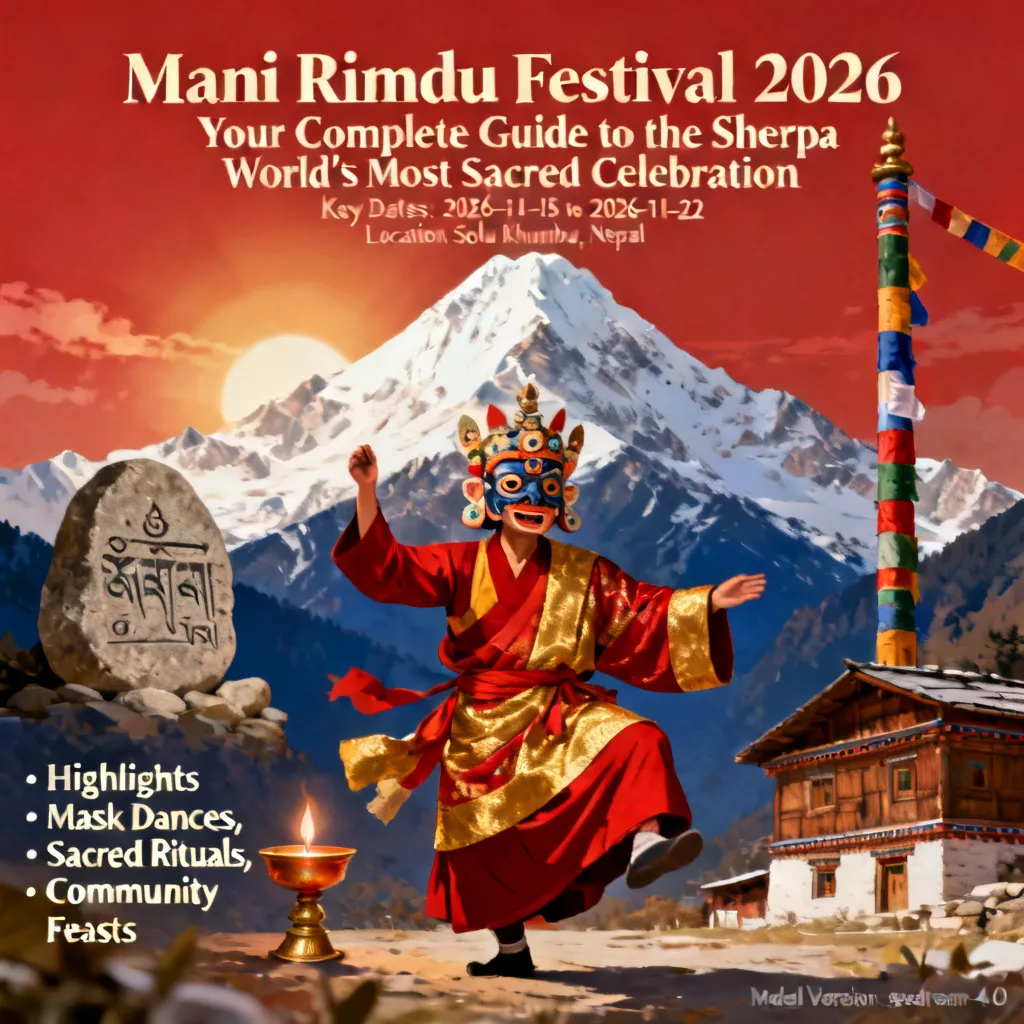
Standing in the stone courtyard of Tengboche Monastery at 3,867 metres above sea level on a November morning the Himalayan sky above you the precise, impossible blue that only exists at altitude watching a figure in a vast painted mask and robes of crimson and gold move through ancient ritual choreography while horns and cymbals and the deep percussive pulse of drums fill the mountain air this is not sightseeing. This is something far closer to the experience of witnessing a civilisation speak to its own deepest truths.
Mani Rimdu is the most important festival in the Sherpa cultural calendar. It is a celebration of Buddhist dharma, a ritual defeat of ignorance and evil, a community renewal ceremony, and a living artwork of extraordinary complexity performed at altitude, inside one of the world’s most dramatically beautiful monastery settings, by monks who have spent weeks in intensive preparation.
Mani Rimdu Festival 2026
For the growing number of travelers who time their Everest region visit specifically around Mani Rimdu, it is frequently described as the single most powerful cultural experience they have ever had.
This is everything you need to know to be there in 2026.
What Is Mani Rimdu and Why Does It Matter?
The Origins A Festival Born at the Roof of the World
Mani Rimdu is a Tibetan Buddhist festival performed exclusively by the Nyingma school the oldest school of Tibetan Buddhism, tracing its lineage directly to the 8th-century Indian master Padmasambhava (Guru Rinpoche), who is credited with bringing Buddhism to Tibet and, by extension, to the Sherpa people who migrated from eastern Tibet to Nepal’s Khumbu region roughly 500 years ago.
The festival’s name offers a key to its meaning. Mani refers to the sacred mantra Om Mani Padme Hum the mantra of Avalokiteshvara, the Bodhisattva of Compassion, and the most widely recited mantra in all of Tibetan Buddhism. Rimdu translates approximately as “a small round pill” referring to the consecrated rilbu pills that are one of the festival’s most spiritually significant offerings.
Together, Mani Rimdu is understood by the Sherpa community as a ceremony of compassion, protection, and the triumph of dharma over ignorance a ritual renewal of the Buddhist values that have sustained Sherpa culture through five centuries of Himalayan life.
👨👩👧 What Mani Rimdu Means to the Sherpa Community
To understand Mani Rimdu’s significance to Sherpa people, you first need to understand what Sherpa culture is built upon.
The Sherpas are not simply the mountain guides that global trekking culture has made them famous as. They are a distinct ethnic and cultural group Tibetan in origin, Buddhist in faith, extraordinarily resilient in character whose entire worldview is shaped by the Nyingma Buddhist tradition that Mani Rimdu both celebrates and perpetuates.
For the Sherpa community, Mani Rimdu is simultaneously:
- A spiritual renewal the 18 days of private ritual preceding the public festival involve intensive group meditation and prayer by the monastery’s monks, accumulating merit and generating protective energy for the entire community
- A community gathering Sherpa families travel from across the Khumbu region to attend; the festival is a reunion of extended family networks that the demands of trekking season and geographic dispersal keep separated for much of the year
- A transmission of identity the masked dances, the iconography, the music, the ritual objects each element carries cultural knowledge that has been passed from teacher to student across generations; Mani Rimdu is how Sherpa cultural memory is embodied and renewed
- A blessing ceremony the rilbu pills distributed on the final day carry the accumulated spiritual energy of the entire 21-day ritual; receiving them is considered a genuine protection for the year ahead
When a Tengboche monk adjusts his mask before entering the courtyard, he is not putting on a costume. He is becoming a deity — temporarily embodying a manifestation of enlightened consciousness for the benefit of every being present. That distinction is not theatrical. For the Sherpa community, it is theological reality.
The Three-Day Public Programme
The public Mani Rimdu festival runs across three days, each with a distinct character and ritual focus. What visitors witness is the culmination of 18 days of intensive private monastery practice the moment when weeks of internal spiritual work is made visible to the community and the world.
🔴 Day One Empowerment Ceremony (Wang)
Timing: Begins approximately 09:00 | Duration: 3–4 hours | Location: Main monastery prayer hall
The first day is the most intimate and spiritually concentrated of the three. The head lama the Tengboche Rinpoche at Tengboche Monastery conducts the Wang, or empowerment ceremony, inside the monastery’s main prayer hall.
This is a transmission ceremony in the Vajrayana Buddhist tradition the Rinpoche transmits the spiritual blessing and protective energy accumulated during 18 days of prayer directly to the assembled community. Lay Sherpa community members, monks, and respectful visitors crowd into the hall together.
What you will experience:
- The monastery’s interior is illuminated by butter lamps; the air carries incense, yak butter, and juniper smoke
- Monks seated in rows chant from ancient texts in a deep, resonant, overlapping pattern unlike any Western choral tradition
- Ritual objects dorjes (thunderbolts), bells, sacred texts, offering bowls filled with grain and water are arranged on the altar with meticulous care
- The Rinpoche performs ritual hand gestures (mudras) and recitations; devotees receive blessings individually
For foreign visitors: You are welcome to observe respectfully from the sides or rear of the hall. Remove shoes before entering. Maintain silence. Do not point feet toward the altar. Photography is generally restricted inside the hall on this day follow the lead of local community members.
🎭 Day Two The Cham: Sacred Masked Dances
Timing: Begins approximately 09:00–10:00 | Duration: 5–7 hours | Location: Monastery courtyard
Day Two is the visual and dramatic heart of Mani Rimdu the day that draws photographers, travelers, and cultural visitors from across the world. The Cham is a form of sacred masked dance found across Tibetan Buddhist cultures, but Mani Rimdu’s version performed at Tengboche against the backdrop of Ama Dablam and the Khumbu peaks is widely considered among the most spectacular in all of Asia.
The Cham is not performance in the Western theatrical sense. It is ritual enactment each dance re-tells episodes from Buddhist cosmology and history, particularly narratives involving Guru Padmasambhava’s subjugation of demonic forces and the triumph of dharma over ignorance and ego.
The Main Dance Sequence:
The day’s dances unfold across approximately seven hours, with breaks between sequences. The principal dances include:
- The Dance of the Black Hat Sorcerers (Zhana Ngagpa) monks in tall black hats and flowing robes perform slow, deliberate movements representing the power of tantric practitioners to subdue negative forces; the hypnotic rhythm of the accompanying drums establishes the ritual space
- The Dance of the Terrifying Deities (Drag-gshed) the most visually dramatic sequence; monks wear enormous painted masks representing wrathful protector deities bulging eyes, fanged mouths, skull crowns in robes of layered silk; these figures are not evil but protective, their terrifying appearance directed outward at the forces of ignorance rather than inward at the community
- The Dance of the Cemetery Lords (Durdag) skeleton-costumed figures representing the lords of the charnel ground; a meditation on impermanence and the reality of death embedded within the festival’s celebratory atmosphere
- The Dance of the Eight Manifestations of Padmasambhava eight monks each embodying a different aspect of Guru Rinpoche, the festival’s central spiritual figure; the choreography is the most complex of the entire sequence
- The Comic Interlude Achi Lhamu between the heavier ritual dances, a pair of comic characters (laypeople figures in simple masks) perform slapstick interludes that delight the Sherpa audience and provide tonal relief; this is the moment when children press to the front and laughter fills the courtyard a reminder that Buddhist celebration encompasses the full human register
Courtyard Viewing Tips:
- Arrive by 08:30 to claim a ground-level position near the front; the courtyard fills quickly once dances begin
- Bring a folding cushion or thick jacket to sit on the stone courtyard is cold and hard; dances begin mid-morning and run through mid-afternoon
- A 70–200mm lens captures the mask detail that wide-angle misses; a 35–50mm gives the environmental context shot showing monks, mountains, and assembled community simultaneously
- The afternoon light (14:00–16:00) on the southern courtyard wall is warm and directional if you can stay for the later dances, the light quality improves significantly
🌸 Day Three Blessing Ceremony and Rilbu Distribution
Timing: Morning ceremony from 08:00 | Duration: 2–3 hours | Location: Monastery courtyard and surrounding grounds
The third day brings the festival to its spiritual conclusion with a community blessing ceremony and the distribution of the rilbu the small consecrated pills that give the festival its name.
The morning begins with a final, shorter sequence of dances before the Tengboche Rinpoche addresses the assembled community from the monastery steps. The blessing ceremony that follows is the most communally intimate moment of the entire festival monks move through the crowd distributing the rilbu pills, which devotees receive in cupped hands and consume as a spiritual protection and blessing.
Effigies representing negative forces constructed during the 18 days of private ritual and imbued through ceremony with the accumulated negativity that the festival has been working to overcome are ritually destroyed, symbolising the defeat of ignorance and the clearing of obstacles for the community in the year ahead.
For foreign visitors: The rilbu distribution is open to all present. Receiving one is considered respectful participation rather than cultural appropriation accept with both hands cupped, bow slightly in acknowledgment, and consume it as the monks indicate. Many long-term Nepal travelers describe this moment as one of the most unexpectedly moving of their entire journey.
2026 Dates: Tengboche and Thame Monasteries
Mani Rimdu is performed at three monasteries in the Khumbu and Solu-Khumbu region, each on different dates determined by the Tibetan lunar calendar:
| Monastery | 2026 Festival Dates | Altitude | Notes |
|---|---|---|---|
| Thame Monastery | May 14–16, 2026 | 3,800m | Spring edition; smaller, more intimate gathering; combines with pre-monsoon EBC trek |
| Tengboche Monastery | November 3–5, 2026 | 3,867m | Largest and most famous; peak festival atmosphere; combines perfectly with autumn EBC season |
| Chiwong Monastery | November 2026 (dates TBC) | 2,990m | Lower altitude; Solu region; less visited by international trekkers; most authentic community atmosphere |
⚠️ Important Note: Mani Rimdu dates are set by the Tibetan lunar calendar and confirmed by each monastery’s head lama. The dates above are calculated projections for 2026 always verify final confirmed dates with the monastery or Nepal Tourism Board approximately 6–8 weeks before travel.
Combining Mani Rimdu with the EBC Trek
For most international visitors, attending Mani Rimdu at Tengboche in November fits naturally and beautifully into a standard Everest Base Camp trek itinerary in fact, the festival falls almost precisely at the midpoint of the classic EBC route.
🗺️ The Ideal 2026 Combined Itinerary
Pre-Festival Approach (Days 1–8)
- Fly Kathmandu → Lukla; begin trek toward Namche Bazaar
- Namche Bazaar rest and acclimatisation days
- Continue through Khumjung and Khunde villages
- Arrive Tengboche by November 2 — the evening before the festival begins
Festival Days (Days 9–11: November 3–5)
- Day One — Wang empowerment ceremony; settle into Tengboche teahouse
- Day Two — Full day Cham masked dances in the monastery courtyard
- Day Three — Blessing ceremony and rilbu distribution; rest afternoon
Post-Festival EBC Push (Days 12–17)
- Continue trek toward Dingboche and Lobuche
- Reach Gorak Shep; hike to Everest Base Camp
- Summit Kala Patthar for sunrise Everest photography
- Begin descent via Namche Bazaar back to Lukla
Total trip length: 17–19 days from Kathmandu
What to Expect as a Foreign Visitor
Mani Rimdu at Tengboche receives a meaningful number of international visitors each November particularly in the weeks following the main October EBC trekking rush. Here is an honest, practical briefing:
✅ What You Should Know Before You Arrive
- Accommodation books out early Tengboche has very limited teahouse capacity; book your November 2–5 accommodation at least 6–8 weeks in advance; Namche Bazaar (2 hours below) is a viable backup base with far more beds available
- Altitude affects everything Tengboche sits at 3,867m; if you arrive directly from Kathmandu without proper acclimatisation, altitude sickness will compromise your experience significantly; follow the standard acclimatisation schedule through Namche before ascending
- Dress respectfully and warmly November at Tengboche is genuinely cold; temperatures drop to -10°C or below overnight and morning courtyard temperatures are frigid; layer appropriately, but also dress modestly for the monastery setting; no shorts, sleeveless tops, or revealing clothing
- Ask before photographing photography of the Cham dances in the courtyard is generally permitted; photography inside the monastery during the Wang ceremony is restricted; always follow instructions from monks or monastery staff; never photograph devotees at close range without a respectful acknowledgment
- Carry cash there are no ATMs at Tengboche; withdraw sufficient Nepali rupees in Namche Bazaar before ascending
- Arrive with patience and openness festival timing at Tengboche operates on monastery time, not schedule time; dances may begin 30–60 minutes later than anticipated; embrace the rhythm rather than fighting it
🙏 Being a Respectful Visitor
The Sherpa community genuinely welcomes foreign visitors to Mani Rimdu there is no sense of intrusion in attending, provided you arrive with appropriate reverence. Remember that what you are witnessing is not a cultural performance staged for tourism. It is a living religious ceremony of deep significance to the community performing it.
Walk clockwise around the stupa and monastery buildings. Keep voices low during ceremonies. Do not step over ritual objects or offerings. If a monk gestures you to move or be silent, respond immediately and graciously. And if a Sherpa family invites you to share tea or food during the festival accept. That invitation is itself a small expression of the hospitality and generosity that Mani Rimdu, at its deepest level, is designed to cultivate. 🏔️🙏
Planning your 2026 Mani Rimdu journey? Explore All About Nepal provides expert trek planning, teahouse booking guidance, and local cultural context for the complete Khumbu experience from Lukla to the monastery courtyard.
