
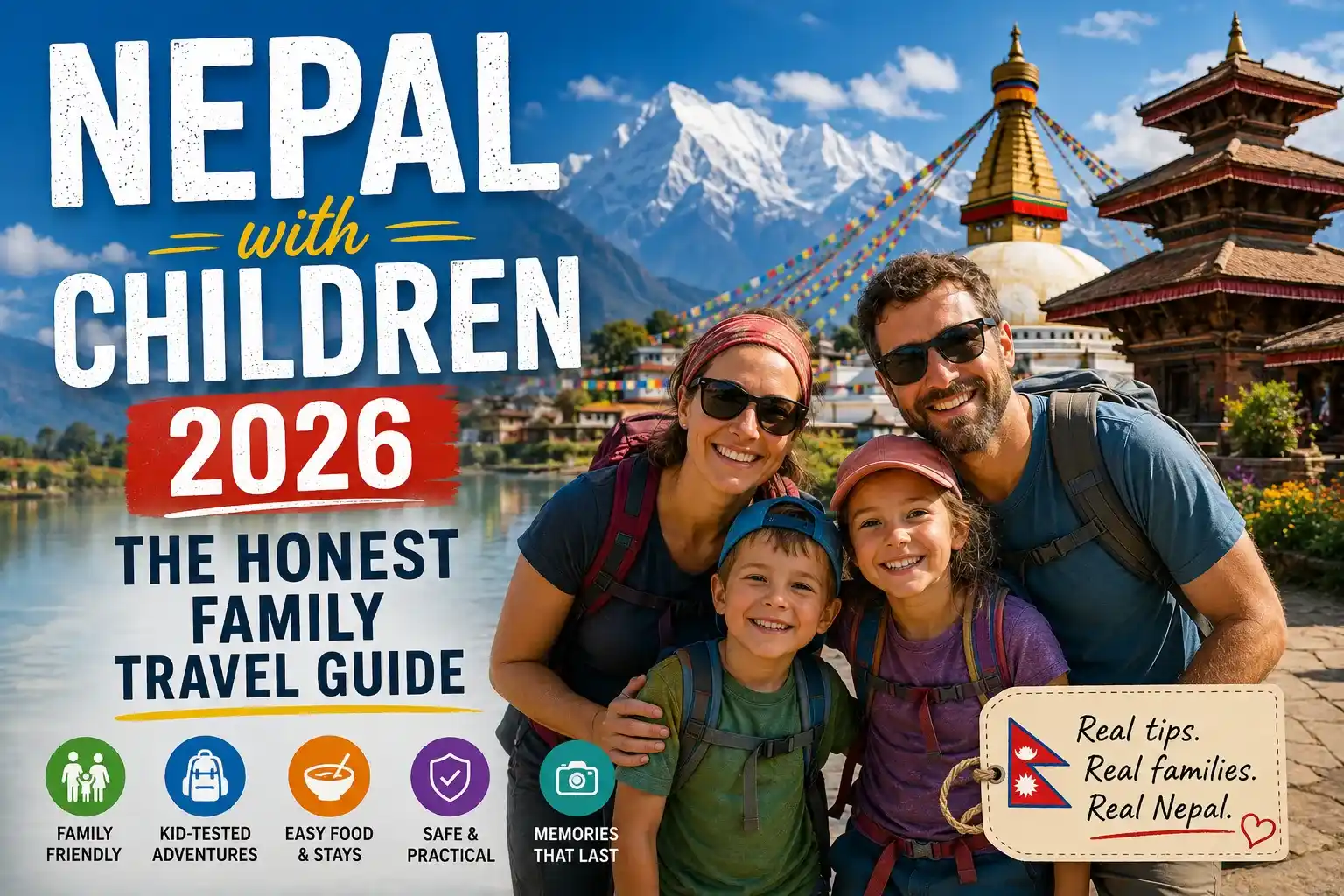
The thing about Nepal with children is that the country genuinely likes them.
Not in the performative hospitality sense that some travel writing defaults to but structurally, culturally, practically. In Nepal, children are noticed and welcomed in a way that makes solo travel feel slightly anonymous by comparison. Restaurant owners bring extra dal bhat without being asked. Guides adjust their pace without complaint. Strangers on mountain trails hand your seven-year-old a piece of fruit and a grin. This is not unusual in Nepal. It is Tuesday.
That warmth does not eliminate the practical challenges of family travel in a country with mountain roads, variable hygiene standards, unpredictable altitude effects, and teahouses that occasionally have one toilet for twelve guests. It does make those challenges considerably easier to manage.
This guide gives you the honest version which treks work at which ages, what altitude does to children’s bodies, what Chitwan delivers for different ages, what vaccinations are actually required versus merely recommended, and the practical tips from families who have done this trip, children in tow, and come back planning to do it again.
Why Nepal Works Exceptionally Well for family travel
Family adventure has increased by 40–50% since 2024, and many operators now design itineraries specifically for families customised routes, extra acclimatisation days, and child-focused pacing that make high-altitude Nepal more accessible than ever.
The structure of Nepal’s tourism infrastructure supports families in specific ways that less-visited destinations cannot match. The Annapurna and Langtang regions have well-marked trails, teahouses at regular intervals, licensed guides who carry mobile phones with emergency contacts, and road access to most trailheads meaning a family can start a trek and, if a child cannot continue, arrange a vehicle back from the nearest road without destroying the trip entirely.
Nepal is an excellent opportunity for families that want to explore together whether on foot in the mountains, by bike in the valleys, or on safari in the Terai. The roads running up into the ranges, which many people consider a problem, have actually become a safety net and a mark of accessibility, certainly for families with young children of five years and upwards.
The honest caveat: babies and toddlers under three are a logistical challenge. High-chairs in restaurants and baby-changing tables are not common in Nepal, whilst western brands of nappies or formula can be difficult to find or expensive. A travel cot is a good idea, especially if you are planning to go more basic or rural during your trip. If your child is under three, Kathmandu, Pokhara, and Chitwan are manageable with preparation. Mountain trekking should wait.
For children aged six and above, Nepal is genuinely excellent family travel. For children aged ten and above, it is exceptional.
Trekking with Children: Age by Age
Ages 3–5: The Doko Solution
For parents with younger children it is possible to hire a porter with a wooden doko basket for a fun way to carry your child on a trek.
The doko is a traditional Nepali basket carried on the back with a head strap. Smaller children who cannot walk the full distance can be carried in a doko by a dedicated porter, making short lower-altitude treks possible even with a four-year-old. The child experiences the mountain the forest, the villages, the views without the trail destroying their enjoyment. Keep maximum altitude below 2,500m for this age group. Day hikes from Pokhara (Dhampus, Sarangkot) or the Kathmandu Valley rim are appropriate. Multi-day teahouse treks are not recommended below age six.
Ages 6–9: Short Treks Begin
Depending on the age of your child, pick short 3–4 day treks to Poon Hill or Dhampus. These offer stunning mountain views without being too strenuous, and the relatively short duration and well-marked trails make them ideal for families.
Poon Hill Trek (4–5 days, max altitude 3,210m) is the standard recommendation for this age group and there is a reason it appears on every family Nepal list. The trail is genuinely beautiful, the altitude is manageable, and the Annapurna and Dhaulagiri panorama from the viewpoint gives a child their first real experience of Himalayan scale. The honest caveat from one parent: Poon Hill is not an easy trek. If you go up to Poon Hill from Pokhara there are a lot of steps, and coming down those steps is hard on knees too. Factor two good rest days into the itinerary for children under ten. A five-day minimum rather than the marketed four days gives everyone more enjoyment.
Dhampus Trek (2–3 days, max altitude 1,650m) is genuinely easy moderate walking, teahouse comfort, direct Annapurna views, and a maximum altitude low enough to eliminate any altitude risk. Ideal for a first mountain experience with children aged six and above.
Ages 10–13: The Sweet Spot
This is where Nepal family trekking truly opens up. Children who have been walking regularly, have some hill fitness, and understand basic trekking discipline can handle routes that were unavailable three years earlier.
Langtang Valley Trek (10 days, max altitude 3,870m at Kyanjin Gompa) is the recommended step-up from Poon Hill. The Langtang Trek stands out as a first choice for families with kids who want an easy, moderate-pace hike it passes through Syabrubesi, Ghodatabela, Lama Hotel, Langtang village, with a deep cultural experience of the Tamang and Yolmo communities, and the highest altitude is within manageable range for acclimatised families. The cheese factory at Kyanjin Gompa is an unlikely but genuine hit with children watching yak cheese being made is somehow universally appealing to ten-year-olds.
Tamang Heritage Trail (6–7 days, max altitude 2,200m) is the culturally richest option for curious children. The trail passes through traditional Tamang villages, offering insights into local life, customs, and Buddhist practices, with hot springs, terraced fields, and views of the Langtang range. Less crowded and features a deep cultural experience. The hot springs at Tatopani after three days of walking are an experience children remember for years.
Ages 14+: Near-Adult Trekking
Teenagers with genuine trekking fitness can handle Annapurna Base Camp (max altitude 4,130m), the Gokyo Lakes route, and with appropriate preparation and an honest assessment of their specific fitness the Three High Passes Trek if they have prior altitude experience. Everest Base Camp is achievable for fit, motivated teenagers on a minimum 14-day itinerary with proper acclimatisation. It is not appropriate as a first Nepal trek.
Altitude Safety for Children: What Parents Need to Know
Altitude sickness in children works differently from adults in one crucial way: children may not be able to accurately describe their symptoms, or may not communicate deterioration clearly because they do not want to stop or feel they are letting the family down.
Amongst all, what concerns parents most is the possibility of AMS (Acute Mountain Sickness) you must stay alert to what children are going through, recognise early symptoms, and follow safety guidelines. Ensure adequate hydration, fuel with necessary nutrients, proceed gently, acclimatise well, and if any discomfort or symptoms occur, inform the trekking guide immediately.
The rules that apply to adults apply more strictly to children:
- Limit sleeping altitude gain to 300–500m per day above 3,000m
- Never let a child sleep at a higher altitude than the previous night if they report a headache
- Build at least one full rest/acclimatisation day for every 1,000m gained above 2,500m
- A child who is unusually quiet, unusually tired, or unusually reluctant to eat is showing possible AMS symptoms do not attribute these to ordinary tiredness until altitude is ruled out
Diamox (acetazolamide) for children: Consult your paediatric travel medicine physician before travel. Diamox is used in children for altitude sickness prevention but at weight-adjusted doses significantly different from adult dosing. Never give a child adult Diamox doses. Carry a pulse oximeter monitoring blood oxygen saturation in children (healthy range above 3,500m: 85%+ when walking, 90%+ at rest) gives you objective data when a child’s self-reporting is unclear.
The descent rule: If a child shows AMS symptoms that do not resolve with rest and hydration within two hours descend. Do not wait for morning. Do not see if they sleep it off. Descend. A family trek that ends two days early is immeasurably better than the alternative.
Chitwan National Park with Children
Chitwan is, for most families, the highlight of Nepal. It is accessible, it delivers, and it requires no altitude management whatsoever.
In Chitwan National Park, kids can look out for rhinoceros, elephants, and more, while activities such as boating on Rapti River and nature walks complete other options for outdoor family enjoyment.
What children actually see and love:
The one-horned rhino is almost guaranteed on a morning jeep safari the park has over 700 rhinos and densities in the core zone mean most morning safari routes produce at least one sighting. Crocodiles on the Rapti River bank are a reliable part of any canoe trip. The Gharial crocodile breeding centre at Kasara educates children about one of the world’s most endangered reptile species in an accessible, non-frightening context.
We had a wild rhino in our hotel garden and there are elephants walking the streets. A long, fruitless safari could be boring for kids, but there are plenty of crocodiles on the river banks.
Honest expectations for children:
A tiger sighting at Chitwan is possible but not probable the park has around 128 tigers across 932 sq km. The peak trekking season (October) is not the best time to see wildlife the grass is tall and tigers are well-hidden. The best wildlife season for a family with children who need deliverable experiences is February–April, when the grass has been cut and visibility across the park’s grasslands is maximum.
The ethical elephant question: Elephant-back safaris are no longer recommended by any responsible travel operator in Nepal. The welfare concerns are well documented. Chitwan has shifted toward ethical elephant encounters at the Elephant Breeding Centre (Khorsor) children can observe elephants at close range without welfare compromise. This is worth explaining to children in advance and framing as a conscious choice: you are visiting elephants, not riding them, because Nepal is trying to do better for its wildlife.
Age appropriateness: Chitwan works for all ages above five or six. The jeep safari is best for children who can sit still for two to three hours without guaranteed results consider a half-day jeep rather than a full day for under-eights.
Kathmandu Valley Days with Children
Kids will enjoy the open spaces and opportunity to learn about Nepal’s history and culture in Bhaktapur, a UNESCO World Heritage Site with well-preserved architecture and traffic-free streets.
What actually works for children in Kathmandu:
Swayambhunath (The Monkey Temple) is the clear children’s favourite among Kathmandu’s UNESCO sites. The resident monkey population, the 365-step staircase, and the enormous painted stupa eyes at the top combine into something that holds children’s attention without requiring cultural preparation. The monkeys require respectful distance and loose food items kept inside bags inform children clearly before arrival.
Boudhanath Stupa works well for older children and teenagers who can absorb the atmosphere. Morning circumambulation with monks and Tibetan families produces a cultural immersion that no museum can replicate.
Pashupatinath Temple: You will likely see cremations here and the smell is not good not for sensitive kids. Worth a brief visit with older children (12+) who have been prepared with context about Hindu cremation traditions. Skip for children under ten or those who are sensitive to difficult sensory experiences.
Bhaktapur is the most reliably child-friendly of the heritage sites traffic-free medieval streets, enough open space for children to run, and the potter’s wheel demonstrations in Pottery Square are genuinely engaging for any age. The Juju Dhau yoghurt served in clay pots is universally accepted by children who find dal bhat or momos insufficiently appealing.
Vaccinations for Children Travelling to Nepal
Consult your doctor about traveling to Nepal — vaccination regimes may include hepatitis A, typhoid, and routine childhood vaccines. Depending on the travel itinerary, a person may also require vaccines for Japanese encephalitis or rabies.
The standard vaccination list for children visiting Nepal:
- Hepatitis A: Recommended for all travelers including children. Two-dose series; first dose at least two weeks before travel.
- Typhoid: Recommended for children eating outside tourist establishments. Oral vaccine (for children over six) or injectable. Effectiveness is not 100% maintain food hygiene practice regardless.
- Routine childhood vaccines: Confirm MMR, DTP (diphtheria, tetanus, pertussis), polio, and varicella are up to date before travel.
- Japanese Encephalitis: Recommended for rural Terai travel (Chitwan, Bardia) particularly relevant for families spending more than four weeks in Nepal or spending significant time in rural areas. Discuss with your travel medicine physician.
- Rabies: Recommended if children will have significant contact with animals (dogs, monkeys). The monkey population at Swayambhunath specifically warrants consideration children who may attempt to touch or feed monkeys are at higher risk.
- Malaria prophylaxis: Not required for the mountain trekking regions or Kathmandu. The Terai (Chitwan, Bardia, Lumbini) carries a low malaria risk. Discuss prophylaxis with your physician if including Terai destinations.
See your travel medicine physician at least six to eight weeks before departure some vaccine series require multiple doses spaced weeks apart, and leaving this to the last week before travel eliminates options.
Best Family-Friendly Accommodation
Kathmandu: Hotel Yak & Yeti (mid-upper range) has family rooms and a garden where children can decompress after temple visits. For a more boutique family experience, the Dwarika’s Heritage Hotel has courtyards and cultural programming that engage older children. Budget families do well in Thamel guesthouses ask specifically for rooms away from the street side to reduce night noise.
Pokhara: Lakeside accommodation ranges from basic guesthouses to full resort properties. There are limited but well-kept green spaces like Phewa Lake Park. Travel insurance is essential for any emergencies. The Tiger Mountain Pokhara Lodge (upper range) is the family choice if budget allows extraordinary mountain views, safe grounds, and a genuinely child-welcoming environment.
Chitwan: Sapana Lodge is a wonderful place for kids loads of space to play, a playground, and children enjoy watching the elephants being bathed at the end of the day. Island Jungle Resort and Barahi Jungle Lodge both have the space and wildlife proximity that make Chitwan memorable for children.
On trek: Family-friendly accommodations on trekking routes offer extra beds, kid-friendly meals, and safe environments. Homestays provide a unique cultural experience and a warm, welcoming atmosphere. Tell your agency you are travelling with children and request advance booking at teahouses with family rooms and reliable hot water premium in the mountains but available at most major stops.
Practical Tips from Parents Who Have Done It
“Start the altitude conversation before the flight.” Children who understand what altitude sickness is and why slowing down matters are far more likely to tell you honestly when something feels wrong. The child who knows that headache = immediate stop is safer than the one who pushes through silently to avoid disappointing the adults.
“Snacks are more important than any piece of gear.” Pack more snacks than you think is necessary. Teahouse food is excellent but the gap between meals on a mountain day is long. A child who has run out of snacks at 4,000m is a different proposition from a child with a pocket full of trail mix and chocolate.
“Build in a full rest day every four to five days.” Not a half-day, not an “easy walking” day. A genuine rest day at altitude where no packs are worn and no altitude is gained. Children regenerate faster than adults but they also degrade faster. The rest day that feels unnecessary is usually the one that prevents the evacuation.
“The kids’ relationship with the guide is everything.” A guide who genuinely engages with children teaching Nepali words, naming birds on the trail, explaining village customs turns a hard day into a story. Ask your agency explicitly for a guide known to work well with children. It is a specific skill set.
“Nepal likes children more than almost anywhere else you will travel.” This is not a cliché. It is the observation of every family who has made this trip and cannot stop planning the next one.
The Explore All About Nepal team is based in Kathmandu. For guidance on specific family itineraries, age-appropriate treks, or connecting with family-experienced guides, leave a question in the comments.
