
Most visitors to Nepal never make it east of Kathmandu. That’s both a shame and an opportunity eastern Nepal contains tea gardens that rival Darjeeling, one of the Himalayan region’s most sacred pilgrimage temples, Nepal’s best birdwatching reserve, the world’s third-highest mountain, and trekking routes that see a fraction of the foot traffic of Annapurna or Everest.
This guide covers the best places to visit in eastern Nepal organized by what each destination actually offers, how to reach it, and how long to budget for a genuine experience rather than a rushed day trip.
best places to visit in eastern Nepal
Quick Reference: Eastern Nepal at a Glance
| Factor | Detail |
|---|---|
| Main gateway cities | Biratnagar, Bhadrapur, Dharan |
| Flights from Kathmandu | 45 min to Biratnagar or Bhadrapur ($80–$120) |
| Bus from Kathmandu | 12–18 hours depending on destination |
| Key regions | Ilam hills, Taplejung, Solukhumbu (Everest), Khotang, Terai |
| Best months | October–November, March–May |
| Signature experiences | Ilam tea gardens, Pathibhara Temple, Koshi Tappu, Kanchenjunga |
| Crowd level vs Kathmandu/Pokhara | Significantly lower most areas genuinely uncrowded |
Why Eastern Nepal Is Worth the Journey
Eastern Nepal’s low visitor numbers are partly geography it’s farther from Kathmandu’s tourist infrastructure than the Annapurna or Everest regions and partly awareness. Most Nepal travel content focuses on the central corridor (Kathmandu–Pokhara–Annapurna) or the Khumbu (Everest), leaving eastern Nepal largely undocumented for Western audiences.
What you find when you get there is genuinely different from the rest of the country: lush subtropical hills covered in tea gardens, a distinct Limbu and Rai ethnic cultural identity, sacred sites that draw pilgrims from across Nepal and India but almost no Western tourists, and trekking routes approaching Kanchenjunga that rank among Nepal’s finest wilderness experiences.
1. Ilam — Nepal’s Tea Capital
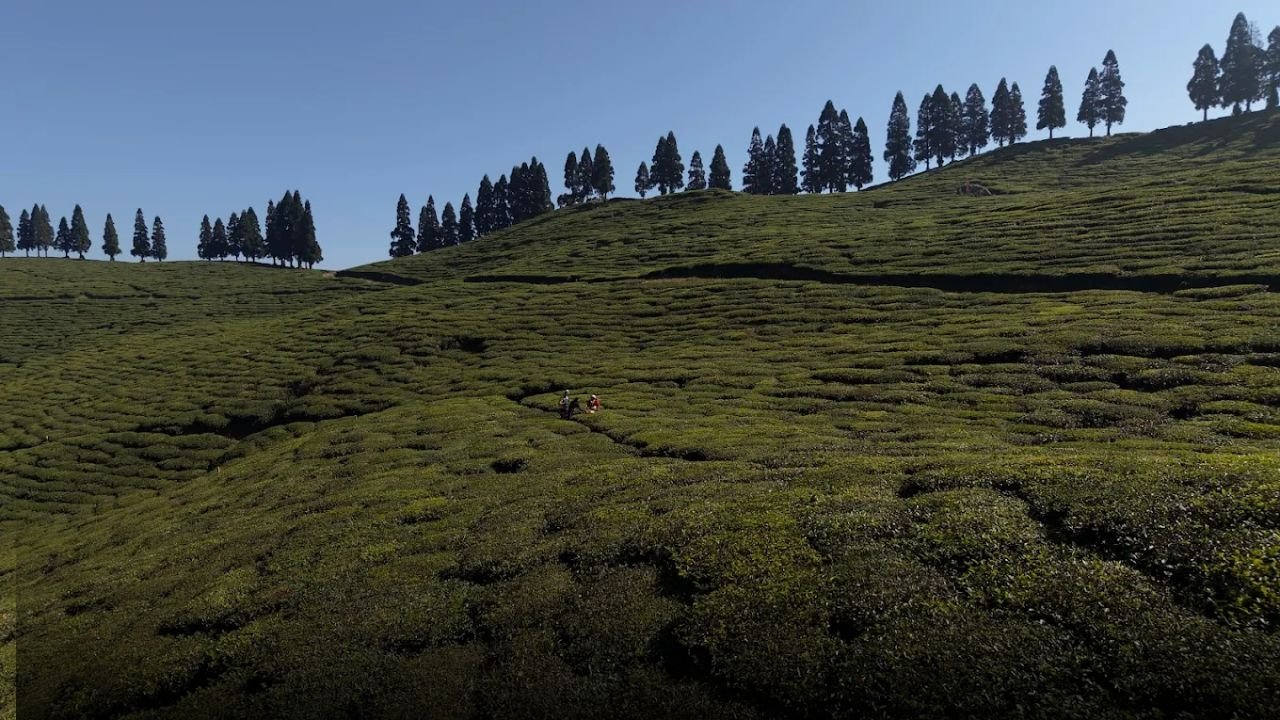
Ilam is the closest Nepal gets to Darjeeling rolling hills blanketed in organized tea gardens at elevations between 1,000m and 2,000m, with mist rising off the plantations in early morning and Kanchenjunga visible on clear days to the north.
Nepal’s tea industry is centered here, and Ilam’s high-altitude orthodox tea is genuinely excellent distinct from both Darjeeling and Assam in flavor profile, and significantly less internationally known, which keeps prices reasonable and the experience authentic.
What to do in Ilam:
- Walk through the Kanyam tea gardens one of the most scenic tea estate landscapes in the entire Himalayan region
- Visit Shree Antu hill for Kanchenjunga sunrise views the mountain appearing above the tea garden landscape at dawn is one of eastern Nepal’s most distinctive images
- Mai Pokhari a sacred lake surrounded by rhododendron forest at 2,100m, 30 minutes from Ilam town
Getting there: Fly Kathmandu to Bhadrapur (45 min, ~$90), then drive 3–4 hours to Ilam. Alternatively, bus from Kathmandu takes approximately 14–16 hours.
How long: 2–3 days minimum to properly experience the tea gardens and surrounding hills.
2. Pathibhara Temple (Taplejung) — The Most Significant Pilgrimage Site You’ve Never Heard Of
At 3,794m on a ridge in Taplejung district, Pathibhara Devi Temple is one of Nepal’s most important Hindu pilgrimage sites drawing hundreds of thousands of devotees annually from across Nepal and India. For Western travelers, it’s almost entirely unknown.
The goddess Pathibhara (locally known as Mukkumlung, sacred to the Limbu community’s Kirat tradition) is believed to grant wishes to devoted pilgrims, and the temple complex at nearly 3,800m offers panoramic views of the Kanchenjunga massif that rival anything available from a viewpoint in the Everest or Annapurna regions.
What makes it remarkable: The convergence of Hindu pilgrimage tradition and Indigenous Kirat religious practice at a single high-altitude site is unusual anywhere in the Himalayan region. The scale of pilgrimage particularly during Dashain and special festival days creates an atmosphere unlike any site in the more tourist-facing parts of Nepal.
Access: A cable car operational since 2024 has made the temple accessible to pilgrims who previously couldn’t manage the 8–9 hour trek from Phungling (Taplejung district headquarters). The trek option remains available and passes through genuinely beautiful rhododendron and oak forest.
Getting there: Fly Kathmandu to Taplejung (Suketar Airport) or Biratnagar then road transport. Budget 2–3 days for the full experience including trek and overnight near the temple.
3. Koshi Tappu Wildlife Reserve — Nepal’s Premier Birdwatching Destination
In the flat Terai plains of eastern Nepal, Koshi Tappu Wildlife Reserve protects 175 square kilometers of wetlands, grasslands, and riverine forest along the Sapta Koshi River. It’s Nepal’s oldest Ramsar site and one of Asia’s most important migratory bird staging areas.
The numbers: Over 500 bird species recorded, including some of the subcontinent’s rarest waterbirds. During winter migration (November–February), the reserve hosts tens of thousands of migratory ducks, geese, and waders. The resident population includes the critically endangered Bengal florican, Sarus crane, and multiple kingfisher species.
Beyond birds: Koshi Tappu is also home to the last wild population of wild water buffalo (Arna) in Nepal one of Asia’s most endangered large mammals alongside gharial crocodiles, smooth-coated otters, and Gangetic dolphins in the river channels.
Who it suits: Serious birdwatchers will find this one of the best sites in South Asia. General wildlife enthusiasts get a genuinely different experience from Chitwan flatter, wetter, and more focused on birds and river wildlife than megafauna.
Getting there: Drive from Biratnagar (approximately 2 hours) or from the border town of Kakarbhitta (approximately 1 hour). No domestic flight required from the main eastern Nepal gateway.
Best time: November–February for peak migratory bird populations.
4. Kanchenjunga Base Camp Trek
The third-highest mountain on Earth has a base camp that sees a fraction of the traffic of Everest or Annapurna a 3–4 week expedition through genuinely remote eastern Nepal that approaches Kanchenjunga (8,586m) from the south side through the Kanchenjunga Conservation Area.
Unlike EBC or ABC, the Kanchenjunga approach is a genuine wilderness experience no crowds, minimal tourism infrastructure, and the requirement for camping or basic homestay accommodation in most sections. It’s a restricted-area trek requiring a special permit and a licensed guide, similar to Manaslu or Upper Mustang.
What makes it worth the effort: The Kanchenjunga massif’s five summits above 8,400m a concentration of extreme altitude in a single peak system found nowhere else on Earth produce approach views that experienced trekkers consistently describe as more dramatic than EBC. The cultural landscape of eastern Nepal’s Limbu and Rai communities along the approach trail is distinct from anything in the Annapurna or Khumbu regions.
Duration: 21–28 days round trip from Kathmandu including flights and trekking days.
Permit: Kanchenjunga Conservation Area Permit plus Restricted Area Permit both arranged through a registered agency.
[See our Kangchenjunga Base Camp section in our Nepal 8000m mountains guide for more detail on the mountain itself.]
5. Halesi Mahadev — The Cave Temple Sacred to Three Religions
In Khotang district, Halesi Mahadev is a complex of limestone caves sacred simultaneously to Hindu, Buddhist, and Kirat (Indigenous) traditions a religious layering genuinely unusual anywhere in Asia.
Hindus revere it as a place where Shiva meditated, with a naturally formed Shiva lingam inside the cave. Tibetan Buddhists believe Guru Padmasambhava (who brought Buddhism to Tibet) practiced meditation here. Kirat traditions claim it as an ancient sacred site predating both religions. All three communities actively use the site for worship today.
The physical experience of entering the cave steep stairs descending into darkness, the cave opening into large chambers where butter lamps glow against ancient rock formations, water dripping from the ceiling into pools considered holy is one of the most memorable in eastern Nepal.
Getting there: Accessible by road from Diktel (Khotang district headquarters) or from Kathmandu via bus (approximately 8 hours to the nearest road point). A cable car has improved accessibility in recent years.
Combining with other eastern Nepal destinations: Halesi sits roughly midway between Kathmandu and Biratnagar a logical stop on a longer eastern Nepal circuit rather than a standalone destination.
6. Makalu-Barun National Park and Base Camp
Adjacent to Sagarmatha National Park on the west and the Tibet border on the north, Makalu-Barun protects the approach to Makalu (8,485m) the world’s fifth-highest mountain through some of the most biodiverse terrain in the Himalayan region.
The biodiversity: 3,000 flowering plant species, 440 bird species, and 75 mammal species including confirmed snow leopard, red panda, clouded leopard, and musk deer populations more concentrated biodiversity than almost any protected area in South Asia at comparable altitude.
The trek: The route to Makalu Base Camp (3,800m, with high camp options to 5,500m+) from Tumlingtar (the access airstrip) passes through the full elevational range from subtropical lowlands to high alpine glacier terrain one of the most ecologically diverse trekking routes in Nepal.
Who it’s for: Experienced trekkers specifically interested in remote wilderness, biodiversity, and a serious physical challenge. Not suitable for first-time Nepal trekkers the route is significantly more demanding than ABC or EBC with less support infrastructure.
7. Dharan and the Eastern Hill Stations
Often overlooked between Biratnagar (the main eastern gateway city) and the higher hills, Dharan is a pleasant mid-sized city at the foot of the Chure hills known for its temples, the former British Gurkha recruitment center, and as a practical base for exploring the surrounding lower hills.
For travelers arriving by flight to Biratnagar and heading toward Ilam or Taplejung, Dharan is a natural overnight stop with better accommodation and food options than most smaller eastern Nepal towns.
Day trips from Dharan:
- Budhasubba Temple — an important local Hindu site
- Pindeshwar Temple — another significant pilgrimage point
- Bijayapur viewpoint — panoramic eastern Terai views
8. Solukhumbu (Everest Region)
Technically the western part of eastern Nepal’s administrative zone, Solukhumbu deserves mention specifically because it’s accessed differently from the west flights to Phaplu (Solukhumbu’s original airstrip, before Lukla was built) give access to the lower Solu region, which sees almost no tourists despite its proximity to the Everest corridor.
The lower Solu region roughly Salleri to Phaplu is a gentle, beautifully forested area of traditional Sherpa villages and Buddhist monasteries that predates the trekking tourism boom in the Khumbu. Walking from Phaplu toward Namche Bazaar on the original trade route (rather than flying into Lukla) gives a completely different introduction to Sherpa culture.
Getting Around Eastern Nepal
Flights: Biratnagar and Bhadrapur are the two main domestic airports both served by multiple daily flights from Kathmandu (45 minutes, $80–$120). Taplejung (Suketar) has less frequent domestic flights. Tumlingtar serves Makalu access.
Road transport: Eastern Nepal’s road network has improved significantly the Mid-Hill Highway connects most hill district headquarters. Jeep hire is the most practical option for reaching destinations not on main bus routes.
Bus: Long-distance buses from Kathmandu’s Gongabu Bus Park connect to Biratnagar, Dhankuta, and Ilam. Journey times are long (12–18 hours) but affordable ($10–$20 for major routes).
Best Time to Visit Eastern Nepal
October–November (Recommended): Post-monsoon clarity delivers the sharpest Kanchenjunga views from Pathibhara and Ilam’s Shree Antu hill. Trekking conditions in Taplejung and Solukhumbu are optimal.
March–May (Recommended): Rhododendron forests in full bloom across the eastern hills spectacular on the Pathibhara trek and throughout Ilam district. Kanchenjunga Base Camp trek season.
November–February (Best for Koshi Tappu): Peak migratory bird season at Koshi Tappu Wildlife Reserve the best months for birdwatching specifically.
June–August (Monsoon): Eastern Nepal receives heavy monsoon rainfall not recommended for trekking, though Ilam’s tea gardens are lush and atmospheric in the mist. Road travel can be disrupted by landslides.
Sample Eastern Nepal Itinerary (7–10 Days)
Option 1: Cultural and Nature Circuit (7 Days)
- Day 1: Fly Kathmandu to Bhadrapur → Drive to Ilam
- Days 2–3: Ilam tea gardens, Kanyam, Shree Antu sunrise
- Day 4: Drive to Dharan (overnight)
- Day 5: Drive to Koshi Tappu (afternoon wildlife safari)
- Day 6: Koshi Tappu (full day birdwatching)
- Day 7: Drive to Biratnagar → Fly to Kathmandu
Option 2: Pilgrimage and Culture (7 Days)
- Day 1: Fly Kathmandu to Biratnagar → Drive to Dharan
- Day 2: Drive toward Taplejung (overnight en route)
- Days 3–4: Pathibhara Temple trek and visit
- Day 5: Drive to Ilam
- Day 6: Ilam tea gardens, Kanyam
- Day 7: Drive to Bhadrapur → Fly to Kathmandu
Cost Overview: Eastern Nepal Trip Budget
| Expense | Budget | Mid-Range |
|---|---|---|
| Flights (Kathmandu return) | $160–$200 | $160–$200 |
| Accommodation (per night) | $10–$20 | $25–$50 |
| Food (per day) | $8–$15 | $15–$25 |
| Local transport (jeep hire) | $30–$50/day | $50–$80/day |
| Pathibhara cable car | ~$15 round trip | ~$15 |
| Koshi Tappu entry | ~$15 | ~$15 |
| 7-day trip total | ~$500–$700 | ~$900–$1,400 |
Eastern Nepal is meaningfully cheaper than the Annapurna or Everest regions no expensive restricted area permits for most destinations, no Lukla flight premium, and lower tourist pricing on accommodation and food throughout.
Frequently Asked Questions
What are the best places to visit in eastern Nepal?
Ilam tea gardens, Pathibhara Temple in Taplejung, Koshi Tappu Wildlife Reserve, Halesi Mahadev cave temple in Khotang, and the Kanchenjunga Base Camp trek are the region’s most distinctive destinations for Western travelers.
How do I get to eastern Nepal from Kathmandu?
The fastest option is flying to Biratnagar (45 minutes, $80–$120) or Bhadrapur — both have multiple daily flights. Long-distance bus from Kathmandu takes 12–18 hours depending on destination. The Mid-Hill Highway has improved driving conditions significantly.
Is eastern Nepal safe for tourists?
Yes the region sees fewer tourists than Kathmandu or Pokhara, which means less tourism-related petty crime. Standard travel precautions apply. For high-altitude trekking (Kanchenjunga, Makalu), a licensed guide is mandatory and essential.
What is the best time to visit eastern Nepal?
October–November and March–May offer the best overall conditions for most eastern Nepal destinations. November–February is specifically best for Koshi Tappu birdwatching. Avoid June–August for trekking due to heavy monsoon rainfall and landslide risk.
Is eastern Nepal good for birdwatching?
Koshi Tappu Wildlife Reserve is one of Asia’s premier birdwatching sites over 500 species recorded, with peak migratory populations November–February. The eastern hills around Ilam and Taplejung also offer excellent birding in rhododendron and oak forest habitats.
How many days do I need for eastern Nepal?
A meaningful eastern Nepal trip requires at least 7 days enough for 2–3 destinations without rushing. 10 days allows a more relaxed circuit combining Ilam, Pathibhara, and Koshi Tappu.
Is the Kanchenjunga Base Camp trek worth doing over Everest Base Camp?
For experienced trekkers specifically seeking genuine wilderness solitude, cultural distinctiveness, and the approach to the world’s third-highest mountain yes. Kanchenjunga sees dramatically fewer trekkers than EBC and offers a substantially wilder experience. It’s a significantly more demanding undertaking than EBC in terms of duration and remoteness.
