Want to stand on a Himalayan summit but you’re not a technical climber?
Mera Peak is your answer.
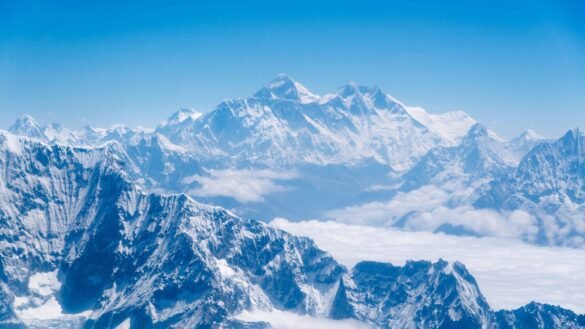
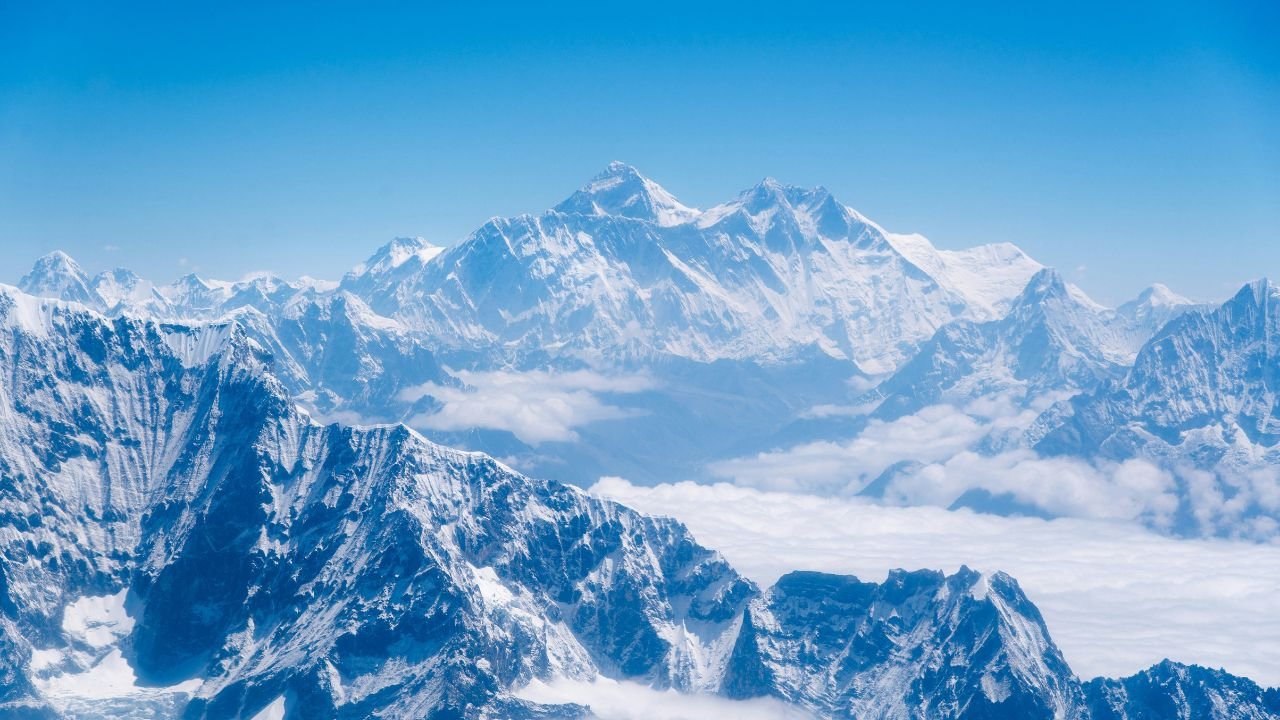
At 6,476m, it’s the highest trekking peak in Nepal yet it requires no advanced climbing skills. From the top, you see five of the world’s ten highest mountains in one sweeping view: Everest, Lhotse, Makalu, Cho Oyu, and Kanchenjunga.
It’s the perfect first 6,000m climb. Physically demanding, absolutely but achievable for a fit, determined trekker with basic training.
Here’s everything you need to plan it for 2026.
mera peak climbing
Quick Reference: Mera Peak at a Glance
| Detail | Info |
|---|---|
| Height | 6,476m (21,247 ft) |
| Status | Highest trekking peak in Nepal |
| Difficulty | Challenging but non-technical |
| Duration | 15–18 days (Kathmandu to Kathmandu) |
| Best seasons | Spring (Mar–May), Autumn (Sep–Nov) |
| Total cost | $2,200–$3,800 per person |
| Guide required | Yes mandatory (NMA-certified) |
| Starting point | Lukla (fly from Kathmandu) |
| First climbed | 1953, by Jimmy Roberts & Sen Tenzing |
What Is Mera Peak?
Mera Peak is the highest of Nepal’s officially designated “trekking peaks” mountains you can climb with basic mountaineering skills rather than expedition-level technical expertise.
It sits in the remote Hinku Valley, southeast of Everest. The mountain actually has three summits: Mera North, Mera Central, and Mera South. Most climbers aim for Mera Central at 6,476m.
Here’s what makes it special: the climb itself is technically straightforward. No difficult rock climbing, no extreme ice walls. The main challenge is the altitude and the physical endurance of a long, high expedition not technical skill.
That combination a genuine 6,000m Himalayan summit without technical climbing is why Mera Peak is one of the most popular first climbs in the world.
The View That Makes It Worth It
Let’s talk about the summit, because it’s extraordinary.
From the top of Mera Peak, you get a 360-degree panorama that includes five of the world’s ten highest mountains:
- Everest (8,849m) — the highest of all
- Lhotse (8,516m) — 4th highest
- Makalu (8,485m) — 5th highest
- Cho Oyu (8,188m) — 6th highest
- Kanchenjunga (8,586m) — 3rd highest
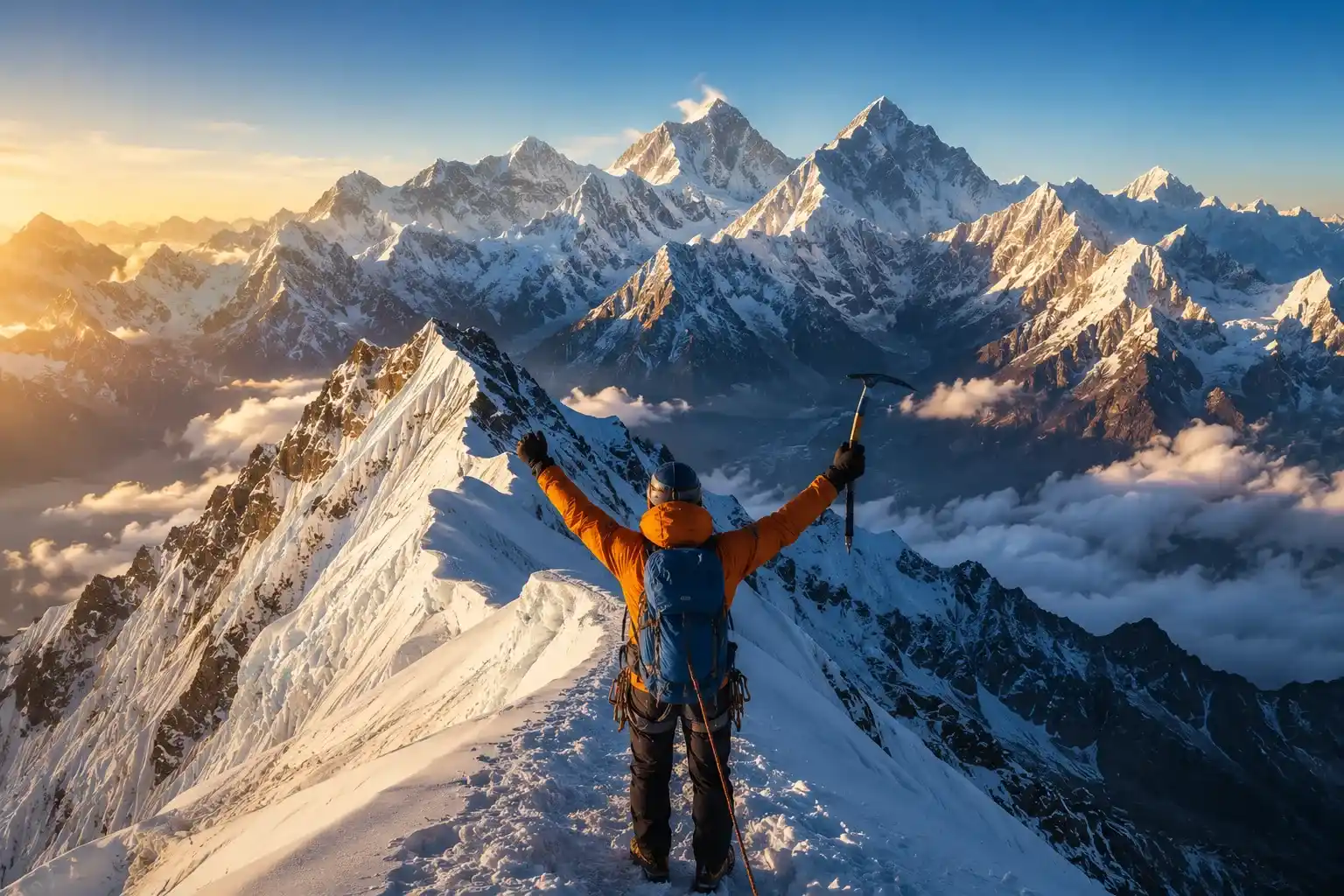
Surrounded by Nuptse, Baruntse, and Ama Dablam, watching the sunrise light these giants in gold it’s one of the finest mountain views accessible to non-technical climbers anywhere on Earth.
Is Mera Peak Right for You?
Difficulty: Challenging but non-technical
Let’s be honest about what this means.
You don’t need: Previous technical climbing experience, rock-climbing skills, or expedition history.
You do need: Excellent physical fitness, prior high-altitude trekking experience, mental determination, and willingness to learn basic skills (using crampons, an ice axe, and ropes taught on the trip).
The climb involves glacier walking with crampons and a rope, plus a physically brutal summit day starting in the dark. It’s not “hard” in a technical sense it’s hard in an endurance-and-altitude sense.
Mera Peak suits you if:
- You’ve completed a high trek like EBC or Annapurna Circuit
- You’re genuinely fit and want your first Himalayan summit
- You’re comfortable with cold, long days, and altitude
Look elsewhere if:
- You’ve never trekked at high altitude
- You’re not prepared to train seriously beforehand
New to altitude? Read our what happens to your body at 5,000 meters guide first.
Mera Peak Permits and Costs (2026)
You need three permits and there was an important price change in late 2025.
Mera Peak Climbing : Photo by Andreas Gäbler on Unsplash
1. Mera Peak Climbing Permit (NMA)
Issued by the Nepal Mountaineering Association. Prices updated September 1, 2025:
- Autumn (Sep–Nov): $175 per person
- Spring (Mar–May): $350 per person
- Winter/summer: lower rates
This seasonal difference is significant spring costs double the autumn permit.
2. Makalu Barun National Park Permit
About $30 per person.
3. Local Area Permit
The relevant rural municipality entry permit, around $20–$30.
Important: These permits must be arranged through a registered agency, and an NMA-certified guide is mandatory for the climb.
Full Cost Breakdown (2026)
Mera Peak offers genuinely good value for a 6,000m summit.
| Expense | Cost (USD) |
|---|---|
| Climbing permits (all three) | $225–$410 |
| NMA-certified climbing guide + support | included in package |
| Kathmandu–Lukla flights (round trip) | $350–$400 |
| Accommodation (teahouses + high camp) | included in package |
| Meals during trek | included in package |
| Group climbing gear | included in package |
| Personal gear rental (if needed) | $150–$300 |
| Travel insurance (with climbing cover) | $150–$250 |
| Tips | $150–$250 |
Typical Package Prices
| Package Type | Cost (USD) |
|---|---|
| Budget group package | $2,200–$2,800 |
| Standard package | $2,800–$3,500 |
| Premium package | $3,500–$4,500 |
Seasonal note: Spring expeditions cost 40–50% more than autumn driven by the higher permit and peak demand. Autumn (Sep–Nov) is the better-value season.
Mera Peak Itinerary (16 Days)
A standard route. The trek approaches through the remote, quiet Hinku Valley far less crowded than the main Everest trail.
Days 1–2: Kathmandu
Arrival, preparation, gear check, and expedition briefing.
Day 3: Fly to Lukla, trek begins
The famous 35-minute flight to Lukla, then trek toward Paiya. See our Lukla airport guide.
Days 4–8: Trek through the Hinku Valley
Through remote villages Paiya, Panggom, Ramailo Danda, Kothe into increasingly wild, beautiful country. Fewer trekkers, more solitude than the EBC route.
Day 9: Reach Khare (5,045m)
The last settlement before the climb. Base for acclimatization.
Day 10: Acclimatization and climbing training at Khare
Crucial day. Your guide teaches crampon use, ice-axe technique, and rope skills. Rest and adjust to altitude.
Day 11: Khare to Mera High Camp (5,780m)
Climb to high camp on the glacier. A tented camp in a dramatic, exposed setting.
Day 12: Summit Day — Mera Peak (6,476m), descend to Khare
The big one. Start around 2–4 AM in the dark and cold. A long, steady glacier climb to the summit for sunrise over the giants. Then the long descent back to Khare.
Day 13: Contingency day
A buffer day for weather. Essential never skip building this in.
Days 14–15: Trek back to Lukla
Retrace through the Hinku Valley.
Day 16: Fly to Kathmandu
The flight back, and celebration.
Best Time to Climb Mera Peak
Autumn (September–November) — Best Value
Clear, stable weather and the cheaper permit ($175). The most popular season for good reason.
Spring (March–May) — Excellent but Pricier
Stable weather, longer days, and warmer temperatures but the permit doubles to $350 and it’s busier.
Winter & Summer — Not Recommended
Winter is brutally cold with dangerous conditions; summer monsoon brings poor visibility and wet, risky terrain.
Essential Gear for Mera Peak
Unlike a standard trek, Mera Peak needs mountaineering equipment.
Climbing gear (often provided/rentable):
- Crampons, ice axe, climbing harness, helmet
- Mountaineering boots (insulated, crampon-compatible)
- Rope (group gear, provided by guide)
Clothing:
- Heavy down jacket (essential for summit day)
- Full layering system, waterproof shell
- Insulated gloves, warm hat, balaclava
- Glacier sunglasses (critical)
Other:
- Sleeping bag rated to -20°C
- Trekking poles, headlamp with spares
Renting in Kathmandu: You can rent crampons, ice axe, harness, boots, down jacket, and sleeping bag in Thamel for $150–$300 total far cheaper than buying if you won’t climb again.
See our Nepal packing list for the full checklist.
Insurance: Non-Negotiable for Mera Peak
This is critical, and many trekkers get it wrong.
Standard trekking insurance EXCLUDES peak climbing. Mera Peak at 6,476m requires specialized mountaineering/high-altitude coverage.
A helicopter evacuation from this remote region alone costs $5,000–$12,000. Make sure your policy explicitly covers:
- Climbing/mountaineering above 6,000m
- Helicopter evacuation
- The specific altitude of Mera Peak
Do not climb without it.
See our Nepal travel insurance guide for policies that cover peak climbing.
Mera Peak vs Island Peak: Which First?
The two most popular Nepal trekking peaks. Here’s the honest comparison.
| Factor | Mera Peak | Island Peak |
|---|---|---|
| Height | 6,476m (higher) | 6,189m |
| Technical difficulty | Easier (non-technical) | Harder (a technical headwall) |
| Main challenge | Altitude & endurance | Technical climbing section |
| Best for | First 6,000m climb | Those wanting more technical challenge |
| Views | 5 of world’s 10 highest peaks | Stunning Everest-region views |
The honest verdict: Mera Peak is higher but easier the better choice for a first Himalayan summit. Island Peak is lower but more technical, better if you want to test genuine climbing skills. Many climbers do Mera first, Island Peak later.
How to Train for Mera Peak
Start training 8–12 weeks before.
Focus on:
- Cardio endurance — long hikes, running, stair climbing
- Leg strength — squats, lunges, step-ups
- Back-to-back training days — simulate consecutive long trekking days
- Hiking with a loaded pack — build the specific fitness you’ll need
The fitter you arrive, the more you’ll enjoy it and the higher your summit chances.
Frequently Asked Questions
How hard is Mera Peak to climb?
Mera Peak is challenging but non-technical. It requires excellent fitness, prior high-altitude trekking experience, and basic skills like using crampons and an ice axe (taught on the trip) but no advanced rock or ice climbing. The main challenge is the altitude and the physically demanding summit day, not technical difficulty.
How much does it cost to climb Mera Peak?
A guided Mera Peak expedition costs $2,200–$3,800 per person in 2026, including permits, guide, Lukla flights, meals, and accommodation. Spring costs 40–50% more than autumn, mainly due to the higher climbing permit ($350 spring vs $175 autumn).
How high is Mera Peak?
Mera Peak stands at 6,476m (21,247 ft), making it the highest trekking peak in Nepal. From the summit you can see five of the world’s ten highest mountains, including Everest.
Do I need climbing experience for Mera Peak?
No technical climbing experience is required, but you do need excellent fitness and ideally prior high-altitude trekking experience. Basic skills like crampon and ice-axe use are taught during an acclimatization/training day at Khare before the summit push.
How long does it take to climb Mera Peak?
A standard Kathmandu-to-Kathmandu expedition takes 15–18 days, including trekking days, acclimatization, the climb, and a weather-contingency day. Building in that buffer day is essential.
When is the best time to climb Mera Peak?
Autumn (September–November) and spring (March–May). Autumn offers the best value with a cheaper permit and stable weather. Spring is excellent but pricier and busier. Avoid winter and the summer monsoon.
What permits do I need for Mera Peak?
Three: the Mera Peak Climbing Permit from the NMA ($175 autumn / $350 spring), the Makalu Barun National Park permit (~$30), and a local rural municipality permit (~$20–$30). Your agency arranges all three.
Is Mera Peak or Island Peak easier?
Mera Peak is higher (6,476m vs 6,189m) but technically easier, making it the better first Himalayan climb. Island Peak is lower but more technical, with a challenging headwall. Many climbers do Mera Peak first.
Do I need special insurance for Mera Peak?
Yes absolutely. Standard trekking insurance excludes peak climbing. You need specialized mountaineering coverage for climbing above 6,000m, including helicopter evacuation (which alone can cost $5,000–$12,000). Never climb without it.