
Every year, hundreds of thousands of people walk to Everest Base Camp, Annapurna Base Camp, or the high passes of Nepal’s trekking routes. Most of them have no idea what is happening inside their bodies as they climb the cascade of physiological changes that begin the moment they step above 3,000 meters and intensify with every hundred meters gained.
Understanding this isn’t just medically interesting. It is genuinely useful the difference between recognizing what your body is telling you and ignoring it is often the difference between a successful summit and a helicopter rescue that costs $5,000 – $10,000 before the blades stop spinning.
This is what actually happens, hour by hour, as you ascend to 5,000 meters and beyond.
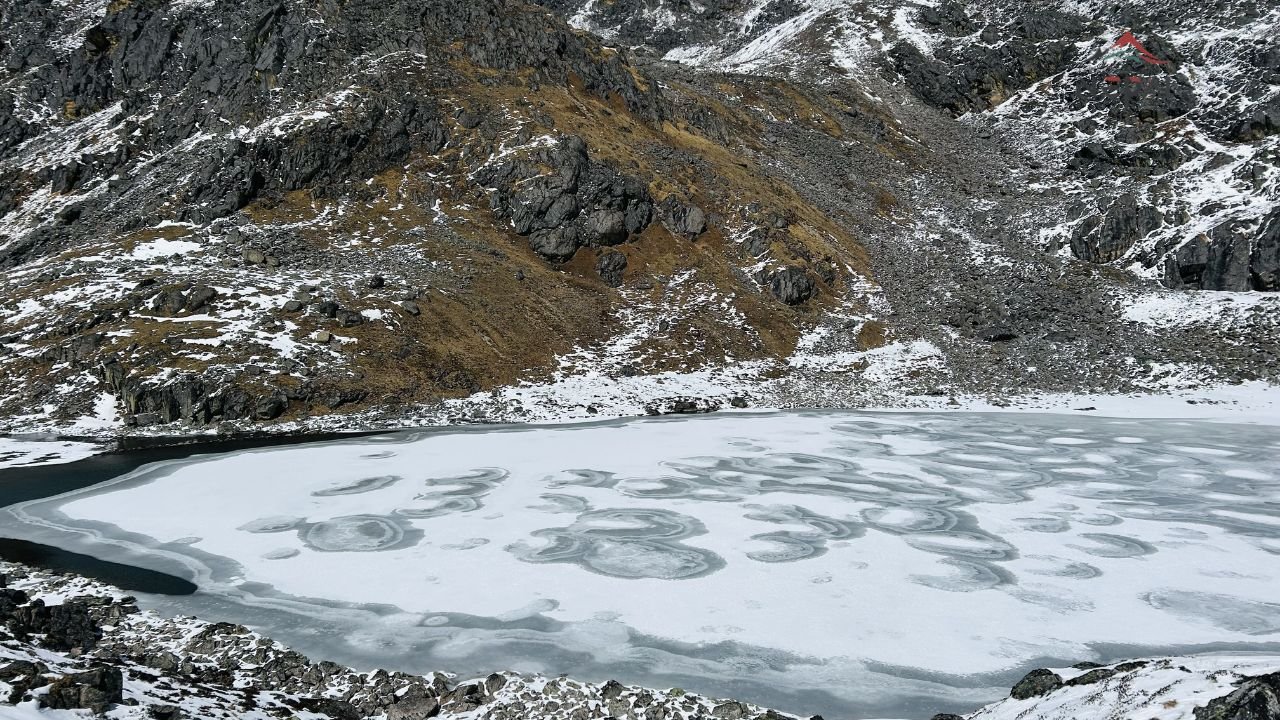
What Happens to Your Body at 5,000 Meters
First: The Fundamental Problem
At sea level, the air you breathe contains approximately 21% oxygen the same percentage that exists at 5,000 meters, at 8,000 meters, at the top of Everest. The oxygen percentage of air doesn’t change with altitude. What changes is atmospheric pressure and pressure is everything.
At 5,000 meters, atmospheric pressure is approximately 54% of sea-level pressure. This means that although the air around you contains the same proportion of oxygen, each breath you take delivers roughly half the oxygen molecules of a sea-level breath. Your lungs are doing the same work for half the result.
At Everest Base Camp (5,364m), you are breathing air that delivers approximately 50% of the oxygen available at sea level. At the summit of Everest (8,849m), that figure drops to approximately 33% one third of what your body evolved to function on.
Everything that follows every symptom, every physiological adaptation, every moment of confusion or euphoria or crushing headache that altitude produces flows from this single underlying reality: your body is oxygen-deprived, and it is trying everything it knows to compensate.
Hours 0–2: Arrival at Altitude
What You Feel
You’ve just landed at a high-altitude airstrip Lukla (2,860m) for the Everest region, or you’ve arrived at Namche Bazaar (3,440m) after a day’s walk. Or you’ve driven to a high-altitude trailhead. The first two hours feel almost normal. You might notice you’re breathing slightly faster than usual, particularly on exertion. The air feels thinner in a way that’s difficult to articulate not painful, just slightly insufficient.
Most people at this stage feel fine. This is the dangerous part.
What Is Actually Happening
Your body has detected the drop in blood oxygen saturation (SpO2) and initiated its immediate emergency responses:
Breathing rate increases. Your respiratory center in the brainstem responds to reduced oxygen by signaling your lungs to breathe faster and more deeply. This is involuntary you don’t decide to breathe faster, it simply happens. The increase is modest at first: perhaps 15–20% above your sea-level resting rate.
Heart rate increases. Your cardiovascular system’s immediate response to reduced oxygen delivery is to pump blood faster sending what oxygen is available through the system more rapidly. Your resting heart rate at altitude is meaningfully higher than at sea level. A resting heart rate of 60 bpm at sea level might be 75–80 bpm at 3,500m on your first day.
Blood vessels dilate. Peripheral vasodilation increases blood flow to tissues. This is why some people notice warmth or flushing at altitude in the first hours.
SpO2 begins dropping. At sea level, normal blood oxygen saturation is 95–100%. Within 2 hours of arriving at 3,500m, many people’s SpO2 has dropped to 88–92%. This is the normal range for this altitude on arrival but it represents a significant reduction in the oxygen your tissues are receiving.
Hours 2–6: The First Warning Signs
What You Feel
Somewhere between 2 and 6 hours after arriving at altitude sometimes sooner, sometimes later the first symptoms of Acute Mountain Sickness (AMS) typically appear. The most common early symptom is a headache. Not a sharp or sudden pain, but a dull, persistent pressure most commonly felt at the temples or behind the eyes that ibuprofen may partially relieve but rarely fully resolves.
You might also notice:
- Reduced appetite food that you would normally find appealing holds little interest
- A mild nausea that makes you reluctant to eat even though you know you should
- Unusual fatigue tiredness disproportionate to the physical effort you’ve actually made
- Difficulty sleeping, even when genuinely exhausted
- A slight dizziness when you stand up quickly
What Is Actually Happening
Cerebral blood flow is increasing. One of altitude’s early responses is vasodilation of the cerebral blood vessels the brain, detecting reduced oxygen, dilates its blood supply to try to maintain adequate oxygen delivery. This increased blood flow to the brain causes increased intracranial pressure, which is the direct cause of the altitude headache. The brain is literally pressing against the inside of your skull slightly harder than normal.
Fluid shifts are beginning. Altitude triggers changes in the hormonal systems that regulate fluid balance in the body. Antidiuretic hormone (ADH) levels fluctuate, aldosterone levels change the net effect is that fluid begins moving from inside blood vessels into surrounding tissues. This is the beginning of the process that, if it continues unchecked, leads to edema fluid accumulation in the lungs or brain.
Your kidneys are working overtime. In response to the increased breathing rate initiated in hours 0–2, you have been exhaling more carbon dioxide than normal. This makes your blood more alkaline than the body prefers a condition called respiratory alkalosis. Your kidneys begin compensating by excreting bicarbonate in your urine, trying to restore blood pH to normal. This is why altitude causes increased urination in the first days your kidneys are actively adjusting your body’s chemistry.
Sleep architecture is disrupted. Even before you try to sleep, altitude begins affecting the brain systems that regulate sleep. The pattern of breathing during sleep changes at altitude, many people experience Cheyne-Stokes respiration, a cyclical pattern where breathing gradually deepens, then slows, then stops briefly (an apnea), then restarts with a gasp. This happens because the respiratory control system is simultaneously responding to low oxygen (which drives breathing) and low carbon dioxide from hyperventilation (which suppresses breathing). The two signals alternate, creating the characteristic waxing-and-waning pattern.
Hours 6–24: The Critical Decision Point
What You Feel
By 6–24 hours at altitude, you will know whether your body is handling the ascent reasonably well or struggling. The headache, if present, has either stabilized or worsened. Sleep, if you’ve tried it, has been poor frequent waking, vivid dreams, the Cheyne-Stokes gasping that wakes you or your tent partner repeatedly.
The danger in this window is not feeling terrible it’s feeling not-quite-bad-enough to do anything about it. Most altitude sickness tragedies involve a person who felt “not great” at 6 hours and “significantly worse” at 24 hours but didn’t descend because the symptoms seemed manageable and the summit seemed close.
The Lake Louise Score Know This
The medically validated scale for assessing AMS severity:
| Symptom | None (0) | Mild (1) | Moderate (2) | Severe (3) |
|---|---|---|---|---|
| Headache | 0 | Mild | Moderate | Severe, incapacitating |
| Gastrointestinal | 0 | Poor appetite/nausea | Moderate nausea/vomiting | Severe vomiting |
| Fatigue/weakness | 0 | Mild | Moderate | Severe/incapacitating |
| Dizziness | 0 | Mild | Moderate | Severe/incapacitating |
A score of 3 or above with headache as one of the symptoms indicates AMS. A score of 6 or above indicates severe AMS requiring immediate descent. These numbers matter because self-assessment at altitude is unreliable the cognitive effects of hypoxia mean you are worse at evaluating your own condition precisely when accurate self-evaluation is most important.
What Is Actually Happening
Hypoxic ventilatory response is intensifying. Your body’s attempt to compensate for reduced oxygen by breathing faster and deeper continues to develop. Some people have a strong hypoxic ventilatory response their breathing increases substantially in response to low oxygen and these people generally acclimatize better. Others have a blunted response and are at higher risk of severe AMS.
Erythropoietin (EPO) production begins. Your kidneys have detected sustained low oxygen and begun producing erythropoietin the hormone that signals your bone marrow to produce more red blood cells. This is altitude’s most famous long-term adaptation, but it takes days to weeks to produce meaningful numbers of new red blood cells. The EPO surge beginning now will translate into measurably higher red blood cell counts in 3–5 days it is the body’s medium-term solution to the oxygen problem, but it cannot help you in the immediate hours.
Brain tissue is vulnerable. The brain consumes approximately 20% of the body’s oxygen despite representing only 2% of body weight. It has no oxygen storage capacity if oxygen delivery drops, brain function degrades within seconds. At altitude, this degradation is gradual rather than sudden, but it is real: judgment, coordination, and the ability to accurately assess your own condition all decline in a manner that is invisible to the person experiencing it.
This is altitude’s most insidious characteristic. The person who needs most urgently to make a good decision about whether to descend is the person whose decision-making capacity has been most compromised by the altitude that created the need for the decision.
The Two Conditions That Kill: HACE and HAPE
Understanding AMS the common, usually manageable form of altitude sickness is important. Understanding the two conditions that kill is essential.
High Altitude Cerebral Edema (HACE)
HACE is AMS that has progressed to genuine brain swelling. The fluid that began shifting in hours 2–6 has accumulated in the brain tissue itself, increasing intracranial pressure to a level that impairs function and, without intervention, causes death.
The progression:
- Severe, persistent headache unresponsive to ibuprofen
- Ataxia — loss of coordination. The clinical test: can the person walk a straight line heel-to-toe? If not, HACE is likely
- Confusion — disorientation, inappropriate behavior, inability to follow simple instructions
- Loss of consciousness
The timeline: HACE can progress from moderate AMS symptoms to unconsciousness in hours. It is the most time-critical altitude emergency.
The treatment: Descent immediately, as far as possible. Every meter down matters. A Gamow bag (portable hyperbaric chamber) can simulate descent if physical descent is impossible. Dexamethasone (a corticosteroid) can temporarily reduce brain swelling. These are bridges to descent, not alternatives to it.
High Altitude Pulmonary Edema (HAPE)
HAPE is fluid accumulation in the lungs rather than the brain and it is the most common cause of death from altitude sickness.
The mechanism: At altitude, the pulmonary arteries constrict unevenly in response to low oxygen. Some sections of the lung receive greatly increased blood flow while others receive less. The increased pressure in overperfused sections causes fluid to leak from the capillaries into the lung tissue and eventually the air spaces drowning from the inside.
The progression:
- Decreased exercise tolerance the first sign is often feeling unusually breathless during exertion that previously felt manageable
- Dry cough developing into a productive cough
- Crackling sounds in the lungs when breathing (detectable with a stethoscope, or in severe cases, audible without one)
- Extreme fatigue
- Cyanosis blue tint to lips or fingernails
- Gurgling breathing sounds
Why HAPE kills: It can develop while a person is sleeping, progressing from manageable breathlessness to life-threatening pulmonary flooding in hours. A person who went to sleep at altitude with a dry cough can wake up or fail to wake up with fluid-filled lungs.
The treatment: Descent immediately. Nifedipine (a calcium channel blocker that reduces pulmonary artery pressure) can help. Supplemental oxygen if available. A Gamow bag as a bridge. HAPE reverses dramatically with descent people who are barely conscious can recover rapidly with 500–1,000 meters of descent. The lungs clear.
Hours 24–72: Acclimatization or Crisis
What You Feel (If Acclimatizing Well)
For people who are acclimatizing successfully who have ascended at an appropriate rate, rested when needed, and whose bodies are responding well to the altitude hours 24–72 bring a gradual but real improvement. The headache diminishes. Appetite returns. Sleep, though still imperfect, is better than the first night. Physical exertion feels less impossible than it did on arrival.
This improvement is real and meaningful but it does not mean acclimatization is complete. It means your body’s immediate emergency responses have stabilized the situation enough to function.
What Is Actually Happening
Blood composition is changing. The EPO surge that began in hours 6–24 is beginning to translate into early results. More importantly, your existing red blood cells are releasing oxygen more efficiently at altitude a shift in the oxygen-hemoglobin dissociation curve that improves tissue oxygen delivery without requiring new cells.
Breathing efficiency is improving. The hyperventilation that caused respiratory alkalosis in the first hours has been partially compensated by your kidneys’ bicarbonate excretion. Your breathing is still faster than sea-level normal but no longer as dramatically elevated your respiratory control system has recalibrated.
Pulmonary circulation is adapting. The pulmonary artery pressure that rises acutely on altitude arrival begins to moderate as the vascular system adapts to the new oxygen environment.
Cellular adaptations are beginning. At a molecular level, cells throughout your body are upregulating the expression of hypoxia-inducible factor (HIF-1α) a protein that turns on dozens of genes involved in surviving low-oxygen conditions. Mitochondria (the energy-producing organelles in cells) are adapting their function. These changes take days to weeks to fully develop but begin almost immediately.
Days 3–7: Real Acclimatization
By days 3–7 at the same altitude assuming no further ascent the physiological adaptations begun in the first hours are producing real results.
Red blood cell production: The bone marrow is producing new red blood cells at an accelerated rate. By day 5–7, measurable increases in red blood cell count are detectable. By 2–3 weeks, red blood cell volume may have increased by 20–30% above sea-level baseline.
Blood viscosity increases: More red blood cells means thicker blood which improves oxygen carrying capacity but increases cardiovascular workload and clotting risk. This is one reason experienced high-altitude trekkers maintain careful hydration dehydrated blood at altitude is thick enough to meaningfully increase thrombosis risk.
Muscle adaptation: Muscles at altitude develop increased capillary density over weeks more blood vessels per unit of muscle tissue, improving oxygen delivery to working muscle. Elite altitude athletes who train at altitude and compete at sea level exploit this adaptation the “live high, train low” strategy used by endurance athletes worldwide.
What Diamox Actually Does
Acetazolamide (Diamox) the medication many trekkers take for altitude acclimatization works by accelerating the kidney’s bicarbonate excretion that normally takes 2–3 days to fully develop. By removing bicarbonate faster, Diamox prevents the respiratory alkalosis that suppresses breathing rate and allows more aggressive hyperventilation which means more oxygen delivered per unit of time.
The practical effect: Diamox makes your body behave as though it has been at altitude 1–2 days longer than it actually has. It doesn’t prevent altitude sickness it accelerates one of the key adaptive mechanisms. And because it works through the kidneys, it also dramatically increases urination, which is why the primary advice with Diamox is aggressive hydration.
Common side effects tingling in the fingers and toes, altered taste of carbonated drinks are caused by the same mechanism that makes it work: carbonic anhydrase inhibition. They are harmless and resolve when the medication is stopped.
The Pulse Oximeter: Your Most Important Piece of Equipment
A pulse oximeter is a small clip-on device (available for $20–$40) that measures blood oxygen saturation (SpO2) through your fingertip. At altitude, this number tells you things your symptoms alone cannot:
| SpO2 Reading | What It Means at Altitude |
|---|---|
| 95–100% | Normal (sea level baseline) |
| 90–94% | Mild hypoxia typical on arrival at 3,000–3,500m |
| 85–89% | Moderate hypoxia common at 4,000–5,000m during acclimatization |
| 80–84% | Significant hypoxia monitor closely, rest |
| Below 80% | Serious descend if not improving |
| Below 70% | Emergency descend immediately |
The critical insight: SpO2 during sleep is lower than awake SpO2 at altitude sometimes by 10–15 percentage points. A reading of 85% while awake and resting may drop to 70–75% during sleep, which is why many AMS emergencies occur overnight. Checking SpO2 in the morning before getting up gives you the most relevant picture of how your body is handling the altitude overnight.
At 5,364 Meters: Everest Base Camp
Everest Base Camp sits at exactly the altitude where the body’s ability to acclimatize its capacity to maintain adequate function through the adaptations described above begins to reach its limits for most people.
At 5,364m, SpO2 in a well-acclimatized trekker rests around 75–85% numbers that would trigger emergency intervention at sea level. The brain is functioning on approximately half the oxygen it evolved to use. Cognitive tasks that feel effortless at sea level require conscious effort. Simple mathematics, remembering names, reading a map all take more deliberate concentration than they should.
This is not altitude sickness. This is normal function at this altitude, for a human body that evolved at sea level over millions of years.
At 8,000 Meters: The Death Zone
Above 8,000 meters, the body cannot acclimatize. The oxygen pressure is too low for the compensatory mechanisms that work at lower altitudes to maintain adequate function. Every hour spent above 8,000 meters, the body is deteriorating regardless of supplemental oxygen use.
At 8,000m without supplemental oxygen:
- SpO2 drops to approximately 50–60%
- Cognitive function is severely impaired the judgment and decision-making required to climb safely are compromised by the very altitude that demands them
- Physical strength degrades rapidly muscles working with half their normal oxygen supply fatigue in minutes rather than hours
- The body is consuming itself breaking down muscle tissue for energy when normal metabolic processes can’t keep pace with demand
With supplemental oxygen (the system most Everest climbers use):
- A flow rate of 2–4 liters per minute raises effective altitude by approximately 1,000–1,500 meters
- At 8,000m with 4 L/min oxygen, a climber’s physiological experience approximates being at approximately 6,500m still extremely demanding but survivable for the duration of a summit day
The Death Zone is called the Death Zone because it is the altitude above which life is unsustainable over time not because death is immediate, but because the physiological balance sheet is negative from the moment you enter it. You are spending life faster than you can sustain it. The goal is to complete what you came to do and leave before the deficit becomes irreversible.
The Signs That Mean Descend Now No Exceptions
After everything above, the practical summary that matters most:
Descend immediately no discussion, no waiting to see if it improves if:
- Ataxia: Cannot walk a straight heel-to-toe line. Test yourself or ask someone to test you.
- Confusion: Disorientation, inappropriate behavior, inability to answer simple questions correctly
- Extreme breathlessness at rest: Not just on exertion breathless while sitting still
- Productive cough with pink or frothy sputum: This is HAPE. Descend now.
- SpO2 below 70% on a pulse oximeter, not improving with rest
- Any combination of the above
The rule that saves lives: if in doubt, go down. Not in an hour. Not after sleeping. Not after one more day to see if it improves. Now. Descent resolves altitude sickness with a speed and reliability that no medication can match 500 meters of descent can reverse a condition that would be life-threatening within hours at the same elevation.
Frequently Asked Questions
What happens to your body at 5,000 meters?
At 5,000 meters, atmospheric pressure is approximately 54% of sea level, meaning each breath delivers roughly half the oxygen of a sea-level breath. Your heart rate and breathing rate increase, blood oxygen saturation drops to 75–85% in well-acclimatized individuals, cognitive function is measurably reduced, and sleep is disrupted by Cheyne-Stokes breathing patterns. The body compensates through increased red blood cell production, improved oxygen extraction efficiency, and cellular adaptations but these take days to weeks to fully develop.
What are the first signs of altitude sickness?
The most common early sign is a dull, persistent headache typically at the temples or behind the eyes appearing 2–6 hours after arriving at altitude. This is usually accompanied by reduced appetite, mild nausea, unusual fatigue, and difficulty sleeping. A headache plus any one other symptom indicates AMS and should be taken seriously.
How long does it take to acclimatize to 5,000 meters?
Most people need 3–7 days of gradual ascent and rest at intermediate altitudes to acclimatize adequately to 5,000 meters. The standard acclimatization rule is not to ascend more than 300–500 meters per sleeping elevation per day above 3,000 meters, with a rest day every 2–3 days of ascent.
What is a safe blood oxygen level at altitude?
At 5,000 meters, SpO2 of 75–85% in a well-acclimatized person is considered normal for that altitude. SpO2 below 70% warrants concern and monitoring; below 70% not improving with rest is grounds for descent. The key comparison is not against sea-level norms but against what’s typical for that specific altitude.
Does Diamox prevent altitude sickness?
Diamox (acetazolamide) reduces the risk and severity of AMS by accelerating one of the key acclimatization mechanisms specifically, the kidney’s compensation for respiratory alkalosis. It doesn’t prevent altitude sickness entirely but makes the body behave as though it has been at altitude longer than it actually has. It must be taken before ascent to be effective, not after symptoms appear.
Can fit people get altitude sickness?
Yes fitness provides no protection against altitude sickness. AMS is determined by genetics, acclimatization rate, and ascent speed, not cardiovascular fitness. Elite athletes can develop severe AMS while unfit individuals acclimatize perfectly. This surprises many people and is one of altitude’s most counterintuitive characteristics.
What is the difference between AMS, HACE, and HAPE?
AMS (Acute Mountain Sickness) is the common form headache, nausea, fatigue usually manageable with rest and descent if needed. HACE (High Altitude Cerebral Edema) is AMS progressed to brain swelling characterized by ataxia and confusion, requiring immediate descent. HAPE (High Altitude Pulmonary Edema) is fluid in the lungs characterized by extreme breathlessness and productive cough, the most common cause of altitude death, also requiring immediate descent.
Why does altitude affect sleep so badly?
Altitude disrupts sleep through Cheyne-Stokes respiration a cyclical breathing pattern where breaths gradually deepen, then slow, then stop briefly before restarting with a gasp. This happens because the respiratory control system is simultaneously responding to low oxygen (which drives breathing) and low carbon dioxide from hyperventilation (which suppresses it). The two competing signals create the characteristic waxing-waning-apnea cycle that wakes sleepers repeatedly throughout the night.