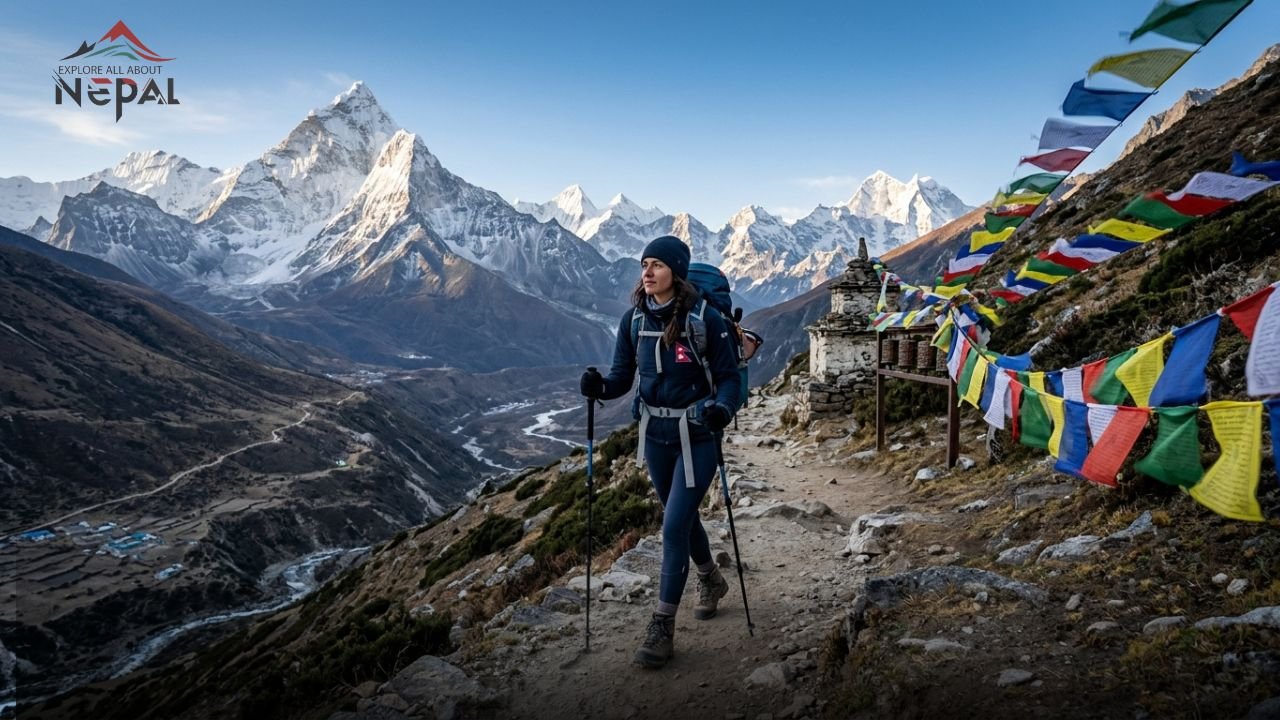
The short answer is: on most major trekking routes in Nepal, no you cannot legally hike without a licensed guide as of 2026. A regulation introduced in April 2023 made licensed guide accompaniment mandatory for all foreign trekkers on Nepal’s established routes, ending more than five decades of independent trekking culture in the country.
This guide explains exactly what the rule covers, which routes it applies to, how it’s enforced, what the genuine exceptions are, and what your options are if independent trekking was central to your Nepal trip plan.
Can I Hike in Nepal Without a Guide
Quick Reference: Nepal Guide Requirements 2026
| Trek/Area | Guide Required? |
|---|---|
| Annapurna Base Camp (ABC) | Yes — mandatory |
| Everest Base Camp (EBC) | Yes — mandatory |
| Manaslu Circuit | Yes — mandatory (also min. group of 2) |
| Langtang Valley | Yes — mandatory |
| Gokyo Lakes | Yes — mandatory |
| Poon Hill / Ghorepani | Yes — mandatory |
| Upper Mustang | Yes — mandatory (restricted area) |
| Lapchi Valley | Yes — mandatory (restricted area) |
| Restricted area treks | Yes — mandatory + special permits |
| Day hikes near Kathmandu/Pokhara | Generally no — not enforced |
| Short walks within towns | No |
What Exactly Is the Mandatory Guide Rule?
In April 2023, Nepal’s government through the Nepal Tourism Board and the Trekking Agencies’ Association of Nepal (TAAN) implemented a regulation requiring all foreign trekkers to be accompanied by a licensed Nepali guide on established trekking routes.
The stated reasons were multiple:
Safety: A significant number of foreign trekkers were going missing or requiring rescue on Nepal’s mountain trails each year, many of them solo trekkers without local knowledge or support. The mandatory guide rule was partly a response to high-profile rescue incidents and fatalities involving unsupported independent trekkers.
Economic distribution: Guiding provides direct income to licensed local professionals and their families. Requiring guides ensures trekking revenue reaches local communities rather than flowing primarily to online booking platforms or foreign tour operators selling self-guided packages.
Environmental protection: Guided trekking allows better monitoring of trail behavior, waste disposal, and protected area compliance than fully independent trekking.
Which Routes Does the Rule Apply To?
The mandatory guide rule applies to all officially gazetted trekking routes in Nepal which in practice means every route requiring a TIMS card or conservation area permit. This covers:
Annapurna Region:
- Annapurna Base Camp Trek
- Annapurna Circuit
- Poon Hill / Ghorepani-Poon Hill Trek
- Mardi Himal Trek
- Khopra Danda Trek
Everest / Khumbu Region:
- Everest Base Camp Trek
- Gokyo Lakes Trek
- Three Passes Trek
- Pikey Peak Trek
Langtang Region:
- Langtang Valley Trek
- Gosaikunda Trek
- Helambu Circuit
Other Major Routes:
- Manaslu Circuit
- Upper Mustang
- Dolpo
- Kanchenjunga Base Camp
- All restricted area treks
How Is the Rule Actually Enforced?
Hike in Nepal Without a Guide
This is the question most independent-minded trekkers ask and the honest answer is that enforcement has strengthened significantly since the rule’s introduction.
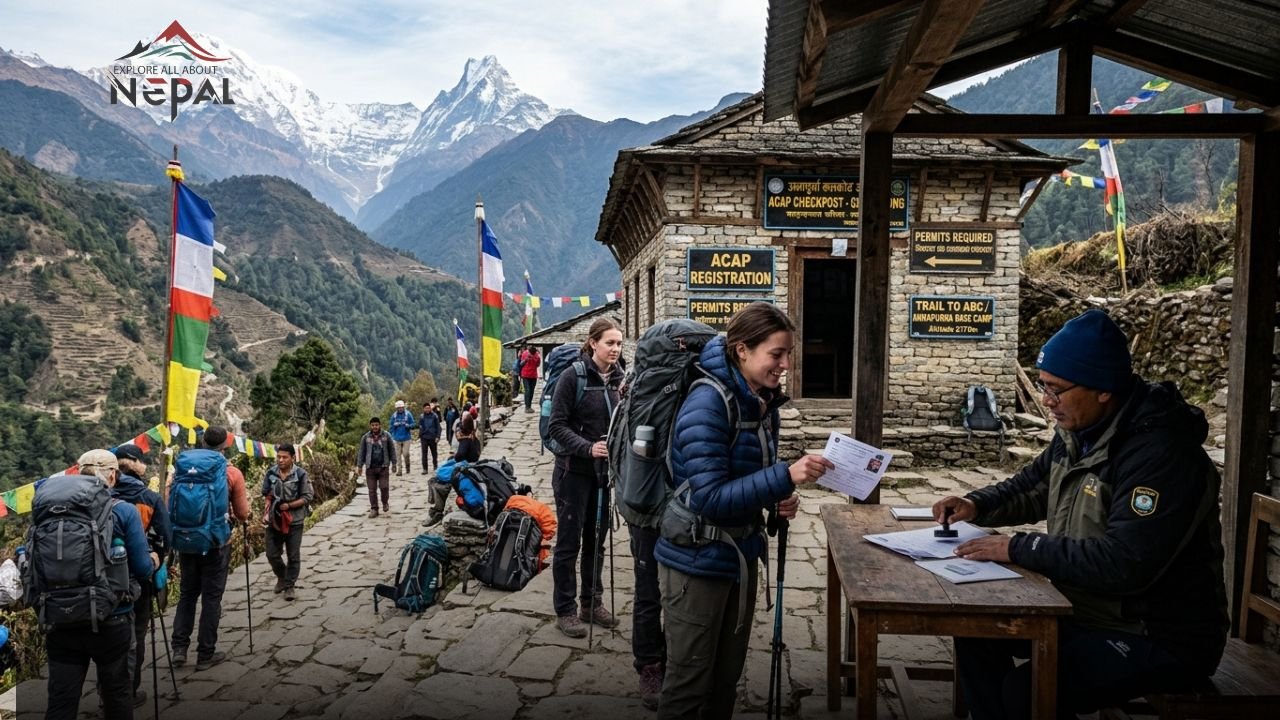
Permit checkpoints: Every major trekking route has multiple permit checkpoints where trekkers must show their TIMS card, conservation area permits, and guide documentation. At these checkpoints, solo trekkers without a registered guide are turned back or asked to hire one on the spot (usually at a disadvantageous rate).
Tea house reporting: Tea house owners along trekking routes are increasingly aware of the regulation and some report unguided foreign trekkers to local authorities.
Real consequences: Trekkers caught without a guide face being turned back from the route, potential fines, and in some cases permit cancellation. This is not a regulation that’s being quietly ignored it’s actively enforced at major checkpoints on all the routes listed above.
The practical reality: Getting past the first checkpoint without a guide is difficult on popular routes like ABC and EBC. Routes with fewer checkpoints (some off-the-beaten-path options) are less consistently enforced, but this varies and cannot be relied upon.
Are There Any Exceptions?
Day hikes near cities: Day hikes from Kathmandu (Shivapuri National Park, Nagarjun Forest, Champa Devi) and Pokhara (Sarangkot, World Peace Pagoda walk) are not covered by the mandatory guide rule and can be done independently. These are within easy reach of urban infrastructure and don’t require TIMS cards or conservation area permits for access.
Trekking within towns and valleys: Walking between villages or towns on roads or established paths not classified as official trekking routes doesn’t require a guide.
Nepali citizens: The mandatory guide rule applies to foreign trekkers. Nepali citizens are not subject to this requirement.
Special research or professional permits: Journalists, researchers, and filmmakers operating under specific government-issued permits may have different arrangements, but these are specialized cases, not general exceptions.
The honest position: For any trek requiring a TIMS card or conservation area permit which covers essentially every meaningful multi-day trekking route in Nepal you need a licensed guide. There are no general exceptions for experienced trekkers, solo hikers, or repeat Nepal visitors.
Why Many Trekkers Actually Welcome the Rule
The mandatory guide rule was controversial when introduced a significant community of experienced independent trekkers felt it removed a freedom that had defined Nepal trekking for generations. But the practical experience of most Western trekkers who’ve trekked Nepal post-2023 is more nuanced.
A good guide genuinely improves the experience. The tea house system and well-marked trails of Nepal’s major routes were built for independent trekking they’re easier to navigate than most wilderness trails globally. But a licensed guide who knows the route, speaks the local language, can monitor your altitude sickness symptoms, knows which tea houses are best at each stop, and has established relationships with local communities adds real value beyond navigation.
Safety on altitude routes is genuinely improved. The majority of helicopter rescues in Nepal involve trekkers who were poorly acclimatized, took wrong turns in bad weather, or didn’t recognize altitude sickness symptoms early enough. A licensed guide with altitude training addresses all three risks simultaneously.
The cost is reasonable. A licensed guide costs $25–$40 per day on a 10-day trek, that’s $250–$400. For most Western trekkers, this is a meaningful but manageable addition to the total trip budget. See our complete guide to how much it costs to hire a guide in Nepal for a full breakdown.
What About Hiring a Guide Locally vs Through an Agency?
If you’ve accepted that a guide is required and are now deciding how to arrange one, you have two main options:
Through a registered trekking agency (recommended):
- Agency verifies guide licensing and registration
- Agency provides backup support if guide becomes unavailable mid-trek
- Permits often bundled into the package
- Guide accountability is higher through formal agency relationship
- Best choice for first-time Nepal trekkers
Directly in Kathmandu or Pokhara:
- Possible to hire licensed freelance guides directly, often at lower cost
- Requires you to verify the guide’s NMA license number independently
- Less backup support if issues arise
- More flexibility in negotiating specific guide preferences
- Better for experienced Nepal trekkers who know what to look for
What to verify regardless of how you hire:
- NMA (Nepal Mountaineering Association) or TAAN license number
- Specific experience on your intended route
- English language proficiency critical for communication on altitude decisions
- First aid and altitude sickness training certification
See our guide to booking a Nepal trek guide for a full checklist.
Can I Trek With Just a Porter, Not a Guide?
This is a common question and the answer under the 2023 rule is no, at least for official trekking routes. The regulation specifically requires a licensed guide, not simply any local companion. Porters, while invaluable for carrying loads, are not licensed guides and don’t satisfy the guide requirement at permit checkpoints.
Some trekkers hire a “guide-porter” a local person licensed as both guide and porter, who both carries loads and provides route guidance. This can be a cost-effective arrangement for solo trekkers who want one person serving both functions rather than paying for a guide and porter separately.
What If I Want to Trek Independently?
If independent trekking without a guide is genuinely important to you, a few honest options exist within the current regulatory framework:
Day hikes from Kathmandu and Pokhara: Shivapuri National Park, Champa Devi, Nagarjun Forest, and Sarangkot are all genuinely rewarding half-day or full-day hikes that don’t require guides or TIMS cards. Not multi-day Himalayan trekking, but real mountain hiking in real Nepal landscapes.
Some village-to-village walking routes: Certain lower-altitude routes connecting villages in the hill regions fall outside the officially gazetted trekking route system and aren’t covered by the mandatory guide requirement. These require research specific to the area and are best identified through up-to-date local knowledge rather than general guides.
Accept the rule and find the right guide: The most pragmatic approach. A genuinely compatible guide on a route like Langtang or ABC often feels more like a knowledgeable local companion than a mandatory service particularly once you’re in the mountains together. The experience of trekking with a good guide in Nepal is meaningfully different from the imagined loss of freedom the rule initially suggests.
Frequently Asked Questions
Can I hike in Nepal without a guide in 2026?
On major trekking routes requiring TIMS cards or conservation area permits which covers ABC, EBC, Manaslu, Langtang, Gokyo, Poon Hill, and all other established multi-day routes no. The mandatory guide rule introduced in April 2023 requires all foreign trekkers to be accompanied by a licensed Nepali guide. Day hikes near Kathmandu and Pokhara that don’t require permits are generally exempt.
When did Nepal make guides mandatory?
April 2023. The Nepal Tourism Board and TAAN implemented the regulation requiring licensed guide accompaniment for all foreign trekkers on established routes, ending the independent trekking system that had operated since the 1960s.
What happens if I trek without a guide in Nepal?
At permit checkpoints which are present on all major routes you will be turned back or required to hire a guide on the spot. Some trekkers report fines. In practice, getting past the first checkpoint without a guide is difficult on popular routes, and attempting to do so risks having your permits cancelled.
Do I need a guide for a day hike in Nepal?
Generally no for day hikes near Kathmandu (Shivapuri, Champa Devi, Nagarjun) or Pokhara (Sarangkot walk, World Peace Pagoda hike) that don’t require TIMS cards or conservation area entry permits. These are outside the scope of the mandatory guide regulation.
Is the mandatory guide rule enforced?
Yes increasingly so since its introduction in 2023. Permit checkpoints on all major routes check for guide documentation, and tea house owners are aware of the regulation. Getting through multiple checkpoints unguided on routes like ABC or EBC is genuinely difficult.
Can I hire a guide independently rather than through an agency?
Yes licensed freelance guides can be hired directly in Kathmandu or Pokhara, often at lower cost than agency packages. Verify the guide’s NMA or TAAN license number before confirming, and understand that direct hires come with less backup support than agency arrangements.
Why did Nepal introduce the mandatory guide rule?
Three primary reasons: improving trekker safety (particularly reducing solo trekker fatalities and rescues), ensuring trekking revenue reaches local licensed professionals and their communities, and improving environmental compliance monitoring on protected trekking routes.
Is a porter sufficient instead of a guide?
No the mandatory rule specifically requires a licensed guide. Porters are not licensed guides and don’t satisfy permit checkpoint requirements. Some trekkers hire a “guide-porter” a single licensed person serving both functions as a cost-effective compromise.
