
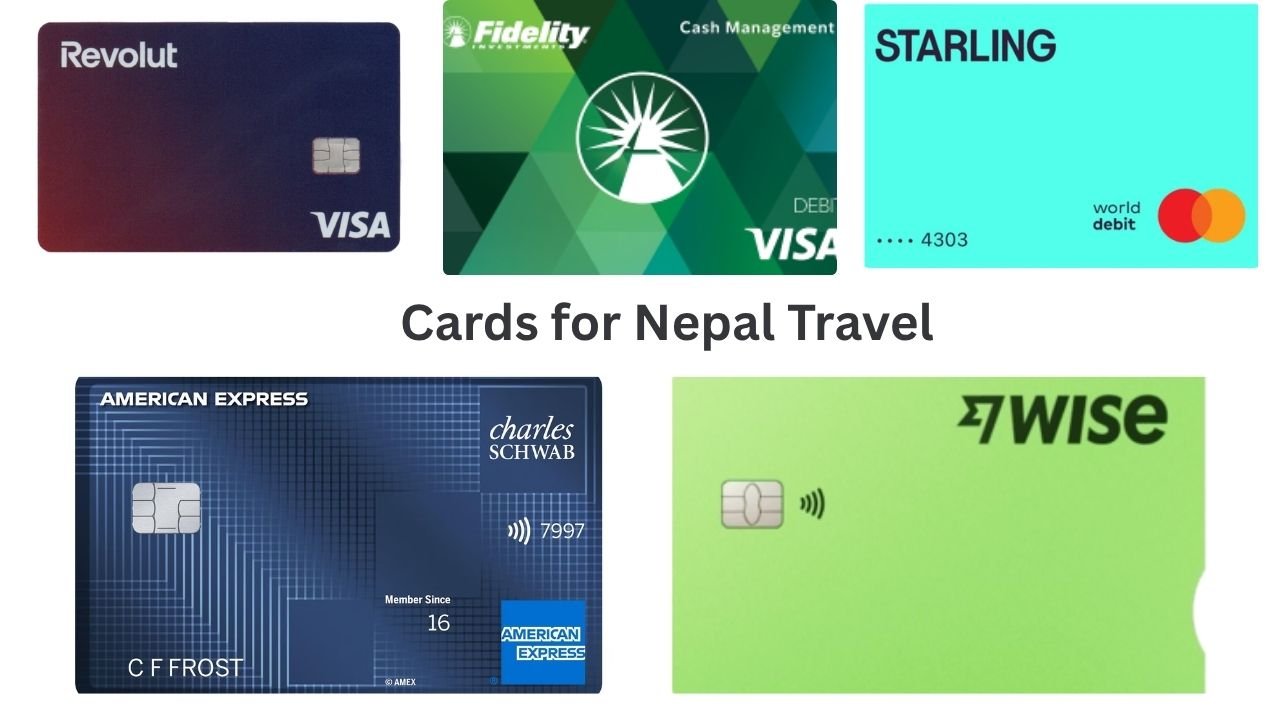
Nepal runs largely on cash once you leave Kathmandu and Pokhara but the cards you carry still matter enormously, for ATM withdrawals, hotel bookings, and the growing number of places in the cities that do accept cards. Bring the wrong card and you’ll lose 3–5% to foreign transaction fees on every transaction and ATM withdrawal, easily $50–$150 lost over a two-week trip for no reason.
This guide covers exactly which cards work best for Nepal, what actually accepts cards versus what requires cash, and how to avoid the fees that quietly eat into every Western traveler’s Nepal budget.
Quick Answer: What You Actually Need
For most Western travelers, the ideal Nepal card setup is:
- One no-foreign-transaction-fee debit card for ATM withdrawals (your primary cash source)
- One no-foreign-transaction-fee credit card for hotels, restaurants, and bigger purchases in Kathmandu/Pokhara
- Backup cash in USD $200–$300 as an emergency reserve, since card systems and ATMs in Nepal occasionally go offline
Does Nepal Accept Credit and Debit Cards?
Partially, and it depends heavily on where you are.
Kathmandu and Pokhara (cities): Most mid-range and upscale hotels, established restaurants, trekking gear shops, and tour agencies accept Visa and Mastercard. Card acceptance has expanded significantly in recent years.
Trekking routes (tea houses, villages): Cash only, almost universally. Once you leave Pokhara for the Annapurna region or Lukla for the Everest region, assume zero card acceptance until you return. Tea houses, local guides, and porters all expect Nepali Rupees in cash.
ATMs: Available in Kathmandu, Pokhara, and larger towns (Lukla has limited ATM access; Namche Bazaar has one ATM that is not always reliable). Once on the trail itself, ATMs do not exist.
The practical rule: Withdraw enough cash in Kathmandu or Pokhara before you start any trek. Don’t count on accessing more money until you’re back in a city.
Best Debit Cards for Nepal Travel
1. Charles Schwab Investor Checking (US)
The long-standing favorite among American travelers for a reason: zero foreign transaction fees, and Schwab reimburses 100% of ATM fees worldwide, including fees charged by the local ATM operator in Nepal. This means you can withdraw from any ATM in Kathmandu or Pokhara without losing money to either Schwab or the local bank.
- Foreign transaction fee: $0
- ATM fee reimbursement: 100%, unlimited
- Requirement: Must open a linked Schwab brokerage account (no minimum balance required)
- Best for: US travelers widely considered the single best option available
2. Wise (Multi-Currency Card)
Wise isn’t a traditional bank but operates a genuinely useful multi-currency debit card. You can hold and convert into Nepali Rupees (and dozens of other currencies) at the real exchange rate, with low, transparent conversion fees.
- Foreign transaction fee: Low, transparent conversion fee (typically under 1%)
- ATM withdrawals: Free up to a monthly limit, then a small fee applies
- Best for: Travelers from the US, UK, EU, Australia, and most other countries genuinely global
- Note: Available in most countries, making it one of the most accessible options regardless of nationality
3. Revolut
Similar to Wise a fintech-first card offering real exchange rates and minimal fees, with a strong mobile app for tracking spending and freezing/unfreezing the card instantly if needed (useful while trekking with limited connectivity).
- Foreign transaction fee: $0 on standard plans (within monthly limits)
- ATM withdrawals: Free up to a limit (varies by plan tier)
- Best for: UK and EU travelers, increasingly available in other markets
4. Fidelity Cash Management Account (US)
A strong alternative to Schwab for US travelers, particularly those who don’t want a brokerage account.
- Foreign transaction fee: $0
- ATM fee reimbursement: 100%, unlimited
- Best for: US travelers wanting a Schwab alternative without the investment account requirement
5. Starling Bank (UK)
A UK digital bank with genuinely fee-free international spending and ATM withdrawals.
- Foreign transaction fee: $0
- ATM withdrawals: Free up to £300 per rolling 30-day period, then a 2% fee applies
- Best for: UK travelers
Best Credit Cards for Nepal Travel
1. Chase Sapphire Preferred (US)
Consistently recommended for international travel no foreign transaction fees, solid travel insurance benefits built into the card itself (which can complement, though not replace, your dedicated travel insurance policy), and strong rewards on travel spending.
chase sapphire preferred card
- Foreign transaction fee: $0
- Annual fee: ~$95
- Best for: US travelers who want rewards plus built-in travel protections
2. Capital One Venture Rewards (US)
A strong no-annual-fee-conscious alternative, with no foreign transaction fees and flexible rewards redemption.
- Foreign transaction fee: $0
- Best for: US travelers wanting simpler rewards structure than Chase’s points ecosystem
3. American Express (Limited Use in Nepal)
Amex cards often carry excellent travel benefits and no foreign transaction fees, but acceptance in Nepal is significantly lower than Visa or Mastercard even in Kathmandu and Pokhara. Bring Amex as a backup or rewards-earning card, never as your primary card.
american express platinum card
4. Halifax Clarity Card (UK)
A long-standing favorite among UK travelers specifically for international use no foreign transaction fees on purchases or cash withdrawals.
- Foreign transaction fee: $0
- Best for: UK travelers prioritizing a dedicated no-fee travel credit card
Cash vs Card: What You Actually Need in Nepal
| Situation | Cash or Card? |
|---|---|
| Tea houses on any trek | Cash only |
| Local guides and porters (tips, daily fees) | Cash only |
| Kathmandu/Pokhara mid-range hotels | Card usually accepted |
| Kathmandu/Pokhara budget guesthouses | Cash preferred, card sometimes accepted with surcharge |
| Trekking permits (TIMS, ACAP, etc.) | Cash, occasionally card at official offices |
| Restaurants in Thamel/Lakeside | Card usually accepted |
| Local markets, street food, small shops | Cash only |
| Domestic flights (Kathmandu–Pokhara, Lukla) | Card accepted when booking through agency |
| Souvenir and trekking gear shops | Mixed — ask before assuming |
Bottom line: Budget for needing cash for roughly 70–80% of your in-country spending once you include any trekking days. Cards matter most for accommodation and bigger city purchases.
How Much Cash to Carry in Nepal
For a 2-week trip including a 7–10 day trek, a reasonable cash plan:
- Trek expenses (guide tips, tea house extras, snacks, bottled water/purification): $15–$25/day × trek days
- Kathmandu/Pokhara daily spending (meals, taxis, incidentals): $20–$40/day
- Permit fees (if not pre-paid through agency): $30–$50 total
- Buffer/emergency cash: $100–$150
Withdraw most of this in Kathmandu or Pokhara before heading to the trailhead, since ATM access disappears once you’re on the trail.
Tips for Using Cards Safely in Nepal
Notify your bank before you travel. International transactions in Nepal can trigger fraud alerts if your bank isn’t expecting them, freezing your card at the worst possible moment.
Carry two cards from two different networks (Visa + Mastercard). Card network outages and individual ATM issues happen having a backup from a different network avoids being stranded.
Check ATM withdrawal limits before relying on them. Many Nepali ATMs cap withdrawals at NPR 10,000–35,000 (roughly $75–$260) per transaction, meaning you may need multiple withdrawals and multiple ATM fees if your card doesn’t reimburse them to get the cash you need.
Use ATMs attached to established banks (Nabil Bank, Standard Chartered, Himalayan Bank, NIC Asia) in Kathmandu and Pokhara rather than standalone ATM machines, which carry a higher risk of card skimming.
Keep your PIN private and cover the keypad card skimming, while not rampant, does occur at less secure ATMs, particularly in tourist-heavy areas.
Frequently Asked Questions
Can I use a credit card in Nepal?
Yes, in Kathmandu and Pokhara at most mid-range hotels, restaurants, and shops. Visa and Mastercard have the widest acceptance. Once on a trekking route, assume credit cards are not accepted anywhere.
What is the best debit card for Nepal travel?
For US travelers, Charles Schwab Investor Checking is widely considered the best option due to zero foreign transaction fees and unlimited ATM fee reimbursement worldwide. For UK and international travelers, Wise and Revolut offer similarly strong no-fee international access.
Are there ATMs in Nepal?
Yes, in Kathmandu, Pokhara, and larger towns. ATM availability drops sharply once you leave the cities — Lukla has limited access and Namche Bazaar has one ATM that isn’t always reliable. There are no ATMs on most trekking trails beyond these points.
How much cash should I bring to Nepal?
For a two-week trip including trekking, budget $400–$600 in cash to cover trek expenses, daily spending, and permits, with USD as a useful backup currency to exchange or carry as an emergency reserve.
Does Nepal use US dollars?
Some tourist-facing businesses in Kathmandu and Pokhara will accept USD informally, but the official currency is the Nepali Rupee (NPR), and you’ll get better value and wider acceptance using NPR for most transactions.
What is the best way to withdraw money in Nepal?
Use ATMs at established banks (Nabil Bank, Standard Chartered, Himalayan Bank) in Kathmandu or Pokhara, ideally with a debit card that reimburses ATM fees, such as Charles Schwab for US travelers or Wise for international travelers.
Do Nepali ATMs have withdrawal limits?
Yes, typically NPR 10,000–35,000 (roughly $75–$260) per transaction, depending on the bank. You may need to make multiple withdrawals to access larger amounts of cash.
Is it safe to use credit cards in Nepal?
Generally yes at established hotels and businesses in Kathmandu and Pokhara. As with anywhere, avoid using cards at unfamiliar or informal vendors, and prefer ATMs attached to recognized banks over standalone machines to reduce skimming risk.
