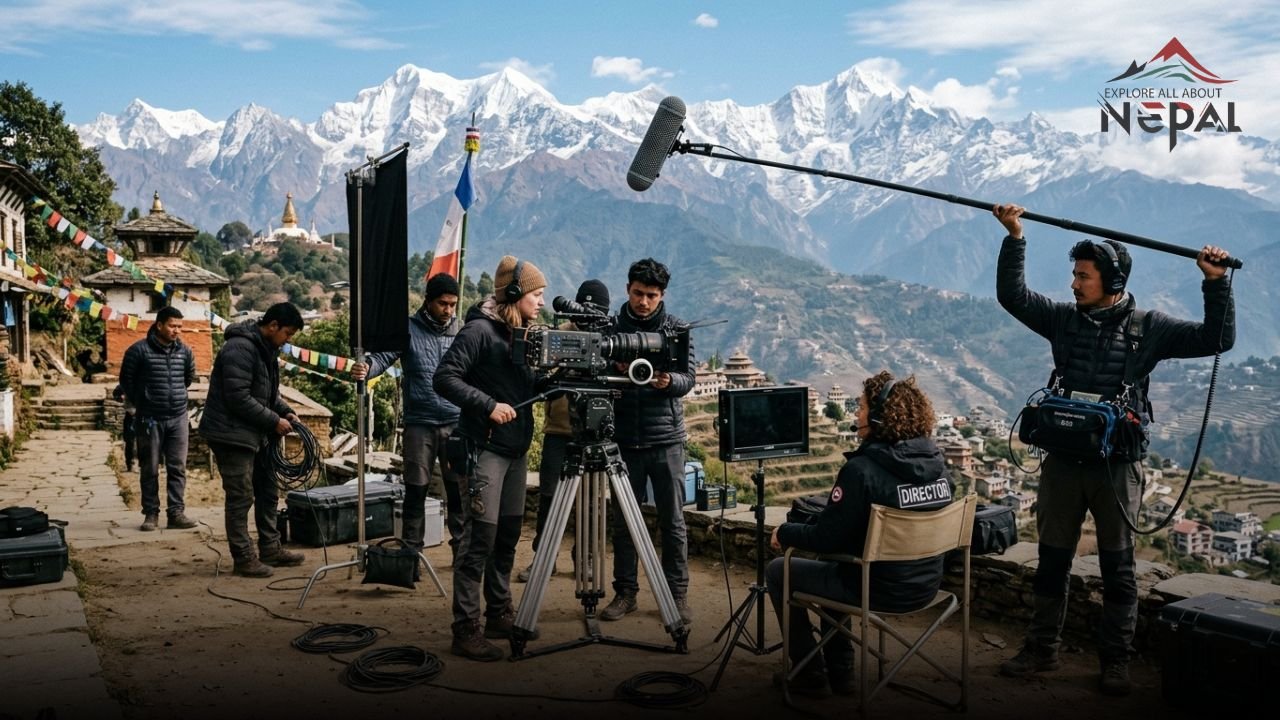
Nepal’s combination of Himalayan landscapes, ancient UNESCO heritage sites, and dramatic cultural diversity makes it an increasingly popular filming destination but navigating the country’s permit system requires working through multiple government bodies, and the process differs significantly depending on whether you’re shooting a documentary, a commercial, a feature film, or drone footage.
This guide breaks down exactly what’s required, which offices issue which permits, realistic costs and timelines, and the practical realities of working with a local production partner.
Quick Reference: Filming Permits in Nepal
| Production Type | Primary Authority | Typical Timeline |
|---|---|---|
| Documentary / journalism | Ministry of Information and Communications + Department of Information | 2–4 weeks |
| Feature film / commercial | Nepal Film Development Board (NFDB) | 3–6 weeks |
| Filming in National Parks/Conservation Areas | Department of National Parks and Wildlife Conservation | 4–6 weeks |
| Filming at heritage sites (Durbar Squares, temples) | Department of Archaeology | 2–4 weeks |
| Drone/aerial filming | Civil Aviation Authority of Nepal (CAAN) | 4–8 weeks |
| Filming in restricted/border areas | Department of Immigration + local administration | 6–8 weeks |
Timelines are estimates and vary significantly based on production scale, location, and current government processing capacity. Always confirm directly with a registered local production company.
Why Nepal Has Become a Filming Destination
Beyond the obvious draw of Himalayan scenery, Nepal offers production teams a combination that’s increasingly rare: genuinely undeveloped, dramatic landscapes within a few hours of an international airport with reasonably good production infrastructure in Kathmandu. The country has hosted documentary crews, international commercials, and feature productions drawn to everything from Everest base camp footage to the medieval architecture of Bhaktapur and Patan.
Production costs in Nepal also remain considerably lower than equivalent shoots in Europe or North America local crew, equipment rental, and line production services are competitively priced, which has made it an attractive secondary or primary location for international productions working with constrained budgets.
Who Needs a Filming Permit in Nepal?
Permit requirements apply to:
- International production companies filming for any commercial purpose (advertising, feature film, television)
- Documentary crews, including journalistic and editorial documentary work
- Drone or aerial filming of any kind, anywhere in the country
- Filming within national parks, conservation areas, and restricted border regions
- Filming at protected heritage sites (Durbar Squares, temples, monasteries under Department of Archaeology jurisdiction)
What generally doesn’t require a formal permit: Casual personal filming with a phone or small handheld camera for non-commercial use, such as travel vlogging without monetized commercial intent, in most public spaces. However, the line between personal and commercial use is increasingly scrutinized, and any filming involving a crew, professional equipment, or clear commercial output should assume permits are required.
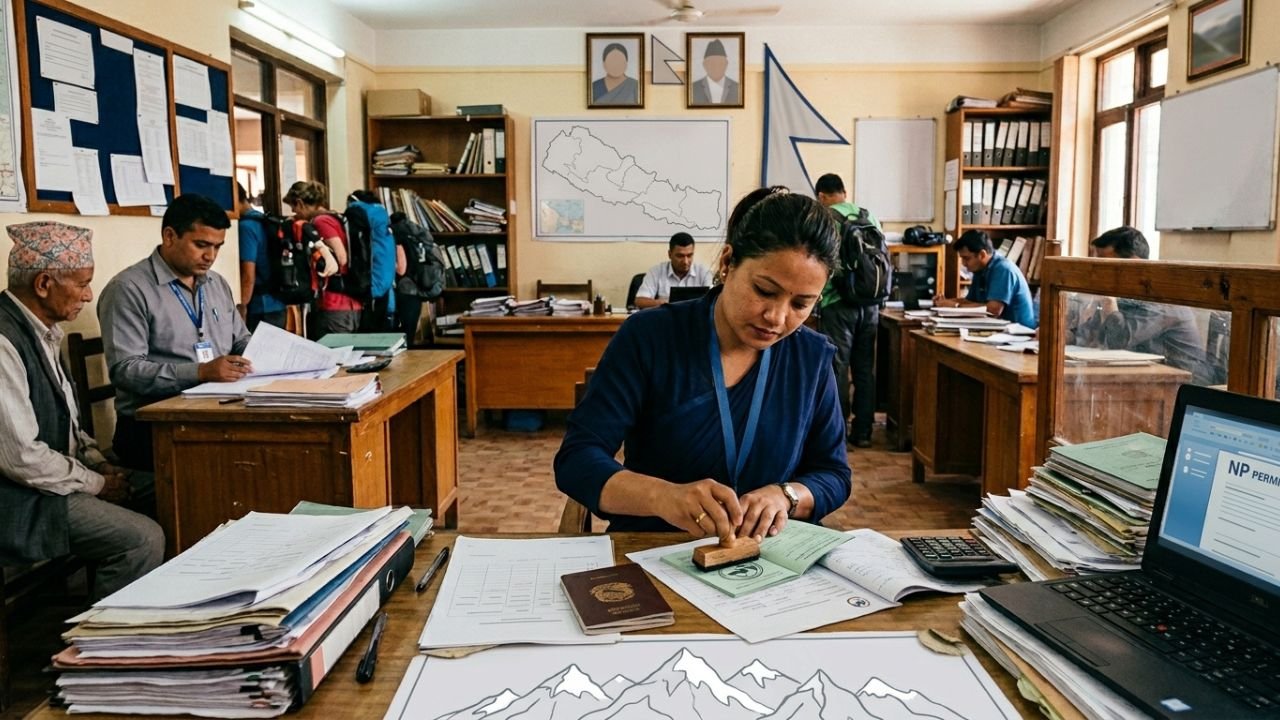
Filming Permits in Nepal: Government Office
The Main Permit-Issuing Bodies
Nepal Film Development Board (NFDB)
The primary government body for feature films, commercials, and larger productions. The NFDB acts as the central coordinating authority and is typically the first point of contact for any significant international production planning to film in Nepal. They can help coordinate access to multiple other government departments depending on your shooting locations.
Department of Information and Ministry of Information and Communications
Handles permits for documentary and journalistic filming, particularly when the content involves interviews, social or political subject matter, or news-style production.
Department of National Parks and Wildlife Conservation
Required for any filming within Nepal’s national parks (Chitwan, Sagarmatha/Everest region, Annapurna Conservation Area, and others). This includes both wildlife documentary work and any production using these areas as backdrop, including trekking and mountaineering footage.
Department of Archaeology
Governs filming permissions at protected heritage and archaeological sites Kathmandu, Patan, and Bhaktapur Durbar Squares, Pashupatinath, Swayambhunath, Boudhanath, and other protected monuments. Fees and conditions vary by site and production scale.
Civil Aviation Authority of Nepal (CAAN)
All drone and aerial filming in Nepal requires CAAN authorization, regardless of production type. This is one of the more time-intensive permits to secure and should be initiated as early as possible in your production timeline.
Department of Immigration
Required when filming involves restricted areas border regions, certain high-altitude zones, and areas requiring special trekking permits (similar to the restricted area permits required for treks like Upper Mustang, Dolpo, or Lapchi Valley).
What You’ll Need to Apply
While exact documentation varies by production type and the specific authority involved, most filming permit applications in Nepal require:
- A formal application letter outlining the production, crew size, and shooting locations
- Detailed shooting schedule and location list
- Script or treatment/synopsis (for narrative or documentary productions)
- Copies of passports for all foreign crew members
- Proof of production company registration (or partnership with a registered Nepali production/line production company)
- Insurance documentation covering the production and crew
- Letter of invitation or local sponsorship, often provided by your local production partner
- Equipment list, particularly for drone or specialized equipment
For documentary and journalistic work, additional scrutiny often applies regarding subject matter, particularly anything touching on political, religious, or sensitive social topics.
Working with a Local Line Production Company
For nearly all international productions, working with a registered Nepali line production company is the practical path through this process not just a convenience, but often a requirement for permit applications, since several government bodies expect a registered local entity to be the official applicant or co-applicant.
What a local line production partner typically provides:
- Permit application management across the relevant government departments
- Local crew (camera assistants, gaffers, drivers, fixers)
- Location scouting and location release agreements with private property owners or community leaders
- Equipment rental coordination
- Logistics transport, accommodation, and crew movement, particularly for shoots involving trekking regions or remote locations
- On-the-ground liaison with local authorities during the shoot itself
Given the number of separate government bodies potentially involved in a single production (heritage sites, national parks, drone permits, and general filming authorization can all apply to a single shoot), a local production company’s existing relationships and process knowledge generally saves significant time compared to navigating each application independently from abroad.
Filming in Nepal’s National Parks and Trekking Regions
If your production includes footage in Chitwan National Park, the Everest (Sagarmatha) region, the Annapurna Conservation Area, or other protected zones, expect an additional layer of permitting beyond standard filming authorization:
- Conservation area or national park entry permits, similar to those required for trekkers
- Potential restrictions on equipment, crew size, or specific filming locations within the park to minimize environmental impact
- Possible requirement for a park-assigned guide or ranger to accompany the production
- Separate fee structures, often distinguishing between still photography, video, and commercial drone use
If your production plans to film along an established trekking route Everest Base Camp or Annapurna Base Camp, for example coordinate timing with peak trekking season in mind. October and November see extremely high trekker volume, which complicates both logistics and the visual cleanliness of footage. See our guide to the best time for the Annapurna Base Camp trek for season-by-season trail conditions.
Drone Filming Permits in Nepal
Drone filming deserves special attention because it’s both increasingly central to modern production and one of the more heavily regulated areas.
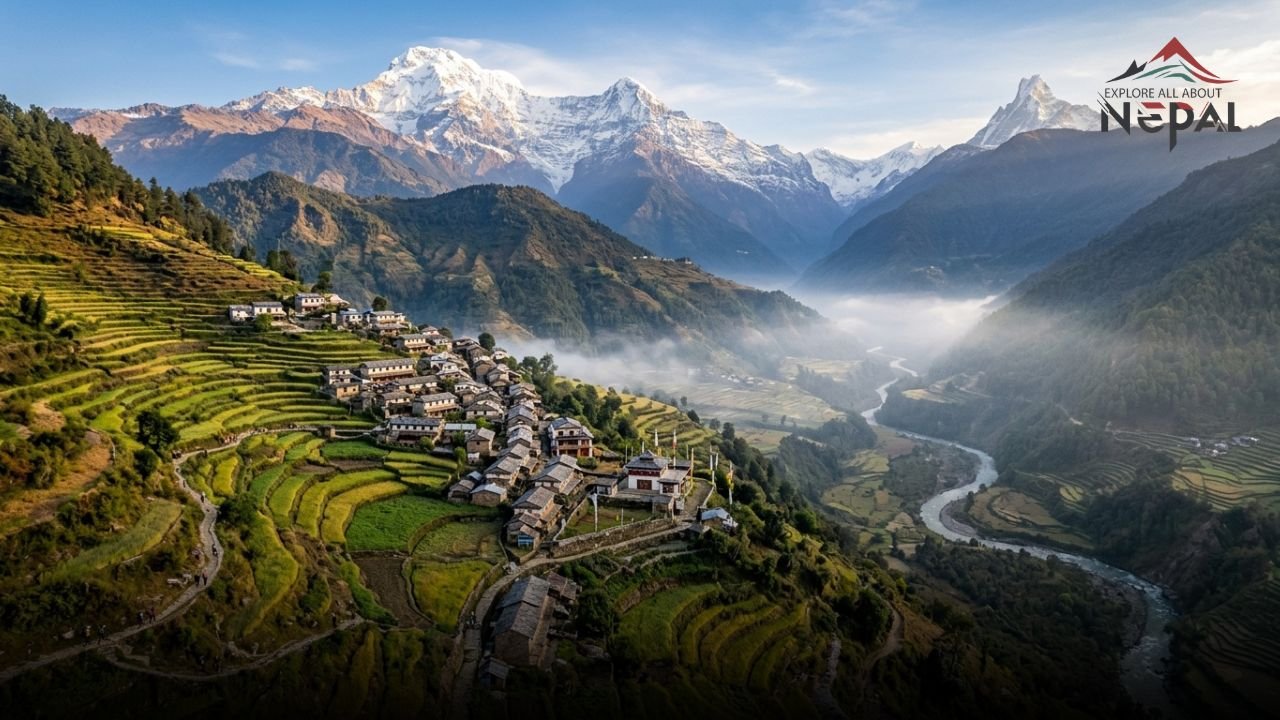
Drone Operator in Nepal
Key considerations:
- All drone operation, commercial or otherwise, requires CAAN authorization
- Restricted airspace applies near Kathmandu (due to Tribhuvan International Airport), certain border regions, and specific heritage and government sites
- Drone permits for national parks and conservation areas require separate authorization from the Department of National Parks and Wildlife Conservation in addition to CAAN clearance
- Processing timelines for drone permits tend to run longer than standard filming permits initiate this process as early as possible, ideally 6–8 weeks ahead of the planned shoot
- Equipment specifications (drone weight, type) may affect which category of permit applies
Given the complexity here, drone filming is one of the clearest cases where local production partner expertise pays for itself in time saved.
Realistic Timeline for Securing Filming Permits
| Production Complexity | Recommended Lead Time |
|---|---|
| Simple documentary, single location, no drone | 3–4 weeks minimum |
| Commercial/feature film, multiple locations | 6–8 weeks minimum |
| Filming znational parks or heritage sites | 8–10 weeks minimum |
| Filming involving drones, restricted areas, or border regions | 10–12 weeks minimum |
Government processing times in Nepal can vary based on current administrative capacity, the complexity of your specific request, and how complete your initial application is. Building in buffer time and starting the process earlier than you think necessary consistently proves worthwhile.
Frequently Asked Questions
Do I need a permit to film in Nepal?
Yes, for any commercial, documentary, or professional production. Casual personal filming for non-commercial use generally doesn’t require formal permits, but any filming involving a crew, professional equipment, or commercial intent should assume permits are necessary.
How long does it take to get a filming permit in Nepal?
Simple productions can secure permits in 3–4 weeks. More complex shoots involving national parks, heritage sites, or drone filming should budget 8–12 weeks for the full permit process.
Do I need a local production company to film in Nepal?
While not always legally mandatory depending on production type, working with a registered Nepali line production company is the practical standard for international productions, since several permit-issuing bodies expect a local registered entity as part of the application.
Can I fly a drone in Nepal for filming?
Yes, but it requires authorization from the Civil Aviation Authority of Nepal (CAAN), and additional permits if filming within national parks or conservation areas. Drone permits typically take longer to process than standard filming permits.
How much does a filming permit cost in Nepal?
Costs vary significantly based on production type, scale, and locations involved national park and heritage site fees differ from general filming authorization, and commercial productions typically pay more than documentary or educational work. Obtain a specific quote from the relevant authority or your local production partner rather than relying on general estimates.
Can I film at Everest Base Camp or in national parks?
Yes, with the appropriate national park/conservation area permits in addition to standard filming authorization. Productions should also factor in standard trekking permits and logistics if cast or crew are physically trekking to remote locations.
Who issues filming permits in Nepal?
Several bodies depending on production type: the Nepal Film Development Board for feature films and commercials, the Ministry of Information and Communications for documentary work, the Department of National Parks and Wildlife Conservation for protected areas, the Department of Archaeology for heritage sites, and CAAN for drone filming.
Is documentary filming treated differently from commercial filming in Nepal?
Yes. Documentary and journalistic work is typically handled through the Ministry of Information and Communications and may face additional scrutiny regarding subject matter, while commercial and feature productions generally route through the Nepal Film Development Board.
