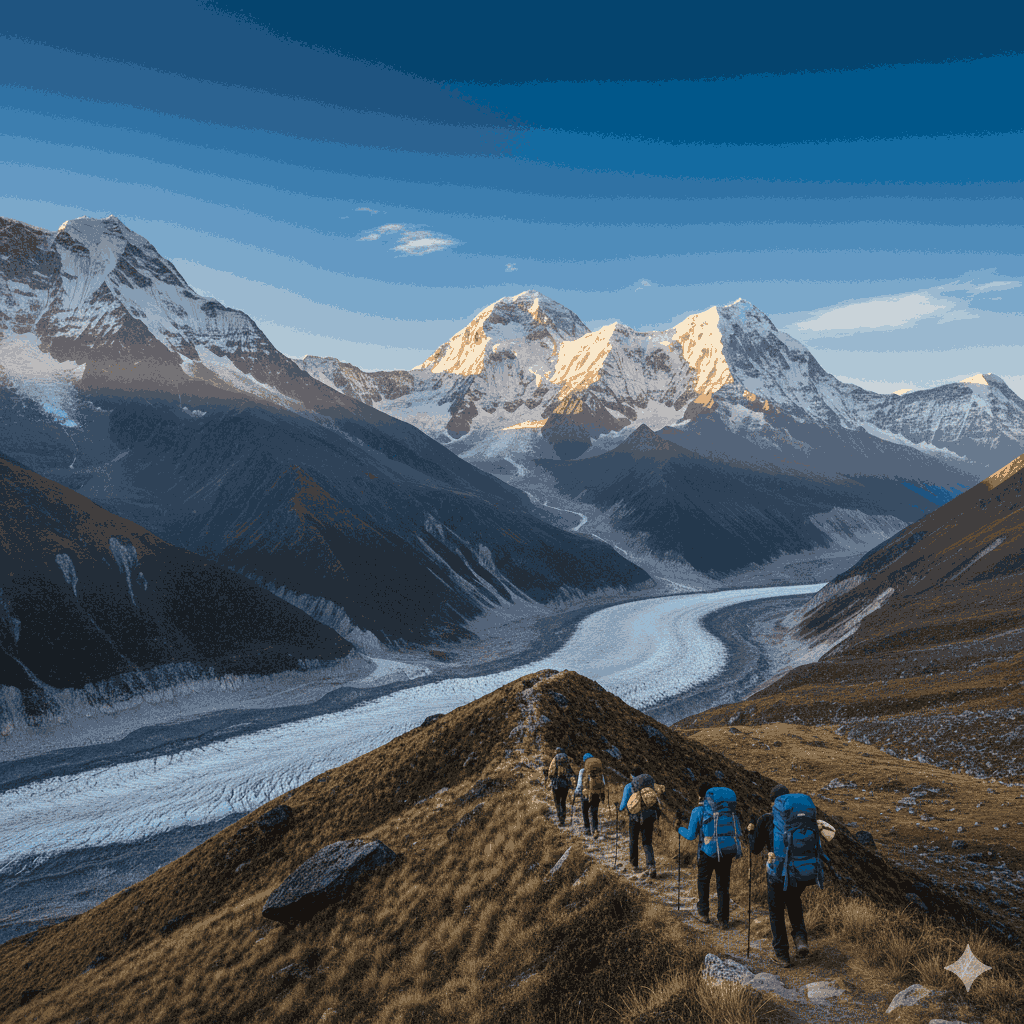
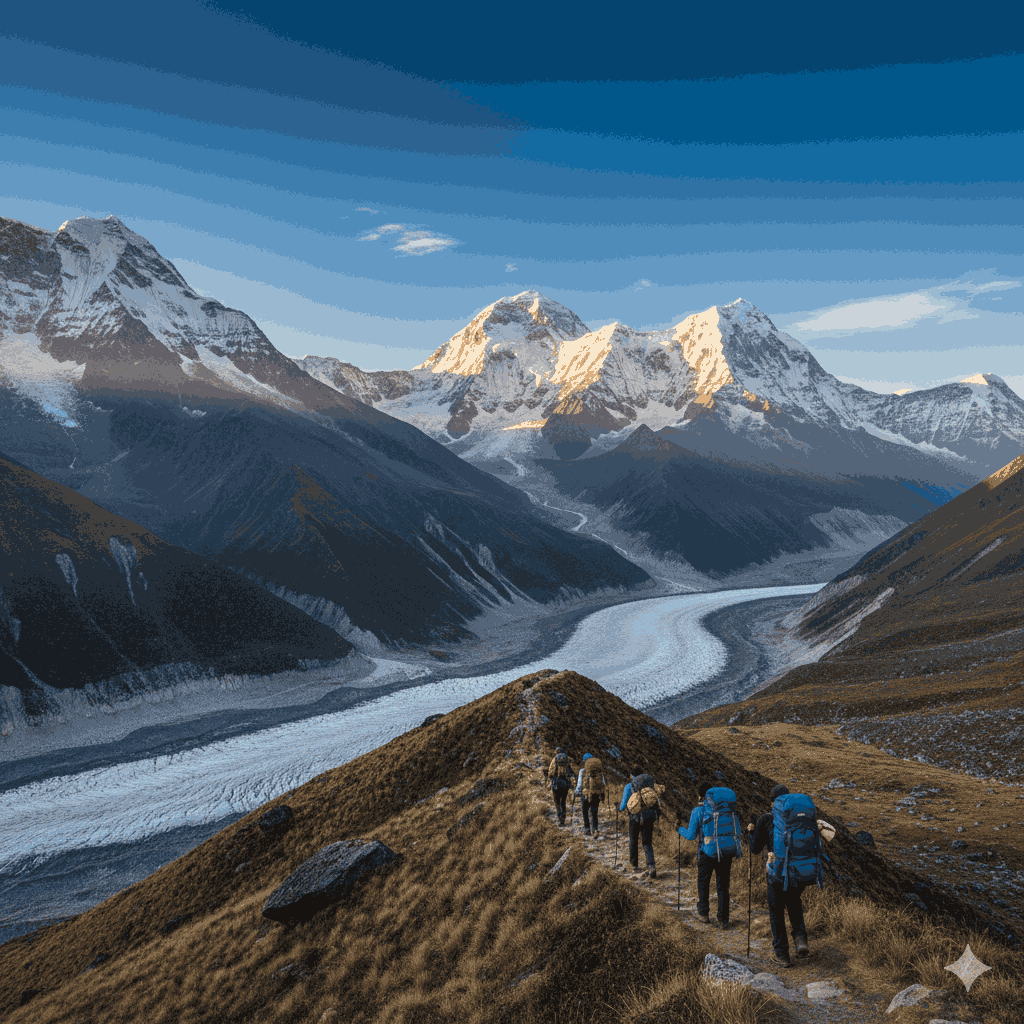
when to trek in Nepal showing autumn Himalayan clarity in Annapurna region
Determining when to trek in Nepal is far more than a simple calendar check; it is a profound act of aligning your physical journey with the ancient, rhythmic pulse of the world’s highest peaks. In 2026, as the trekking world evolves with smarter satellite infrastructure, refined safety protocols, and a new generation of boutique teahouses, the question of when to trek in Nepal has become the singular foundation of every successful expedition.
Whether you are aiming for the iconic ABC trek in Nepal or venturing into the rain-shadowed hidden valleys of Mustang, timing determines the colors you see, the communities you encounter, and the clarity of the memories you carry home. As you embark on what many consider the most beautiful trek in Nepal, your choice of season will paint your backdrop, be it the white-hot, crystalline glare of a winter morning or the soft, hazy pink of a spring afternoon.
1. The Crystal Clarity: Why Autumn Reigns Supreme (Sept – Nov), when to trek in nepal
If you ask any veteran climber or high-altitude photographer when to trek in Nepal for the most reliable conditions, they will point to October without hesitation. This is the “Heavyweight Champion” of trekking seasons. The monsoon rains of July and August act as a natural filter, washing away the atmospheric dust and particulate matter, leaving the air so crisp that the mountains seem to lean in toward you.
On the ABC trek in Nepal, the visibility in October often reaches a literal $100\%$. You can stand at the Annapurna Base Camp and see the individual blue-ice cracks on Annapurna South with startling precision. This is also the premier time for the jazz festivals and live music in Kathmandu, where the world-renowned Jazzmandu festival brings a global rhythm to the ancient, medieval courtyards of the Kathmandu Valley.
2. The Blooming Sanctuary: The Magic of Spring (March – May)
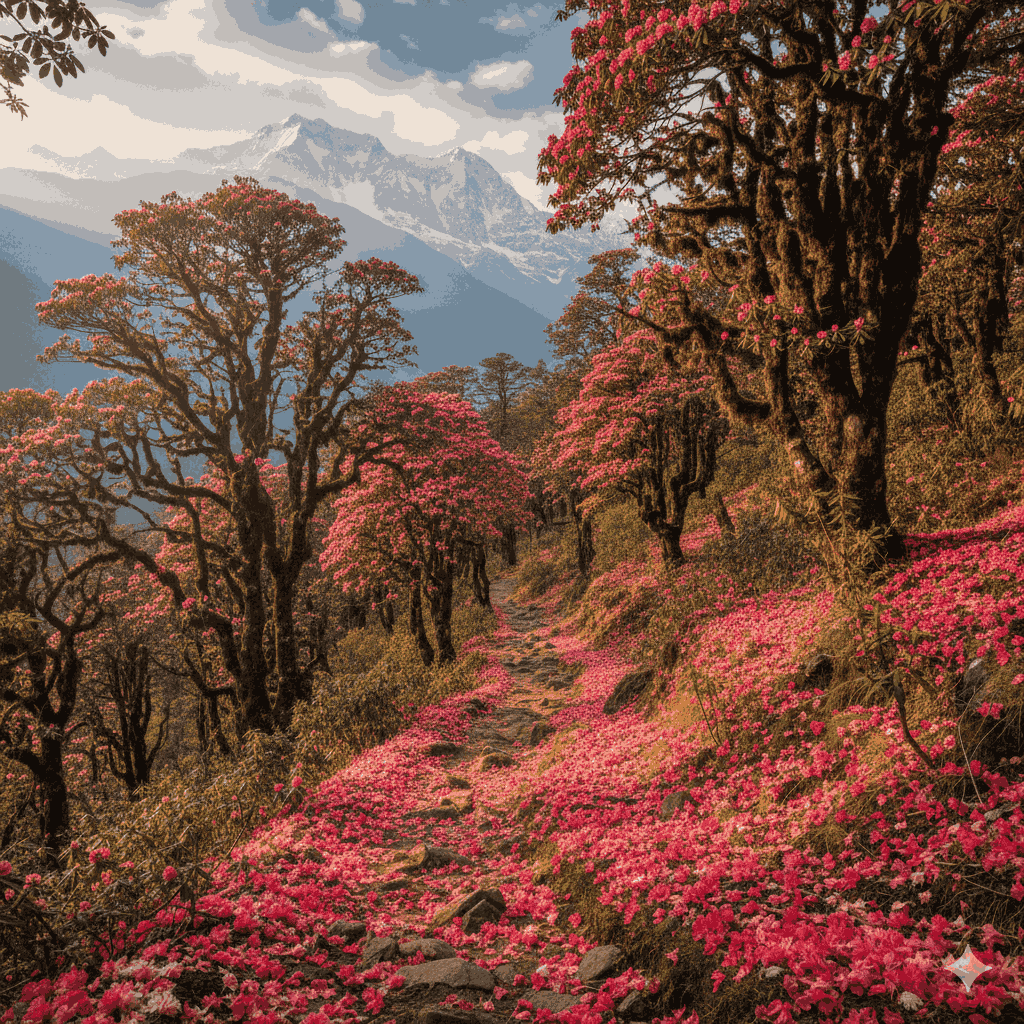
when to trek in Nepal during spring with blooming rhododendron forests
Spring is often referred to as the “Spirit Season”. This is when to trek in Nepal if you want to witness the most beautiful trek in Nepal dressed in its finest floral gown. The hillsides undergo a dramatic transformation as rhododendron forests, Nepal’s national flower, bloom in waves. You will see vibrant crimsons at lower altitudes ($2,000m$), transitioning to soft pinks and pure whites as you approach the tree line.
The Climate: Daytime temperatures hover between $15^\circ C$ and $22^\circ C$ in the valleys, offering the most comfortable hiking conditions of the year.
The Atmosphere: This is the peak season for Everest summit attempts. When you visit the mountains in Spring, you aren’t just a trekker; you are part of a global community of adventurers, sharing trails with elite climbers and high-altitude researchers.
3.The Silent Kingdom: Winter’s Hidden Peace (Dec – Feb)
Winter is for the bold and the introspective. While the general public avoids these months, the savvy traveler knows this is a brilliant answer to when to trek in Nepal for those who value solitude over warmth. By 2026, the evolution of Himalayan hospitality means many teahouses on the ABC trek in Nepal have installed improved insulation and high-efficiency heating systems.
Imagine standing at the Annapurna Sanctuary in January with no other tourists in sight,just you and a $360$-degree cathedral of snow-clad $7,000$-meter peaks. The air is remarkably stable, and the lack of moisture means you will rarely see a cloud. It is a time for quiet reflection by a yak-dung fire, sharing stories with local families who have more time to talk now that the crowds have thinned.
4. The Rain Shadow: Monsoon’s Secret Escapes (June – Aug)
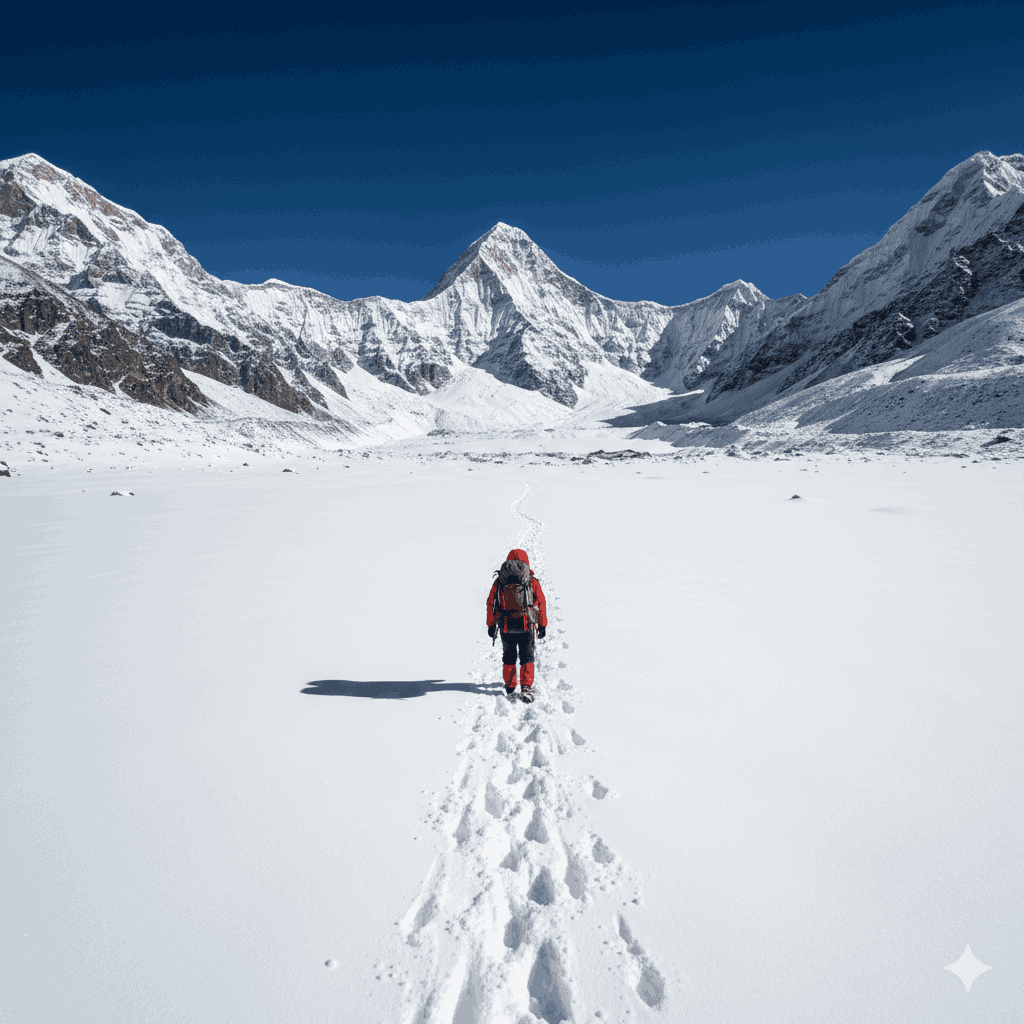
when to trek in Nepal in winter with snow covered Annapurna Sanctuary
The biggest misconception in Himalayan travel is that you cannot trek during the monsoon. If you know when to trek in Nepal, you know the secret of Upper Mustang. Because it lies north of the main Himalayan range, Mustang is in a “rain shadow.” While the rest of the country is lush and rainy, Mustang remains a dry, high-altitude desert.
A guided trek in Nepal during this time offers a landscape of ochre cliffs, wind-sculpted caves, and Tibetan-influenced culture that feels frozen in time. The lowlands may be wet, but the flight into Jomsom takes you into a world of endless sun and ancient “Forbidden Kingdoms.”
5. Safety and Regulations: The 2026 Guided Mandate, When to Trek in Nepal
In 2026, the concept of a guided trek in Nepal has shifted from a luxury to a requirement. The Nepal Tourism Board now mandates that trekkers in most national parks be accompanied by a licensed professional. This regulation has drastically improved safety, especially regarding:
Altitude Sickness (AMS): Guides are trained to spot subtle physiological changes before they become emergencies.
Environmental Protection: Guides ensure that “Leave No Trace” principles are strictly followed, preserving the most beautiful trek in Nepal for future generations.
6. Beyond the Peaks: Deep Cultural Immersion, When to Trek in Nepal
Timing your trip isn’t just about the sun; it’s about the soul. Choosing when to trek in Nepal to align with the festival calendar adds a layer of depth that a summer hike simply cannot match.
Dashain (Oct 2026): Experience the largest Hindu festival, where high-altitude villages are filled with bamboo swings and ceremonial feasts.
Tihar (Nov 2026): Known as the festival of lights, you will see mountain lodges decorated with marigolds and butter lamps to honor the goddess of wealth.
Holi (Mar 2026): A perfect pre-trek “warm-up” in Kathmandu, where the city explodes in a celebration of color and brotherhood.
7. The Urban Riff: Jazz in the Valley, When to Trek in Nepal
The final secret to when to trek in Nepal lies in the city you start and end in. The jazz festivals and live music in Kathmandu reach their zenith in October. There is a specific, electric energy in the Thamel and Lazimpat districts as trekkers return from the wild, sharing their mountain conquests over the smooth sounds of local and international jazz legends. In 2026, the music scene has expanded into the heritage sites of Patan, offering “Jazz in the Square” events that are free to the public.
Comprehensive 2026 Seasonal Planning Guide
| Month | Trekking Quality | Regional Focus | Cultural Highlight |
| January | Cold but Clear | Lower Annapurna / Mardi Himal | Quiet Lodge Fires |
| April | Floral Peak | ABC trek in Nepal | KatJazz Festival |
| July | Lush / Rain-Shadow | Upper Mustang / Dolpo | Summer Rites |
| October | High Definition | Everest / Annapurna | Jazzmandu 2026 |
| November | Crisp & Stable | Manaslu / Kanchenjunga | Tihar (Lights) |
FAQs on When to Trek in Nepal
Is October 2026 truly the best time for the Everest region?
Yes. From an SEO and photographic perspective, October is the “golden month.” The dust is gone, the temperature is manageable ($12^\circ C$ to $15^\circ C$ during the day), and the flight reliability to Lukla is at its highest. It is also the best time to experience the jazz festivals and live music in Kathmandu as a post-trek reward.
What makes the ABC trek in Nepal special in April?
The ABC trek in Nepal is unique because it takes you into a “Sanctuary” of $7,000$m peaks. In April, the approach through the forest is a literal tunnel of blooming rhododendrons. It is the most beautiful trek in Nepal for those who appreciate biodiversity as much as geology.
Can I trek without a guide in 2026?
As of the latest 2026 safety protocols, independent trekking in most conservation areas is prohibited for foreign nationals. A guided trek in Nepal is now the standard. This has improved the quality of information provided to tourists and significantly reduced the number of search-and-rescue operations.
The decision of when to trek in Nepal is a personal contract you sign with the landscape. In 2026, the trails are safer, the lodges are warmer, and the cultural scene is more vibrant than ever before. Whether you seek the high-definition glory of an October morning or the silent, snowy peace of a January evening, the Himalayas are waiting to meet you.
Furthermore, 2026 has seen the expansion of emergency rescue stations in critical hubs like Gorakshep and Thorong La. With improved satellite connectivity across the Khumbu and Annapurna regions, the isolation of the mountains no longer means a lack of protection. You are free to lose yourself in the majesty of the peaks, knowing that the “contract” you’ve signed is backed by a world-class support system.
