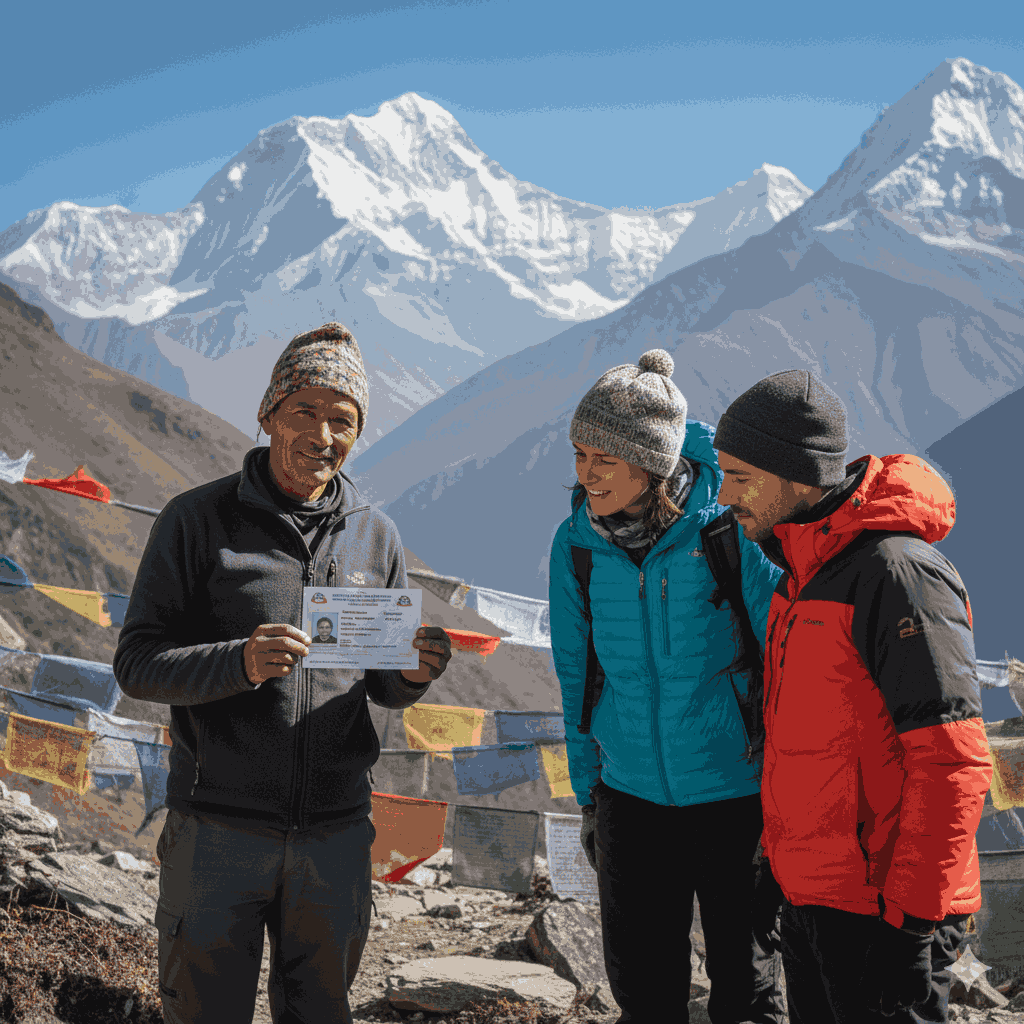
guided trek in Nepal with licensed guide verifying credentials in the Himalayas
Choosing a guided trek in Nepal as your primary objective for 2026 is a decision that moves you away from the commercial noise of more famous routes and into a realm of deep spiritual silence and geographic grandeur. Known as the “Home of the Gods,” Nepal offers thousands of kilometers of trails that are often described as the most well-rounded trekking experiences in the world. Whether you are walking through the lush middle hills or the high-altitude deserts of the rain shadow, a professional guide is the bridge between a simple walk and a life-changing expedition.
In 2026, the guided trek in Nepal has entered a new era of professionalism, safety, and cultural integrity. With updated mandatory guide policies and significantly improved teahouse infrastructure, these trails provide the perfect middle ground for adventurers who want to challenge their physical limits while ensuring they are supporting the local economy responsibly.
Discover the Soul of the Himalayas: Why Professional Guidance is Paramount
If you are looking to truly elevate your experience, you must understand the depth that a professional brings to a guided trek in Nepal. Many travelers assume that because trails are well-marked, they can navigate alone. However, the discovery of hidden cultural nuances, such as the proper way to walk around a Buddhist Chorten (clockwise) or the medicinal properties of high-altitude herbs, only happens when you are accompanied by a local expert.
Beyond the cultural layers, a guided trek in Nepal in 2026 is a matter of safety and logistics. The weather in the Himalayas is notoriously fickle; a clear morning can turn into a dangerous blizzard in the time it takes to eat lunch. A seasoned guide reads the clouds and the wind in ways an app or a map never could. They understand the physiological signs of Acute Mountain Sickness (AMS) and carry the authority to make the life-saving call to descend when a trekker’s ego might otherwise push them into danger.
The 2026 Regulatory Landscape: Mandatory Guide Rules
The government of Nepal, in coordination with the Nepal Tourism Board, has implemented strict regulations for 2026 to ensure the safety of all visitors. Solo trekking is now prohibited in almost all national parks and conservation areas.
The Legal Framework for 2026
When you book a guided trek in Nepal, your agency handles the complex “Restricted Area Permits” (RAP) and “National Park Entry Permits.” For regions like Manaslu, Upper Mustang, and Upper Dolpo, a guide is not just a suggestion—it is a legal requirement for permit issuance. These guides must be licensed by the Ministry of Tourism, ensuring they have undergone rigorous training in first aid, mountain rescue, and environmental conservation.
Economic Impact and Sustainability
By opting for a guided trek in Nepal, you are participating in a sustainable tourism model. The fees you pay directly support the families of guides and porters, many of whom come from remote mountain villages where tourism is the only source of income. This creates a circular economy that allows these communities to maintain their traditional lifestyle while sending their children to school.
Top Routes for a Guided Trek in Nepal in 2026
While there are hundreds of trails, certain routes define the Himalayan experience. Here is how professional guidance changes the game on each:
1. The Annapurna Circuit: A Cultural Odyssey
Often called the most diverse trail in the world, the Annapurna trek in Nepal takes you from lush tropics to the 5,416m Thorong La Pass. A guide here is essential for navigating the changing trail conditions caused by recent road expansions, ensuring you stay on the “NATT” (Natural Annapurna Trekking Trails) rather than walking on dusty jeep roads.
2. Everest Base Camp: The Pinnacle of Adventure
On an Everest guided trek in Nepal, your guide acts as a logistics manager. They handle the stressful re-booking of flights from Lukla if the weather turns, and they ensure you have a bed in Gorak Shep, where teahouses are often overbooked. They also provide the historical context of the Sherpa “Tigers of the Snow” who conquered these peaks.
3. The Langtang Valley: The Valley of Glaciers
For those seeking the easiest trek in Nepal that still offers 7,000m peaks, Langtang is the answer. A guide here will share the heart-wrenching and heroic stories of the 2015 earthquake recovery, making your journey a pilgrimage of solidarity.
Cost Breakdown for a Guided Trek in Nepal (2026 Estimates)
Planning your finances is key to a stress-free trip.
| Service Category | Standard Daily Rate | Included Benefits |
| Senior Lead Guide | $35 – $50 USD | English/Foreign language fluency, pulse oximetry, logistics management. |
| Assistant Guide | $25 – $30 USD | Supports larger groups (4+ people), manages the “tail” of the group. |
| Porter (1:2 ratio) | $20 – $25 USD | Carries up to 20kg of gear, allowing you to walk with a light daypack. |
| Full Service Package | $100 – $180 USD | Includes all meals, teahouse lodging, permits, and staff salaries. |
The Mega-FAQ: Detailed Expert Advice for 2026 Trekkers
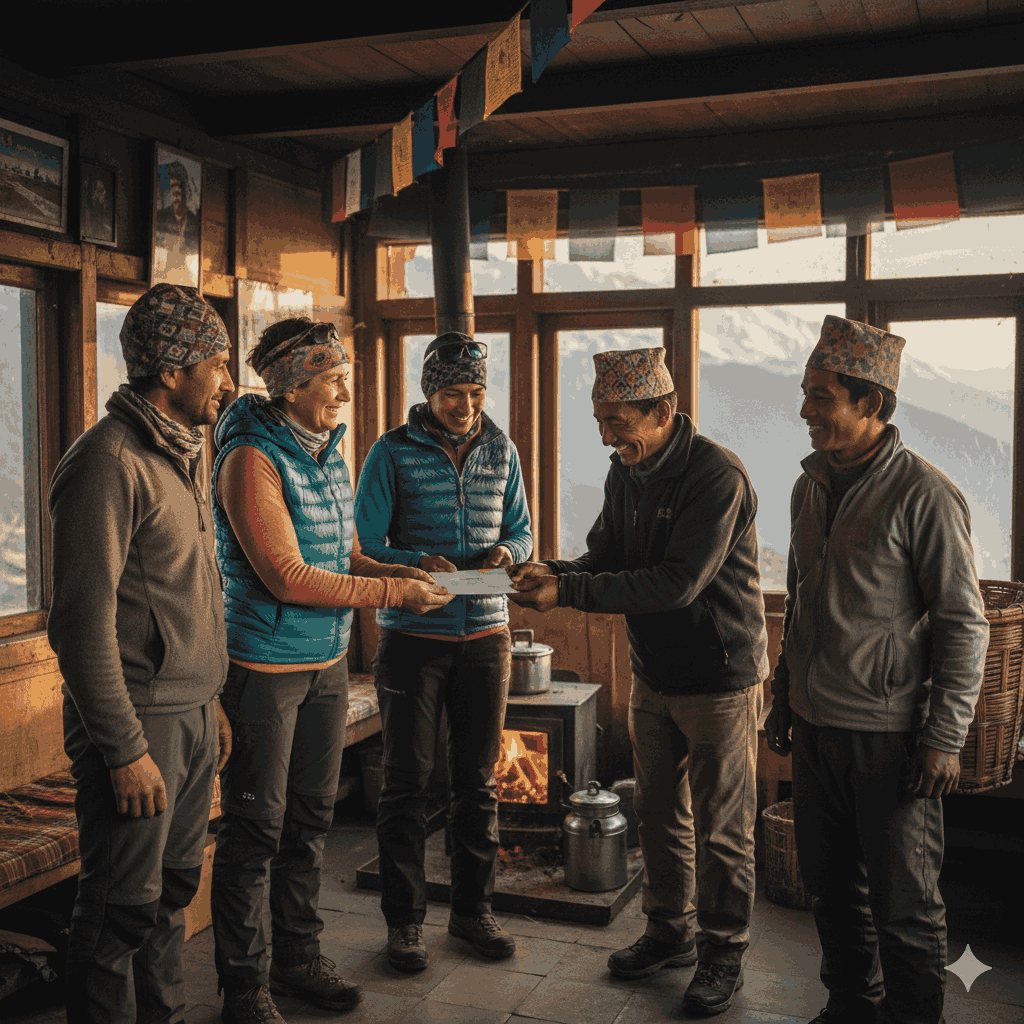
guided trek in Nepal tipping etiquette for guide and porter at trek completion
Why should I choose a guided trek in Nepal instead of going solo?
In 2026, safety is the primary driver. Beyond the legal requirements, a guide provides a safety net that solo trekkers lack. From diagnosing altitude sickness to finding the trail after a heavy snowfall, their expertise is invaluable. Moreover, they enrich your journey by translating conversations with local villagers, allowing for a deep cultural exchange that is impossible when traveling alone.
How do I choose the right trekking agency?
Look for agencies that are members of TAAN (Trekking Agencies’ Association of Nepal). Check for transparent pricing and, most importantly, ensure they provide their staff with insurance and proper high-altitude gear. A responsible agency will always prioritize the welfare of their porters as much as the comfort of their clients.
What is the best time for a guided trek in Nepal?
The best time to trek in Nepal remains the pre-monsoon (March to May) and post-monsoon (September to November) seasons. During these months, the skies are generally clear, and the temperatures at high altitudes are manageable. Spring is famous for the blooming rhododendrons, while Autumn offers the crispest views of the peaks.
What level of fitness is required?
For a standard guided trek in Nepal, you don’t need to be an Olympic athlete, but you should be able to walk for 6 to 7 hours a day with a light pack. Cardiovascular health is vital, so we recommend training with stair-climbing or hiking at least three months before your arrival.
What should I pack for a 14-day trek?
Layers are your best friend. You need moisture-wicking base layers, an insulating fleece, and a heavy down jacket for the evenings. Don’t forget high-quality, broken-in trekking boots and a sleeping bag rated to at least -15°C. Your guide will provide a more specific list during your pre-trek briefing in Kathmandu.
Is travel insurance mandatory?
Yes. In 2026, most agencies will not allow you to begin a guided trek in Nepal without insurance that specifically covers “emergency helicopter evacuation” up to 6,000m. This is a critical safety precaution.
How do I manage hygiene and health on the trail?
Your guide will advise you on “safe eating” practices—usually avoiding raw salads and sticking to freshly cooked hot meals like Dal Bhat. Always use water purification tablets or a filter; never drink tap water. Your guide will also carry a basic first-aid kit, but you should bring your own supply of personal medications and blister kits.
What is the standard tipping etiquette for a guided trek in Nepal in 2026? While tipping is not legally mandatory, it is a deeply ingrained part of the trekking culture and is highly expected as a gesture of gratitude. In 2026, the general guideline is to budget approximately 10% to 15% of your total trek cost for the entire support team.
For the Guide: Typically $15–$20 USD per day.
For the Porter: Typically $10–$15 USD per day.
It is customary to present the tips on the final evening of the trek in a discrete envelope. If you are in a group, it is best to pool your tips together. Always use clean, crisp bills (USD or NPR) and hand them over with your right hand as a sign of respect.
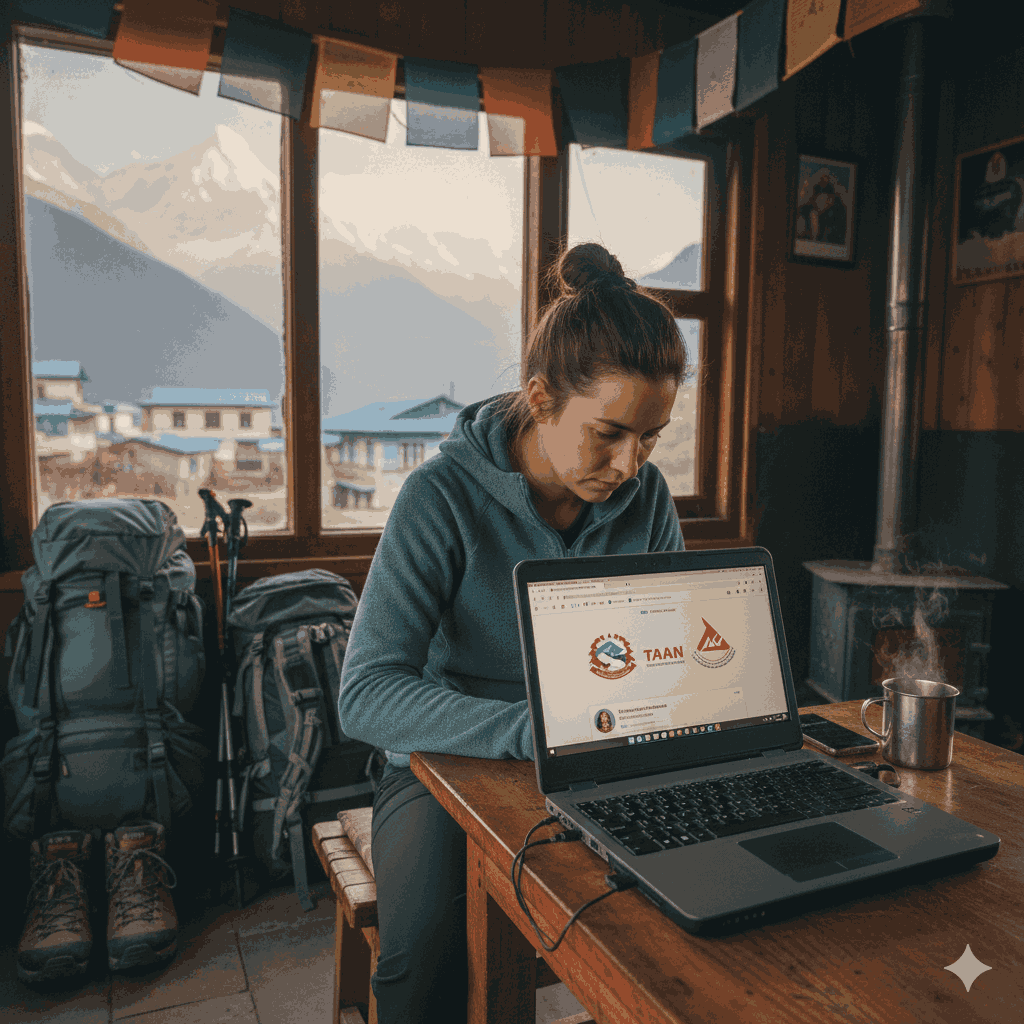
How can I verify that my guide is officially licensed and my agency is legitimate? With the strict enforcement of the mandatory guide policy in 2026, verifying credentials is vital. A legitimate guided trek in Nepal must be organized through an agency registered with the Nepal Tourism Board (NTB) and the Trekking Agencies’ Association of Nepal (TAAN).
Check the ID: Your guide should carry a valid license issued by the Ministry of Culture, Tourism, and Civil Aviation.
Insurance: Ask for proof that the agency provides insurance for their guides and porters; a reputable company always covers their staff’s medical and evacuation needs.
Official Portals: You can verify agency registration status directly on the Nepal Tourism Board website or the TAAN official member directory.

guided trek in Nepal with licensed guide verifying credentials in the Himalayas
The guided trek in Nepal is more than just a vacation; it is an immersion into a way of life that has remained unchanged for centuries. By trusting a professional guide, you are ensuring that your adventure is safe, respectful, and profoundly meaningful.
Once you descend from the silence of the high passes and return to the bustling streets of Thamel, take the time to decompress. The jazz festivals and live music in Kathmandu offer the perfect environment to celebrate your success and reflect on the majesty of the Himalayas.
