
Losar Festival in Photos, Monks performing rituals at a Himalayan monastery during Losar, with prayer flags and mountain scenery.
The high-altitude kingdoms of the Himalayas do not simply mark the passage of time; they dance it into existence. In Nepal, the new year is a rhythmic cycle of three distinct celebrations collectively known as Losar. While the world observes a single calendar, the ethnic communities of the mountains follow the lunar and solar transitions that define their spiritual survival.
The Losar Festival Dress: Traditional Attire and Cultural Symbols act as the visual language of these festivals. Every thread, bead, and color is a deliberate prayer for prosperity. When paired with the Traditional Losar Dances and Music You Should Not Miss in Nepal, the atmosphere transforms into a sensory overload of ancient heritage. For those planning a journey in 2026, understanding these deep-rooted customs is the key to unlocking the soul of the Himalayas.
The Triad of New Year: Tamu, Sonam, and Gyalpo Losar
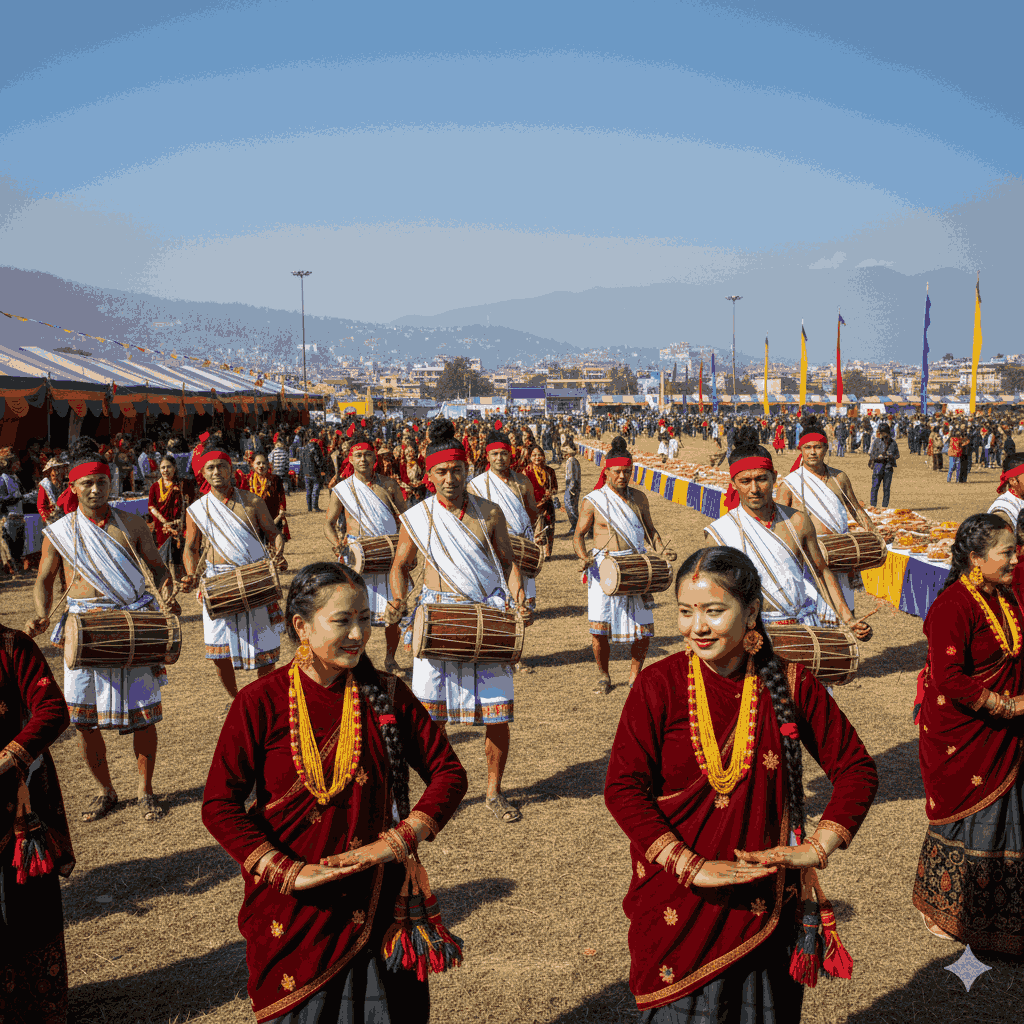
Losar Festival in Photos Gurung community celebrating Tamu Losar in traditional costumes with dancing and cultural displays.
Nepal is unique because it celebrates three different Losars, each belonging to a specific ethnic group with its own calendar and customs.
Tamu Losar: The Gurung Solar Transition
Celebrated on the 15th of Poush (typically late December or early January), Tamu Losar is the new year of the Gurung people, also known as the Tamu. This community primarily inhabits the foothills of the Annapurna and Dhaulagiri ranges. The festival marks the end of the shortest days and the return of the sun, making it a solar celebration of light and warmth. In 2026, the festivities for the new cycle will begin on December 30, 2025.
Sonam Losar: The Tamang Agricultural Merit
The Tamang and Hyolmo communities celebrate Sonam Losar. The word “Sonam” translates to “merit” or “virtuous,” reflecting the agricultural nature of the celebration. It takes place on the first new moon of the month of Magh (January or February). This festival is a time for purification after the harvest and is deeply tied to the 12-year animal zodiac cycle. In 2026, Sonam Losar falls on January 19.
Gyalpo Losar: The Sherpa and Tibetan Royal New Year

Losar Festival in Photos ,Sherpa monks performing Cham dance during Gyalpo Losar with vibrant masks and ritual instruments.
Gyalpo Losar is the most widely recognized globally as the Tibetan New Year. In Nepal, it is celebrated with immense fervor by the Sherpas of the Everest region and the Tibetan diaspora in Kathmandu. It marks the beginning of the new year in the Tibetan calendar and often involves the most elaborate monastic rituals. For 2026, Gyalpo Losar reaches its peak on February 18. You can read a comprehensive breakdown of these dates in the Different Types of Losar in Nepal guide.
Losar Festival Dress: Traditional Attire and Cultural Symbols
The Losar Festival Dress: Traditional Attire and Cultural Symbols are more than festive costumes; they are a “new skin” for a new year. Wearing these garments is a symbolic act of shedding the misfortunes of the past.
The Sherpa Chuba: A Masterpiece of the High Peaks
The most iconic piece of traditional attire in the Everest region is the Chuba. This long, heavy robe is made from thick wool to combat the freezing winds of the Khumbu.
Design: The Chuba is wrapped around the body and tied with a sash (Kera), creating a large pouch in the front. This pouch historically served as a pocket for carrying anything from dried cheese to prayer books.
Symbolism: During Gyalpo Losar, the Chuba is often made of silk or decorated with brocade borders, signifying the “Royal” (Gyalpo) nature of the festival.
The Pangden: The Marriage Rainbow
For Sherpa women, the Pangden is an essential cultural symbol. This multi-colored striped apron is worn at the waist.
The Code: Traditionally, only married women wore the Pangden, but it has evolved into a general symbol of ethnic pride. The bright, horizontal stripes are said to represent the harmony of the universe.
Material: Authentic Pangdens are hand-woven on backstrap looms, a process that preserves the ancient textile traditions of the high mountains. Learn more about the Losar Festival Dress and its secrets to understand the technical craftsmanship involved.
Gurung Bhangra and Ghalek: The Velvet Heritage
The Gurung community brings a distinct luxury to the Losar Festival Dress: Traditional Attire and Cultural Symbols.
The Bhangra: Men wear a white woven vest called a Bhangra. It is crossed over the chest and tied, representing the community’s history as hunters and warriors.
The Ghalek: Women drape a maroon or dark green velvet shawl called a Ghalek over their shoulders. This is paired with a velvet blouse (Cholo), creating a look of regal elegance.
Tamang Lungi and the Red Border
During Sonam Losar, the Tamang people emphasize the color red.
The Lungi: Women wear a wrap-around skirt known as a Lungi. The hem is usually adorned with a thick red border, which is a cultural symbol of fire,a purifying element that wards off evil spirits.
The Patuka: Both men and women wrap a long yellow or red sash (Patuka) around their waist. This provides physical support for the rigorous Traditional Losar Dances and Music You Should Not Miss in Nepal.
Traditional Losar Dances and Music You Should Not Miss in Nepal
When the music starts, the Losar Festival Dress: Traditional Attire and Cultural Symbols come alive. The dances performed during Losar are categorized into sacred monastic rituals and joyous community folk dances.
The Sacred Cham: Masked Exorcism of the Monasteries
The most spectacular of the Traditional Losar Dances and Music You Should Not Miss in Nepal is the Cham dance. Performed primarily during Gyalpo Losar, this is a tantric ritual meant to destroy the “demons” of ego and ignorance.
The Performers: Trained monks take on the personas of wrathful deities and protectors.
The Attire: They wear the most extreme versions of Losar Festival Dress: Traditional Attire and Cultural Symbols, featuring massive, hand-painted masks and silk robes that have been preserved for centuries.
The Experience: The heavy, slow stomps of the dancers, accompanied by the drone of long horns (Dungchen), create a trance-like atmosphere that is believed to purify the entire community. For those in Kathmandu, Kopan Monastery is one of the premier locations to witness this.
Tamang Selo: The Joy of the Damphu
The Tamang Selo is the heartbeat of Sonam Losar. It is a high-energy dance that reflects the resilient spirit of the Tamang people.
The Instrument: The dance is centered around the Damphu, a circular frame drum. According to legend, the first Damphu was made by a man to cheer up his grieving wife, making it a permanent cultural symbol of joy.
The Movement: Dancers move in circular patterns, their traditional attire swirling as they jump and spin. The lyrics often tell stories of nature, love, and mountain life.
The Syabru: Sherpa Unity in Namche Bazaar
In the Solu-Khumbu region, the Syabru dance is the main attraction.
The Sound: This is a group dance where participants link arms and stomp in unison. The sound of heavy mountain boots hitting the floor provides the percussion.
The Setting: Usually performed in the courtyards of Namche Bazaar or Tengboche, the Syabru is a powerful display of community solidarity against the harsh Himalayan winter.
Ghatu and Kauda: Gurung Narrative Dances
Tamu Losar is famous for the Ghatu and Kauda dances.
Ghatu: This is a slow, narrative dance that tells the legend of a medieval King and Queen. It is performed by young girls in a trancelike state.
Kauda: A more social and flirtatious dance, Kauda is performed with a Madal drum and showcases a Traditional Losar Dances the dexterity and grace of the Gurung youth. To find where these are performed, check the Best Places to Experience Losar Festival in Nepal.
The Alchemy of Himalayan Jewelry
No Losar Festival Dress: Traditional Attire and Cultural Symbols are complete without the “spiritual shields” of the Himalayas—the jewelry. For the people of Nepal, jewelry is not a vanity; it is a portable bank and a religious talisman.
Turquoise and Coral: The Sky and the Earth
The most prominent stones in Himalayan traditional attire are turquoise and coral.
Turquoise (The Sky Stone): Believed to have fallen from the heavens, it is a cultural symbol of health and luck.
Coral (The Life Force): Red coral represents the energy of the sun and the protection of the bloodline.
The Gau: The Portable Shrine
The Gau is a silver or gold prayer box worn as a pendant. It is a central piece of the Losar Festival Dress: Traditional Attire and Cultural Symbols. Inside, the wearer keeps sacred mantras or a small image of a Buddha. During the Traditional Losar Dances and Music You Should Not Miss in Nepal, the Gau swings rhythmically, serving as a constant blessing for the dancer. Information on these artifacts can be found through the International Association for Tibetan Studies.
Culinary Symbols: The Taste of a New Year

Losar Festival in Photos , Family celebrating with Guthuk and traditional foods, embodying the spirit of renewal during Losar.
The Losar Festival Dress: Traditional Attire and Cultural Symbols even extend to the dinner table.
Guthuk: On the eve of Gyalpo Losar on Traditional Losar Dances, families eat a soup with nine ingredients. Hidden inside the dough balls are symbolic objects. Finding wool means you have a kind heart; finding a chili means you have a hot temper. These are playful cultural symbols of self-reflection.
Khapse: These deep-fried pastries are shaped like lotus flowers or donkey ears. They are offered to the gods before being eaten by the family.
Changkol: A warm, mildly alcoholic brew made from barley beer (Chang) is served to guests, acting as a cultural symbol of mountain hospitality. Explore more about the Traditional Food Prepared During Losar to plan your festival menu.
Planning for 2026: Where to Go
If you want to witness the Traditional Losar Dances and Music You Should Not Miss in Nepal in person, you must plan according to the specific region.
Kathmandu (Tundikhel and Boudhanath): Tundikhel is the best place to see the mass parades of the Gurung and Tamang communities. Boudhanath Stupa is the spiritual epicenter for the Sherpa and Tibetan festivities.
Pokhara (Lakeside): The Gurung community in Pokhara organizes massive cultural rallies that showcase the finest traditional attire against the backdrop of the Annapurna range.
Upper Mustang (Lo Manthang): For a truly ancient experience, Mustang offers the most traditional and secluded Losar celebrations, where the Traditional Losar Dances and Music You Should Not Miss in Nepal have remained unchanged for 500 years.
What is the most important part of the Losar Festival Dress: Traditional Attire and Cultural Symbols?
While every piece is vital, the Pangden (for Sherpa women) and the Bhangra (for Gurung men) are the most distinctive. However, the most universally important element across all groups is the Gau (prayer box) and turquoise jewelry, which serve as a cultural symbol of spiritual protection and prosperity for the coming year.
Why do people wear new clothes during Losar?
In Himalayan culture, wearing new Losar Festival Dress: Traditional Attire and Cultural Symbols represents a “fresh start.” It is a symbolic act of shedding the misfortunes, sins, and bad luck of the previous year to make room for positive energy and merit.
Where can I see the Traditional Losar Dances and Music You Should Not Miss in Nepal?
For the most authentic experience, you should visit:
Tundikhel (Kathmandu): For massive cultural parades during Tamu and Sonam Losar.
Boudhanath Stupa: For Sherpa and Tibetan celebrations.
Kopan or Shechen Monastery: To witness the sacred Cham Masked Dances.
Namche Bazaar: For the high-altitude Syabru circle dances.
Is it okay for tourists to wear Losar Festival Dress: Traditional Attire and Cultural Symbols?
Yes, the local communities generally appreciate it when visitors show interest in their heritage. However, it is important to wear the traditional attire respectfully. Avoid wearing sacred items like monastic robes, and always ask a local to help you wrap your Chuba or Ghalek correctly to honor the tradition.
What instruments are used in the Traditional Losar Dances and Music You Should Not Miss in Nepal?
The primary instruments include the Damphu (frame drum), Tungna (lute), Madal (hand drum), and the monastic Dungchen (long horns). These instruments are often decorated with carvings that serve as a cultural symbol of the 12-year animal zodiac.
What are the dates for Losar in 2026?
Tamu Losar: December 30, 2025 (marks the 2026 cycle).
Sonam Losar: January 19, 2026.
Gyalpo Losar: February 18, 2026.
Are the dances performed during Losar religious or social?
They are both. The Cham dance is a strictly religious, meditative ritual performed by monks. Conversely, the Tamang Selo and Syabru are social folk dances meant for community bonding and celebration. Both are essential Traditional Losar Dances and Music You Should Not Miss in Nepal.
The Losar Festival Dress: Traditional Attire and Cultural Symbols are the living soul of Nepal’s highlands. They remind us that culture is not something found in books, but something worn on the skin and danced in the streets. As the 2026 animal cycle begins, these traditions during Traditional Losar Dances will once again prove that the spirit of the Himalayas is as indestructible as the mountains themselves.
