
A deadly avalanche at Himlung Himal in Nepal’s Manang district has become one of the most serious tragedies of the country’s 2026 autumn climbing season.
Fifteen Nepali expedition workers have died after an avalanche buried the mountain’s base camp in late September, while one worker remains missing. Rescue teams have recovered and identified 15 bodies, but difficult mountain conditions have prevented the recovery operation from continuing for the missing worker.
The tragedy happened just as Nepal’s autumn mountaineering season was getting underway.
The workers were not foreign climbers attempting the summit. They were Nepali guides, kitchen staff and expedition support workers who had travelled ahead to prepare the route, establish the camp and fix ropes before foreign climbers arrived.
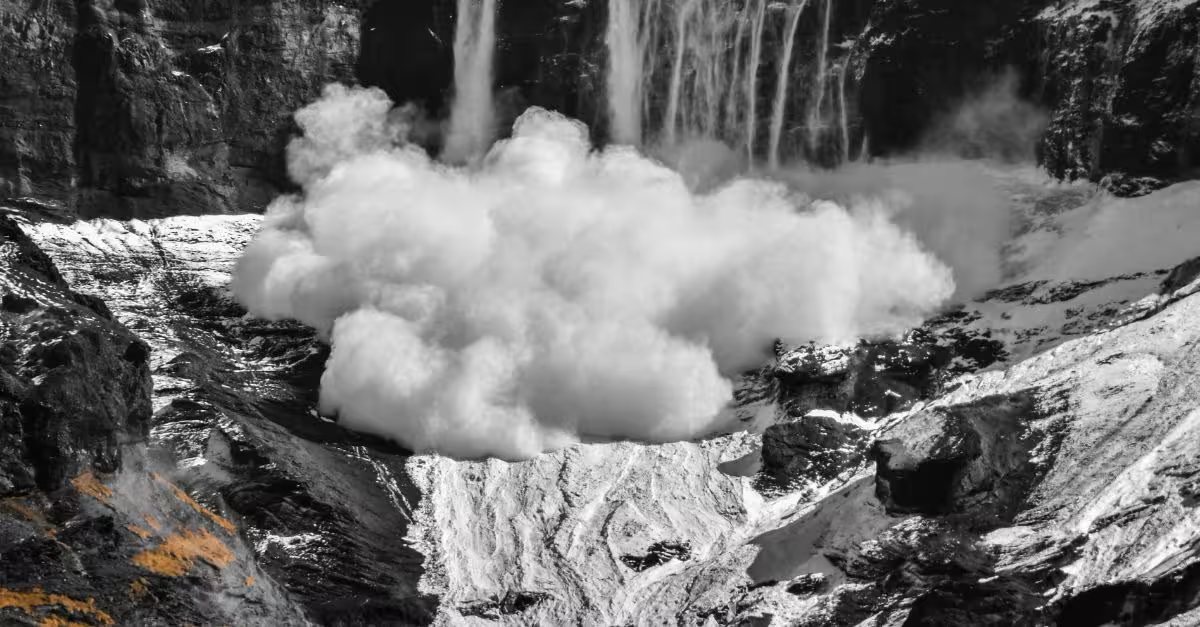
Himlung Himal avalanche: Representive images Photo by Lucas Leonel Suárez on Pexels
The latest recovery operation has now been completed for the time being, with rescuers having to dig through more than 14 feet of snow and avalanche debris.
What Happened at Himlung Himal?
The avalanche struck the Himlung Himal base camp in Narpa Bhumi Rural Municipality-5 of Manang district during the early hours of September 27, 2026, according to the latest local reporting.
The mountain rises to 7,126 metres (23,379 feet) and is located in the remote Nar Phu region of northern Manang, close to Nepal’s border with China.
A Nepali expedition support team had travelled from Kathmandu to the mountain to prepare the base camp and climbing route for the upcoming autumn season.
The avalanche buried part of the camp under a huge amount of snow.
Initial reports were uncertain about the number of people affected because communication with the remote mountain area was difficult. As rescuers reached the site and accounted for the expedition team, the number of missing people was revised.
Eventually, 16 people from the group were confirmed missing after the avalanche.
Eleven others survived and were accounted for.
Rescue teams subsequently recovered the bodies of 15 people.
One worker, 38-year-old Pasang Nuri Sherpa of Okhaldhunga, remains missing.
Latest Himlung Avalanche Update: 15 Dead, One Still Missing
The latest confirmed figures are:
| Update | Latest information |
|---|---|
| Mountain | Himlung Himal |
| Elevation | 7,126 metres |
| Location | Nar Phu, Manang, Nepal |
| Avalanche | September 27, 2026 |
| Nepali team involved | 27 people |
| Survivors accounted for | 11 |
| Initially missing | 16 |
| Bodies recovered | 15 |
| Still missing | 1 |
| Foreign climbers at base camp | No |
| Rescue status | Main recovery operation completed; further efforts depend on conditions |
The latest recovery operation found eight additional bodies on October 1, taking the total number recovered to 15. The bodies were transported by helicopter to locations including Phu and Chame, with further legal and identification procedures carried out afterward.
A report published on October 3 says the Nepal National Mountain Guide Association completed the second phase of the search and recovery operation despite extreme conditions and more than 14 feet of snow covering the area. Pasang Nuri Sherpa remains unaccounted for.
Who Were the People at the Camp?
The people caught in the avalanche were Nepali expedition workers and support staff.
They had travelled to Himlung Himal ahead of foreign clients to carry out essential preparation work.
Their responsibilities included:
- Establishing the base camp
- Setting up tents and kitchen facilities
- Preparing climbing routes
- Fixing ropes
- Carrying and organising expedition equipment
- Supporting the upcoming climbing teams
Reports identified workers from several districts, including Sankhuwasabha, Gorkha, Khotang, Rukum East, Kavrepalanchok, Sindhupalchok, Okhaldhunga and Dolakha.
The tragedy therefore affected people working behind the scenes of Nepal’s mountaineering industry rather than climbers who had already begun their summit attempts.
That distinction is important.
Foreign Climbers Had Not Yet Arrived
One of the most important facts about the Himlung Himal avalanche is that foreign climbers were not at the base camp when the avalanche struck.
The Nepali support team had been sent ahead to prepare the mountain for the arrival of foreign clients.
According to reporting from The Kathmandu Post, foreign climbers were expected to reach the mountain several days after the Nepali team had established the camp.
This means the disaster occurred during the preparation stage of the expedition.
For international climbers planning Nepal’s autumn climbing season, it is a reminder that expedition staff often reach remote mountains before their clients and may face serious risks while preparing camps and routes.
Why Was the Rescue So Difficult?
Himlung Himal is a remote, high-altitude mountain.
At 7,126 metres, the environment is extremely demanding even under normal conditions.
After the avalanche, rescue teams faced several additional problems:
- Heavy snow
- Deep avalanche debris
- Unstable mountain conditions
- Poor weather
- Difficult helicopter access
- Extreme altitude
- Freezing temperatures
- Limited working time at the site
Rescuers reported having to dig through more than 14 feet of snow and avalanche debris to reach the buried camp.
Helicopters were placed on standby in Kathmandu and Pokhara during the early stages of the operation, but bad weather initially prevented them from reaching the mountain.
Once conditions improved, rescue personnel were flown to the base camp and began searching likely burial areas.
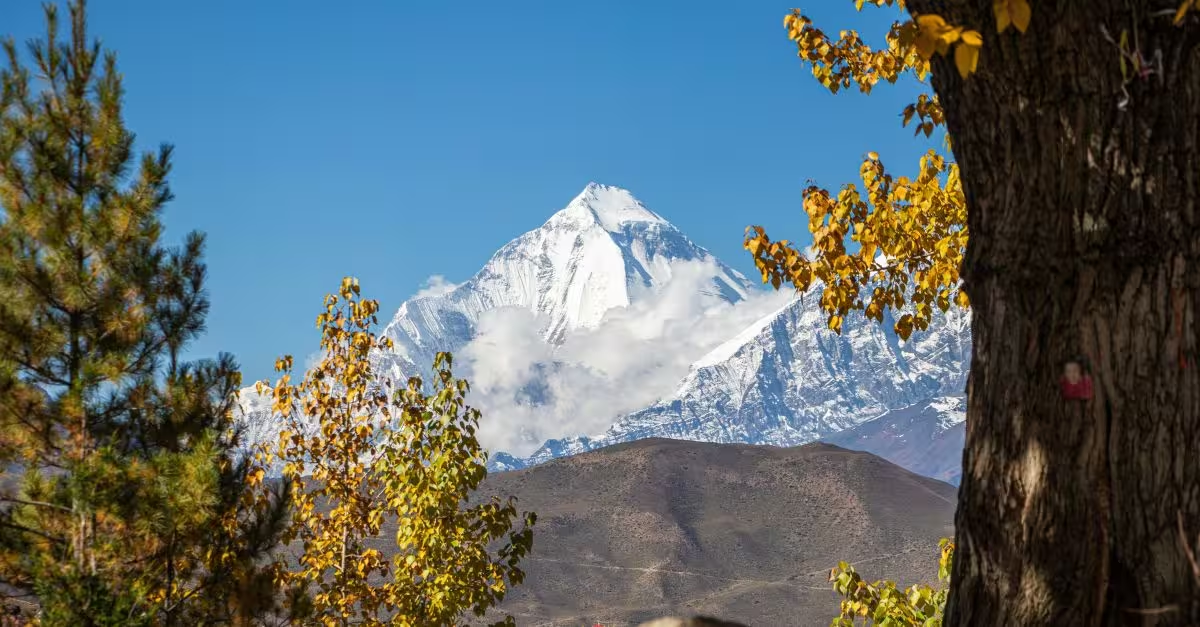
Himlung Himal:Photo by Roshan Pokharel/
How the Search and Recovery Operation Unfolded
The rescue operation changed considerably over several days.
September 27: Avalanche strikes
The avalanche struck the Himlung Himal base camp during the early hours.
Initial reports indicated that several Nepali workers were missing.
Two bodies were recovered during the first search operation.
September 28: Four bodies recovered
Rescue teams recovered additional bodies, bringing the confirmed number to four.
Twelve people were still missing at that stage.
Bad weather and difficult mountain conditions continued to affect the operation.
September 29: Search temporarily paused
After searching through approximately 14 feet of snow and debris, rescuers temporarily suspended the operation because conditions were becoming dangerous.
The Nepal National Mountain Guide Association said recovery efforts would resume when conditions allowed.
September 30: Seven bodies recovered
Three additional bodies were recovered, bringing the total to seven.
The operation continued under the leadership of experienced mountain guides.
October 1: Death toll reaches 15
The biggest recovery operation came on October 1.
Rescuers recovered eight additional bodies, bringing the total number of confirmed deaths to 15.
One person remained missing.
October 3: Latest status
The latest reporting says the second phase of the search and recovery operation has been completed.
The 15 recovered bodies have been identified, while Pasang Nuri Sherpa remains missing.
Further recovery efforts could depend on whether mountain conditions become safe enough for rescuers to return.
Who Led the Rescue Operation?
The Nepal National Mountain Guide Association (NNMGA) played a central role in the search and recovery effort.
Experienced mountain guides were deployed to the avalanche site, including IFMGA-certified guides.
The operation was conducted with support from expedition companies, helicopter operators, local authorities and other agencies.
The difficult conditions meant that the rescuers themselves had to work in a potentially hazardous avalanche environment.
This was not simply a matter of searching through ordinary snow.
Large quantities of compacted avalanche debris had buried the camp, while continued mountain hazards made prolonged work dangerous.
What Is Himlung Himal?
Himlung Himal is a 7,126-metre mountain in the Nar Phu region of Manang.
It is considered an important climbing peak for mountaineers looking to gain experience at high altitude.
The mountain is much less famous among general tourists than Mount Everest, but it is part of Nepal’s wider mountaineering industry and attracts international expedition teams.
For climbers, mountains such as Himlung provide opportunities to gain experience at elevations above 6,000 metres before attempting some of the world’s highest peaks.
That makes the mountain economically important to the local expedition industry.
The mountain also requires substantial logistical preparation.
Before foreign climbers arrive, Nepali workers and guides have to establish camps, transport equipment, prepare routes and install fixed ropes.
The people involved in that work are an essential part of Nepal’s Himalayan tourism industry.
Why Did the Avalanche Happen?
The exact trigger of the Himlung avalanche has not been definitively established in the latest reporting.
What is known is that the avalanche occurred during a period of persistent rain and heavy snowfall across Nepal’s mountain regions.
The Himlung area was experiencing difficult weather around the time of the disaster.
It is important not to automatically attribute this particular avalanche to climate change without a specific scientific assessment of the event.
However, the tragedy has renewed attention on the broader risks faced by people working in the high Himalayas.
A Difficult Year for Nepal’s Mountains
The Himlung disaster comes during an unusually difficult period for Nepal.
The country has already experienced major flooding and landslides during the 2026 monsoon season, while the autumn mountain season has also seen serious weather-related incidents.
That wider context matters because Nepal’s tourism industry depends heavily on the mountains.
Thousands of international visitors come to Nepal for trekking, mountaineering and adventure tourism, while tens of thousands of Nepalis earn income through guiding, portering, accommodation, transportation and expedition support.
The Himlung tragedy demonstrates that the risks of mountain tourism extend far beyond the people who actually climb the summit.
What Does the Avalanche Mean for Nepal’s Autumn Climbing Season?
The Himlung avalanche is not evidence that Nepal’s entire autumn climbing season has been cancelled.
Nepal continues to receive foreign climbers and issue climbing permits for mountains across the country.
However, individual mountains can experience very different weather and safety conditions.
A mountain that is suitable for climbing can still experience sudden snowfall, avalanches, rockfall or other hazards.
The Himlung incident therefore highlights the importance of:
- Weather monitoring
- Route assessment
- Experienced mountain guides
- Proper acclimatisation
- Avalanche awareness
- Emergency planning
- Flexible expedition schedules
- Local mountain information
For expedition operators, these are not optional details. They are fundamental parts of high-altitude climbing.
Does This Affect Trekking in Nepal?
The Himlung Himal avalanche should not be interpreted as meaning that all trekking in Nepal is unsafe.
Himlung is a 7,126-metre mountaineering peak, and conditions at that altitude can be very different from those on popular trekking routes.
For example, a traveler trekking in the lower sections of the Annapurna or Everest regions is not automatically exposed to the same conditions as an expedition team working at a high-altitude base camp.
However, October travelers should still monitor weather and local conditions.
The 2026 autumn season has already demonstrated that weather can change quickly in Nepal’s mountains.
Trekkers should check their specific route rather than treating the whole country as one set of conditions.
What Should Climbers Learn From the Himlung Tragedy?
The tragedy highlights a difficult reality of Himalayan expeditions.
A climbing expedition begins long before the climber reaches the mountain.
Guides, cooks, porters, route-fixing teams and other support workers often arrive first.
They prepare the infrastructure that makes an expedition possible.
In the Himlung case, those workers were exposed to the mountain before the foreign climbing team arrived.
For future expeditions, careful weather assessment, communication systems, evacuation planning and route safety assessment remain essential.
The disaster also highlights the importance of recognising the risks faced by Nepal’s expedition workers, who form the backbone of the country’s mountaineering industry.
The Human Cost Behind Nepal’s Climbing Industry
When people think about Himalayan climbing, the focus is often on the climber attempting the summit.
But every major expedition depends on a much larger team.
Nepali guides prepare routes.
Kitchen staff provide food at high-altitude camps.
Porters move equipment.
Camp staff establish tents and logistical facilities.
Helicopter crews support rescue and transportation.
Local communities provide accommodation, transport and other services.
The Himlung tragedy shows the human cost that can exist behind the international image of Himalayan adventure.
The 15 people who died were not simply numbers in a climbing report. They were workers who had travelled into the mountains to prepare an expedition for others.
Himlung Himal Avalanche: What We Know Now
As of October 3, 2026, the key facts are:
- The avalanche struck Himlung Himal in Manang in the early hours of September 27.
- The mountain stands at 7,126 metres.
- A 27-member Nepali support team had travelled to the area to prepare the climbing camp and route.
- Eleven members of the group survived and were accounted for.
- Sixteen were initially unaccounted for.
- Fifteen bodies have now been recovered and identified.
- One worker, Pasang Nuri Sherpa, remains missing.
- No foreign climbers were at the base camp when the avalanche struck.
- Rescue teams worked through more than 14 feet of snow and debris.
- The second phase of the search and recovery operation has been completed.
- Further recovery efforts may depend on whether mountain conditions become safe enough.
Frequently Asked Questions
When did the Himlung Himal avalanche happen?
The avalanche struck the Himlung Himal base camp in the early hours of September 27, 2026. Some early reports referenced September 26 because the incident occurred overnight, but the latest local reports place the event at around 12:45 a.m. on September 27.
How many people died in the Himlung avalanche?
As of October 3, 15 Nepali workers have died. One additional worker remains missing.
Were foreign climbers killed?
No. Foreign climbers had not yet reached the Himlung base camp when the avalanche struck. The Nepali team had arrived ahead of them to prepare the camp and route.
How high is Himlung Himal?
Himlung Himal is 7,126 metres (23,379 feet) high and is located in the Nar Phu region of Manang.
Is the Himlung Himal rescue operation still continuing?
The main second phase of the search and recovery operation has been completed. Fifteen bodies have been recovered, while one person remains missing. Further efforts may depend on weather and mountain safety conditions.
Is Himlung Himal a trekking destination?
Himlung Himal is primarily a mountaineering and expedition peak, rather than an ordinary trekking destination. It is popular among climbers seeking experience at high altitude.
Does the avalanche mean Nepal’s autumn trekking season is unsafe?
Not necessarily. The Himlung incident occurred at a 7,126-metre mountaineering base camp. Conditions vary significantly between mountains and trekking routes. Travelers should check the latest weather, trail and local safety information for their specific destination.
A Tragedy at the Beginning of Nepal’s Autumn Season
Nepal’s autumn climbing season is normally a period of excitement for the country’s mountaineering industry.
Foreign climbers arrive, expedition teams establish camps and guides begin work on some of the world’s highest mountains.
This year, however, the season has begun with a devastating loss at Himlung Himal.
Fifteen Nepali expedition workers have lost their lives, while one person remains missing.
The recovery operation has shown just how difficult work in the high Himalayas can be. Rescuers had to work through metres of snow and unstable mountain conditions simply to recover those who were buried.
For Nepal’s tourism industry, the Himlung avalanche is also a reminder that the people who make Himalayan expeditions possible face many of the same risks as the climbers they support and sometimes face those risks before the climbers even arrive.
As the autumn season continues, the Himlung tragedy will remain an important reminder of the power and unpredictability of Nepal’s high mountains.
