
Among the many stories associated with Mount Everest, few are as widely known and discussed as the mystery of Green Boots on Mount Everest. For decades, climbers ascending the world’s highest mountain encountered a figure resting in a small cave along the Northeast Ridge route. Over time, this individual became one of the most recognized landmarks on Everest and earned the nickname “Green Boots” because of the bright green mountaineering boots visible from the climbing route.
The story of Green Boots is not simply about a landmark. It is closely tied to the dangers of high-altitude mountaineering, the harsh realities of the Death Zone, and the history of Everest expeditions. Many climbers who passed the location described it as a sobering reminder of the risks involved in attempting to summit the world’s highest mountain.
The identity of Green Boots has long been a subject of discussion within the mountaineering community. Most experts believe the individual was Tsewang Paljor, an Indian climber who disappeared during the tragic 1996 Everest season. However, some uncertainty remains, leading to continued debate and speculation over the years.
What made Green Boots particularly famous was the location. Situated near a cave at approximately 8,500 meters on Everest’s Northeast Ridge, the body was visible to climbers heading toward the summit from the Tibetan side. Because thousands of climbers passed the spot, Green Boots gradually became one of Everest’s most recognizable reference points.
The story also raises important questions about mountaineering ethics, body recovery on Everest, and the challenges of operating in one of the most extreme environments on Earth. Recovering bodies from such altitudes is often incredibly difficult, dangerous, and expensive.
Today, discussions about Green Boots on Mount Everest continue to attract interest from climbers, historians, and Everest enthusiasts worldwide. The story combines mystery, history, tragedy, and human endurance in a way few Everest stories can match. Understanding Green Boots helps provide insight into both the beauty and dangers of Everest, reminding us that every successful summit is achieved in one of the harshest environments on the planet.
What Are Green Boots on Mount Everest?
The term Green Boots on Mount Everest refers to one of the most famous landmarks in Everest climbing history. The nickname was given to a deceased climber whose body rested for many years in a small limestone cave on the mountain’s Northeast Ridge route.
The name itself comes from the bright green climbing boots that were clearly visible to passing mountaineers. Because the climber’s identity was not immediately confirmed, expedition members and guides began referring to the individual simply as “Green Boots.” Over time, the nickname became widely recognized throughout the mountaineering world.
Unlike traditional landmarks such as rock formations or mountain ridges, Green Boots became a human landmark. Climbers often used the cave’s location as a navigation reference point while ascending toward the summit from the Tibetan side of Everest.
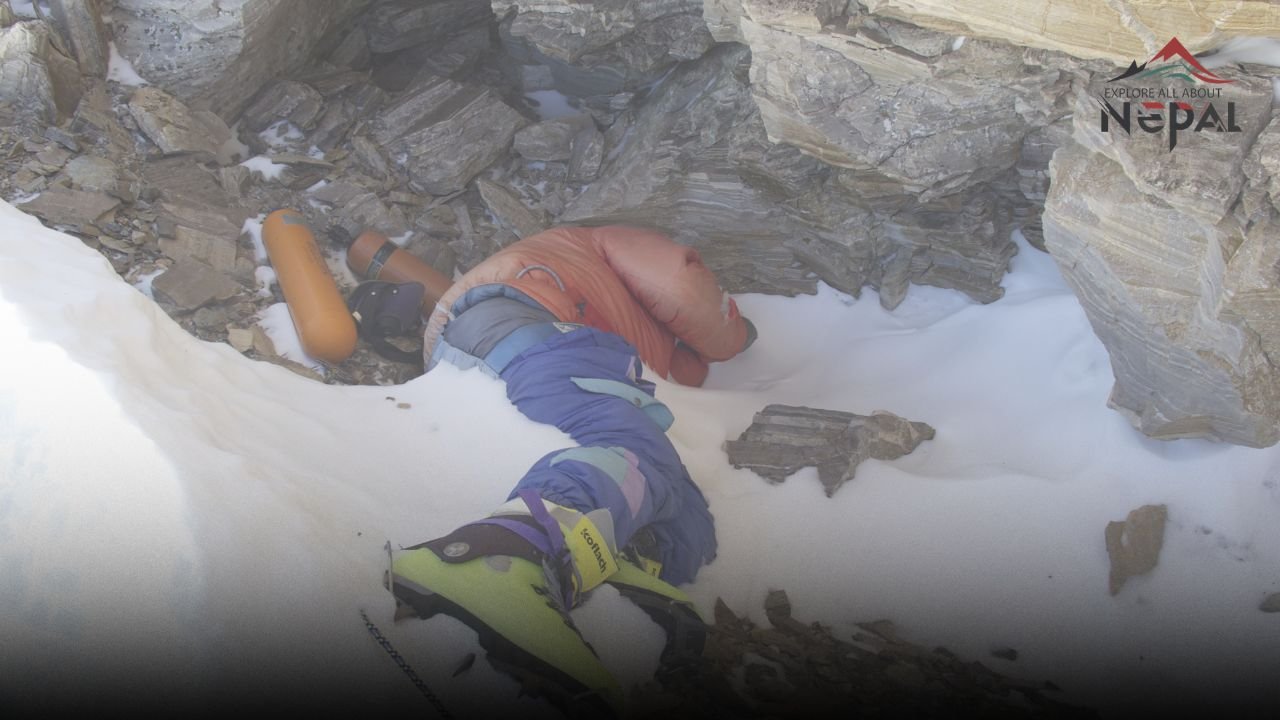
green boots on mount everest
The cave where Green Boots rested was located at an elevation of approximately 8,500 meters, well within Everest’s notorious Death Zone. At this altitude, oxygen levels are extremely low, temperatures remain far below freezing, and survival becomes increasingly difficult.
For many climbers, encountering Green Boots was a deeply emotional experience. Some described the sight as a reminder of the mountain’s dangers, while others viewed it as a symbol of the risks associated with high-altitude mountaineering.
The story gained wider public attention through books, documentaries, news reports, and accounts from climbers who passed the location. As Everest became more popular among commercial expeditions, increasing numbers of climbers became familiar with the Green Boots story.
The significance of Green Boots extends beyond the physical location. The nickname became associated with broader discussions about Everest safety, climbing ethics, body recovery, and the responsibilities of climbers operating in extreme environments.
Over the years, Green Boots evolved from a simple route marker into one of Everest’s most recognized and discussed symbols. The story remains one of the most compelling examples of how individual experiences can become part of mountaineering history.
Today, when people search for Green Boots on Mount Everest, they are often seeking to understand not only the identity of the climber but also what the story reveals about life and death on the world’s highest mountain.
Where Were Green Boots Located on Mount Everest?
One of the reasons Green Boots on Mount Everest became so famous is the specific location where the body remained visible for many years.
Green Boots was located on Everest’s Northeast Ridge route, which approaches the mountain from the Tibetan side. This route differs from the more commonly used South Col route that begins in Nepal. Climbers using the Northeast Ridge pass through a series of challenging sections before reaching the summit.
The body rested inside a small limestone cave at approximately 8,500 meters above sea level. This location placed Green Boots deep within the Death Zone, an area where oxygen levels are insufficient to sustain human life for extended periods.
The cave itself provided limited shelter from Everest’s harsh conditions. While it offered some protection from wind and snow, the environment remained extremely hostile. Temperatures regularly dropped well below freezing, and powerful storms frequently swept across the mountain.
Because the cave was situated directly along the climbing route, many summit-bound climbers passed within a short distance of Green Boots. This visibility contributed significantly to the nickname’s widespread recognition.
For decades, climbers used the location as a reference point during summit attempts. Guides sometimes mentioned the cave when discussing route progress, and expedition reports frequently referred to passing Green Boots on the way to higher camps or the summit.
The location also became important in discussions about Everest body recovery. Removing a body from such an altitude is exceptionally difficult. The terrain is steep, oxygen levels are dangerously low, and rescue teams face significant risks during recovery operations.
As Everest climbing became more popular, photographs and descriptions of the cave spread throughout the mountaineering community. Many climbers who reached the summit later shared their experiences of passing the site.
The location’s prominence helped transform Green Boots into one of Everest’s most famous landmarks. While the cave itself is relatively small and unremarkable from a geological perspective, its association with Green Boots made it one of the most discussed locations on the mountain.
The story demonstrates how a single spot on Everest can become part of climbing history, symbolizing both the mountain’s challenges and the human stories connected to it.
Who Was Green Boots on Mount Everest?
One of the most frequently asked questions about Green Boots on Mount Everest concerns the climber’s identity. Although some uncertainty remains, most mountaineering experts believe Green Boots was Tsewang Paljor.
Tsewang Paljor was a member of the Indo-Tibetan Border Police (ITBP) Everest expedition in 1996. The team aimed to summit Mount Everest during a season that would later become one of the most tragic and well-known periods in Everest history.
Born in the Ladakh region of India, Paljor was known for his determination, discipline, and mountaineering skills. He joined the expedition as part of a highly motivated team seeking to achieve success on the world’s highest mountain.
On May 10, 1996, Paljor and several teammates reached the summit of Everest. However, severe weather conditions developed during their descent. High winds, poor visibility, and freezing temperatures created an extremely dangerous situation.
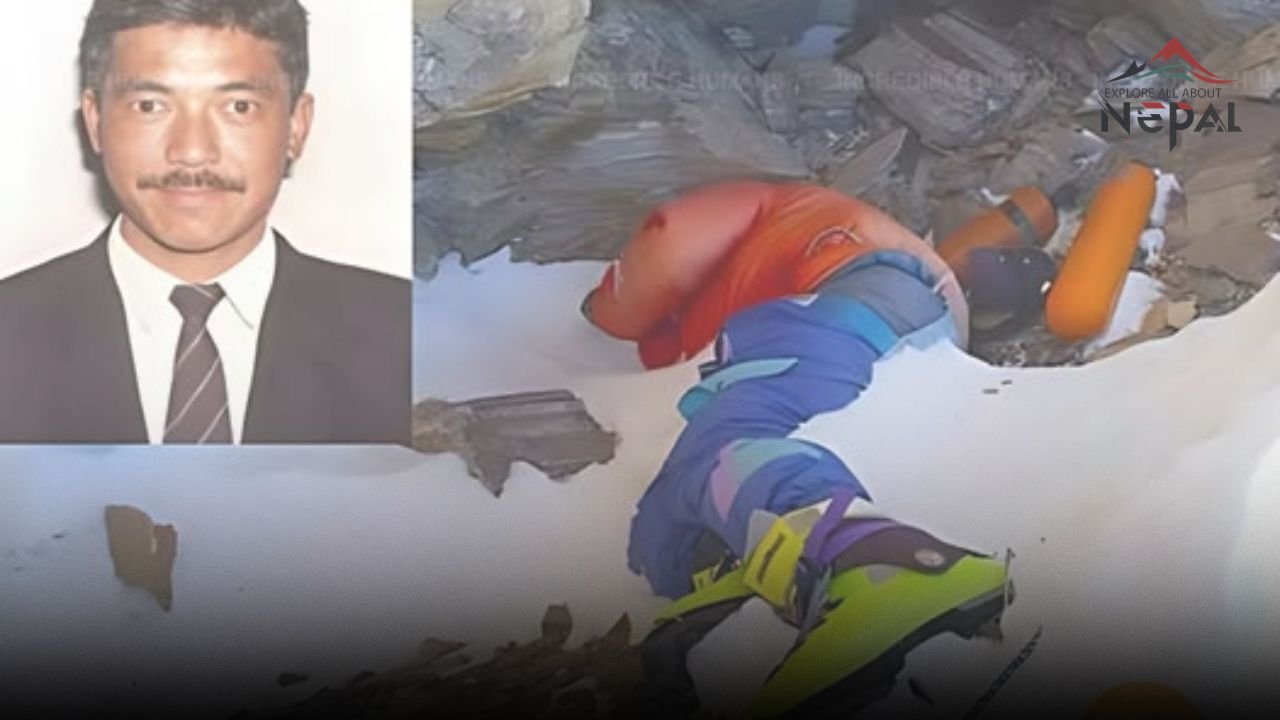
tsewang paljor
Communication difficulties and deteriorating weather complicated efforts to descend safely. Several climbers became stranded high on the mountain, and rescue attempts were limited by the harsh conditions.
In the years that followed, many climbers and researchers concluded that Green Boots was likely Tsewang Paljor based on expedition records, location, clothing descriptions, and eyewitness accounts. However, because definitive identification was difficult, some uncertainty persisted.
A small number of alternative theories suggested the body might belong to another member of the expedition, but the majority of evidence points toward Paljor. The story gained international attention as Everest climbing expanded during the late 1990s and early 2000s. Books, documentaries, and expedition reports frequently referenced Green Boots, further increasing public interest in the mystery.
Regardless of the ongoing debate, the story of Green Boots serves as a reminder of the risks faced by climbers operating in the Death Zone. It also highlights the courage and commitment of those who attempt Everest despite its many dangers. Today, the name Green Boots is closely associated with Tsewang Paljor, and his story remains one of the most discussed chapters in Everest history.
The 1996 Indian Everest Expedition
The story behind Green Boots on Mount Everest is closely tied to the 1996 Indian Everest Expedition, one of the most significant and tragic expeditions in Everest history. This team was part of a larger international climbing season that year, which would later be remembered for multiple fatal incidents across different expeditions.
The Indian expedition was organized by the Indo-Tibetan Border Police (ITBP), a specialized force responsible for border security in high-altitude regions. The team consisted of experienced climbers selected for their physical endurance, discipline, and previous mountaineering experience.
Their objective was straightforward but extremely challenging: to successfully summit Mount Everest during the 1996 climbing season. At that time, Everest expeditions were becoming increasingly popular, but conditions on the mountain remained as dangerous as ever.
The team chose the North Ridge route from Tibet, which is known for its exposure to strong winds, extreme cold, and technical challenges near the summit. This route requires climbers to pass through several high camps before reaching the final summit push.
Among the team members was Tsewang Paljor, who would later become strongly associated with the identity of Green Boots. Paljor and his teammates were well-prepared, but Everest is unpredictable even for the most experienced climbers.
The expedition faced typical challenges of high-altitude climbing: thin air, freezing temperatures, and physically exhausting conditions. However, the 1996 season was particularly unstable, with rapidly changing weather patterns affecting multiple teams across the mountain.
Despite these difficulties, members of the Indian expedition reached the summit. However, what happened during the descent would later become part of Everest history and contribute to the mystery surrounding Green Boots.
The 1996 Indian Everest Expedition is now remembered not only for its summit success but also for its role in one of the most analyzed years in Everest climbing history. It is frequently studied alongside other 1996 expeditions that experienced severe storms, accidents, and fatalities.
The events of this expedition remain central to understanding Green Boots on Mount Everest, as they provide the most widely accepted explanation for the identity and circumstances of the climber known by that name.
What Happened on Everest in May 1996?
The events of May 1996 on Mount Everest are among the most widely studied in mountaineering history, and they form the critical background to the story of Green Boots on Mount Everest.
During this period, multiple expeditions were attempting to summit Everest from both the Nepal and Tibet sides. Weather conditions initially appeared favorable, leading several teams to push for summit attempts around the same time.
However, Everest’s weather can change rapidly, and in May 1996, a severe storm system developed unexpectedly. This storm brought strong winds, heavy snowfall, and extremely low visibility, especially in the upper regions of the mountain near the summit.
Climbers who had already reached high altitudes found themselves trapped in dangerous conditions. The descent became extremely difficult as ropes were buried under snow and route markers disappeared. Several teams experienced communication failures, making coordination and rescue efforts even more challenging. As oxygen levels dropped and exhaustion increased, climbers struggled to make safe decisions.
The situation became particularly critical in the Death Zone, where the human body begins to deteriorate rapidly due to lack of oxygen. Climbers who were delayed during their descent faced increasing risks of frostbite, hypoxia, and exhaustion. It was during this period that members of the Indian expedition, including Tsewang Paljor, encountered extremely harsh conditions while descending from the summit area.
The combination of poor visibility, fatigue, and severe weather contributed to multiple tragedies across different teams. The 1996 season ultimately became one of the deadliest in Everest history up to that time.
These events were later documented extensively in books, films, and research studies, including well-known accounts such as Into Thin Air. While the Indian expedition’s experience was only one part of the larger 1996 disaster, it became central to discussions about Green Boots.
The harsh conditions of May 1996 help explain how climbers could become stranded in such extreme environments and why recovery or rescue operations on Everest are often impossible at such altitudes. These events remain essential to understanding the mystery of Green Boots on Mount Everest, as they provide the most widely accepted context for what likely happened on the mountain.
How Did Green Boots Become an Everest Landmark?
The transformation of a tragic mountaineering incident into one of Everest’s most recognizable landmarks is a key part of the story of Green Boots on Mount Everest.
The term “Green Boots” originated from the bright green climbing boots worn by the deceased climber, which remained clearly visible to passing expeditions. Because the body was located directly along the Northeast Ridge route, almost every climber ascending from the Tibetan side passed within sight of the cave.
Over time, climbers began referring to the location as a navigation point. In the complex terrain of Everest, route markers and recognizable features are extremely important. The cave where Green Boots rested became an unofficial reference point for teams making their way toward the summit.
As more expeditions passed the location, the nickname became widely adopted within the climbing community. Guidebooks, expedition reports, and climber testimonies began referencing Green Boots as a known landmark.
Unlike natural features such as ridges or ice formations, this landmark was unique because it was human. It represented both a physical location and a powerful reminder of the risks associated with high-altitude climbing.
The visibility of the site contributed significantly to its fame. Because the cave was located on a frequently used route, thousands of climbers over the years passed by and shared their experiences afterward. These repeated accounts helped solidify Green Boots as part of Everest’s collective memory.
In some cases, climbers described the emotional impact of passing the site. For many, it served as a stark reminder of the consequences of poor weather, exhaustion, or miscalculation in the Death Zone.
Over time, the name Green Boots became known far beyond the mountaineering community. Books, documentaries, and online discussions brought the story to a global audience, turning it into one of Everest’s most famous human landmarks.
Today, Green Boots on Mount Everest is recognized not only as a physical location but also as a symbol of the mountain’s dangers and the human stories embedded in its history.
Why Are Bodies Left on Mount Everest?
One of the most important questions related to Green Boots on Mount Everest is why bodies are often left on the mountain instead of being recovered.
The primary reason is the extreme environment of Everest’s Death Zone. Above 8,000 meters, conditions are so harsh that recovery operations become extremely dangerous for rescue teams. Thin air, freezing temperatures, and unpredictable weather make even simple movement difficult.
Physically retrieving a body from these altitudes often requires multiple climbers, specialized equipment, and significant time. However, even with preparation, the risks to rescue teams can be life-threatening. In many cases, attempting recovery could result in additional fatalities.
Another major factor is cost. Recovery operations on Everest are extremely expensive, often requiring helicopters, experienced high-altitude climbers, and extensive logistical support. For many families and organizations, these costs are not feasible.
Terrain is also a major obstacle. Bodies are often located on steep slopes, crevasses, or exposed ridges where safe extraction is nearly impossible. In some cases, weather conditions may only provide short windows for climbing, making recovery even more difficult.
Because of these challenges, many bodies remain on Everest permanently. Over time, some become partially covered by snow and ice, while others remain visible depending on location and conditions.
This reality is an unfortunate but widely accepted aspect of high-altitude mountaineering. Climbers are aware that the risks of Everest include not only the possibility of death but also the likelihood that recovery may not be possible.
In the case of Green Boots on Mount Everest, these factors explain why the body remained in place for many years and became a well-known landmark along the climbing route.
The presence of bodies on Everest has also led to ethical discussions within the mountaineering community. Some argue that visible bodies should be removed out of respect, while others believe that recovery attempts should only be made when conditions are safe. Ultimately, the presence of Green Boots highlights the extreme challenges of Everest and the harsh realities faced by climbers in the world’s highest environment.
The Death Zone and Its Risks
The story of Green Boots on Mount Everest cannot be fully understood without explaining the environment where it exists—the Death Zone. This term refers to altitudes above 8,000 meters, where the oxygen level is so low that the human body cannot survive for extended periods without significant physiological strain.
At this altitude, the atmospheric pressure is roughly one-third of what it is at sea level. Even though the oxygen percentage in the air remains the same, the reduced pressure means each breath contains far fewer oxygen molecules. For climbers, this creates a state of chronic oxygen deprivation.
In the Death Zone, the body begins to deteriorate. Muscles weaken, mental clarity declines, and decision-making becomes impaired. Even simple movements require extreme effort. Climbers often describe it as a state where the body is constantly struggling just to function.
One of the most serious risks is hypoxia, a condition caused by insufficient oxygen reaching vital organs. Hypoxia can lead to confusion, poor coordination, and in severe cases, loss of consciousness. This is especially dangerous on exposed ridges and steep slopes where a single mistake can be fatal.
Another major risk is altitude sickness, including High Altitude Cerebral Edema (HACE) and High Altitude Pulmonary Edema (HAPE). Both conditions can develop rapidly and are potentially deadly without immediate descent.
Extreme cold adds another layer of danger. Temperatures in the Death Zone can drop far below freezing, increasing the risk of frostbite and hypothermia. Combined with exhaustion and lack of oxygen, this creates a highly unstable environment for survival.
Weather conditions also play a critical role. Sudden storms, strong winds, and whiteout conditions can appear quickly, reducing visibility and making navigation nearly impossible. Many Everest tragedies have occurred when climbers were caught in unexpected weather changes during descent.
The Death Zone is also where rescue becomes nearly impossible. Helicopters cannot operate at these altitudes, and human rescue teams face extreme risk. As a result, climbers are largely on their own once they enter this region of the mountain.
The presence of Green Boots on Mount Everest in this zone highlights the unforgiving nature of this environment. It serves as a powerful reminder that even experienced climbers are vulnerable to the extreme conditions found at the highest elevations on Earth.
The Mystery Around Green Boots’ Identity
One of the most discussed aspects of Green Boots on Mount Everest is the uncertainty surrounding the climber’s true identity. While most evidence points to one individual, the story still carries a degree of ambiguity that has fueled debate for decades.
The widely accepted identification is Tsewang Paljor, a member of the Indo-Tibetan Border Police expedition during the 1996 Everest season. Based on expedition records, location details, and eyewitness accounts, many experts believe he is the climber known as Green Boots.
According to expedition reports, Paljor and his team reached the summit of Everest on May 10, 1996. However, they encountered severe weather conditions during their descent. Poor visibility, strong winds, and exhaustion made it extremely difficult to navigate safely back down the mountain.
In the confusion of the storm, several climbers became separated from their team. Communication was limited, and rescue efforts were nearly impossible due to the extreme altitude and weather conditions.
Over time, climbers passing through the Northeast Ridge route began noticing a body in a small cave wearing distinctive green boots. Because no official recovery had taken place, the identity remained unconfirmed on-site, leading to the nickname “Green Boots.”
Although Tsewang Paljor is the most widely accepted identity, some alternative theories have been suggested. These theories typically involve other members of the same expedition or uncertainty caused by overlapping accounts from different climbers.
However, most modern mountaineering historians and researchers agree that the evidence strongly supports Paljor’s identity. The location, timing, and descriptions match available expedition data from 1996.
Despite this, absolute confirmation is difficult due to the conditions on Everest and the lack of formal recovery at the time. This uncertainty has helped keep the story of Green Boots alive in global climbing discussions.
The mystery surrounding Green Boots is not just about identity. It also reflects the broader challenges of Everest expeditions, where harsh conditions, limited communication, and inaccessible terrain can make it difficult to document events with complete certainty.
This unresolved aspect is one reason Green Boots on Mount Everest remains one of the most compelling stories in mountaineering history.
Did Green Boots Disappear?
In recent years, climbers have reported that Green Boots on Mount Everest is no longer visible in the same location where it was once a well-known landmark. This has led to questions about whether Green Boots has disappeared from Everest.
For many years, Green Boots remained in a small limestone cave on the Northeast Ridge route at around 8,500 meters. Climbers ascending from the Tibetan side would pass directly by the site, making it one of the most recognizable reference points on the route.
However, reports beginning in the 2010s suggested that the body was no longer visible in its original location. Some climbers claimed that it may have been moved or covered by snow, while others suggested that natural environmental changes could have shifted its position.
Everest is a dynamic environment. Strong winds, snowfall, and ice movement can gradually alter the landscape over time. Objects that were once visible can become buried or displaced due to these natural processes.
There is also speculation that recovery efforts may have been carried out at some point, although no widely confirmed official operation has been documented publicly. In high-altitude mountaineering, recovery decisions are often not widely announced or may occur during limited weather windows.
Despite these reports, the exact current status of Green Boots remains unclear. What is known is that for many years, the location served as a landmark and point of reference for climbers on the Northeast Ridge route.
The disappearance or reduced visibility of Green Boots has not diminished the significance of the story. Instead, it has added another layer of mystery to an already well-known Everest narrative.
Today, Green Boots on Mount Everest continues to be discussed in books, documentaries, and online discussions, even though the physical presence may no longer be as visible as it once was.
The story now exists not only as a physical landmark but also as a historical memory embedded in Everest climbing culture.
Interesting Facts About Green Boots on Mount Everest
The story of Green Boots on Mount Everest contains several interesting facts that have contributed to its global recognition among climbers and enthusiasts. One of the most well-known facts is that Green Boots was located at approximately 8,500 meters, placing it deep within Everest’s Death Zone. This makes it one of the highest-altitude human landmarks ever widely recognized in mountaineering history.
Another important fact is that the nickname “Green Boots” comes directly from the bright green climbing boots worn by the climber. This simple detail made the body easily identifiable to passing expeditions and helped the name spread throughout the climbing community.
Green Boots became especially famous because of its location along a major route. Thousands of climbers attempting Everest via the Northeast Ridge passed by the cave, making it one of the most frequently encountered memorial sites on the mountain.
The most widely accepted identity of Green Boots is Tsewang Paljor, who was part of the 1996 Indian Everest expedition. However, due to the conditions on Everest, official confirmation remains complex.
Another interesting fact is that Green Boots served as an unofficial navigation point for climbers. Guides and expedition teams often referenced the cave when describing progress toward the summit.
The story gained international attention through mountaineering books, documentaries, and media coverage of the 1996 Everest season, which was one of the deadliest years in Everest history. Over time, Green Boots became more than just a landmark. It became a symbol of the risks associated with high-altitude climbing and the extreme conditions found in the Death Zone.
Even today, despite changes in visibility, the story remains one of the most searched and discussed topics related to Everest. These facts continue to make Green Boots on Mount Everest one of the most compelling and widely recognized stories in Himalayan mountaineering history.
Legacy of Green Boots on Mount Everest
The legacy of Green Boots on Mount Everest extends far beyond a single location on the mountain. Over time, this story has become one of the most powerful symbols of both the achievement and danger associated with high-altitude mountaineering.
At its core, Green Boots represents the extreme conditions found in Everest’s Death Zone. The story reminds climbers that even reaching the summit does not guarantee safety, and that descent is often the most dangerous part of the journey. In this sense, Green Boots has become a silent lesson written into the landscape of Everest itself.
For many years, climbers passing through the Northeast Ridge route encountered Green Boots as part of their journey. It became an unintentional memorial, one that required no plaque or ceremony to be recognized. Instead, it existed naturally within the climbing route, shaped by the mountain’s environment and history.
The legacy is also deeply connected to the 1996 Everest season, a year that significantly changed how the world views Everest expeditions. That season highlighted the risks of commercialization, weather unpredictability, and decision-making at extreme altitude. Green Boots became one of the most recognizable human reminders of those events.
Within the mountaineering community, the story has influenced discussions about ethics, risk management, and responsibility. Climbers and expedition organizers often reflect on whether bodies should remain on the mountain or be recovered when possible. These discussions continue to shape modern Everest policies and practices.
The identity associated with Green Boots, widely believed to be Tsewang Paljor, also adds a human dimension to the legacy. It transforms the story from an anonymous landmark into a personal narrative of ambition, struggle, and tragedy.
In recent years, changes on Everest have altered the physical visibility of Green Boots, but the story remains deeply embedded in climbing culture. Even without a clearly visible landmark, the name continues to be used in books, documentaries, and discussions about Everest history.
Ultimately, the legacy of Green Boots is not just about one climber or one location. It is about the broader reality of Everest itself an environment where human limits are constantly tested, and where every ascent comes with profound risk.
Green Boots on Mount Everest in Popular Culture
The story of Green Boots on Mount Everest has extended far beyond mountaineering circles and become part of global popular culture. Over the years, it has been referenced in books, documentaries, films, online discussions, and media coverage about Everest.
One of the main reasons for its cultural impact is the way the story combines mystery, tragedy, and extreme adventure. Unlike many Everest stories that focus purely on successful summits, Green Boots represents the darker and more sobering side of the mountain.
Books about Everest expeditions, particularly those covering the 1996 season, played a major role in introducing the story to a global audience. As readers learned more about the conditions on Everest, Green Boots became a recurring reference point in discussions about danger and survival.
Documentaries about Everest have also featured or referenced the story, often using it to highlight the risks of climbing in the Death Zone. These visual formats helped reinforce the image of Green Boots as one of the most recognizable Everest landmarks.
Online platforms and social media further amplified the story. Climbers sharing their personal experiences of passing the site helped keep the discussion alive, especially as Everest tourism increased in the 2000s and 2010s.
In popular culture, Green Boots is often used as a symbol of Everest’s harsh reality. It represents the idea that the mountain does not differentiate between experienced climbers and newcomers when conditions turn dangerous.
The story is also frequently used in educational content about mountaineering risks, high-altitude physiology, and expedition planning. It serves as a real-world example of the consequences of extreme environments.
However, modern discussions also emphasize respect. Many climbers and content creators now approach the topic with sensitivity, focusing on the historical and educational aspects rather than sensationalism.
As Everest continues to attract climbers from around the world, the story of Green Boots remains relevant. It is not just a historical footnote but a continuing part of how people understand the risks and realities of climbing the world’s highest mountain.
Frequently Asked Questions
Who was Green Boots on Mount Everest?
Most mountaineering experts believe Green Boots was Tsewang Paljor, a member of the 1996 Indian Everest expedition. However, some uncertainty remains due to limited on-site confirmation.
Why is it called Green Boots?
The name comes from the bright green climbing boots worn by the climber, which were clearly visible to passing expeditions on the Northeast Ridge route.
Where was Green Boots located?
Green Boots was located in a small limestone cave on Everest’s Northeast Ridge at around 8,500 meters above sea level.
Is Green Boots still on Everest?
Reports suggest that Green Boots is no longer clearly visible in the original location, possibly due to snow cover or environmental changes, but the exact status is not fully confirmed.
What happened in the 1996 Everest disaster?
The 1996 season involved severe storms, poor visibility, and multiple accidents across different expeditions, making it one of the deadliest seasons in Everest history.
Why are bodies not removed from Everest?
Bodies are often left due to extreme altitude, dangerous conditions, high recovery costs, and the risks involved in retrieval operations.
What is the Death Zone?
The Death Zone refers to altitudes above 8,000 meters where oxygen levels are too low to sustain human life for long periods.
Why is Green Boots famous?
Green Boots became famous because it served as a visible landmark on a major Everest route and became associated with one of the most tragic Everest seasons.
Was Green Boots ever officially identified?
There is no universally confirmed official identification on-site, but most evidence strongly supports the identity of Tsewang Paljor.
Why do climbers still talk about Green Boots?
Because it represents the dangers of Everest, serves as a historical reference point, and is part of mountaineering education and storytelling.
The story of Green Boots on Mount Everest is one of the most powerful and widely recognized narratives in mountaineering history. What began as a tragic outcome on one of the world’s most dangerous mountains gradually became a landmark, a mystery, and a lasting symbol of Everest’s harsh realities.
At the center of this story is the belief that Green Boots was likely Tsewang Paljor, a climber who was part of the 1996 Indian Everest expedition. While some details remain debated, the widely accepted account connects Green Boots to one of the most challenging and tragic seasons in Everest’s history.
Over time, Green Boots became more than just a physical presence on the mountain. It became a reference point for climbers navigating the Northeast Ridge route, a reminder of the dangers of the Death Zone, and a symbol of the thin line between success and tragedy in high-altitude mountaineering.
The story also highlights important realities of Everest expeditions. The extreme altitude, unpredictable weather, and physical limits of the human body make Everest one of the most dangerous environments on Earth. Even the most experienced climbers are vulnerable to conditions beyond their control.
Today, even as Everest climbing continues to grow in popularity, the legacy of Green Boots remains deeply embedded in the culture of the mountain. It is discussed in books, documentaries, and climber accounts as both a historical reference and a lesson in respect for nature’s extremes.
More importantly, the story encourages reflection. It reminds climbers, adventurers, and readers that every summit attempt carries risk, and that the mountain demands humility, preparation, and awareness. Ultimately, Green Boots on Mount Everest is not just about one climber or one location. It is about the human desire to explore limits, the consequences of extreme environments, and the enduring stories that mountains leave behind.
