Quick Reference: Down Jacket for Nepal Treks
| Your trek | Max altitude | Fill power you want | Fill weight (down) | Rent or buy? |
|---|---|---|---|---|
| Annapurna Base Camp | 4,130 m | 650–800 | 150–250 g | Rent is fine |
| Everest Base Camp | 5,364 m | 800+ | 200–300 g | Buy if you trek often |
| Gokyo / Three Passes | 5,420 m+ | 800+ | 250–350 g | Buy |
| Manaslu Circuit | 5,106 m | 700–800 | 200–300 g | Either |
| Langtang Valley | 4,984 m | 650–750 | 150–250 g | Rent is fine |
| Poon Hill / short treks | 3,210 m | 550–650 | 100 g or synthetic | Rent or skip |
Last updated: June 2026.
There’s a moment on every Nepal trek usually around 4,000 metres, usually just after the sun drops behind the ridgeline when the temperature falls off a cliff and you understand, physically, why everyone told you to bring a proper down jacket. The tea house dining room is unheated. Your fingers stop working. And the difference between a good night and a miserable one comes down to a single layer you either packed correctly or didn’t.
Most gear guides are written by shops that want to sell you the most expensive jacket on the rack. This one is written from the trail. Here’s what actually matters for trekking in Nepal, and what doesn’t.
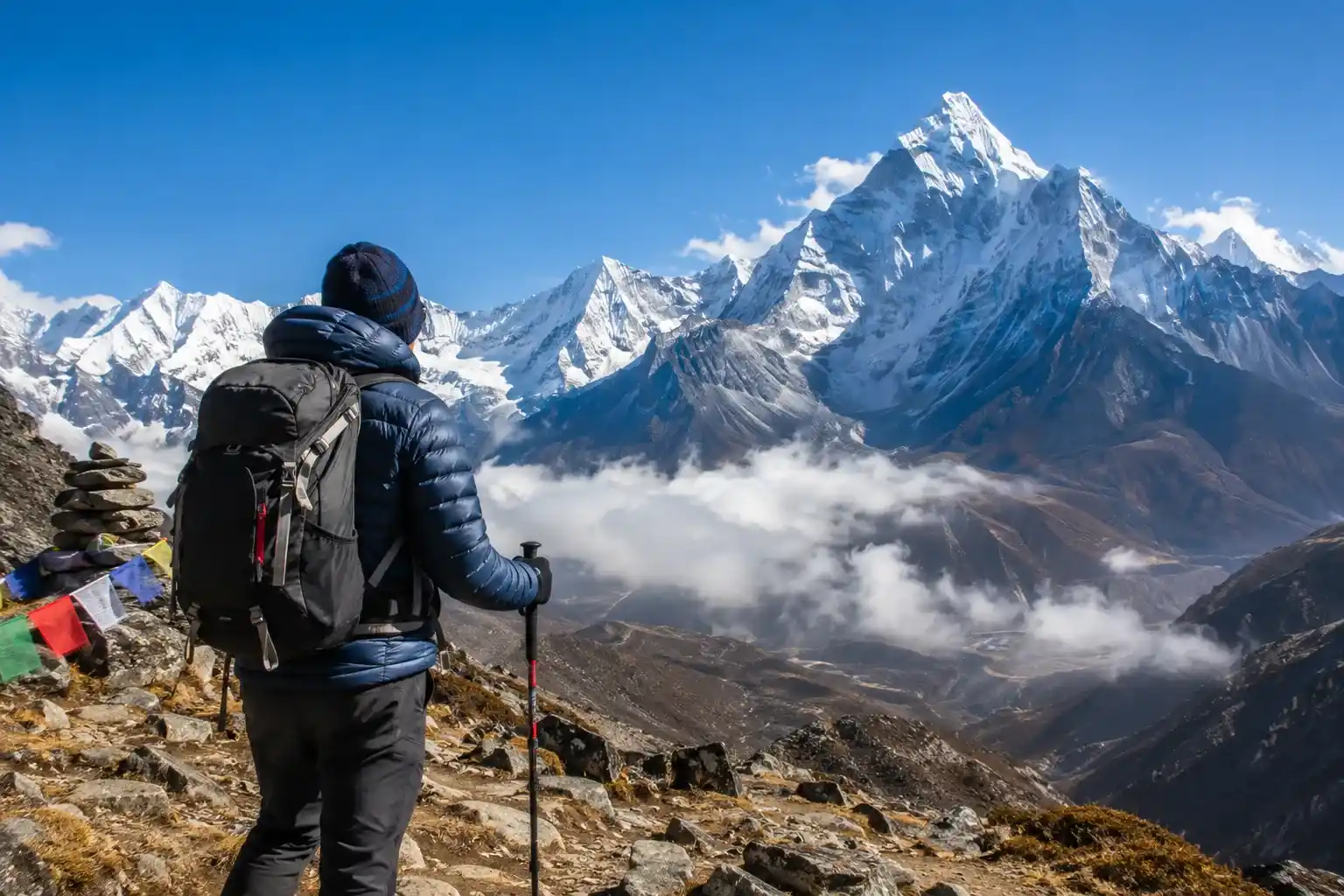
Trekker in a down jacket at high altitude in the Nepal Himalaya
The only three numbers that matter
Forget brand loyalty for a second. A down jacket’s warmth comes down to three things.
Fill power is the quality of the down how much loft you get per gram. Higher fill power traps more warm air for less weight. For Nepal, 650 fill power is the realistic floor for anything above 4,000 m, 800+ is what you want for Everest Base Camp altitude and the high passes, and anything under 600 is a town jacket, not a mountain one.
Fill weight is how much down is actually stuffed inside and this is the number gear marketing hides. A jacket can boast 800 fill power but contain so little down that it’s barely warmer than a fleece. For high-altitude Nepal trekking you want roughly 200–300 g of down fill. Below 150 g, treat it as a layering piece, not your main defence.
Down vs synthetic. Down wins on warmth-to-weight and packs smaller, which matters when a porter or your own back is carrying it. Synthetic wins when wet, because down clumps and loses loft when soaked. Nepal’s main trekking seasons October–November and March–April are mostly dry at altitude, so down is the right call for the vast majority of trekkers. If you’re trekking in monsoon shoulder weeks or somewhere notoriously damp, a synthetic or a hydrophobic-treated down is worth considering.
Match the jacket to your actual trek
The mistake people make is buying one jacket for “Nepal” as if every trek has the same conditions. A Poon Hill trekker and a Three Passes trekker need very different things.
Lower treks (Poon Hill, lower Annapurna, short Langtang). You top out around 3,000–3,500 m. A lightweight 550–650 fill jacket, or even a good synthetic, handles the evening chill. Don’t over-buy here.
Classic base camp treks (Annapurna Base Camp, Everest Base Camp, Langtang Valley). This is where most readers are headed. ABC tops out at 4,130 m and EBC at 5,364 m a real difference. For ABC, a 650–800 fill jacket with 150–250 g of fill is plenty. For EBC, push to 800 fill and 200–300 g, because Gorak Shep and the pre-dawn Kala Patthar climb are genuinely cold.
High passes and altitude treks (Gokyo, Three Passes, Manaslu Circuit). You’re crossing passes above 5,000 m, often before dawn, often in wind. This is expedition-adjacent territory. Go 800+ fill, 250–350 g, with a hood that actually fits over a hat and a baffle construction that doesn’t leak heat at the seams.
The thing nobody tells first-timers: you can rent in Kathmandu
Here’s the money-saver. Thamel, the trekking district of Kathmandu, is full of shops renting down jackets and sleeping bags by the day. Rental down jackets typically run a few hundred rupees per day, and the quality is fine for lower and mid-altitude treks. If you’re doing one trek and never trekking again, renting makes far more sense than buying a jacket you’ll wear twice.
Two honest caveats. First, rental jackets are heavily used check the loft (squeeze it; if it’s flat, it’s dead down), check the zips, and check for tears at the seams before you walk out. Second, for the highest treks Three Passes, Gokyo, anything where you’re crossing 5,000 m passes rental stock is hit-or-miss on genuinely warm jackets, and this is the one trek where being cold is dangerous, not just uncomfortable. For those, bring your own or budget for a premium rental.
Buy your own if you trek regularly, if you run cold, or if you’re doing a high-altitude route where you can’t afford to gamble on rental quality.
Features worth paying for (and the ones that are marketing)
Worth it: a hood that fits over a beanie, an internal chest pocket (your phone battery dies fast in cold; keep it close to your body), elastic or adjustable cuffs that seal in heat, and a packed weight you can actually live with a good trekking down jacket compresses to roughly the size of a water bottle.
Marketing: waterproof down claims (down is for warmth, your shell is for rain keep them as separate layers), “expedition” badging on a jacket with only 150 g of fill, and any colour-based pricing. Pay for fill, not for branding.
How to layer it so it actually works
A down jacket is an insulation layer, not an outer shell. The system that works in Nepal: a moisture-wicking base layer against your skin, a fleece or light mid-layer, your down jacket, and a windproof/waterproof shell over the top for the worst of it. On the move uphill you’ll often strip the down off entirely you generate huge heat climbing and pull it back on the second you stop. The jacket earns its place at rest stops, in camp, and on those brutal pre-dawn summit pushes, not during the hard climbing.
Frequently Asked Questions
Do I really need a down jacket for Everest Base Camp?
Yes. Temperatures at Gorak Shep and on the Kala Patthar climb regularly drop well below freezing before dawn, even in peak trekking season. An 800 fill jacket with 200–300 g of down is standard kit for EBC, and the unheated tea house dining rooms at altitude make it useful around the clock, not just outdoors.
Can I rent a down jacket in Kathmandu instead of buying one?
Yes Thamel shops rent down jackets by the day at low cost, and for lower and mid-altitude treks like Annapurna Base Camp or Langtang the quality is perfectly adequate. Inspect the loft, zips and seams before renting. For the highest passes, rental warmth is less reliable, so bring your own or pay for a premium rental.
What fill power is best for high-altitude trekking in Nepal?
For treks above 4,000 m, 650 fill power is the practical minimum and 800+ is ideal for Everest-region altitude and the high passes. But fill power alone isn’t enough check the fill weight too. A genuinely warm high-altitude jacket carries roughly 200–300 g of down, not just a high fill-power rating.
Is down or synthetic better for Nepal?
Down is better for the main October–November and March–April trekking seasons, which are mostly dry at altitude, because it’s warmer for its weight and packs smaller. Synthetic is the safer choice if you expect damp conditions, since down loses its insulating loft when it gets wet.
Will a down jacket be enough on its own?
No it’s one layer in a system. Pair it with a wicking base layer, a fleece mid-layer, and a windproof/waterproof shell on top. The down handles rest stops, camp, and cold summit mornings; the shell handles wind and rain.
