
Wildlife photography is one of the most exciting photography genres, but it is also one of the most equipment-dependent. Beginners often believe that buying an expensive camera body guarantees great wildlife photos. In reality, success depends far more on selecting the correct lens. That’s why understanding Wildlife photography lenses for beginners is the most important first step toward capturing animals professionally.
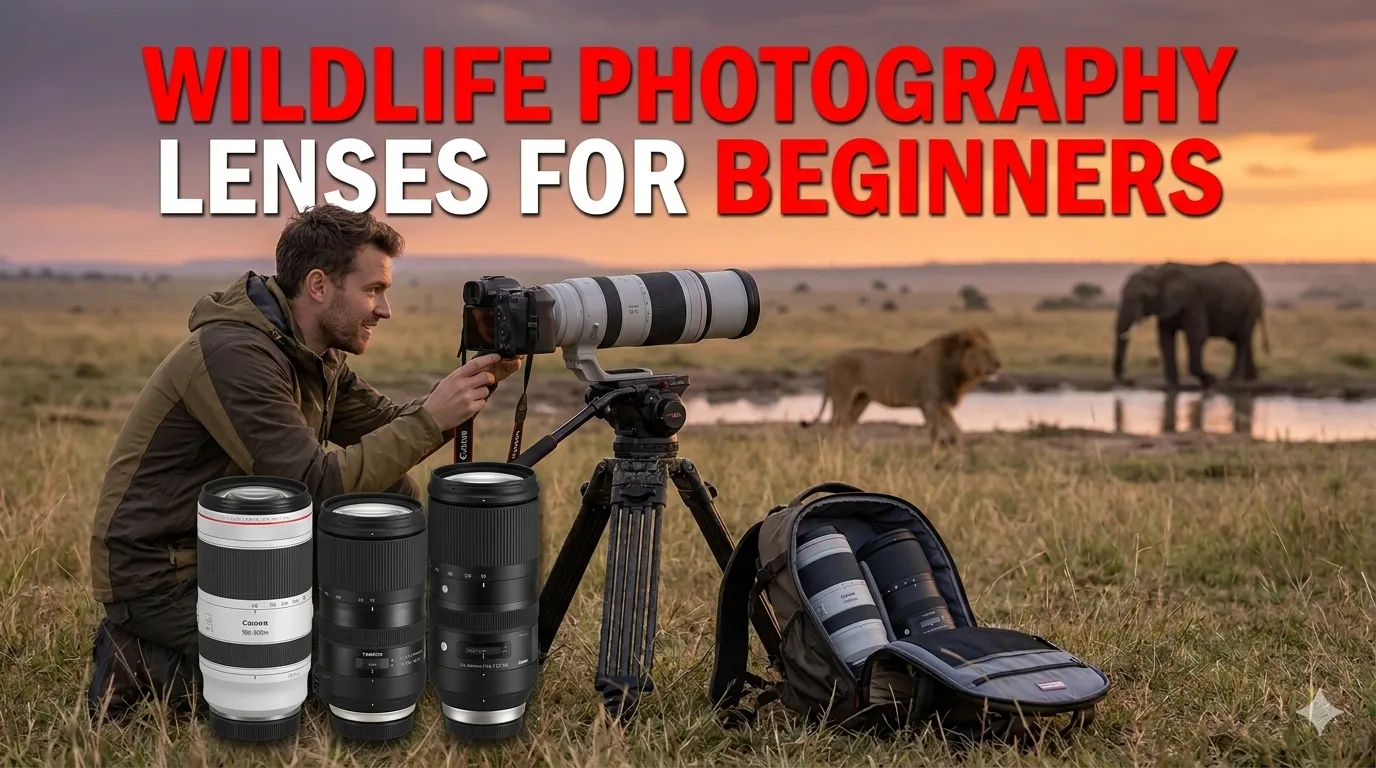
Wildlife Photography Lenses for Beginners
Animals rarely stay close to photographers. Birds fly quickly, mammals move unpredictably, and many species avoid human presence entirely. Because of this, beginners need telephoto lenses capable of reaching distant subjects while maintaining image sharpness.
Modern manufacturers now produce affordable telephoto options specifically designed for newcomers. The rise of lightweight zoom lenses has made Wildlife photography lenses for beginners more accessible than ever before.
This guide explains everything beginners must know focal length, budget choices, lens types, mistakes to avoid, and the best starter options for wildlife photography in 2026.
What Makes Wildlife Photography Different From Other Photography?
Unlike portrait or street photography, wildlife photography requires distance and speed.
Key challenges include:
Moving subjects
Long shooting distances
Changing light conditions
Outdoor environments
Experts consistently recommend long telephoto zoom lenses because wildlife subjects cannot be approached safely. Many beginner photographers discover that upgrading lenses dramatically improves results more than upgrading cameras.
This is why investing in proper Wildlife photography lenses for beginners makes such a significant difference.
Essential Features Beginners Should Look For
Before buying any wildlife lens, beginners must understand critical features.
1. Focal Length (Most Important)
Wildlife photographers generally require:
Minimum: 300mm
Ideal: 400–600mm
Community discussions among photographers frequently suggest that 400mm becomes the practical starting point for wildlife shooting distance.
Good Wildlife photography lenses for beginners usually fall within this range.
2. Image Stabilization
Long lenses magnify camera shake. Stabilization systems help beginners shoot handheld without blurry images.
Modern telephoto lenses often include optical stabilization systems designed specifically for wildlife environments.
3. Fast Autofocus
Animals move quickly. Beginner wildlife lenses should include silent autofocus motors capable of tracking motion accurately.
4. Lightweight Design
Heavy professional lenses can exceed 3–4 kg. Beginner-friendly lenses prioritize portability so photographers can hike or travel comfortably.
Types of Wildlife Photography Lenses for Beginners
Understanding lens categories helps simplify decision-making.
Telephoto Zoom Lenses
Most recommended option for beginners.
Advantages:
Flexible framing
Budget friendly
Easier learning curve
These dominate the Wildlife photography lenses for beginners category.
Prime Telephoto Lenses
Single focal length lenses offering superior sharpness.
Best for:
Bird photography
Low-light wildlife shooting
However, beginners may find them less flexible.
Super-Telephoto Lenses
Designed for distant wildlife such as birds or mountain animals.
Many advanced consumer lenses now offer 150–600mm reach at affordable prices.
Best Wildlife Photography Lenses for Beginners (Top Recommendations)
1. 70–300mm Telephoto Lens
A 70–300mm lens is often the first upgrade beginners purchase.
Benefits:
Affordable
Lightweight
Good learning range
It introduces photographers to long-distance shooting before upgrading to larger lenses.
2. 100–400mm Zoom Lens
Widely considered the sweet spot among Wildlife photography lenses for beginners.
Why it works:
Excellent reach
Manageable weight
Versatile for animals and birds
Many photographers recommend this range as the best beginner investment.
3. 150–500mm or 150–600mm Lenses
These lenses provide professional-level reach at consumer pricing.
The Sigma 150–500mm super-telephoto lens, designed for wildlife and sports photography, delivers long-distance performance suitable for enthusiasts moving beyond entry level.
Such lenses dramatically expand wildlife shooting opportunities.
Budget Levels for Beginner Wildlife Lenses
Entry-Level Budget ($300–$600)
70–300mm zoom lenses
Used telephoto lenses
APS-C crop advantage
Ideal starting point for Wildlife photography lenses for beginners.
Mid-Range Budget ($700–$1500)
100–400mm lenses
Third-party telephoto zooms
Better autofocus performance
Most beginners remain in this category.
Advanced Beginner ($1500+)
150–600mm super-telephoto lenses
Weather-sealed construction
Professional sharpness
Camera Sensor Advantage for Beginners
APS-C cameras provide extra reach due to crop factor.
Example:
400mm lens behaves like 600mm equivalent.
This makes APS-C setups extremely effective when paired with Wildlife photography lenses for beginners.
Real Beginner Advice From Wildlife Photographers
Online wildlife communities frequently highlight one important lesson:
Telephoto reach matters more than megapixels.
Many beginners initially struggle using short lenses but see major improvement after upgrading to longer focal lengths.
This confirms why lens choice dominates beginner success.
Common Mistakes Beginners Make
Buying Kit Lenses Only
Standard kit lenses lack sufficient reach.
Ignoring Lens Weight
Heavy lenses reduce shooting time.
Choosing Wide Lenses
Wildlife requires distance compression.
Avoiding these mistakes helps beginners select effective Wildlife photography lenses for beginners.
Best Wildlife Subjects for Beginners
Starting with easier wildlife improves skills.
Recommended subjects:
Birds in parks
Deer or grazing animals
Water birds
Monkeys
Domestic wildlife environments
Long zoom lenses help beginners practice tracking motion effectively.
Wildlife Photography Settings for Beginners
Even the best Wildlife photography lenses for beginners require correct settings.
Recommended Settings:
Shutter Speed: 1/1000s+
Continuous Autofocus
Burst Mode
Auto ISO
Spot Focus Area
These settings increase success rate dramatically.
Handheld vs Tripod Shooting
Beginners often shoot handheld.
Use tripod when:
Using heavy telephoto lenses
Shooting in low light
Waiting for animals
Monopods remain popular among wildlife photographers for mobility.
Travel Wildlife Photography Tips
Beginners traveling to national parks or mountains should prioritize:
Lightweight lenses
Weather sealing
Protective covers
Extra batteries
Portable Wildlife photography lenses for beginners improve travel flexibility.
Wildlife Photography in Nepal for Beginners
Nepal offers ideal beginner wildlife locations:
Chitwan National Park
Bardia National Park
Koshi Tappu Wildlife Reserve
Long telephoto lenses help capture rhinos, birds, deer, and crocodiles safely from distance.
Future Upgrades After Beginner Stage
After mastering beginner equipment, photographers typically upgrade to:
Faster aperture lenses
600mm primes
Mirrorless tracking systems
Learning with proper Wildlife photography lenses for beginners builds strong foundational skills before professional investment.
Why Telephoto Zoom Lenses Dominate Beginner Wildlife Photography
Zoom flexibility allows beginners to react quickly to changing wildlife distances.
Experts consistently recommend telephoto zoom lenses because they balance affordability and performance for newcomers entering wildlife photography.
Choosing the Right Wildlife Photography Lenses for Beginners
Wildlife photography becomes significantly more enjoyable when beginners use equipment suited to real-world conditions. Selecting appropriate Wildlife photography lenses for beginners allows photographers to capture distant animals clearly while learning essential tracking and composition skills.
Instead of investing immediately in expensive professional gear, beginners benefit most from versatile telephoto zoom lenses offering strong reach, stabilization, and manageable weight.
With patience, practice, and the right lens choice, beginners can quickly transition from casual wildlife photography to producing professional-quality images.
The journey into wildlife photography starts not with the most expensive gear — but with choosing the right beginner lens and developing field experience.
FAQs About Wildlife Photography Lenses for Beginners
1. What should beginners prioritize when choosing wildlife photography lenses?
When starting wildlife photography, beginners should focus on focal length, autofocus performance, and image stabilization rather than expensive professional features. A lens with at least 300mm reach helps capture distant animals without disturbing them. Many Wildlife photography lenses for beginners balance affordability with performance, making learning easier without overwhelming technical complexity.
2. Is a zoom lens better than a prime lens for wildlife photography?
Yes, zoom lenses are usually better for beginners because wildlife subjects move unpredictably. A zoom lens allows photographers to quickly adjust framing without changing position. Prime lenses offer sharper images but require experience and careful planning, which can be challenging for newcomers.
3. What focal length is ideal for wildlife photography?
A focal length between 300mm and 600mm is considered ideal for wildlife photography. Smaller animals and birds often require longer focal lengths, while larger mammals can be photographed with 200–400mm lenses. Beginners should start with versatile telephoto zoom lenses before investing in specialized super-telephoto options.
4. Are budget lenses good enough for wildlife photography?
Absolutely. Modern entry-level telephoto lenses provide excellent image quality and autofocus capabilities. Many photographers successfully learn using affordable Wildlife photography lenses for beginners, upgrading only after understanding their shooting style and requirements.
5. Do I need image stabilization for wildlife photography?
Image stabilization is extremely important, especially when shooting handheld or in low-light environments like forests or early mornings. It reduces camera shake and helps maintain sharp images at longer focal lengths where even small movements can blur photos.
6. Can beginners photograph birds using entry-level lenses?
Yes, beginners can photograph birds using entry-level lenses with sufficient zoom reach. Success depends more on patience, lighting conditions, and shooting technique than equipment alone. Practicing tracking moving subjects greatly improves bird photography results.
7. What camera settings work best with wildlife lenses?
Fast shutter speeds (1/1000s or higher) help freeze animal movement. Continuous autofocus mode and burst shooting increase the chances of capturing sharp action shots. Beginners should also use aperture priority mode to maintain proper exposure while adjusting depth of field.
8. Is a tripod necessary for wildlife photography?
A tripod or monopod becomes helpful when using heavy telephoto lenses for long periods. While handheld shooting offers flexibility, support equipment reduces fatigue and improves sharpness during extended wildlife observation sessions.
9. How can beginners improve results with wildlife lenses?
Understanding animal behavior is just as important as gear selection. Practicing composition, maintaining safe distance, and shooting during golden hours significantly improve image quality. Choosing the right Wildlife photography lenses for beginners also ensures better learning progression and confidence in the field.
10. When should a beginner upgrade their wildlife lens?
Upgrading makes sense when limitations start affecting creativity such as needing faster autofocus, better low-light performance, or longer reach. Beginners should first master technique before investing in professional-grade lenses, ensuring the upgrade genuinely improves their photography.
