
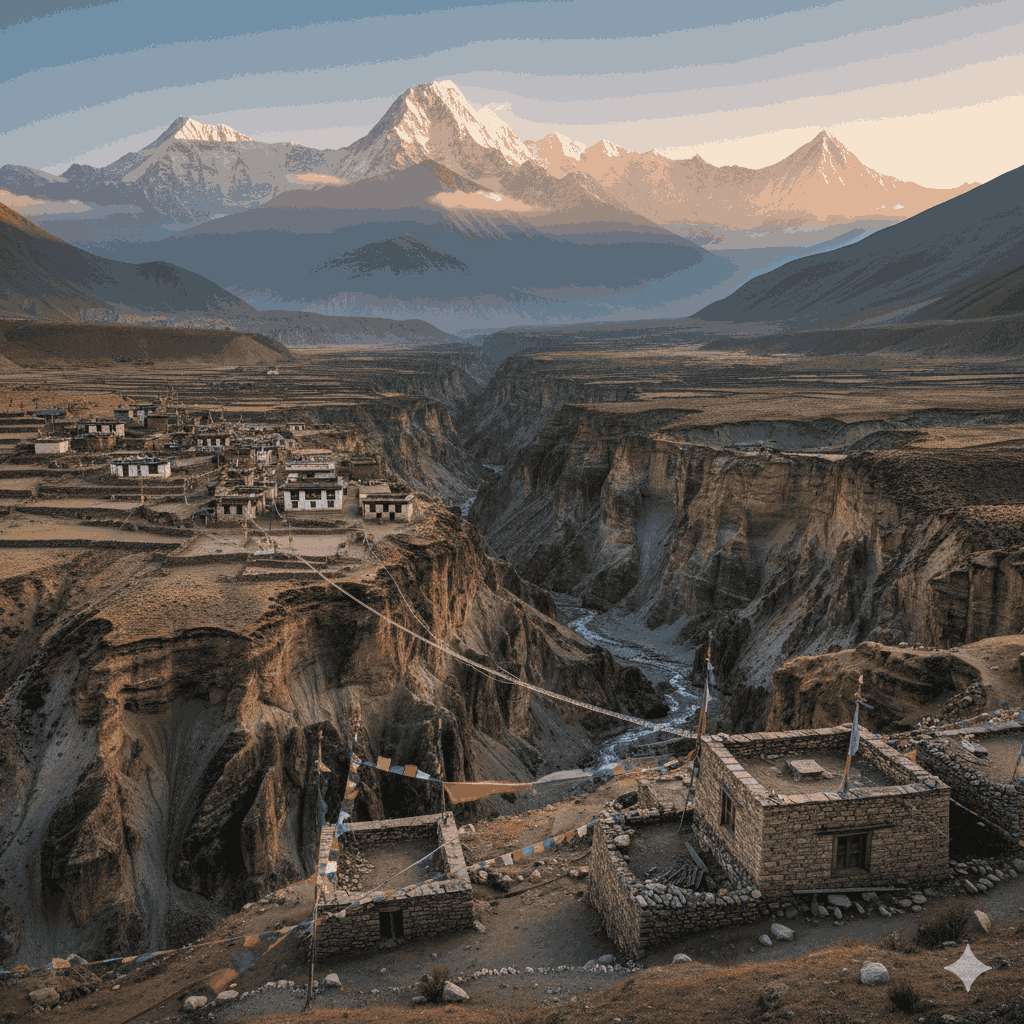
Nar Phu Valley Trek through remote high-altitude villages in the Annapurna region
The Nar Phu Valley Trek is a passage into a world that time forgot. Tucked away in the rain shadow of the Annapurna massif, this restricted region was only opened to trekkers in 2003, and even today, it remains one of the most extraordinary and least-visited corners of Nepal. In 2026, the Nar Phu Valley Trek continues to serve as a “living museum,” where the ancestral traditions of the Khampa people are preserved in their purest form.
Unlike the more commercialized routes in the Everest or Annapurna regions, the Nar Phu Valley Trek offers a raw, unscripted look at Himalayan life. Here, the landscape transitions from lush, subtropical forests to a stark, high-altitude desert that mirrors the Tibetan plateau. As you navigate the Nar Phu Valley Trek, you will walk through narrow canyons, cross ancient stone bridges, and witness the handcrafted architecture of fortified villages like Nar and Phu.
For the modern explorer, the Nar Phu Valley Trek 2026 is the perfect fusion of physical challenge and spiritual discovery. Whether you are seeking a silent trekking experience in Nepal or want to descend into the city to catch the latest jazz festivals and live music in Kathmandu, this journey provides a perspective on the Himalayas that few ever see.
The Historical & Cultural Heart of the Nar Phu Valley Trek
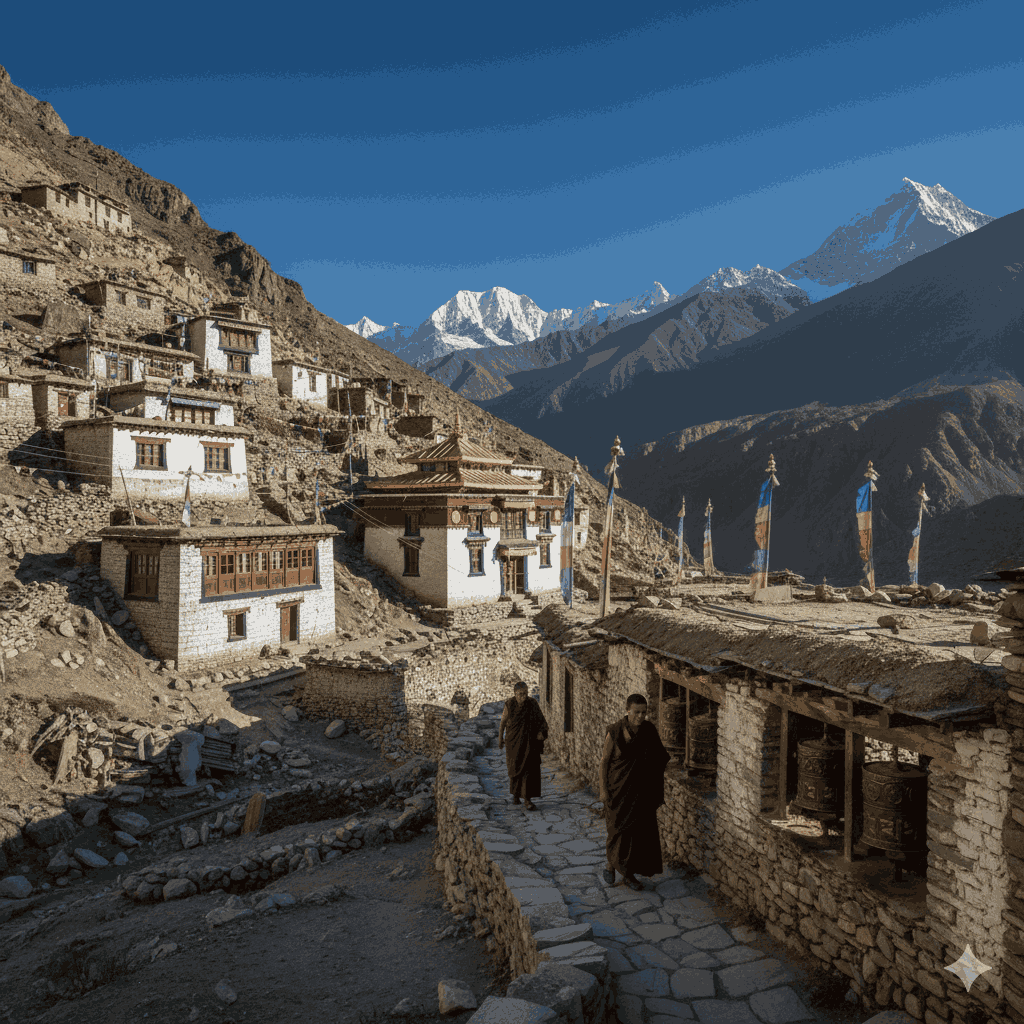
Traditional life and architecture on the Nar Phu Valley Trek in Phu village
To embark on the Nar Phu Valley Trek is to engage with history. The villages of Nar and Phu were settled over a thousand years ago by Tibetan herders who migrated south, creating a unique pocket of ancestral culture that blends Bön and Buddhist practices.
The Fortified Village of Phu
Phu is the spiritual anchor of the Nar Phu Valley Trek. Perched on a rocky outcrop at 4,250 meters, the village is a maze of stone houses stacked one upon another. On your Nar Phu Valley Trek, visiting the Tashi Lhakhang Monastery is a mandatory experience. This extraordinary site is said to be one of the 108 monasteries founded by Lama Urgen Lhundup Gyatso, and it remains a vital hub for the time-honored rituals of the valley residents.
The Agrarian Spirit of Nar
Nar Village, situated at 4,110 meters, is larger and more open than Phu. During the Nar Phu Valley Trek, you will notice the soulful rhythm of agricultural life here. The residents of Nar are famous for their hospitality and their handcrafted textiles. The village is surrounded by vast fields of barley and buckwheat, providing a lush contrast to the surrounding crags.
Nar Phu Valley Trek 2026: Detailed 14-Day Itinerary
This itinerary for the Nar Phu Valley Trek focuses on proper acclimatization and maximum cultural exposure.
Day 1: Kathmandu Arrival (1,400m) Begin your journey in the vibrant capital. Before the isolation of the Nar Phu Valley Trek, soak in the culture by visiting jazz festivals and live music in Kathmandu to get a taste of Nepal’s modern artistic fusion.
Day 2: Kathmandu Sightseeing & Trek Prep Finalize permits for the Nar Phu Valley Trek. Visit the Swayambhunath Stupa and get your gear ready.
Day 3: Drive to Besisahar (760m) A scenic 7-hour drive following the Trishuli and Marsyangdi rivers. This is the starting point for the road toward the Nar Phu Valley.
Day 4: Drive to Koto (2,600m) The official gateway to the Nar Phu Valley. Koto marks the point where you leave the Annapurna Circuit and enter the restricted zone.
Day 5: Trek to Meta (3,560m) Steep climb through the extraordinary Soti Khola gorge. This is your first full day on the Nar Phu Valley rail.
Day 6: Trek to Kyang (3,820m), exploring the ruins of ancient Khampa settlements and grazing lands on the Nar Phu Valley.
Day 7: Trek to Phu Village (4,250m) The trail leads through narrow canyons and over suspension bridges, ending at the fortress-like village of Phu on the Nar Phu Valley.
Day 8: Exploration and Acclimatization in Phu Visit the 700-year-old Tashi Lhakhang Monastery. Witnessing the soulful rituals here is a highlight of the Nar Phu Valley Trek.
Day 9: Trek to Nar Phedi (3,490m) Descend toward the river and stay overnight at the soulful Satya Gumba (monastery stay), an integral part of the Nar Phu Valley experience.
Day 10: Trek to Nar Village (4,110m) A steep climb brings you to Nar, the largest settlement on the Nar Phu Valley, known for its handcrafted prayer stones.
Day 11: Acclimatization in Nar A rest day before the most challenging part of the Nar Phu Valley Trek. Explore the local chortens and prepare for the pass.
Day 12: Cross Kang La Pass (5,320m) & Trek to Ngawal (3,660m) The highest and most breathtaking point of the Nar Phu Valley Trek. The 360-degree views of Annapurna II and Tilicho Peak are unforgettable.
Day 13: Trek to Pisang and drive to Besisahar. Rejoin the main road after successfully completing the core Nar Phu Valley.
Day 14: Return to Kathmandu Transition from the silence of the Nar Phu Valley Trek back to the city for a final evening of celebration.
Practical Requirements for the Nar Phu Valley 2026
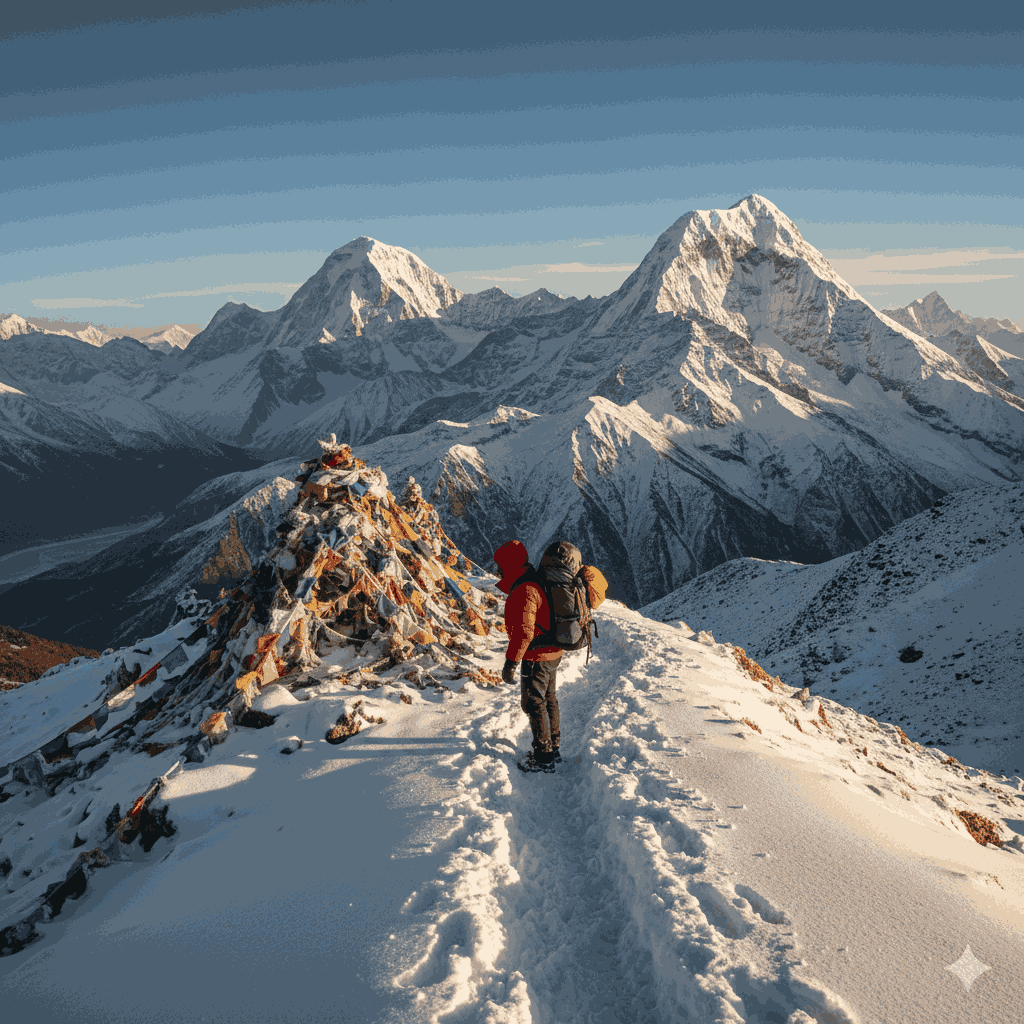
Crossing Kang La Pass during the Nar Phu Valley Trek in Nepal
The Nar Phu Valley is a restricted region, meaning you cannot go there alone. The Mandatory Guide Policy 2026 is strictly enforced here to protect the ancestral heritage and ensure trekker safety.
Permit Breakdown
Restricted Area Permit (RAP): Required specifically for the Nar Phu Valley. Costs are $100 for the first week (peak) or $75 (off-peak).
ACAP Permit: Required as the Nar Phu Valley lies within the Annapurna Conservation Area.
TIMS Card Replacement: Note that in 2026, the traditional TIMS system has evolved; check for local Manang entry requirements before your Nar Phu Valley.
Physical Preparation
Because of the steep descents from the Kang La Pass, ensure your gear is in top condition. If you are a mountain biker, combining this with the circuit, check the Trek mountain bike price in Nepal 2026 for rental and purchase options before starting your Nar Phu Valley.
Why the Nar Phu Valley is Different
What sets the Nar Phu Valley apart is the breathtaking silence. There are no large commercial lodges or luxury menus here. In the Nar Phu Valley, you stay in simple teahouses or monasteries, eating handcrafted meals of Tsampa and butter tea alongside local families.
The Nar Phu Valley is also an incredible spot for photography. The “Kani” (traditional gates) at the entrance of each village are extraordinary works of art, painted with Buddhist deities to ward off evil spirits. For more photography-focused adventures, you might also consider the Mardi Himal yoga trek.
FAQ: Navigating the Nar Phu Valley Trek
How difficult is the Nar Phu Valley?
The Nar Phu Valley is considered strenuous. The crossing of the Kang La Pass at 5,320m is the biggest challenge of the Nar Phu Valley.
Is there electricity on the Nar Phu Valley?
Solar power is available in Nar and Phu for charging small devices, but it can be unreliable during the Nar Phu Valley.
What is the food like on the Nar Phu Valley?
It is basic and soulful. You will mostly eat Dal Bhat, noodle soup, and Tibetan bread on the Nar Phu Valley Trek.
Can I do the Nar Phu Valley Trek in winter?
No, the Nar Phu Valley is usually closed in winter (Dec–Feb) due to heavy snow blocking the high passes like Kang La.
What is the best month for the Nar Phu?
October and November offer the most breathtaking visibility on the Nar Phu Valley Trek, while April/May provides blooming wildflowers.
Are there many tourists on the Nar Phu Valley?
No, the Nar Phu Valley is one of the quietest treks in Nepal due to its restricted status and physical demand.
Is the Nar Phu Valley safe for solo travelers?
No. You must have at least two trekkers and a guide to obtain the necessary RAP for the Nar Phu Valley Trek.
What festivals happen during the Nar Phu Valley?
Lhosar (Tibetan New Year) is huge in February, though the Nar Phu Valley is often done in autumn during harvest festivals.
Do I need a porter for the Nar Phu Valley?
It is highly recommended due to the thin air and steep climbs encountered throughout the Nar Phu Valley.
What should I do after the Nar Phu Valley?
Most trekkers return to the city to relax at the best post-trek bars Kathmandu.
The Nar Phu Valley is not just a destination; it is a profound journey into the very soul of the Himalayas. Over 14 days, you will witness landscapes that feel like another planet and meet people whose lives are guided by time-honored spiritual laws. The Nar Phu Valley tests your body at the Kang La Pass and rewards your spirit in the quiet monasteries of Phu.
In 2026, as the world becomes more connected, the Nar Phu Valley remains a rare sanctuary of isolation and ancestral peace. Whether it’s the handcrafted stone walls or the extraordinary mountain vistas, every moment on the Nar Phu Valley serves as a reminder of the power and beauty of the natural world.
As you descend from the Nar Phu Valley and head back to the capital, perhaps to enjoy the jazz festivals and live music in Kathmandu, you will carry with you the silence and the strength of the mountains. The Nar Phu Valley is a journey that changes you, one step, one prayer, and one breathtaking view at a time.
