
Sherpa women wearing traditional Losar Festival Dress: Traditional Attire and Cultural Symbols
The Losar Festival Dress represents the most vibrant and soul-stirring aspects of the Himalayan New Year. When the lunar calendar resets, the high-altitude communities of Nepal, the Sherpas, Tamangs, and Gurungs, celebrate by showcasing their heritage through their clothing. The Losar Dress is not just a simple garment; it is a visual language that narrates the history of mountain survival and spiritual devotion.
Every thread in the Traditional Attire and Cultural Symbols serves a purpose, whether it is to provide warmth against the mountain chill or to act as a talisman for good fortune. Throughout this guide, we will explore why the Traditional Attire and Cultural Symbols remain the beating heart of Nepal’s cultural landscape during the festive season. To understand the roots of these garments, one must look at the Cultural History of the Himalayas, which has shaped these styles for centuries.
The Majesty of the Sherpa Chuba within the Losar Dress
In the Everest region, the Cultural Symbols are dominated by the chuba. This long, wrap-around robe is the foundation of Sherpa fashion. During Gyalpo Losar, the Losar Dress: Traditional Attire and Cultural Symbols must be made from the finest materials, such as silk or heavy wool, to reflect the prosperity of the coming year.
A key element of the female Traditional Attire is the Pangden. This multicoloured striped apron is a powerful cultural symbol of a woman’s marriage. When observing the Losar Festival Dress in a crowd, the Pangden stands out as a kaleidoscope of history and family lineage. Without these elements, the Traditional Attire would lose its deep-rooted identity. For a closer look at these variations, check out our article on Different Types of Losar in Nepal: Tamu, Sonam, and Gyalpo Losar Explained.
Tamu Losar Aesthetics: Traditional Attire and Cultural Symbols of the Gurung
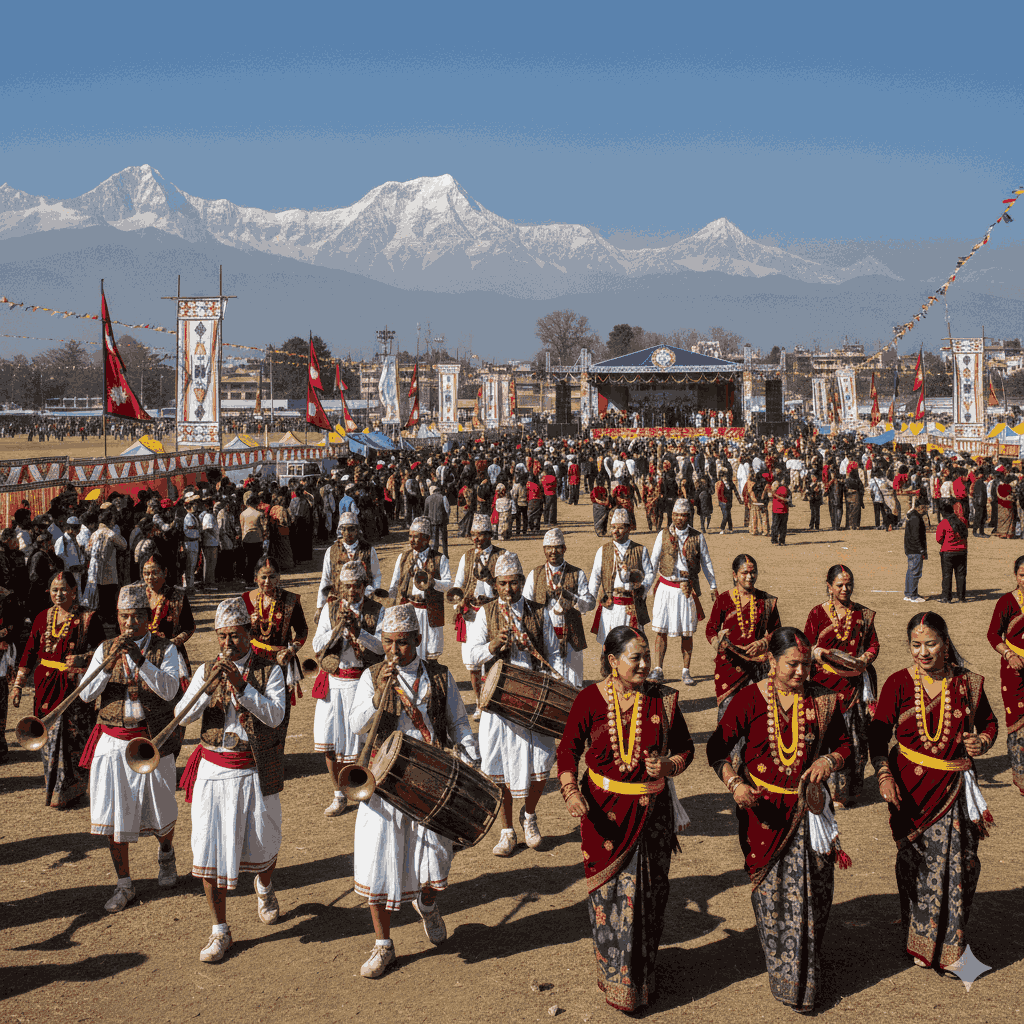
Traditional Gurung Losar attire at Tundikhel during Tamu Losar celebration, Himalayan Nepal
The Gurung community brings a distinct energy to the traditional attire. For Gurung men, the white Bhangra is an essential part of the traditional attire. This woven vest is more than an accessory; it is a cultural symbol of the hardworking spirit of the Tamu people.
For women, the maroon velvet Ghalek is the centrepiece of the festival dress. This draped fabric is often paired with heavy gold jewelry, making the Cultural Symbols of the Gurung some of the most luxurious in Nepal. The Festival Dress: Traditional Attire and Cultural Symbols of the Gurung people highlight how ethnic pride is woven into every piece of fabric. You can see these outfits during the mass parades at Tundikhel, a tradition we discuss in What Tourists Should Know Before Attending Losar Celebrations in Nepal.
Sonam Losar Pride: Festival Dress of the Tamang
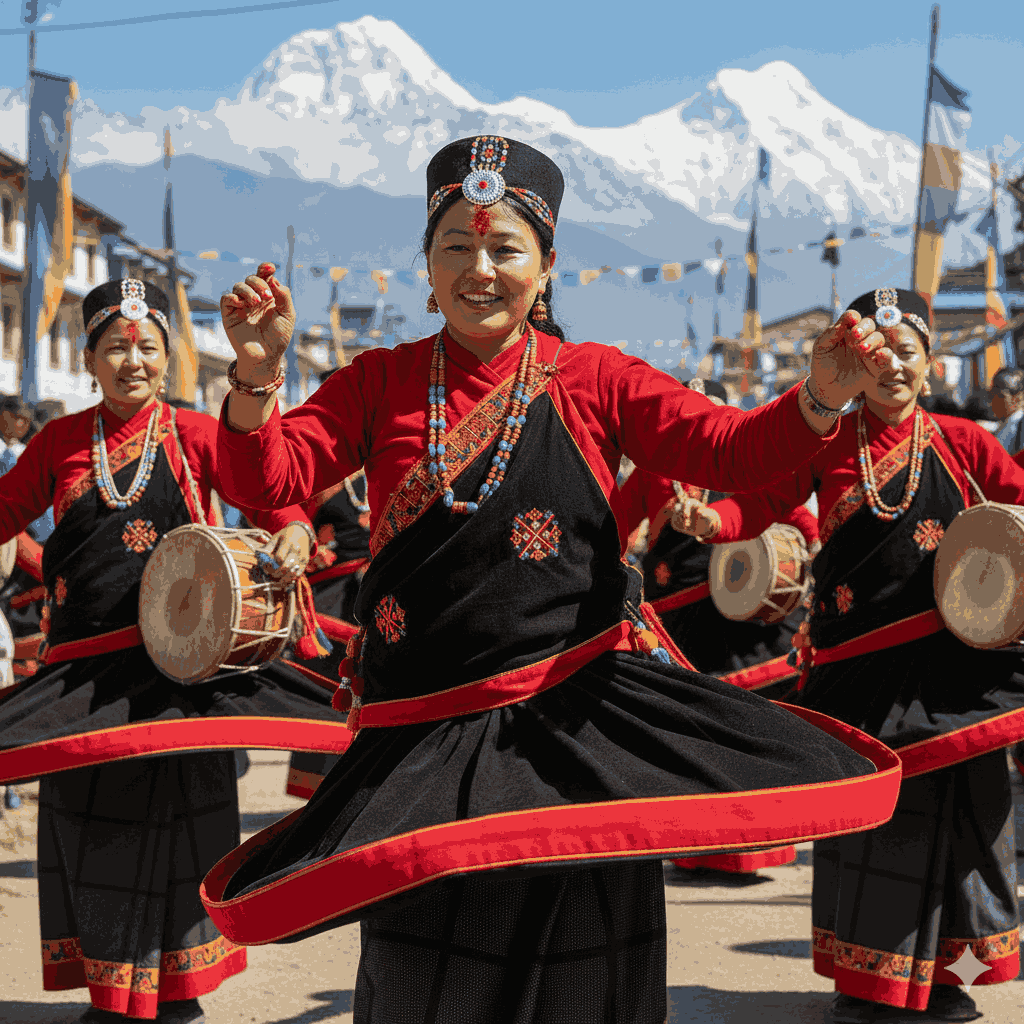
amang Losar traditional attire with red and black motifs during Sonam Losar, Nepal Himalayas
The Tamang people celebrate Sonam Losar with a unique take on the Traditional Attire. Their clothing is defined by the colors red and black, which are significant in their spiritual practices. The traditional Attire and Cultural Symbols for Tamang women include the Lungi, a wrap-around skirt with a bright red border.
In the Tamang tradition, the red border is a cultural symbol of fire and protection. As the community gathers for the Selo dance, the Traditional Attire and cultural symbols create a rhythmic pattern of color. The cultural symbols of the Tamang people are a beautiful example of how spiritual merit is expressed through fashion. This rhythmic expression is often paired with the music of the Damphu Drum in Tamang culture.
5. Decoding Motifs in Festival Dress: Traditional Attire and Cultural Symbols
The embroidery found on the Traditional Attire and Cultural Symbols is never random. Every motif is a cultural symbol designed to bring luck. The Eight Auspicious Symbols, such as the Endless Knot and the Lotus, are frequently seen on the Traditional Attire and Cultural Symbols. For more on the meaning of these patterns, visit the International Association for Tibetan Studies.
The color palette of the cultural symbols also follows the five elements. Blue, white, red, green, and yellow are used in the Cultural Symbols to ensure harmony between the wearer and the universe. Understanding these patterns is key to appreciating the Losar Festival Dress: Traditional Attire.
Jewelry and Ornaments in Losar Dress: Traditional Attire and Cultural Symbols

Traditional Himalayan jewelry and cultural symbols on Losar dress in Nepal Himalayas monastery
No traditional attire and cultural symbols are complete without traditional Himalayan jewelry. Turquoise and coral are the most important stones used in cultural symbols. These stones are more than decorations; they are a cultural symbol of protection and life force.
When a person wears their cultural symbols, the jewelry acts as a spiritual shield. The silver Gau (prayer box) is another staple of the Cultural Symbols, often containing sacred mantras to bless the new year. The Cultural Symbols represent a total package of faith and beauty.
The Evolution of Losar Dress: Traditional Attire and Cultural Symbols in the Modern Era
Even as the world changes, the Cultural Symbols remain resilient. Young people are now blending the Losar Festival Dress: Traditional Attire and Cultural Symbols with modern trends to keep the heritage alive. Fusion designs are breathing new life into the Losar Dress: Traditional Attire and Cultural Symbols, making them popular even outside of festival days.
The traditional attire and Cultural Symbols are also becoming more sustainable. The use of nettle fibers in the traditional attire and Cultural Symbols is a return to ancestral techniques. These changes ensure that the Losar Dress: Traditional Attire and Cultural Symbols will continue to be worn by future generations. Many designers are looking toward Sustainable Himalayan Textiles to keep the Traditional attire relevant.
Respecting Losar Dress: Traditional Attire and Cultural Symbols as a Visitor
If you plan to attend the festival, understanding the cultural symbols is essential for cultural immersion. You can even wear the Festival Dress: Traditional Attire to show respect. However, it is important to learn the meaning behind each cultural symbol before you do.
When buying cultural symbols, try to support local weavers. This helps preserve the craft of the Traditional Attire and Cultural Symbols. By appreciating the Cultural Symbols, you contribute to the survival of the Himalayan culture. Don’t forget to fuel your journey by trying the Traditional Food Prepared During Losar Festival.
Textile Rituals and Festival Dress: Traditional Attire and Cultural Symbols
The Cultural Symbols aren’t just for the people; they reflect the dressing of the entire environment. During the festival, monasteries are draped in the same silk brocades found in the cultural symbols. This creates a seamless spiritual connection between the devotee and the sacred space.
The process of creating the Cultural Symbols begins months in advance. Weavers in the mountains spend the winter months ensuring that the Traditional Attire and cultural symbols are ready for the first day of the new moon. This dedication is what makes the cultural symbols so incredibly special.
Frequently Asked Questions (FAQs)
Q: Why is the focus on the Losar Dress: Traditional Attire and Cultural Symbols so high? The cultural symbols represent a fresh start for the year, and wearing them is believed to attract positive energy and merit.
Q: Where can I see the best Losar Dress: cultural symbols??
The Boudhanath Stupa in Kathmandu and the Tundikhel grounds are the best places to see the cultural symbols in action.
Q: Is the Losar Festival Dress: Traditional Attire and Cultural Symbols expensive?
The price varies. A high-quality cultural symbol made of silk and decorated with gold can be quite an investment, but simpler versions are available for everyone.
Q: Can I take photos of people in the cultural symbols? Most people are proud to show off their Losar Dress: Traditional Attire, but always ask for permission first, especially in religious settings.
The traditional attire and Cultural Symbols are a stunning testament to the cultural diversity of Nepal. From the high mountains to the mid-hills, the Traditional Attire and Cultural Symbols unite different ethnic groups in a shared celebration of life. Every time a person dons their Losar Dress: Traditional Attire and Cultural Symbols, they are honoring their ancestors and keeping their stories alive.
The Losar dress remains the most enduring legacy of the Himalayas. We must continue to cherish the Losar Dress as a symbol of hope, harmony, and resilience.
