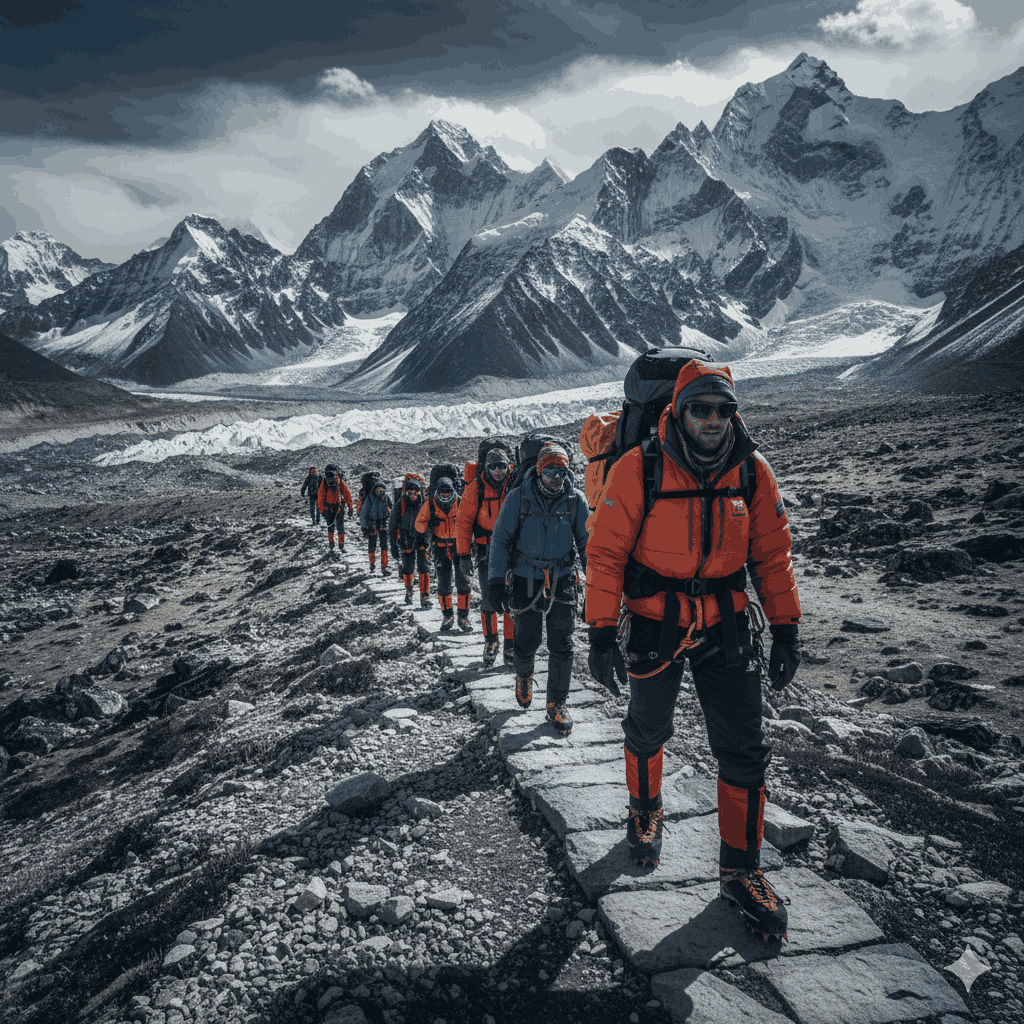
adventure trek in Nepal showcasing high altitude Himalayan expedition
In 2026, the call of the wild is louder than ever. If you have outgrown the gentle stone steps of an easy trek in Nepal, your soul is likely craving the grit, altitude, and sheer unpredictability of an adventure trek in Nepal. This is not just a holiday; it is a full-scale mountain expedition that tests the limits of human endurance. By 2026, the trekking landscape has evolved,trail logistics are smarter, satellite connectivity is more reliable, and the mandatory guide policy ensures that even the hardest trek in Nepal is approached with professional safety standards.
This guide is your ultimate blueprint for navigating the most challenging, rewarding, and technical routes in the Himalayas. From the ice-cracking silence of the Everest High Passes to the medieval isolation of Upper Mustang, we break down the logistics, costs, and soul-stirring experiences that await those brave enough to step off the beaten path.
Section 1: The New Era of Himalayan Trekking (2026 Updates) on
Adventure Trek in Nepal
Before you lace up your boots for an adventure trek in Nepal, you must understand the “New Rules” of the 2026 season. The Nepal Tourism Board has introduced several changes to preserve the environment and ensure trekker safety.
1. Mandatory Guide Requirement for
Adventure Trek in Nepal
The most significant change in 2026 is the nationwide enforcement of the mandatory guide policy. Solo trekking is now restricted in most national parks and conservation areas. While this was controversial at its inception, it has led to a significant decrease in high-altitude accidents. For an adventure trek in Nepal, having a guide is no longer a luxury—it is a legal and safety necessity.
2. Digital Permits & The End of TIMS,
Adventure Trek in Nepal
In many regions, the paper-based TIMS card has been replaced by local municipality digital permits. In the Everest region, for example, you now pay directly to the Khumbu Pasang Lhamu Rural Municipality.
3. Enhanced Connectivity,
Adventure Trek in Nepal
Even on the hardest trek in Nepal, connectivity has improved. Starlink-powered Wi-Fi is now available in high-altitude hubs like Gorak Shep and Samagaon. While we recommend “unplugging” to enjoy the most beautiful trek in Nepal, this connectivity is a game-changer for weather tracking and emergency logistics.
Section 2: Ranking the Most Iconic Adventure Treks in Nepal,
1. Everest Three High Passes Trek: The Khumbu Masterpiece
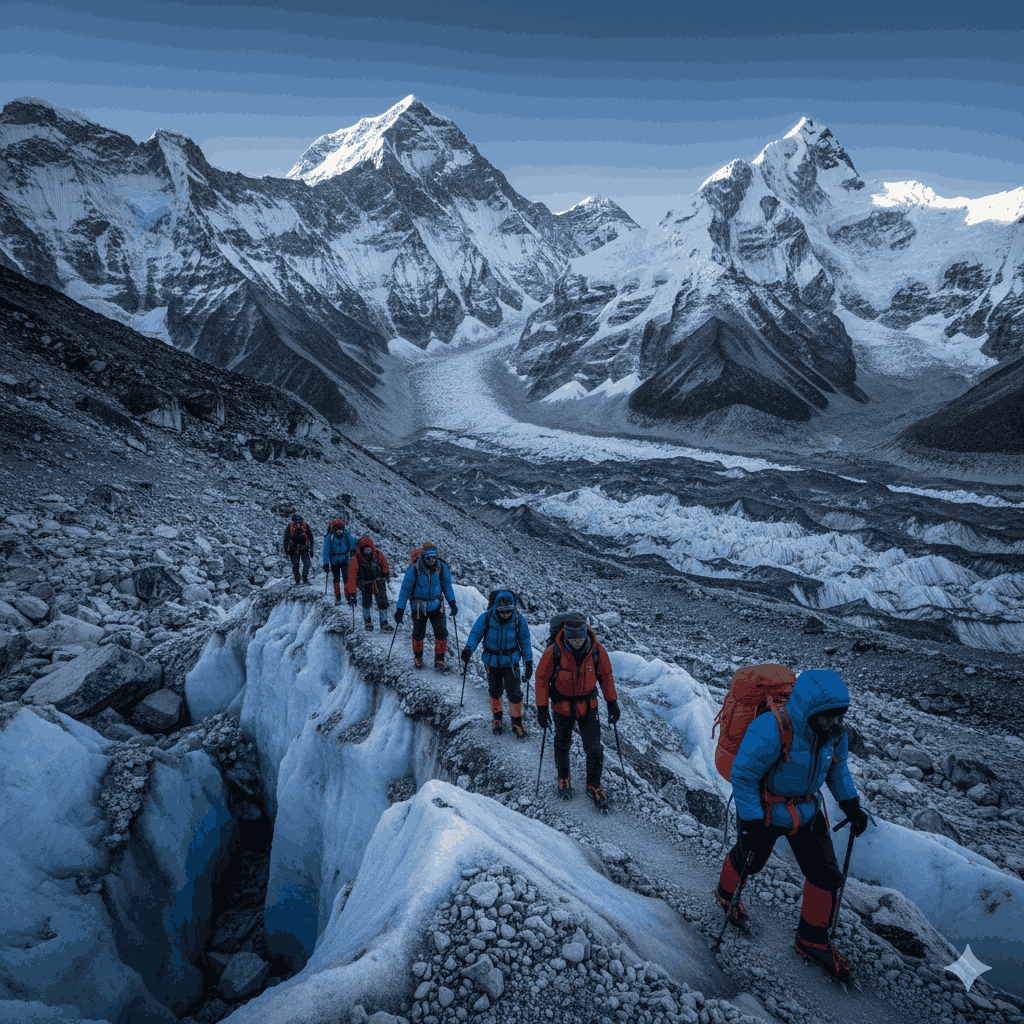
adventure trek in Nepal featuring Everest Three High Passes crossing
For those who find the standard Everest Base Camp route too commercial, the Everest Three Passes Trek is the definitive adventure trek in Nepal. It connects the four main valleys of the Khumbu region via three massive passes: Kongma La, Cho La, and Renjo La.
The Technicality: Crossing the Cho La glacier often requires micro-spikes. The terrain is a mix of loose moraine, steep rock, and ice.
Altitude: You will spend nearly a week above 5,000 meters.
2026 Difficulty: Strenuous/Technical.
Cost: $1,800 – $2,500.
2. Dhaulagiri Circuit: The “Hardest Trek in Nepal”
If you ask any veteran guide which route is the hardest trek in Nepal, the answer is almost always the Dhaulagiri Circuit. This is a full-camping expedition that circumnavigates Dhaulagiri I (8,167m).
The Challenge: There are no teahouses for several days. You sleep on glaciers at the Italian and Japanese Base Camps.
Technical Pass: The French Pass (5,360m) offers a panoramic view of the “Hidden Valley,” but the ascent is brutal.
Experience Required: Only for those who have completed at least two 5,000m+ treks previously, such as the Annapurna trek in Nepal.
3. Manaslu Circuit with Tsum Valley: The Sacred Adventure
The Manaslu Circuit has become the primary alternative to the Annapurna Circuit. By 2026, it is recognized as the best “teahouse adventure” that still feels remote.
The Highlight: Crossing the Larkya La Pass (5,106m).
The Tsum Extension: Adding the Tsum Valley adds 4–5 days of “Restricted Area” trekking into a region that feels like medieval Tibet.
Budgeting: Expect to pay $1,200 – $1,800 for a 16-day loop.
4. Upper Mustang: The Forbidden Kingdom,
Adventure Trek in Nepal
An adventure trek in Nepal doesn’t always involve snow. Upper Mustang is a trans-Himalayan desert.
The Feel: Red cliffs, ancient sky caves, and the walled city of Lo Manthang.
2026 Permit Rule: Permits are now $500 for the first 10 days and $50/day thereafter.
Monsoon Option: Since it sits in the rain shadow, this is the best high-altitude trek for July and August.
5. Kanchenjunga North & South Base Camp: The Long Haul
Located in the far eastern corner of Nepal, this trek is for those who seek absolute solitude.
Distance: Over 220 km of trekking.
The Terrain: From humid bamboo forests to the massive Yalung Glacier.
Difficulty: Strenuous. It requires high endurance for back-to-back 7-hour walking days.
Section 3: Planning Your Logistics (2026 Costs & Permits)
An adventure trek in Nepal requires meticulous financial planning. Below is a breakdown of the estimated 2026 costs.
Trekking Budget Breakdown Table on
Adventure Trek in Nepal
| Item | Low-End (Budget) | Mid-Range (Standard) | High-End (Expedition) |
| Guide Salary | $30 / day | $45 / day | $60+ / day |
| Porter Salary | $20 / day | $25 / day | $35 / day |
| Daily Food/Lodging | $40 | $55 | $80+ |
| Permit Fees | $30 (Standard) | $150 (Manaslu) | $500 (Upper Mustang) |
| Emergency Fund | $500 | $1,000 | $2,000 |
In 2026, travel insurance must explicitly cover “Helicopter Evacuation” up to 6,000 meters. Without this, a rescue can cost upwards of $5,000 USD out-of-pocket.
Section 4: Technical Preparation & Gear
To survive the hardest trek in Nepal, your gear must be top-tier. By 2026, many trekkers are opting for ultra-light carbon fiber poles and modular layering systems.
The “Big 5” Gear List,
Adventure Trek in Nepal
Footwear: B2 or B3-rated boots for technical passes; high-traction trail shoes for lower camps.
Sleeping System: A -20°C (0°F) down bag. Teahouse blankets are insufficient at 5,000m.
Water Filtration: Use a LifeStraw or Grayl bottle to save money and reduce plastic waste.
Outer Layer: A GORE-TEX Pro shell to handle the 100km/h winds on high passes.
Electronics: A 20,000mAh solar power bank. Teahouse charging fees in 2026 can be as high as $10 per full charge.
Section 5: FAQ for the 2026 on Adventure Trek in Nepal
1. Is the “hardest trek in Nepal” dangerous?
Risk is inherent in high-altitude trekking, but “danger” is mitigated by preparation. The Dhaulagiri Circuit and Rolwaling Tashi Lapcha are dangerous for those without glacier experience. In 2026, the mandatory guide policy has significantly improved rescue response times and trail safety.
2. Can I use a mountain bike on an adventure trek in Nepal?
While you might see mountain bikers in the Lower Mustang region, an adventure trek in Nepal involving high passes like Cho La or French Pass is not rideable. If you are a fan of rugged trails, consider the mountain biking trails in Nepal specifically designed for a Trek Marlin 7 or similar XC bikes.
3. What is the best month for a technical adventure?
For the hardest trek in Nepal, the windows are narrow.
October – November: Best stability and visibility.
April – May: Warmer, but with more afternoon cloud cover and potential snow on passes.
December – February: Only for elite winter mountaineers.
4. How do I manage Altitude Sickness (AMS) on an adventure trek?
The rule for 2026 is simple: “Walk slow, climb high, sleep low.” Most adventure itineraries now include mandatory “rest days” at 3,500m and 4,500m. If you develop a persistent headache or loss of appetite, you must descend immediately. Guides now carry pulse oximeters to monitor your oxygen saturation levels daily.
5. How do I get to the remote trailheads?
In 2026, infrastructure has improved. While Lukla remains the gateway to Everest, many “adventure” trails like Manaslu now have jeep access to the lower trailheads (Machha Khola), reducing the trek length by 2–3 days but increasing the initial dust and bumpiness of the ride.
6. What is the most scenic route in 2026?
The title for the most beautiful trek in Nepal is a tie between the Gokyo Lakes (for the turquoise water) and the Annapurna Sanctuary (for the 360-degree peak amphitheater).
Section 6: The Ultimate Recovery: From Glaciers to Jazz
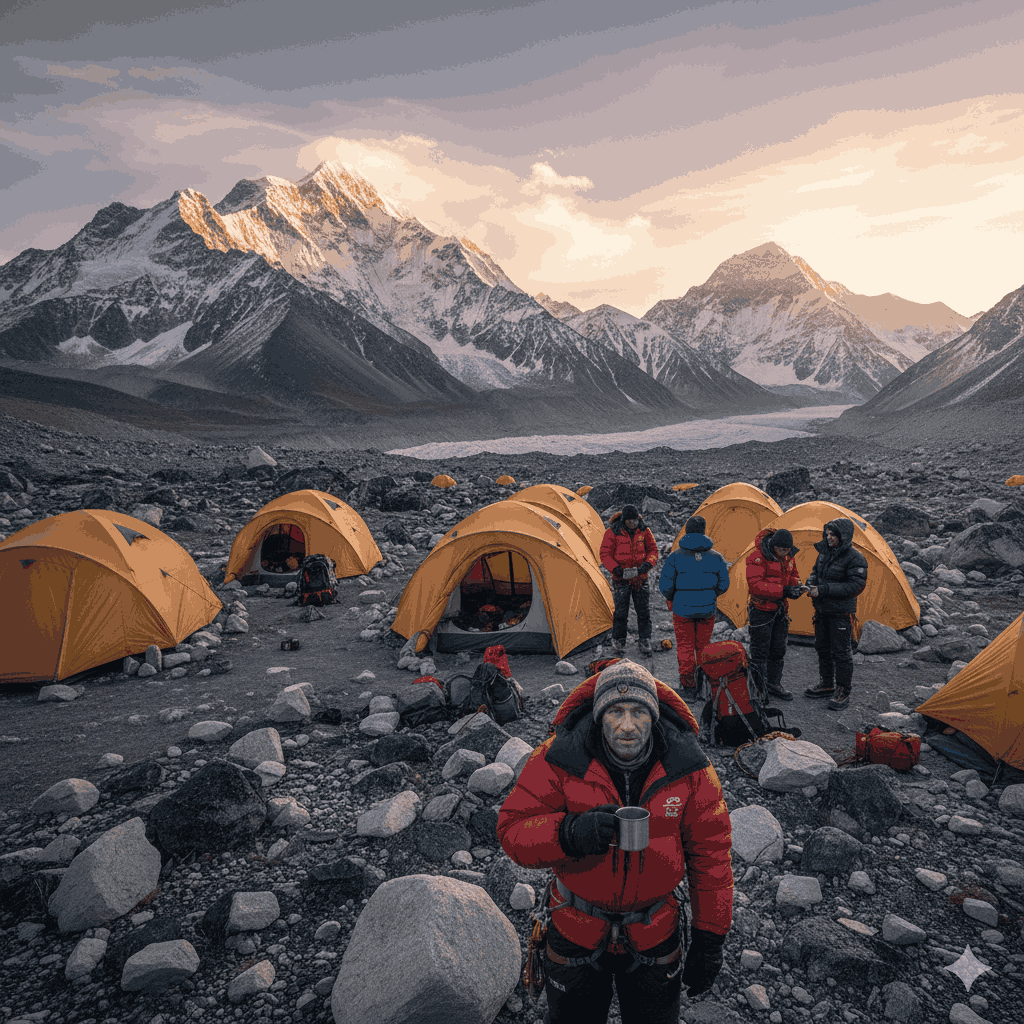
remote adventure trek in Nepal with expedition camping at high altitude
The physical toll of an adventure trek in Nepal is immense. You will lose weight, your knees will ache, and your skin will be weathered by the Himalayan sun. The transition from the “Dead Zone” back to civilization is a rite of passage.
Once you have conquered the hardest trek in Nepal, your first stop should be Kathmandu. By 2026, the city has blossomed into a world-class recovery hub.
Physical Healing: Visit the Himalayan salt spas in Thamel or the Ayurvedic centers in Patan to repair your muscles.
Mental Rejuvenation: There is no better way to celebrate than by sinking into the jazz festivals and live music in Kathmandu. The contrast between the silent, frozen peaks and the soulful, rhythmic pulse of a Kathmandu jazz bar is the most profound part of the journey.
Whether it is the “Jazzmandu” festival in October or the nightly live sessions at Purple Haze or Reggae Bar, the music provides a space to process the intensity of your adventure. You aren’t just listening to music; you are celebrating the fact that you stood on the roof of the world and returned to tell the tale.
An adventure trek in Nepal is the ultimate gift to yourself. It is a challenge that strips away the noise of modern life and leaves you with the raw essentials of breath, movement, and survival. Whether you choose the high-altitude technicality of the Everest Three Passes or the soul-stirring isolation of Upper Dolpo, you will return changed.
As you plan your 2026 journey, remember that the mountains are to be respected, not conquered. Listen to your guide, pack the right gear, and always save enough energy for the final celebration. From the highest pass to the deepest bass line in a Kathmandu jazz club, your Nepal adventure will be the story of a lifetime.
