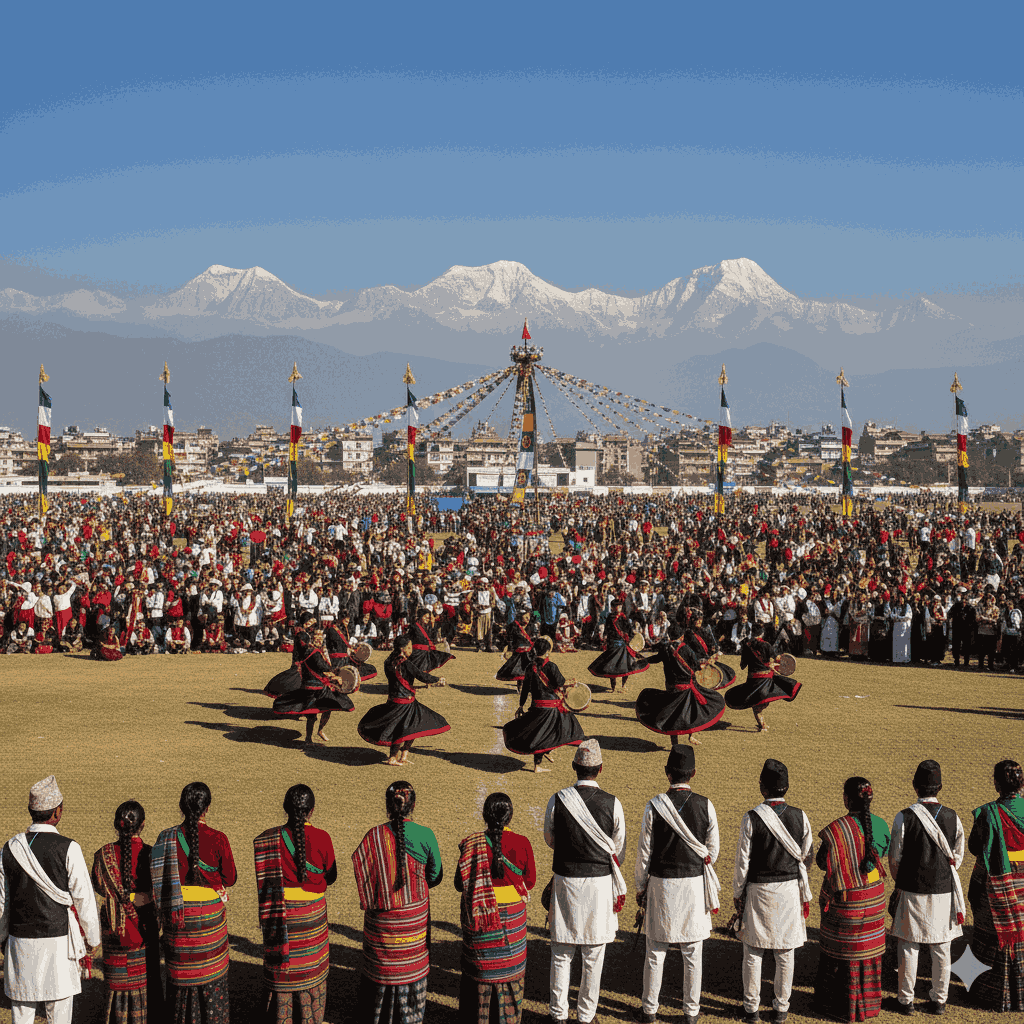
Losar Festival in Photos, Colorful celebrations in Kathmandu with traditional costumes, cultural dances, and prayer flags during Losar.
Nepal is often described as a land where there are more festivals than days in a year. Yet, among the thousands of celebrations that dot the calendar, none carry the same weight of spiritual renewal and ethnic pride as the Losar Festival in Photos: Colors, Costumes, and Culture of Nepal. As the winter sun begins to climb higher over the Annapurna and Everest ranges, the mountain communities of Nepal prepare for a reset that is as much about the soul as it is about the calendar.
In 2026, the stakes are even higher. We are entering the Year of the Fire Horse (Tibetan Year 2153), a cycle that occurs only once every 60 years. In the culture of Nepal, the Fire Horse is a symbol of intense transformation, swift action, and purification. This long-form guide will walk you through every nuance of the festival, from the hidden meanings in the costumes to the essential Role of Monasteries and Lamas During Losar Celebrations in Nepal.
The Triple Crown: Understanding Tamu, Sonam, and Gyalpo Losar
To understand the Losar Festival: Colors, Costumes, and Culture of Nepal, one must first understand that Losar is an umbrella term for three distinct New Year celebrations observed by different ethnic groups.
Tamu Losar: The Gurung Vanguard
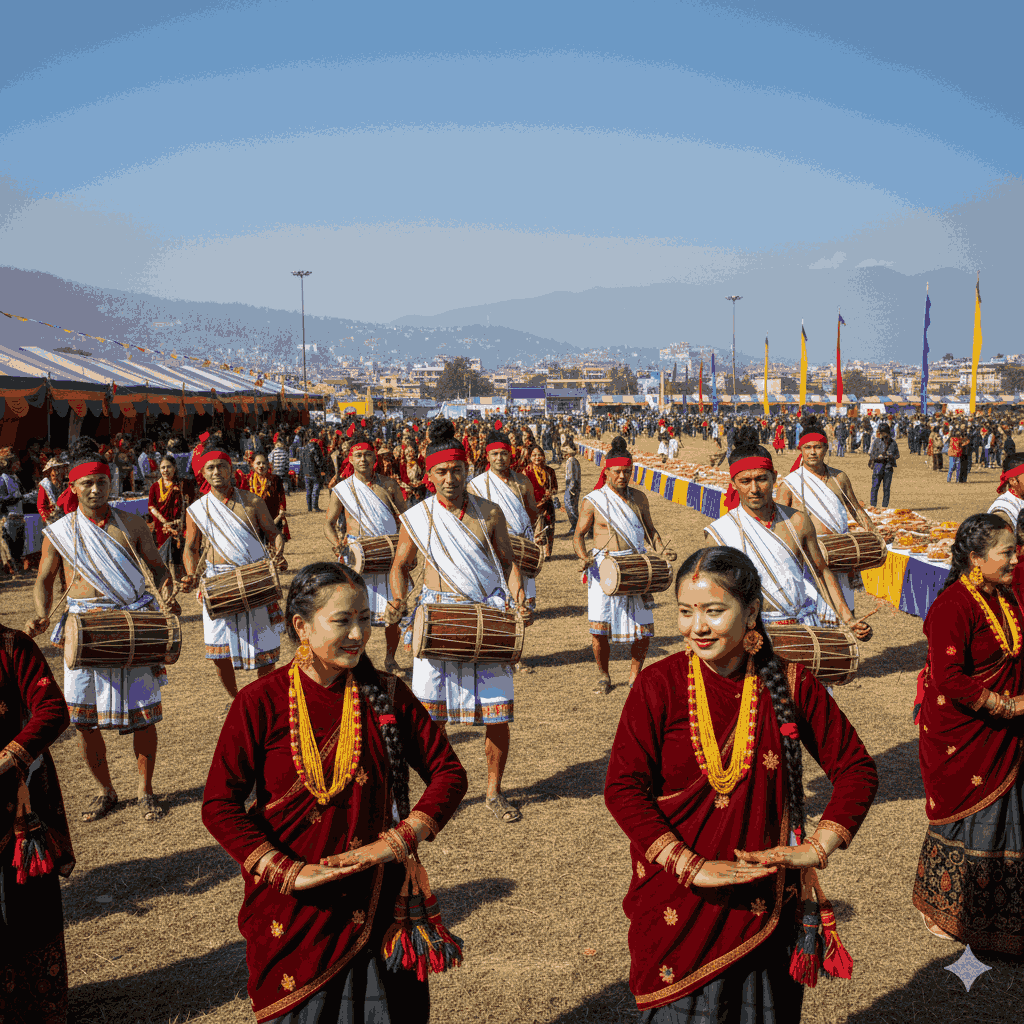
Losar Festival in Photos, Gurung community celebrating Tamu Losar with traditional dances, costumes, and outdoor festivities.
The festival cycle begins with Tamu Losar, the New Year of the Gurung (Tamu) people. Traditionally falling around the winter solstice, it marks the end of the shorter days. Historically, the Gurungs were the legendary warriors and horse-traders of the mid-hills. Their version of the festival is a riot of colors featuring the Bhangra (white woven vest) and Kachhad (wrap-around garment) for men, and stunning maroon velvet Ghaleks for women. In a Losar Festival, this event is often characterized by massive outdoor feasts and traditional dances in the Tundikhel grounds of Kathmandu.
Sonam Losar: The Merit of the Tamangs
Following shortly after is Sonam Losar, celebrated by the Tamang and Hyolmo communities. “Sonam” translates to “Merit” or “Virtue.” For the Tamangs, the festival is deeply tied to the agricultural cycle and the lunar calendar. The culture of Nepal shines here through the Tamang Selo,a dance performed with the Damphu drum, which symbolizes the rhythm of life and the earth.
Gyalpo Losar: The King’s Celebration
Finally comes Gyalpo Losar, the “King’s New Year” primarily observed by Sherpas, Tibetans, and Bhutias. This is the version most visitors see at the Boudhanath Stupa. It lasts for fifteen days, though the first three are the most vital. It is here that the Role of Monasteries and Lamas is most visible, as the entire community turns toward the Gompas for divine guidance.
The Spiritual Pillar: Role of Monasteries and Lamas
The Role of Monasteries and Lamas During Losar Celebrations in Nepal is the invisible thread that binds the festivities together. Without the spiritual guidance of the Lamas, Losar would be merely a social gathering.
The Gutor Ritual: Banishing the Past
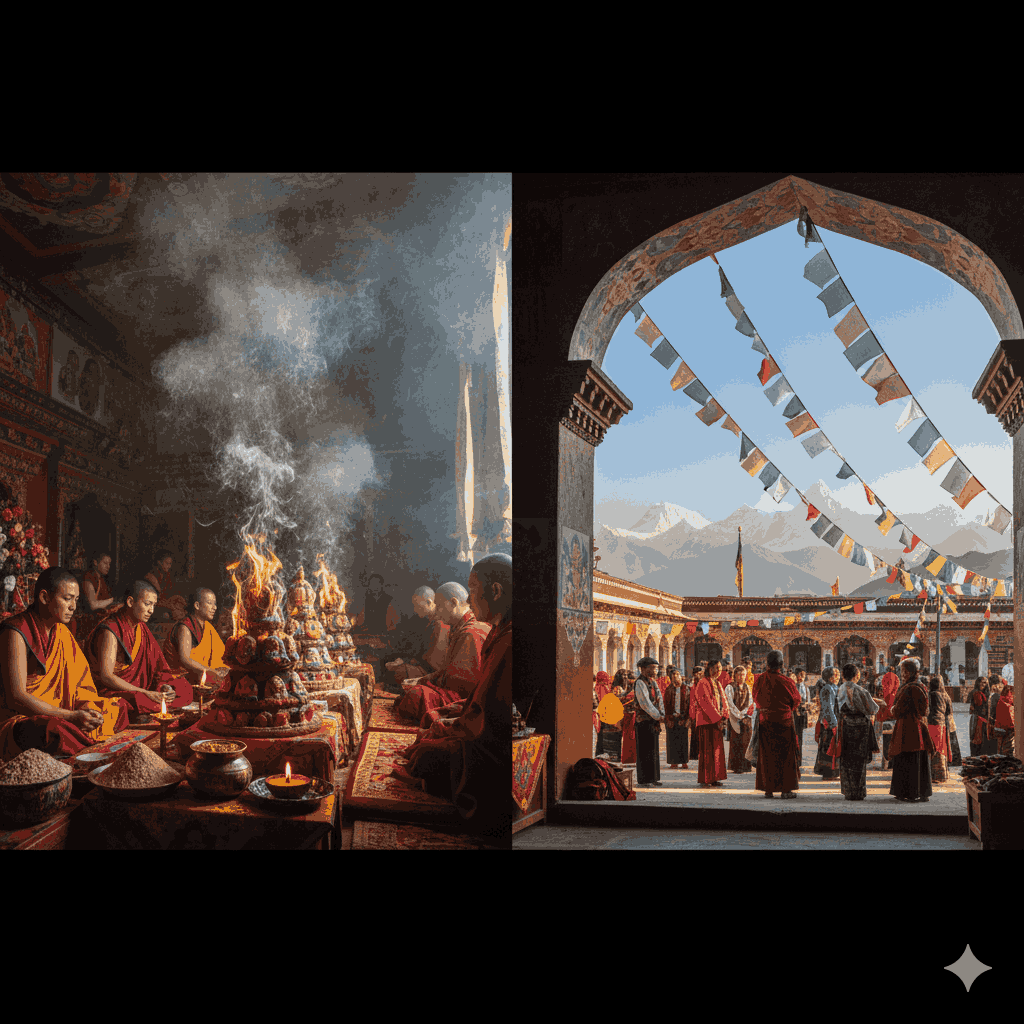
Losar Festival in Photos — Monks performing Gutor rituals and community hanging prayer flags during Gyalpo Losar.
Two days before the New Year, monasteries across Nepal,from Kopan to Tengboche,perform the Gutor puja. High-ranking Lamas lead the community in the ritual destruction of Tormas (ritual cakes). These Tormas represent the accumulated “spiritual debris” of the past year,illnesses, grudges, and bad luck. When the Torma is burned, it signifies a total cleansing, allowing the community to enter the New Year with a pristine “inner house.”
The First Day: Lama Losar
The very first day of the festival is dedicated to the guru. Devotees visit their local monasteries to receive blessings and offer Khatas (white silk scarves). The Role of Monasteries and Lamas on this day is to provide the “Lung” or oral transmission of prayers for the coming year. It is a day of quiet reverence, where the monastery prayers focus on the longevity of the teachers and the spread of peace.
The Cham Dance: A Living Mandala
One of the most spectacular sights in the Losar Festival: Colors, Costumes, and Culture of Nepal is the Cham masked dance. Monks, after days of meditation, take on the persona of wrathful deities. These dances are moving meditations designed to subjugate the ego. For the laypeople watching, the dance is a form of “liberation through seeing,” a unique aspect of the culture of Nepal.
A Visual Masterclass: Colors and Costumes
The Losar Festival: Colors, Costumes, and Culture of Nepal provides a vibrant record of Himalayan ethnic identity. Each piece of clothing is a coded message about the wearer’s history and spiritual aspirations.
The Symbolism of the Five Colors
Everywhere you look during Losar, you see five specific colors:
Blue: Representing the sky and the medicine Buddha.
White: Representing the air and the clouds of purity.
Red: Representing fire and the protective life-force.
Green: Representing water and the balance of nature.
Yellow: Representing the earth and the rootedness of tradition.
These colors are most famously seen on the Lung-Ta prayer flags which are hung in fresh batches during the third day of Losar.
The Sherpa Chuba and Pangden
For the Sherpas of the Everest region, the Chuba is the ultimate garment. Made of thick wool, it is designed for survival. However, during Losar, the Chubas are made of fine silk and brocade. The Pangden, the iconic three-striped apron worn by women, is a masterpiece of weaving. Each stripe represents a different layer of the soul and the family’s heritage. In a Losar Festival, the colorful stripes of the Pangden create a beautiful rhythmic pattern against the white stupas.
The Gold of the Gurungs
In the culture of Nepal, jewelry is often a portable form of family wealth. During Tamu Losar, Gurung women wear massive gold earrings called Nungwari and heavy coral and turquoise necklaces. These costumes reflect the wealth gathered from generations of service and trade.
The Gastronomy of Renewal: Rituals of the Kitchen
Food in the culture of Nepal is never just about nutrition; it is a ritual. During Losar, the kitchen becomes a laboratory of divination.
Guthuk: The Soup of Fortune
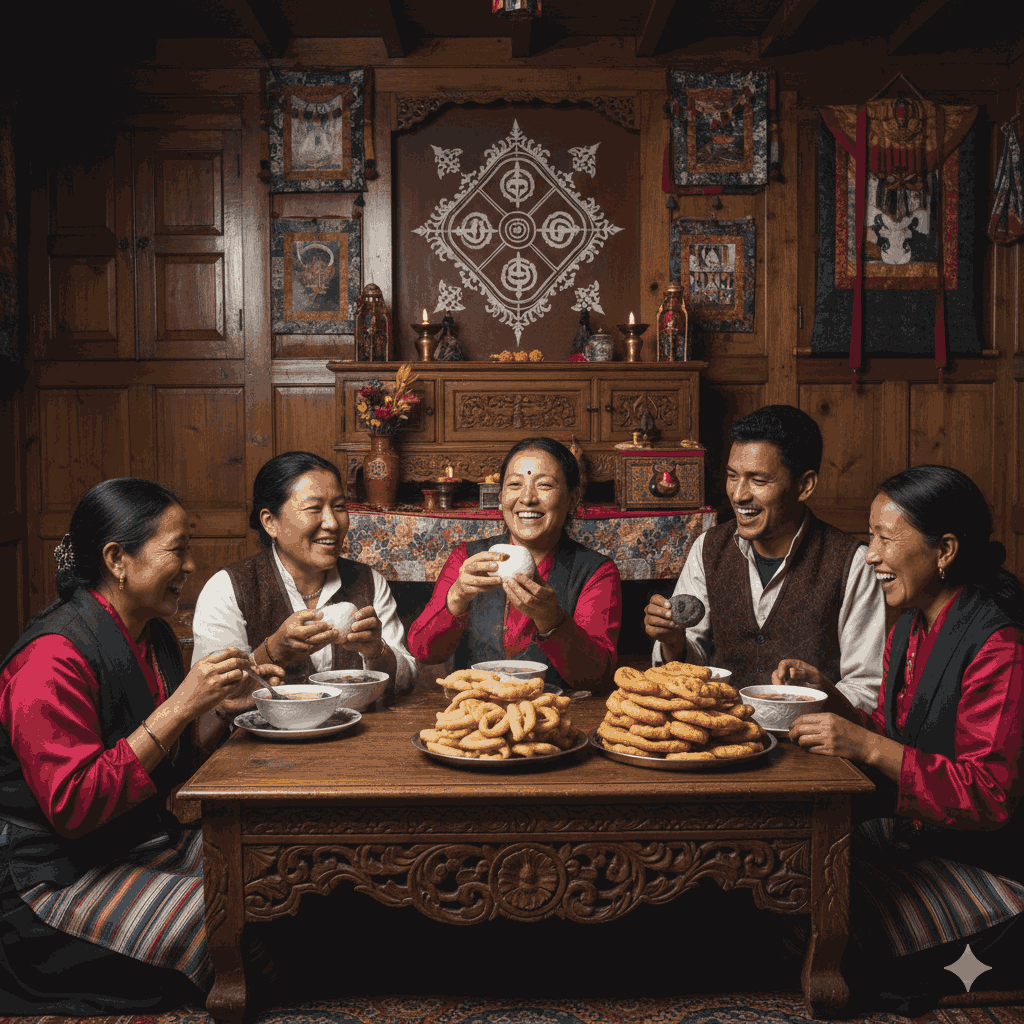
Losar Festival in Photos,Families celebrating with Guthuk and Khapse, embodying renewal and tradition during Losar.
On the 29th day of the 12th month, every household eats Guthuk. This noodle soup contains nine ingredients, but the highlight is the Pilu,large dough balls with hidden objects inside.
Salt: You are a kind person of good character.
Chili: You are a bit too talkative!
Wool: You are gentle and patient.
Coal: You have a “black heart.” This is a lighthearted joke to encourage better behavior.
Khapse: The Edible Art
No house is ready for Losar without Khapse. These are deep-fried pastries made from flour, butter, and sugar. They are twisted into intricate shapes. In the Losar Festival: Colors, Costumes, and Culture of Nepal, you will see these stacked in towering pyramids on altars, symbolizing the abundance the family hopes to attract.
Deep Roots: Why House Cleaning is Sacred
Long before the costumes are donned, the culture of Nepal demands a physical purge. House cleaning for Losar is not a chore; it is the first stage of the monastery prayers.
Clearing the Chimneys
In mountain villages, the hearth is the center of the home. During Losar, the soot must be removed to allow new energy to flow. This cleaning extends to every copper vessel and wooden beam. By the time the Losar Festival in Photos captures a village, the houses literally sparkle.
Flour Paintings (Ashtamangala)
Once the home is clean, it is protected with sacred art. Flour is used to draw the Eight Auspicious Symbols on the walls. This is done to welcome the Buddhas and Bodhisattvas into the home during the New Year.
2026: The Year of the Fire Horse
As we look toward 2026, the culture of Nepal is preparing for a year of massive energy. The Fire Horse is rare, occurring once every 60 years. It brings the heat of the fire element together with the speed of the horse.
Lamas suggest that in the Year of the Fire Horse, spiritual practices are amplified. A single prayer offered during the monastery prayers of 2026 is said to carry the weight of a hundred prayers. For photographers, this means the Losar Festival in Photos: Colors, Costumes, and Culture of Nepal will be more intense, more colorful, and more spiritually charged than it has been in decades.
Frequently Asked Questions (FAQs)
1. What is the most important day of Losar?
The first three days are the most vital. Day 1 (Lama Losar) is for spiritual guides, Day 2 (Gyalpo Losar) is for community leaders, and Day 3 is for the public raising of prayer flags.
2. Why do people throw white flour in the air?
On the third day, communities gather for the Lhasang incense offering. People throw Tsampa (roasted barley flour) into the air while shouting “Lha-Gyal-Lo!” (Victory to the Gods!).
3. Can I visit monasteries during the monastery prayers?
Yes, most monasteries are open. However, remember the Role of Monasteries and Lamas is religious, not performative. Walk clockwise, remove your shoes, and avoid flash photography during chanting.
4. What is the best place to witness Sonam Losar? The Tundikhel grounds in Kathmandu host a massive cultural festival for Sonam Losar, featuring Tamang Selo music and incredible displays of traditional costumes.
5. How long does the celebration actually last? While the “official” holidays are a few days, the spirit of Losar and the monastery prayers continue for the full fifteen days, ending with the Festival of Miracles.
The Losar Festival in Photos: Colors, Costumes, and Culture of Nepal is more than just a beautiful series of images. It is a testament to the resilience of the Himalayan people. Through the Role of Monasteries and Lamas During Losar Celebrations in Nepal, ancient wisdom is passed down. Through the vibrant colors and meticulous costumes, ethnic identity is preserved. And through the shared bowls of Guthuk, community bonds are forged.
As 2026 approaches, the Year of the Fire Horse beckons us to embrace transformation. Whether you are a pilgrim, a photographer, or a student of culture, Losar offers a glimpse into a world where the sacred and the social are one and the same.