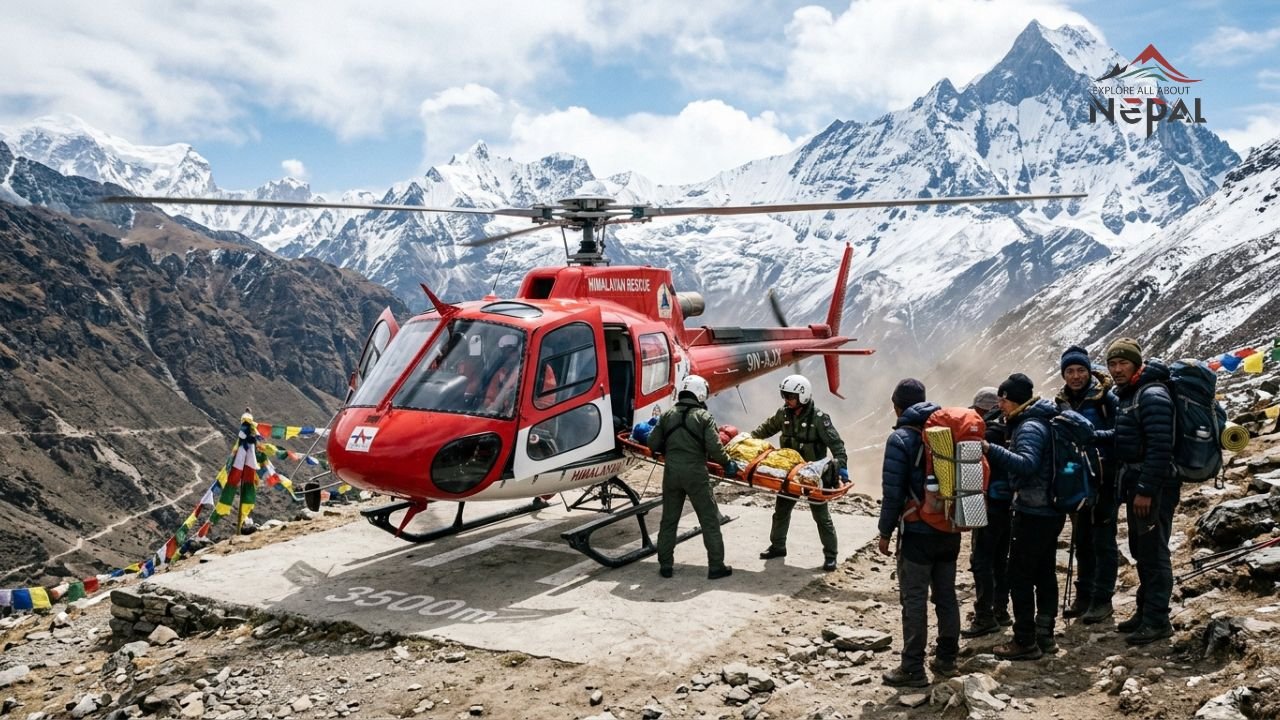
standard travel insurance usually does not cover trekking above 3,000 metres, and every popular Nepal trek Poon Hill, Annapurna Base Camp, Everest Base Camp goes higher than that. If you have an emergency up there, the way down is a helicopter billed at $3,000–$5,000+ before anyone asks how you’ll pay. So the rule is simple: buy a policy that explicitly states it covers high-altitude trekking to your trek’s maximum elevation, and includes helicopter evacuation. Everything else cancellation, baggage, medical matters too, but those two features are what separate a policy that protects you from one that leaves you with a five-figure bill. Below is exactly what to check, line by line.
Why ordinary travel insurance fails in Nepal
Most travel policies are written for beach holidays and city breaks. They quietly exclude “high-risk activities,” and mountain trekking above a certain altitude almost always falls into that bucket. Here’s what most people get wrong: they buy a cheap policy, see the words “covers trekking,” and assume they’re protected. Then they read the fine print at base camp too late and find the cover stops at 2,500 or 3,000 metres.
Nepal is the worst possible place for that mistake, because of three things stacking together: you’re at genuine altitude, you’re days from a road, and the only fast way out is by air. That combination is exactly what budget policies are designed not to cover.
Best Travel Insurance for Nepal
The two non-negotiables
Before anything else, a policy for Nepal must have both of these. If it’s missing either, keep looking.
1. High-altitude trekking cover to your trek’s maximum elevation
Policies state a maximum trekking altitude. You need one that covers the highest point of your specific trek, with a margin. Quick reference for the popular routes:
- Poon Hill: tops out around 3,210 m
- Annapurna Base Camp: around 4,130 m
- Everest Base Camp: around 5,360 m (Kala Patthar viewpoint ~5,545 m)
- High passes (Thorong La on the Annapurna Circuit): around 5,416 m
So an EBC trekker needs cover to at least 5,500 m. A policy capped at 4,000 m leaves you uninsured for the entire upper trek the part where you’re most likely to need it. Read the altitude limit in the policy document itself, not the marketing summary, because the headline often says “trekking covered” while the schedule buries the altitude cap.
2. Helicopter evacuation and emergency medical repatriation
This is the expensive part, and the reason the policy exists. You need:
- Emergency helicopter evacuation — the airlift off the mountain.
- Emergency medical treatment — hospital costs in Kathmandu or abroad.
- Medical repatriation — getting you home if needed, which can cost more than the trek itself.
A policy with altitude cover but a weak medical/evacuation limit is only half a policy. Check the maximum payout on medical and evacuation it should be high (often six figures), because international repatriation is genuinely that expensive.
The other cover that genuinely matters
Once the two essentials are locked, these are the features worth having for a Nepal trip specifically:
Trip cancellation and curtailment. Nepal trips involve big non-refundable costs international flights, trek packages, permits. If illness or a family emergency cancels your trip, this reimburses you. Worth it given how much you’ve sunk in upfront.
Trip delay and missed connection. Your routing to Kathmandu always involves a connection, and the domestic Lukla flight for Everest is famously weather-delayed. Cover that pays out for delays cushions the knock-on costs when the mountains don’t cooperate.
Baggage and gear cover. Your trekking kit boots, down jacket, sleeping bag is valuable. Check the per-item limit if you’re carrying expensive gear, as many policies cap single items low.
Emergency assistance helpline (24/7). In a genuine emergency you want a real person coordinating the evacuation. A good insurer runs a 24-hour assistance line check it exists and operates in your language.
Matching the policy to your trip
Don’t over-buy or under-buy. Match the cover to what you’re actually doing.
Lower / shorter treks (Poon Hill, Ghandruk; under ~3,500 m)
You still need altitude cover Poon Hill clears 3,000 m but you can look for policies covering trekking to ~3,500–4,000 m, which are more widely available and cheaper than high-altitude ones.
Classic high treks (Annapurna Base Camp, Everest Base Camp; 4,000–5,500 m)
This is where it gets specific. You need a dedicated high-altitude trekking policy rated to 5,000 m+ (5,500 m+ for EBC). Standard travel insurance almost never goes this high; you’ll likely need a specialist adventure or trekking insurer, or a paid altitude add-on.
Climbing / mountaineering (above trekking, e.g. Island Peak, expedition peaks)
If you’re going beyond trekking into peak-climbing with ropes and crampons, that’s a different, higher tier of cover again mountaineering insurance, not trekking insurance. Don’t assume a trekking policy stretches to it.
How much it costs and why it’s worth it
For a two-week Nepal trip with proper high-altitude and evacuation cover, expect roughly $80–$200 per person, more for older travelers, higher altitudes, or longer trips. Put that against the alternative: a single helicopter evacuation runs $3,000–$5,000+, and a serious medical repatriation can run far higher.
The honest framing: insurance is the cheapest line item on your whole trip relative to the disaster it prevents. You’ll happily spend more than the policy price on gear or a nice hotel don’t skimp on the one thing standing between you and a five-figure mountain bill.
Mistakes that void your cover (read before you trek)
Even a good policy won’t pay out if you trip one of these. Genuinely important:
Trekking above your policy’s altitude limit. Wander higher than you’re covered for and a claim can be denied outright. Match the limit to your route.
Trekking without a required guide. Solo trekking is now restricted in many of Nepal’s national parks and conservation areas, and some insurers require you to trek with a licensed guide for cover to be valid. Check this it’s a newer condition that catches people out.
Not declaring pre-existing conditions. Failing to declare a relevant medical condition is one of the most common reasons claims are rejected. Declare everything; it’s not worth the risk.
Altitude sickness exclusions. Some policies treat altitude sickness inconsistently make sure acute mountain sickness (AMS) and its complications are covered, since that’s a leading reason for evacuation in Nepal.
Alcohol or recklessness. Standard across all travel insurance: incidents while heavily intoxicated, or from ignoring official safety advice, typically aren’t covered.
How to actually buy it a quick process
- Know your trek’s maximum altitude (use the reference above) and add a margin.
- Filter for policies that explicitly cover that altitude not “trekking” generally.
- Confirm helicopter evacuation, emergency medical, and repatriation are all included with high payout limits.
- Check the guide requirement and altitude-sickness cover in the wording.
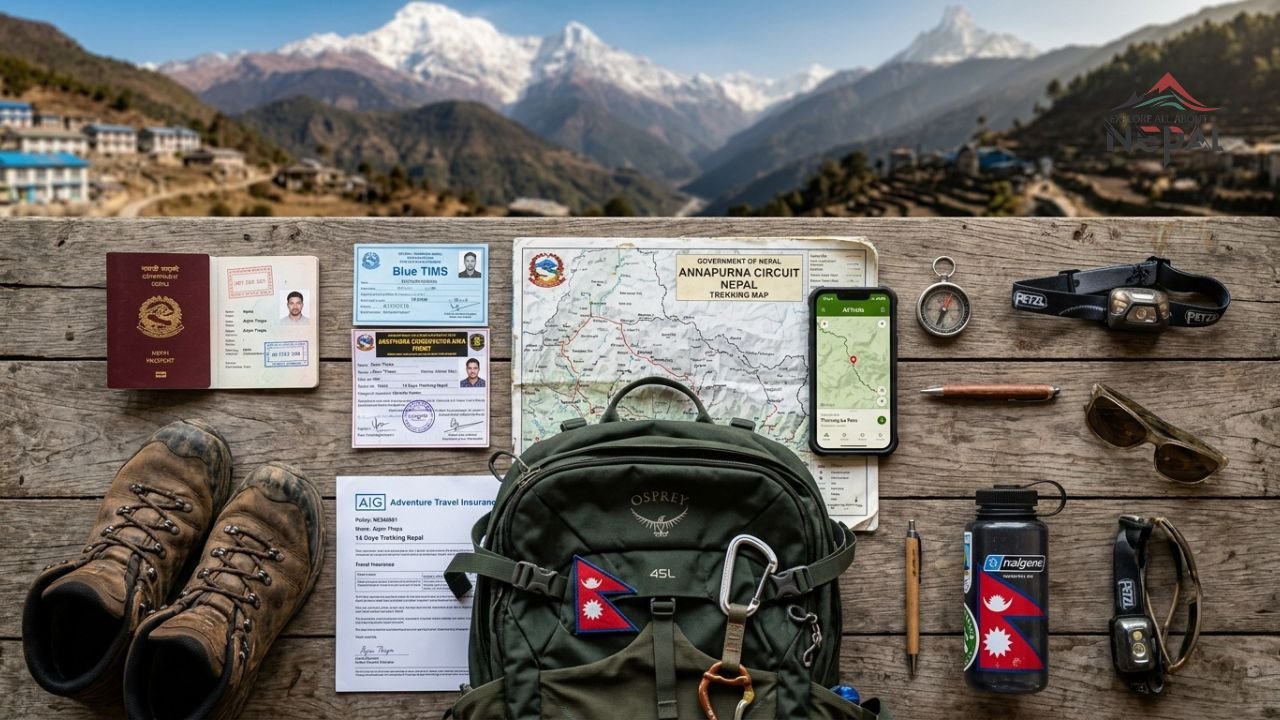
- Read the policy document, not the sales page, then buy. Buy before you travel most policies require this, and some include cancellation cover only if bought early.
Travel Insurance for Nepal
FAQ
Does travel insurance cover trekking in Nepal?
Only if it explicitly says so up to your trek’s altitude. Standard travel insurance usually excludes trekking above 3,000 metres, and every popular Nepal trek goes higher. You need a policy stating it covers high-altitude trekking to your route’s maximum elevation at least 5,500 m for Everest Base Camp plus helicopter evacuation.
How much does travel insurance for Nepal cost?
Roughly $80–$200 per person for a two-week trip with high-altitude trekking and helicopter-evacuation cover, more for older travelers, higher altitudes, or longer trips. It’s inexpensive against the alternative: a Himalayan helicopter rescue costs $3,000–$5,000+, billed before anyone discusses payment.
Do I need special insurance for Everest Base Camp?
Yes. EBC reaches about 5,360 m (higher at Kala Patthar), so you need a specialist policy rated to at least 5,500 m with helicopter evacuation and strong medical and repatriation limits. Standard travel insurance almost never covers this altitude check the policy document, not just the marketing.
Does Nepal travel insurance cover helicopter rescue?
Only if the policy specifically includes emergency helicopter evacuation don’t assume it does. This is the single most important feature for a Nepal trek, since a mountain airlift is the only fast way down and costs thousands of dollars. Confirm it’s listed, with a high payout limit, before buying.
What can void my Nepal trekking insurance?
Common reasons claims are denied: trekking above your policy’s altitude limit, trekking without a required licensed guide, not declaring pre-existing medical conditions, and incidents involving alcohol or ignoring safety advice. Read the wording carefully and match the policy to exactly how and where you’ll trek.
