For decades, Nepal was known almost exclusively as a destination for backpackers, budget trekkers, and spiritual wanderers chasing the Himalayas on a shoestring. That image is now firmly outdated. In 2026, luxury experiences in Nepal have evolved into one of Asia’s most compelling high-end travel stories a country where five-star comfort meets some of the planet’s most dramatic landscapes, ancient cultures, and rare wildlife.
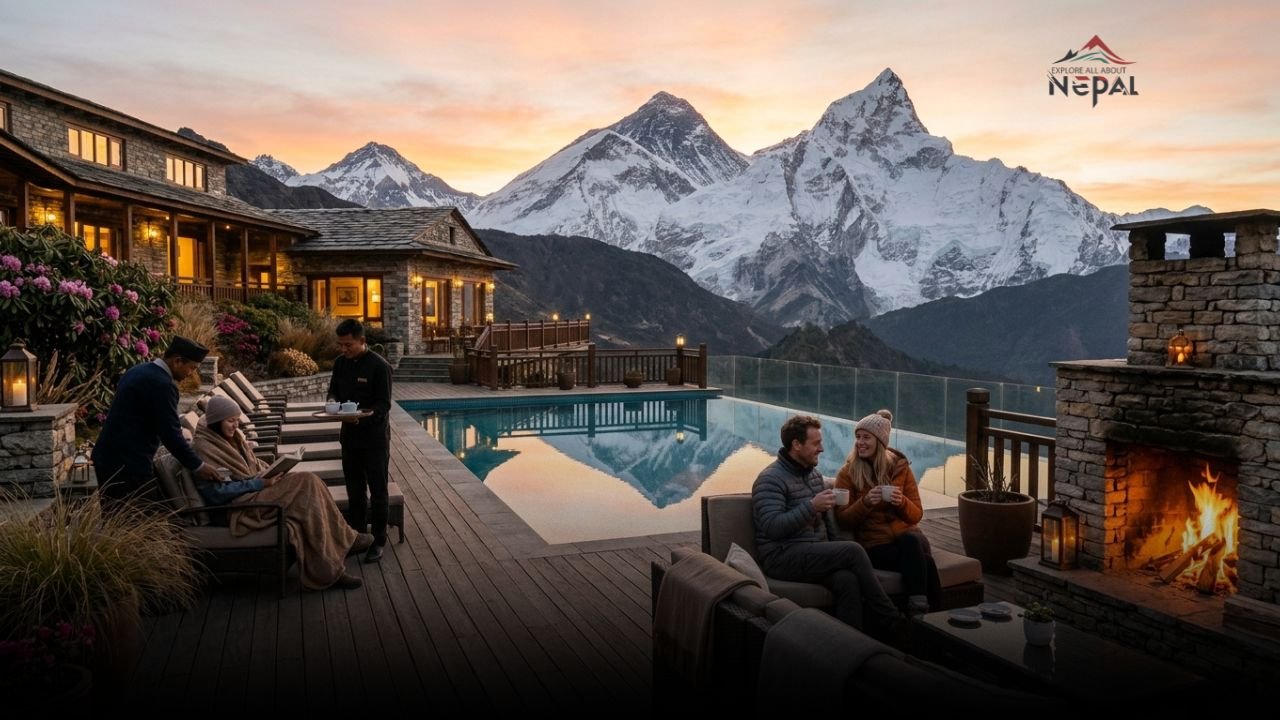
Whether you’re dreaming of sipping champagne while gazing at Mount Everest from a private suite, soaking in an Ayurvedic spa after a day of temple-hopping in Kathmandu, or watching a one-horned rhinoceros drink from a river beside your private plunge pool, Nepal in 2026 delivers an extraordinary range of luxury experiences in Nepal that rival anything found in the Maldives, Bhutan, or Bali but with a distinctly Himalayan soul.
This guide walks through everything you need to know about planning a luxury trip to Nepal in 2026: where to stay, what to do, how much it costs, and how to combine destinations into one unforgettable itinerary.
Why Nepal Has Become a Top Luxury Travel Destination in 2026
Nepal’s transformation into a luxury hotspot didn’t happen overnight. Years of infrastructure investment, a surge in international hotel brands entering the market, and growing demand from travelers seeking authentic, less-crowded alternatives to overexposed destinations have combined to make this one of the most exciting years yet for high-end travel in the country.
According to recent industry reports, Nepal now has over thirty officially recognized luxury hotels, a number that continues to climb as international hospitality groups expand beyond Kathmandu into Pokhara, Lumbini, Chitwan, and even high-altitude regions near Everest.
Today, luxury hotels in Nepal combine friendly Himalayan hospitality with modern international standards, and guests can enjoy fine dining, spa treatments, adventure activities, and helicopter rides, all in one place.
What makes luxury experiences in Nepal so distinctive compared to other premium destinations is the sheer diversity packed into one country. Within a single trip, travelers can move between heritage palace hotels in a UNESCO World Heritage city, jungle lodges tracking endangered wildlife, ridge-top wellness retreats with Himalayan views, and the highest-altitude luxury hotel on Earth all without ever feeling like they’re seeing the “same” Nepal twice.
Industry experts who specialize in curating high-end Himalayan itineraries describe the country’s layout as five distinct luxury zones, each with its own identity. The Kathmandu Valley is about heritage, with living-museum hotels built inside restored Rana palaces and Newari townhouses, while the middle hills around Pokhara and Nagarkot focus on wellness and mountain views with ridge-top resorts, farm-to-table dining, and Ayurvedic retreats.
Meanwhile, the Terai lowlands around Chitwan offer jungle safari luxury with private plunge pools facing the Rapti River, and the Mustang and Annapurna regions deliver cultural remoteness paired with striking high-altitude design.
This kind of geographic and experiential diversity is precisely what makes planning luxury experiences in Nepal in 2026 so rewarding but also why a thoughtful itinerary matters more here than in destinations built around a single resort or beach.
Luxury Heritage Hotels in Kathmandu: Where History Meets Five-Star Comfort
Any conversation about luxury experiences in Nepal has to start in Kathmandu, the cultural and historical heart of the country. The capital is home to some of the most architecturally significant hotels in Asia properties that aren’t just places to sleep, but living museums of Nepali art, craftsmanship, and royal history.
Dwarika’s Hotel
No list of luxury Kathmandu hotels would be complete without Dwarika’s, widely considered the gold standard for heritage luxury in Nepal. The property is built using centuries-old wood carvings rescued from demolished palaces and temples, creating an atmosphere that feels less like a hotel and more like stepping into a living piece of Nepali history.
Many luxury travel specialists describe arriving here as the moment travelers realize Nepal offers far more than mountains and trekking.
Hyatt Regency Kathmandu
For travelers who want international five-star consistency combined with resort-style grounds, the Hyatt Regency Kathmandu remains a perennial favorite. It is a luxurious 5-star hotel with a guest rating of 8.6, offering resort-style accommodation that’s perfect for families seeking relaxation and wellness, complete with a full-service spa offering treatments like hot stone massages and a serene pool area.
The hotel’s spacious gardens, multiple dining venues, and proximity to the Boudhanath Stupa make it an excellent base for exploring the valley.
Hyatt Centric Soalteemode Kathmandu
New for the 2025–2026 season, the Hyatt Centric brand has made its Nepal debut with a striking, newly renovated property in the heart of the city. This newly renovated hotel introduces 153 contemporary guestrooms designed with functionality and flair, featuring stylish local touches, and is the first Hyatt Centric hotel in Nepal, serving as a launchpad for cultural discovery just minutes from the city’s temples and markets.
The hotel’s open-concept lobby and signature lounge serving artisan coffee and locally inspired bites have quickly made it a popular spot for both guests and locals.
Aarya Hotel, Thamel
One of the most talked-about openings in recent memory, Aarya represents a new generation of contemporary luxury in Kathmandu’s Thamel district. Aarya opened in mid-2025 and quickly became one of the most talked-about new hotels in the city, with a vision from non-resident Nepali Krishna Simkhada who spent years in Japan and returned with a commitment to preserving Nepal’s artistic heritage in a contemporary form.
The result is a striking high-rise integrating traditional Newari design elements such as bay windows and lattice work. For travelers seeking modern design with deep cultural roots, Aarya has become a benchmark for what’s possible in Nepal’s evolving luxury scene.
Baber Mahal Vilas
Tucked away from Kathmandu’s busy streets, this heritage hotel occupies a converted Rana-era palace complex featuring courtyards, antique furnishings, and some of the city’s most acclaimed fine-dining restaurants. It’s a favorite for travelers wanting an intimate, boutique experience rather than a large international hotel.
The World’s Highest Luxury Hotel: Everest View Hotel
Perhaps no single property captures the essence of luxury experiences in Nepal quite like Hotel Everest View. Perched at an extraordinary altitude in the Everest region, it holds the distinction of being the highest-placed luxury hotel on the planet. Hotel Everest View is recognized in the Guinness World Records as the world’s highest-placed luxury hotel.
Reaching this hotel is itself part of the luxury experience. Most travelers arrive via helicopter tour from Kathmandu, landing for breakfast with sweeping views of Everest, Lhotse, Nuptse, and Ama Dablam directly from the dining terrace. The journey typically includes a stop at Hotel Everest View at 3,962 meters for breakfast with sweeping panoramic views of Everest and neighboring peaks, often described as one of the most memorable moments of the entire trip.
For travelers who want to experience genuine high-altitude luxury without committing to weeks of trekking, this combination of helicopter access and a five-star breakfast above the clouds has become one of the signature luxury experiences in Nepal for 2026.
Everest Helicopter Tours: The Ultimate Himalayan Luxury Experience for 2026
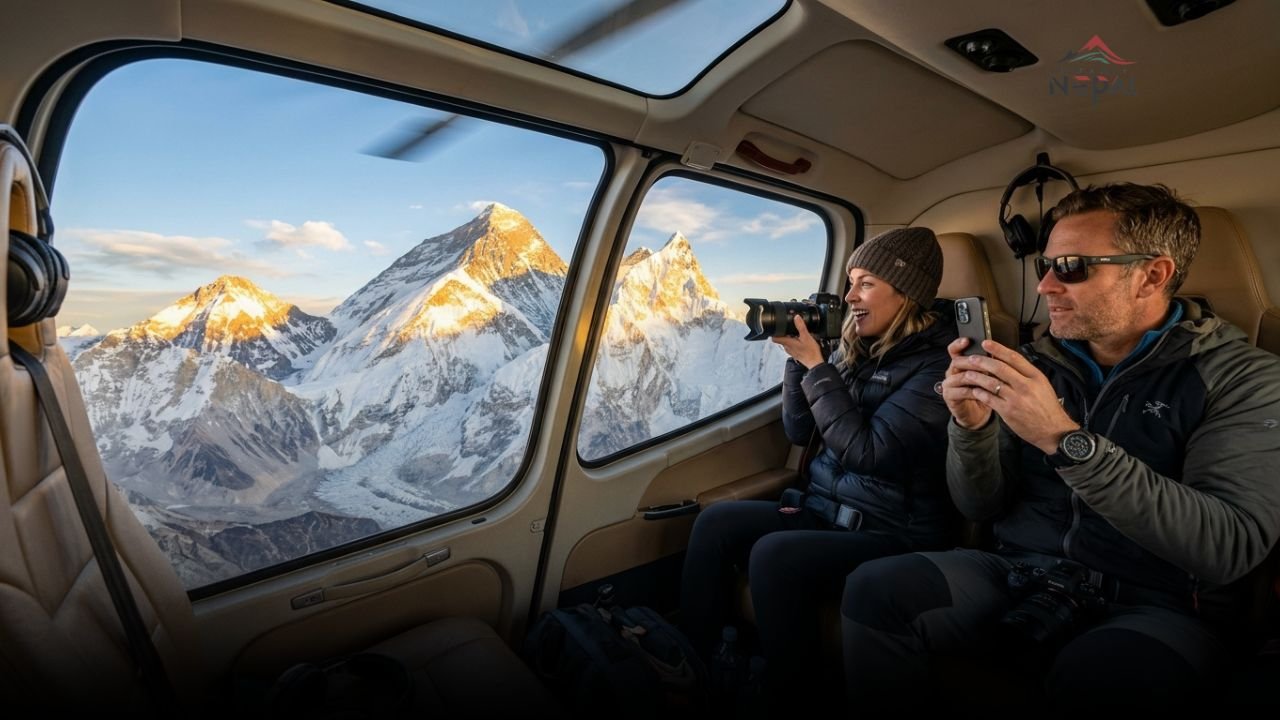
If there’s one experience that defines luxury Himalayan travel in 2026, it’s the Everest helicopter tour. These trips allow travelers to witness the world’s highest mountains up close, in comfort, and within a single day no multi-week trekking required.
Everest Helicopter Tours
What’s Included and How Much It Costs
Pricing for Everest helicopter tours in 2026 varies considerably depending on whether you book a shared flight or a private charter, and whether the tour includes a landing at Kala Patthar or Everest Base Camp itself.
For shared group tours, prices generally start in the range of $1,200 to $1,350 per person. Booking with a group of three to ten people typically costs around USD 1,350 per person, with the tour accomplishable throughout the year except during the monsoon months of June and July when cloud cover can obstruct mountain views.
Another operator confirms similar shared pricing, noting that costs remain within the standard USD 1,240–1,300 per person range on a shared basis in 2026, while private charters average USD 5,800–6,500 per helicopter depending on season and fuel surcharges.
For travelers seeking a more exclusive experience, fully private charters represent the top tier. Private helicopter tour prices for Everest range from USD 5,450 for a single passenger down to USD 1,250 per person when five people travel together, with the journey including a stop at Hotel Everest View the world’s highest luxury hotel for breakfast.
Some operators have introduced multi-tier luxury packages for 2026 that bundle the flight with premium accommodation and full-day experiences.
One operator’s standard package, priced at 6,499 USD per person, includes a shared helicopter with a smaller group, a premium Kathmandu hotel, all meals including breakfast at Everest View Hotel, and an experienced guide, while their luxury tier is priced at 7,499 USD per person. Overall, Everest helicopter tour costs in 2026 range from approximately 2,499 to 5,499 USD per person depending on the tier and inclusions chosen.
What the Flight Looks Like
A typical Everest helicopter tour from Kathmandu takes around five to six hours including ground time. A shared Everest helicopter flight carries up to five passengers based on weight limits, and the tour normally includes Kathmandu hotel pickup and drop-off, the helicopter flight itself, and stops at Lukla, Pheriche, and Syangboche, along with a scenic overfly of Everest Base Camp and Kala Patthar.
For travelers who want to combine the thrill of trekking with the comfort of flying, hybrid packages have also grown in popularity. The Everest Base Camp Trek with Helicopter Return for the 2026/2027 season is priced between US$2,055 and US$2,140 per person depending on group size, allowing trekkers to hike to Base Camp and then fly back to Kathmandu rather than retracing the multi-day walk.
Tips for Booking
When researching luxury Everest helicopter experiences, it’s worth comparing operators carefully, as quality and safety standards vary widely between companies. Reputable operators tend to emphasize unrushed ground time, experienced high-altitude pilots, and transparent pricing.
As one operator notes, helicopter tours in Nepal vary enormously in quality, and some operators overload flights, rush ground time, or skip the breakfast stop, so prioritizing experience and safety together matters when booking.
Given that final pricing can be influenced by fuel surcharges and Civil Aviation Authority of Nepal adjustments throughout the year, it’s wise to book several months in advance during peak season (October to December and March to May) and to confirm exactly what’s included particularly the Everest View Hotel breakfast, which is sometimes billed separately. Breakfast at Hotel Everest View typically costs an additional 4,500 Nepali rupees, or roughly 35 USD per person.
Jungle Safari Luxury in Chitwan National Park
While the Himalayas dominate most people’s image of Nepal, some of the country’s most exclusive luxury experiences in Nepal are found far from the mountains, in the subtropical lowlands of Chitwan National Park.
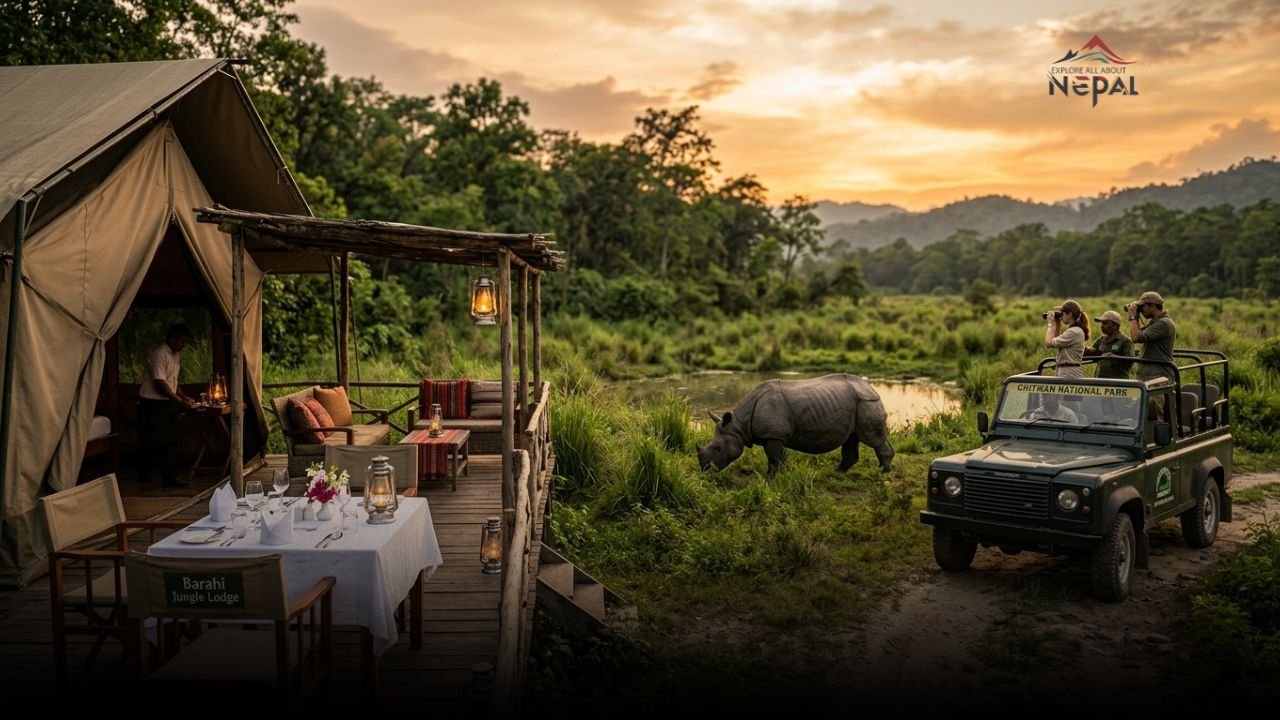
This UNESCO World Heritage site is one of the last strongholds of the Greater One-Horned Rhinoceros and home to elusive Royal Bengal tigers, making it a premier destination for high-end wildlife travel.
Jungle Safari Luxury in Chitwan National Park
Meghauli Serai, A Taj Safari
The undisputed leader in Chitwan luxury is Meghauli Serai, operated by the Taj group’s safari division. The property offers an intimate, exclusive scale that’s rare even among luxury lodges. The resort offers just 16 beautiful Rapti Villas, 13 Meghauli Rooms, and one exceptional Presidential Suite, combining sublime accommodation with jungle safari activities along the banks of the Rapti River.
Each villa is designed for total immersion in the natural surroundings. Guests can unwind in the serenity of the spa’s infinity pool or lounge in their villa’s private plunge pool while taking in stunning views of the jungle beyond. The wellness offerings extend beyond the pool. The on-site spa features three tranquil massage rooms offering a range of traditional and modern therapies, with the option of a personalized massage in the comfort of one’s own villa.
A 2026 luxury travel guide to the region puts it succinctly: Meghauli Serai sets the royal standard for Chitwan, with every villa a masterpiece of design featuring private plunge pools overlooking the Rapti River, and service that carries the quiet confidence of a seasoned expert. Another assessment from the same year notes that the property is built for travelers with the highest expectations.
This is where luxury specialists book guests who expect Four Seasons or Aman-level service and refuse to compromise on it, even in a jungle setting, with soaring light-filled ceilings, vast glass walls erasing the line between interior and exterior, and a spectacular infinity pool overlooking the river.
Barahi Jungle Lodge
For travelers drawn to a more design-forward, Tharu-inspired aesthetic, Barahi Jungle Lodge offers an excellent alternative. Barahi Jungle Lodge anchors itself at the confluence of the Rapti and Narayani rivers, with architecture that pays tribute to the local Tharu aesthetic using sustainable materials. The lodge has earned strong guest feedback, with one recent review on a major booking platform praising the property’s grounds and atmosphere. The lodge has earned a 5 out of 5 rating with guests describing their stay as exceptional and wishing they had more time.
Getting to Chitwan in Style
One of the appeals of incorporating Chitwan into a luxury Nepal itinerary is how seamlessly it connects to the rest of the country when arranged properly. Chitwan is about a five to six hour drive from Kathmandu, or a short twenty-five minute flight to Bharatpur Airport followed by a thirty-minute transfer, and luxury travelers can also arrange helicopter transfers between Chitwan, Pokhara, and Kathmandu for a fully seamless experience with zero road time.
This makes Chitwan a natural addition to itineraries that also include Pokhara and Kathmandu, allowing travelers to experience mountains, heritage cities, and jungle wildlife all within a single, well-paced trip.
Wellness Retreats and Mountain Resorts Around Pokhara and Nagarkot
Beyond the cities and the jungle, Nepal’s middle hills have become a hub for wellness-focused luxury experiences in Nepal. Ridge-top resorts around Pokhara and Nagarkot offer panoramic views of the Annapurna and Langtang ranges, paired with spa programs, yoga retreats, and farm-to-table dining concepts that have grown significantly in sophistication over the past few years.
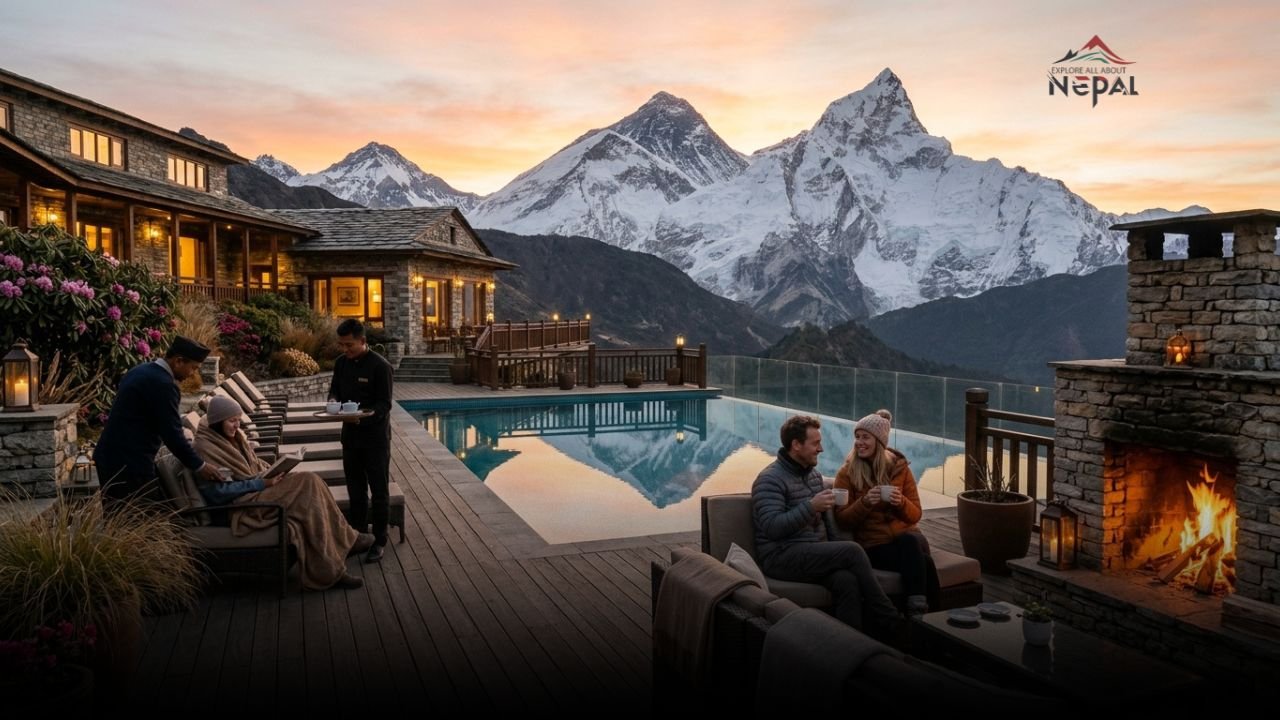
Five-Star Luxury Resort in Pokhara
These properties tend to attract a different kind of traveler than those headed to Everest or Chitwan often honeymooners, wellness travelers, or those looking to decompress after a trekking expedition. Many luxury specialists recommend pairing two to three nights in a Pokhara-area wellness resort with a stay in Chitwan, creating a balanced itinerary that mixes relaxation with adventure. A recommended honeymoon itinerary includes two to three nights in a romantic Pokhara property, followed by three nights at a Chitwan luxury lodge, before returning to Kathmandu for the flight home.
Spa treatments at these mountain resorts frequently draw on Ayurvedic traditions, often combined with ingredients sourced from the Himalayan region itself. One luxury Kathmandu property, for instance, uses Ayurvedic techniques and ingredients sourced from the high Himalayas at its on-site spa a theme echoed across many of Nepal’s premium wellness offerings.
Fine Dining Experiences: Tasting Menus and Heritage Cuisine
Luxury travel in Nepal isn’t only about where you sleep it’s increasingly about where (and what) you eat. Kathmandu’s top hotels have developed dining programs that go far beyond typical hotel restaurants, offering immersive culinary experiences rooted in Nepali tradition.
One of the most celebrated examples is a multi-course tasting menu experience found at a leading Kathmandu heritage hotel. The restaurant is famous for its multi-course traditional Nepali tasting menu, with recommendations to book it twice once before heading to the mountains, and again upon return. This kind of bookend dining experience has become something of a ritual for luxury travelers passing through Kathmandu on longer Himalayan itineraries.
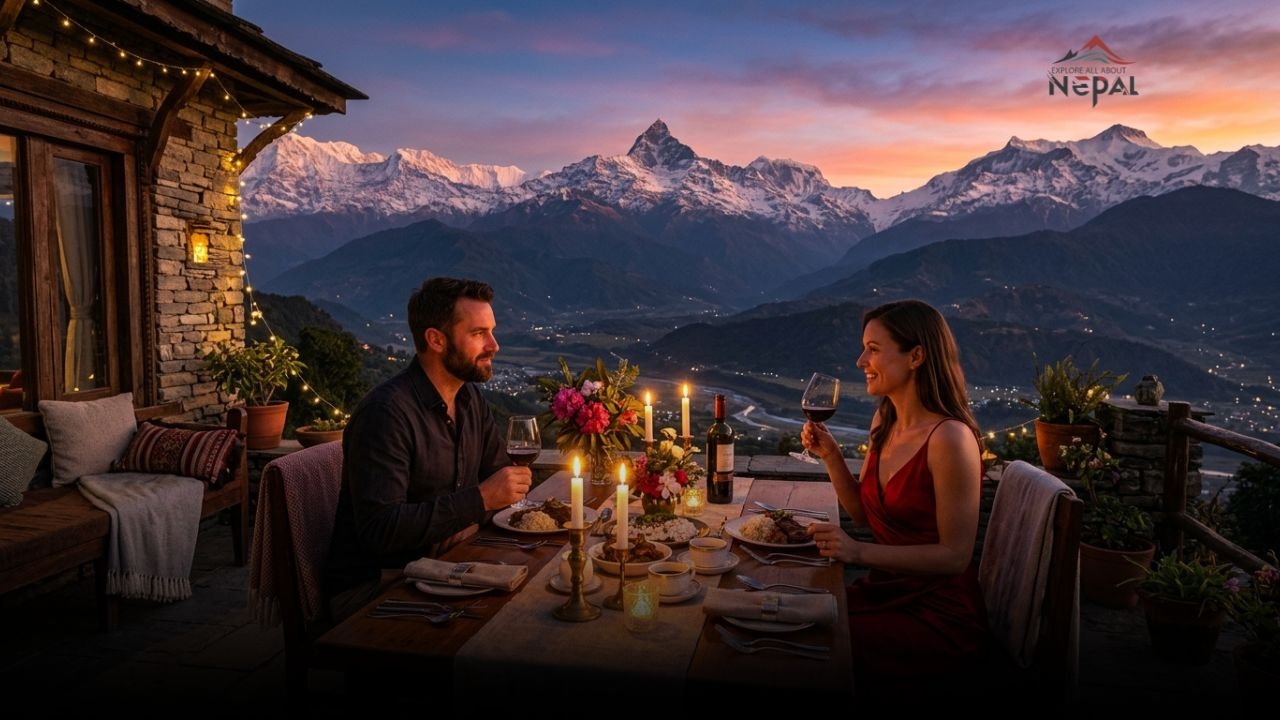
Private Fine Dining with Himalayan Views
Beyond single restaurants, many five-star properties now offer multiple distinct dining venues under one roof, allowing guests to sample everything from international cuisine to regional Nepali specialties without leaving the hotel. Properties increasingly combine an all-day restaurant blending global cuisine with authentic local flavors alongside specialty lounges serving signature cocktails, artisan coffee, and locally inspired bites.
For travelers staying at safari lodges, the dining experience often becomes part of the wilderness atmosphere itself. Some Chitwan properties offer private, unique dining experiences for in-house guests, available indoors, outdoors, poolside, or in-room.
Adventure Meets Luxury: Helicopter Transfers, Private Charters, and Beyond
A defining trend in luxury experiences in Nepal for 2026 is the increasing use of helicopters not just for sightseeing, but as a practical transportation tool that eliminates the long, often grueling road journeys between regions. This shift has fundamentally changed what’s possible on a luxury Nepal itinerary.
Where a journey from Kathmandu to Chitwan once meant a five-to-six-hour drive on winding mountain roads, travelers can now fly between key destinations in a fraction of the time. For luxury guests, helicopter transfers between Chitwan, Pokhara, and Kathmandu can be arranged for those who want a seamless experience with zero road time.
This same philosophy extends to the Everest region, where helicopter access has opened up high-altitude luxury to travelers who may not have the time, fitness, or inclination for multi-week trekking. The growing popularity of combination packages trek part of the way, fly the rest reflects this shift toward flexible, time-efficient luxury. The Luxury Everest Base Camp Trek with Helicopter Return is designed for trekkers who have a short period of time but still want to experience Everest Base Camp, combining trekking with a helicopter return to Kathmandu.
Sample 10-Day Luxury Nepal Itinerary for 2026
For travelers planning their first deep dive into luxury experiences in Nepal, here’s how many of the experiences above can be combined into a single, well-paced itinerary:
Days 1–3: Kathmandu Valley Arrive and settle into a heritage hotel such as Dwarika’s or a contemporary property like Aarya in Thamel. Spend these days exploring UNESCO World Heritage sites including Boudhanath Stupa, Pashupatinath Temple, and Bhaktapur Durbar Square, with evenings built around multi-course tasting menus at the city’s top restaurants.
Day 4: Everest Helicopter Tour A full-day private or shared helicopter tour to the Everest region, including the iconic breakfast stop at Hotel Everest View, the world’s highest luxury hotel.
Days 5–7: Chitwan National Park Fly or transfer by helicopter to Chitwan and check into Meghauli Serai or Barahi Jungle Lodge. Spend these days on jeep safaris, canoe trips along the Rapti River, and spa treatments overlooking the jungle from a private plunge pool.
Days 8–10: Pokhara and the Annapurna Foothills Conclude the trip with a wellness-focused stay at a ridge-top resort near Pokhara, taking in views of the Annapurna range, enjoying farm-to-table dining, and unwinding with Ayurvedic spa treatments before departure.
This kind of itinerary captures the full breadth of what makes luxury experiences in Nepal so distinctive: heritage, altitude, wildlife, and wellness, all within a single trip and without the need for grueling overland travel between destinations.
Best Time to Visit Nepal for Luxury Travel in 2026
Timing matters significantly when planning high-end travel in Nepal, particularly for experiences involving helicopter tours and mountain views. The clearest skies and best mountain visibility generally occur outside the monsoon season. The best time for majestic mountain views with clear blue sky is all months except June and July, which mark the monsoon season when cloudy weather in lowland areas can sometimes obstruct panoramic Himalayan views.
For travelers focused on jungle safaris in Chitwan, the cooler months from October through March tend to offer the most comfortable wildlife viewing conditions, while spring (March to May) brings blooming rhododendrons to the mountain regions, adding another visual dimension to helicopter tours and mountain resort stays.
Why 2026 Is the Year to Experience Luxury Nepal
Nepal in 2026 represents a rare convergence: a country with some of the most awe-inspiring natural landscapes on Earth, a rapidly maturing luxury hospitality sector, and a level of accessibility thanks to helicopter transfers and new five-star openings that simply didn’t exist a decade ago. From heritage palace hotels in Kathmandu and the world’s highest luxury hotel near Everest, to riverside villas with private plunge pools in Chitwan and wellness retreats overlooking the Annapurna range, the range of luxury experiences in Nepal available today is genuinely unmatched in the region.
For travelers seeking a destination that combines adventure, culture, wildlife, and five-star comfort in equal measure, Nepal has firmly established itself as one of Asia’s most exciting luxury frontiers and 2026 is shaping up to be one of the best years yet to experience it.
