
Table of Contents
ToggleIntroduction
Nepal is globally famous for iconic trekking regions like Everest, Annapurna, and Langtang. Millions of travelers dream about walking beneath towering Himalayan peaks, crossing suspension bridges, and reaching legendary mountain villages. Yet beyond the popular trekking routes lies another Nepal a quieter, raw, and deeply mysterious Himalayan world that few travelers ever experience.
These hidden regions are home to some of the most Untouched Mountain Valleys in Nepal, where ancient cultures still thrive, forests remain undisturbed, and landscapes appear almost frozen in time. In many of these valleys, there are no roads, limited communication networks, and very little tourism infrastructure. Some valleys require weeks of trekking just to reach their entrances.
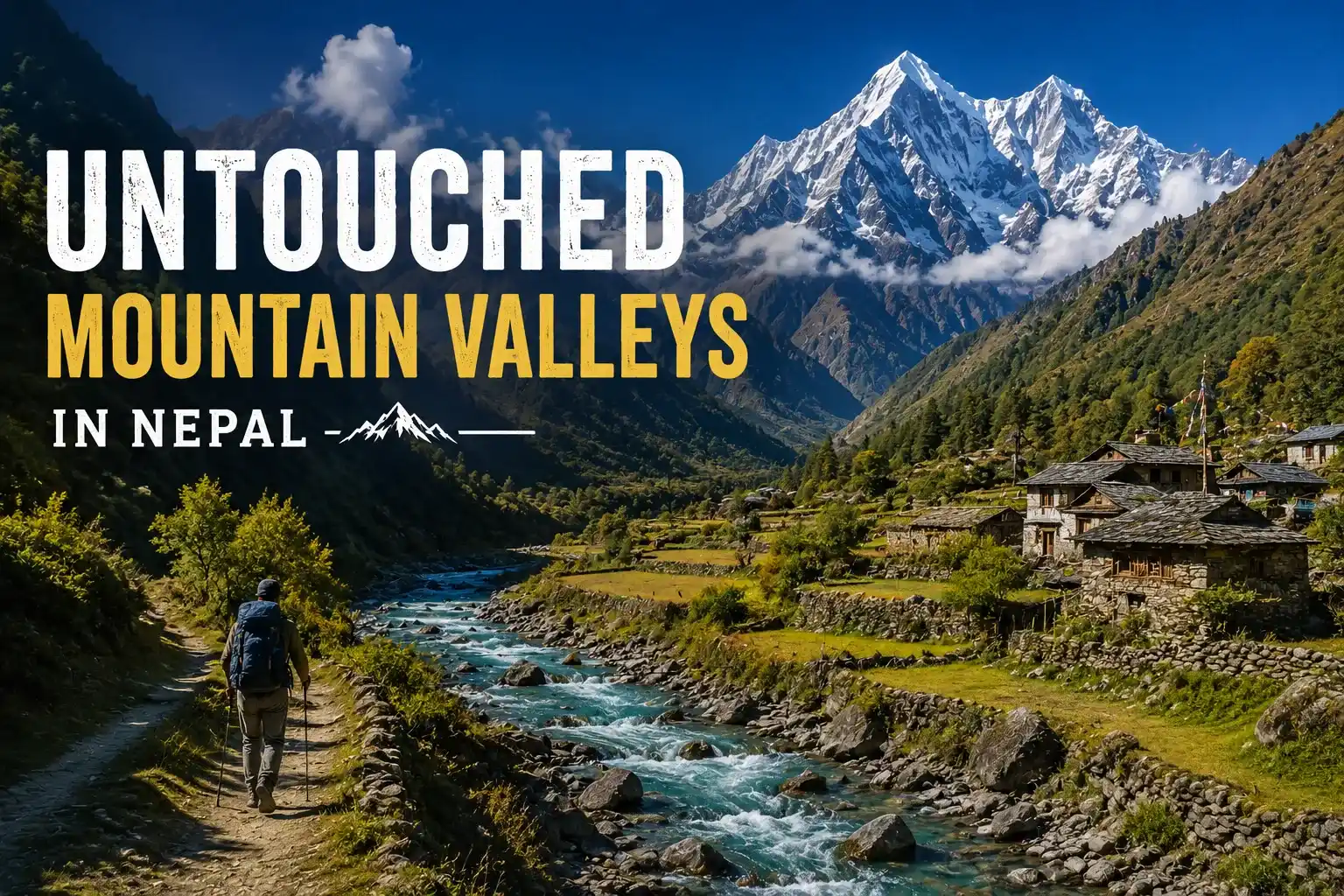
Untouched Mountain Valleys in Nepal
For adventure seekers, photographers, explorers, and travelers searching for authentic Himalayan experiences, these remote valleys represent the last truly unexplored corners of Nepal.
In this guide, we explore Nepal’s hidden mountain valleys, their ecosystems, isolated communities, travel challenges, photography potential, and why they remain among the least visited places in the Himalayas.
Why Nepal Still Has Untouched Mountain Valleys
Nepal’s geography is one of the main reasons why many regions remain isolated. The country rises dramatically from subtropical plains to some of the highest mountains on Earth within a relatively short distance.
This extreme elevation creates countless hidden landscapes separated by steep ridges, glaciers, rivers, and snow-covered mountain passes. Many valleys remain inaccessible because roads cannot easily be constructed through such difficult terrain.
Several factors contribute to the survival of Untouched Mountain Valleys in Nepal:
- Harsh Himalayan geography
- Restricted access areas
- Limited transportation infrastructure
- Seasonal weather barriers
- Preservation through isolation
- Low population density
- Conservation policies
Unlike many overdeveloped mountain destinations worldwide, Nepal still has vast areas where modernization has arrived very slowly. This allows many valleys to maintain their natural and cultural authenticity.
The Geography Behind Nepal’s Hidden Valleys
Nepal contains three major geographic zones:
- The Terai plains
- The mid-hills
- The Himalayan mountain region
The hidden valleys are mostly located within the high Himalayan belt, especially near border regions close to Tibet and remote western Nepal.
These valleys are often formed by:
- Ancient glacier movements
- Deep river erosion
- Tectonic uplift
- Isolated alpine basins
Many Himalayan valleys sit behind giant mountain barriers, making access extremely difficult. During winter, heavy snowfall can completely cut off entire communities for months.
Some valleys lie within rain-shadow regions where the climate resembles the Tibetan Plateau rather than monsoon Nepal. Others remain hidden beneath dense forests and rugged canyon systems. This complex geography is why many Untouched Mountain Valleys in Nepal still feel disconnected from the modern world.
Remote Valleys Most Travelers Never Reach
Nepal has numerous hidden valleys scattered across different regions. While some are slowly gaining recognition, many remain largely unknown internationally.
Tsum Valley
Located in the Manaslu region, Tsum Valley is one of Nepal’s most culturally preserved Himalayan valleys. Hidden behind high mountain ridges, this sacred Buddhist valley remained isolated from outsiders for centuries. Ancient monasteries, prayer walls, yak pastures, and Tibetan-influenced villages dominate the landscape. Tourism remains limited compared to Everest or Annapurna.
Nar Phu Valley
Nar Phu Valley is among the most dramatic and isolated trekking regions in the Himalayas. The valley features medieval-style villages, massive canyon walls, hidden monasteries, and desert-like mountain terrain. The journey into Nar Phu feels like entering another world entirely.
Olangchung Gola
Situated near the border with Tibet, Olangchung Gola is one of eastern Nepal’s least visited Himalayan settlements. The valley surrounding this remote village features ancient trade routes, glaciers, alpine forests, and towering peaks. Very few international trekkers reach this region each year.
Limi Valley
Hidden within Humla district, Limi Valley is among Nepal’s most remote inhabited valleys. The valley has deep Tibetan cultural roots and stunning barren Himalayan landscapes. Because of difficult access and expensive logistics, tourism remains extremely low.
Dolpo Valleys
The remote valleys of Dolpo gained global attention after the film Himalaya, but much of the region still remains isolated and rarely explored.
Upper Dolpo contains hidden lakes, ancient Bon monasteries, high-altitude deserts, and untouched wilderness rarely seen elsewhere in Nepal. These regions perfectly represent the remaining Untouched Mountain Valleys in Nepal.
Untouched Ecosystems and Himalayan Biodiversity
One of the most remarkable aspects of Nepal’s hidden valleys is their biodiversity. Because human development remains limited, many ecosystems remain remarkably intact.
These remote valleys support:
- Snow leopards
- Himalayan blue sheep
- Musk deer
- Himalayan wolves
- Red pandas
- Himalayan monals
- Rare medicinal plants
Several valleys also fall within protected conservation zones, helping preserve fragile alpine ecosystems.
Unique Alpine Environments
High-altitude valleys contain specialized ecosystems adapted to extreme cold and low oxygen levels. Alpine meadows bloom with wildflowers during summer, while glaciers feed pristine rivers and wetlands.
Dense forests at lower elevations support rhododendrons, pine forests, and countless bird species. The isolation of these habitats has allowed many species to survive with minimal human interference.
For environmental researchers and wildlife photographers, Untouched Mountain Valleys in Nepal offer extraordinary opportunities.
Why These Valleys Remain Unknown
Despite Nepal’s popularity as a trekking destination, many valleys remain absent from mainstream tourism. Several reasons explain this:
Difficult Accessibility
Many hidden valleys require:
- Multi-day treks
- Domestic flights
- Restricted permits
- High mountain pass crossings
- Camping expeditions
This naturally limits visitor numbers.
Limited Infrastructure
Unlike Everest Base Camp or Annapurna, these valleys often lack:
- Luxury lodges
- Reliable internet
- Easy transportation
- Medical facilities
- Tourist services
The lack of infrastructure discourages mass tourism.
Restricted Areas
Some valleys require special trekking permits because they lie near sensitive border regions. These restrictions help preserve cultural heritage and environmental stability.
Harsh Conditions
Weather conditions can become dangerous quickly in remote Himalayan regions. Landslides, snowstorms, and altitude sickness remain serious concerns. As a result, only experienced trekkers and expedition travelers usually attempt these journeys.
The Challenges of Traveling to Remote Himalayan Valleys
Exploring the Untouched Mountain Valleys in Nepal requires preparation, patience, and physical endurance.
Long Trekking Routes
Some valleys require trekking for over two weeks through rugged terrain. Travelers must be prepared for steep climbs, narrow trails, and unpredictable conditions.
Altitude Challenges
Many hidden valleys sit above 3,500 meters. Altitude sickness can affect travelers who ascend too quickly.
Proper acclimatization is essential.
Weather Uncertainty
Mountain weather changes rapidly. Heavy snowfall or monsoon rains can block routes unexpectedly.
Limited Emergency Access
In remote regions, rescue operations can be difficult and expensive. Travelers need proper insurance and experienced guides.
Communication Limitations
Phone signals and internet access are often unavailable for days at a time. Despite these difficulties, many travelers describe these journeys as life-changing experiences because of the solitude and authenticity they provide.
Life Inside Nepal’s Isolated Mountain Communities
One of the most fascinating aspects of Nepal’s hidden valleys is the resilience of the people who live there. Communities in these valleys often depend on:
- Yak herding
- Subsistence farming
- Seasonal trade
- Traditional crafts
- Tibetan Buddhist culture
Daily life remains deeply connected to nature and seasonal rhythms.
Ancient Cultural Traditions
Many remote communities preserve centuries-old traditions, dialects, and spiritual practices. Prayer flags flutter above stone villages, monasteries host ancient ceremonies, and local festivals remain largely untouched by commercialization.
Self-Sufficient Living
Because transportation is limited, mountain communities often produce much of their own food and supplies.
This self-sufficient lifestyle is increasingly rare in the modern world.
The cultural preservation found in these Untouched Mountain Valleys in Nepal makes them incredibly valuable both historically and anthropologically.
Photography and Storytelling Potential
For photographers, filmmakers, and travel storytellers, Nepal’s hidden valleys provide unmatched visual opportunities.
Dramatic Landscapes
These valleys feature:
- Snow-covered Himalayan peaks
- Glacial rivers
- Isolated stone villages
- Vast alpine plateaus
- Ancient monasteries
- Remote mountain passes
Every season transforms the landscape differently.
Authentic Human Stories
The people living in remote valleys offer powerful storytelling opportunities centered around resilience, tradition, spirituality, and adaptation to extreme environments.
Rarely Photographed Locations
Unlike overcrowded trekking routes, many valleys still feel visually undiscovered. Photographers can capture scenes rarely seen online or in travel media. This exclusivity is one reason interest in Untouched Mountain Valleys in Nepal continues growing among adventure creators.
The Growing Interest in Hidden Himalayan Destinations
Travel trends are changing globally. Many travelers now seek:
- Slow travel experiences
- Authentic cultural immersion
- Remote destinations
- Sustainable tourism
- Off-the-beaten-path adventures
As overtourism affects famous trekking routes, hidden valleys are attracting growing attention. Adventure tourism operators are increasingly offering expeditions into less-visited Himalayan regions. Documentary filmmakers and travel influencers are also introducing these valleys to wider audiences.
However, increased exposure brings both opportunities and risks. Without proper management, fragile ecosystems and traditional cultures could face pressure from rapid tourism growth.
Responsible Travel in Remote Himalayan Regions
Travelers exploring remote Himalayan valleys should prioritize sustainability and cultural respect.
Respect Local Communities
Visitors should:
- Dress respectfully
- Ask permission before photographing people
- Support local businesses
- Learn basic local customs
Minimize Environmental Impact
Remote ecosystems are extremely fragile.
Travelers should:
- Avoid plastic waste
- Carry reusable supplies
- Follow Leave No Trace principles
- Stay on designated trails
Hire Local Guides
Hiring local guides and porters directly benefits mountain communities economically while improving traveler safety.
Travel Slowly
Responsible exploration means appreciating the environment and culture rather than rushing through destinations for social media content.
Protecting the Untouched Mountain Valleys in Nepal is essential for future generations.
Related Travel Guides and Resources
If you are interested in remote Himalayan travel, you may also enjoy:
- Hidden trekking routes in Nepal
- Remote villages of Upper Mustang
- Best offbeat treks in Nepal
- Himalayan photography destinations
- Sacred Buddhist valleys of Nepal
- Restricted trekking regions guide
- Best seasons for remote trekking in Nepal
These guides help travelers better understand Nepal’s diverse mountain landscapes.
FAQs About Nepal’s Hidden Valleys
Are Nepal’s hidden valleys safe to visit?
Yes, most remote valleys are safe when traveled with proper preparation, experienced guides, and suitable acclimatization.
Do I need special permits?
Some valleys require restricted area permits and licensed guides. Regulations vary by region.
What is the best time to visit remote Himalayan valleys?
Spring (March to May) and autumn (September to November) are generally the best seasons.
Are these valleys suitable for beginner trekkers?
Some valleys are physically demanding and better suited for experienced trekkers due to altitude and remoteness.
Which is the most remote valley in Nepal?
Regions like Limi Valley and Upper Dolpo are considered among the most isolated inhabited valleys in Nepal.
Why are these valleys becoming popular?
Travelers increasingly seek authentic, less crowded destinations with strong cultural and environmental significance.
Nepal still contains extraordinary hidden Himalayan worlds waiting beyond the famous trekking trails. These remote regions preserve landscapes, cultures, and ecosystems that have remained largely unchanged for centuries.
For travelers seeking deeper adventure, solitude, and authenticity, the Untouched Mountain Valleys in Nepal offer experiences far beyond ordinary tourism. From the windswept plateaus of Dolpo to the sacred isolation of Tsum Valley, these hidden destinations reveal a side of Nepal few people ever witness.
As interest in remote travel continues growing, responsible tourism will become increasingly important. Preserving these valleys means protecting not only breathtaking landscapes but also ancient traditions, fragile ecosystems, and unique mountain communities that represent the living soul of the Himalayas.
