Every travel guide about Nepal says the same thing about June, July, and August: avoid.
They are not wrong. But they are not giving you the whole picture either.
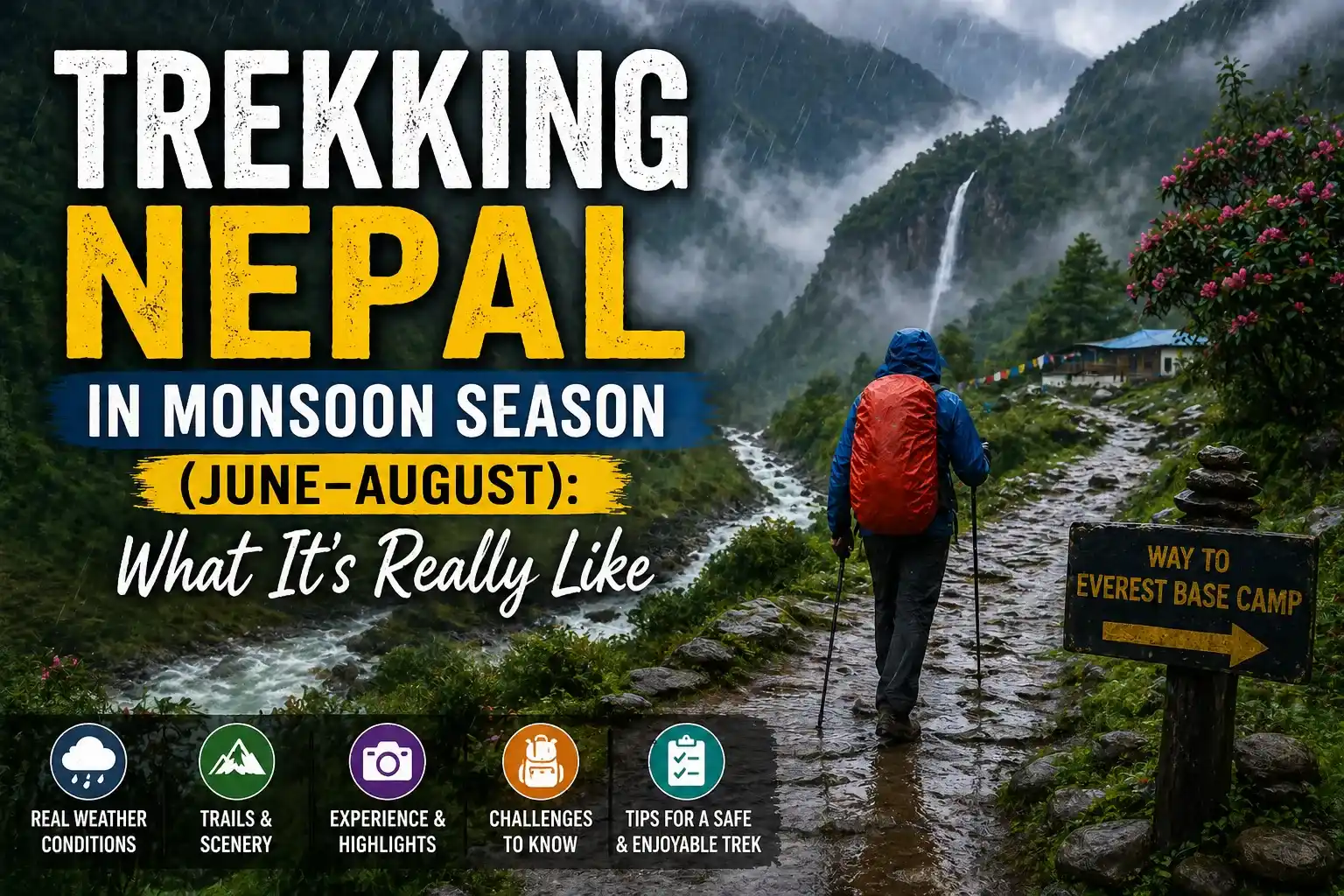
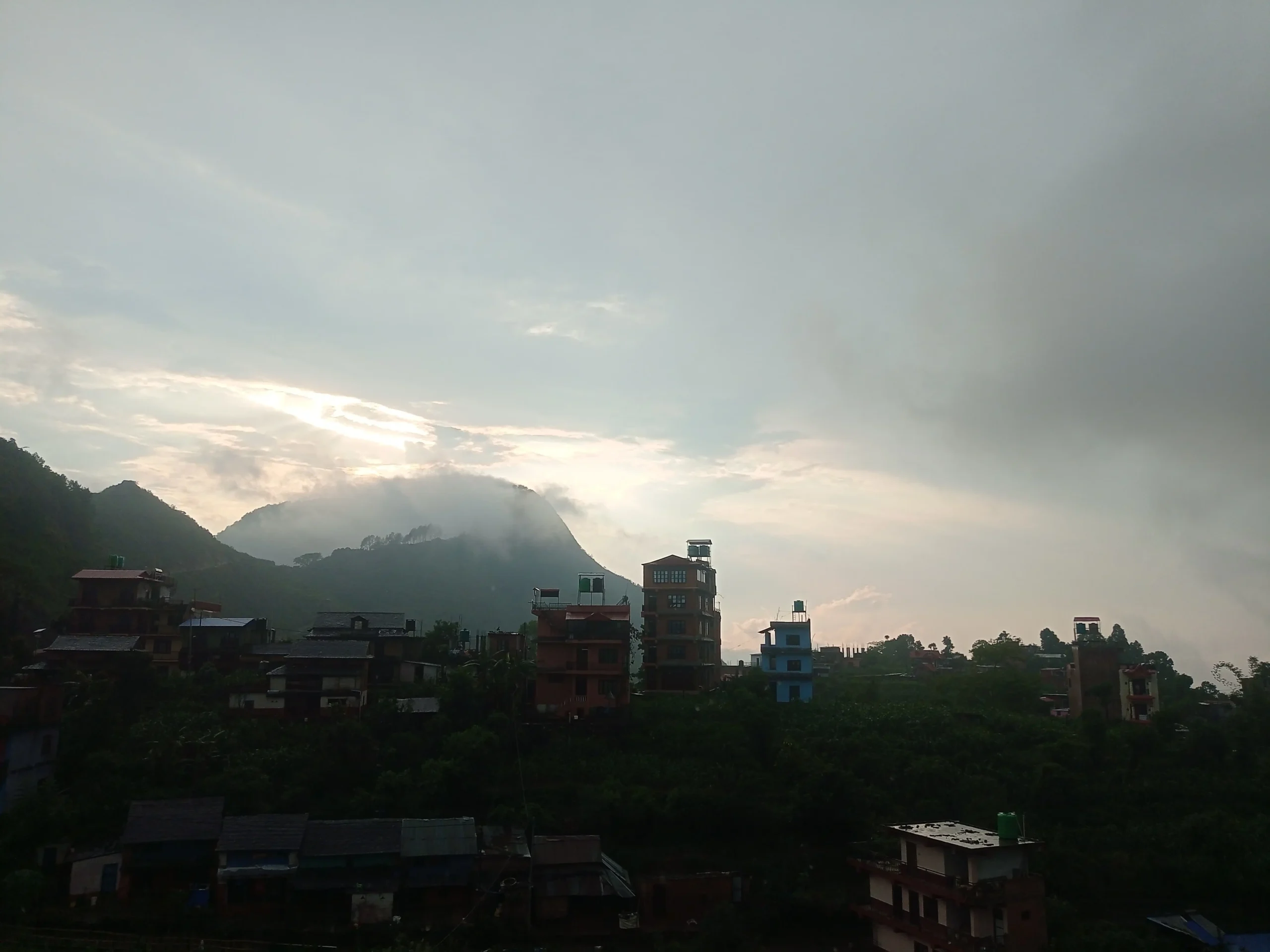
The monsoon season in Nepal runs from the second week of June through the first week of September. For most of the country the Everest region, the Annapurna trails, Langtang, the mid-hills this period genuinely does deliver the conditions those guides describe: heavy afternoon rain that comes not in showers but in sustained, road-dissolving deluges, trails that turn to mud and river simultaneously, leeches in the forest sections, landslides that close roads for days, and mountain views hidden behind cloud for weeks at a time.
Trekking Nepal in Monsoon Season
If you plan to trek EBC or the Annapurna Circuit in July, you will almost certainly have a miserable time. That is not an exaggeration. It is what happens.
But Nepal is not a single weather system. It is a country where the most dramatic mountain range on earth acts as a weather wall and on the other side of that wall, in the valleys that face Tibet rather than the Bay of Bengal, the monsoon barely arrives at all.
Those valleys are where this article lives.
The Rain Shadow: Nepal’s Monsoon Geography Explained
The monsoon that drenches Kathmandu, Pokhara, and the Everest foothills from June to September originates in the Bay of Bengal and moves northwest across the Indian subcontinent. When it reaches the Himalayas, it has one of two options: rise and dump its moisture on the southern slopes, or be blocked entirely.
The Annapurna range, the Dhaulagiri massif, and the Manaslu group form a wall that the monsoon cannot cross. The valleys immediately north of these ranges Upper Mustang, Upper Dolpo, Nar Phu, parts of the Manaslu upper corridor sit in what geographers call the rain shadow: the dry lee side of the mountains where the storm systems cannot penetrate.
While Pokhara, just 60 kilometres south, receives around 300mm of rain in July, Upper Mustang gets approximately 30mm in the same month desert conditions, clear skies, warm temperatures making it genuinely the best time for Upper Mustang trekking.
This is not a minor difference. It is the difference between trekking in Scotland in November and trekking in Arizona in summer. Same calendar, completely different world.
What Monsoon Trekking Is Actually Like: The Honest Version
On the mainstream trails (Everest, Annapurna, Langtang): Don’t.
Unless you’re heading to a rain-shadow area, June is not trekking season. The trails are slippery, leeches are out, and views are rare. By July and August the situation worsens: these are the wettest months, landslides can close roads for days, and Lukla flights to the Everest region are cancelled with sufficient regularity to destroy any fixed itinerary.
The trail conditions on a wet Nepal monsoon route are genuinely unpleasant in ways that photographs do not convey. Stone steps become waterfalls. Mud sections become knee-deep channels. Suspension bridges over swollen rivers look and feel more alarming than they do in October. The vegetation is lush and green that part is beautiful but you are not seeing it because you are watching your footing.
On the rain shadow trails (Upper Mustang, Dolpo, Nar Phu): A completely different experience.
While most of Nepal’s famous trekking routes become slippery and wet from June to August, Upper Mustang stays surprisingly dry. The desert-like landscape looks even more beautiful during this time, with bright red cliffs and green fields.
The Kali Gandaki valley, through which the Upper Mustang trail runs, is one of the deepest gorges on earth. The landscape is Tibetan plateau dusty, ochre, wind-scoured with the contrast of monsoon’s green occasionally visible in the lower villages’ barely-irrigated barley fields. Ancient monasteries. Cliff cave settlements carved centuries ago. White-washed Tibetan villages where horses still serve as primary transport and the nearest road is a day’s walk behind you.
In Dolpo Nepal’s largest and most remote district, where the landscape was immortalised in David Sneath’s anthropological work and Eric Valli’s film Himalaya the conditions are equally dry. Trekking to Dolpo during the monsoon season is the best way to experience the nature and culture of the high Himalayas. As it lies in the rain-shadow area, it receives very little rainfall, resulting in a landscape that resembles the Tibetan plateau.
This is not a consolation prize for people who can’t go in October. This is a genuinely superior experience for these specific destinations at this specific time of year.
Leeches: The Honest Guide to Nepal’s Most Complained-About Creature
No monsoon trekking article is complete without addressing leeches, because leeches are what people Google first when they consider a monsoon Nepal trip and discover they scare them. Let us be completely direct about this.
Leeches are present below 3,000 metres in forested areas during monsoon. Above 3,000 metres, leeches are extremely rare the terrain is too dry and too cold for them. This means that rain shadow treks like Upper Mustang, Dolpo, and Nar Phu are essentially leech-free, even during peak monsoon. If leeches are your number one concern, choose a high-altitude rain shadow trek and you won’t encounter a single one.
For trekkers on lower-altitude or forested routes during monsoon, here is the reality:
They are a nuisance, not a danger. Leeches are painless when they attach you genuinely will not feel them bite. They do not transmit disease. They are not aggressive and do not chase you. They are small, slow-moving, and preventable with basic precautions.
How to prevent them:
- Tuck trousers firmly into socks at every forested section
- Apply DEET insect repellent to boots, socks, and lower legs
- Wear gaiters they are the single most effective leech deterrent
- Check your boots and legs at every rest stop, every 30 minutes on forested trails
If one attaches: Do not yank it off this can leave mouthparts in the skin. Apply salt directly, or hold a lighter flame near (not on) the leech. It releases immediately. The bite leaves a small wound that bleeds for longer than expected (leeches inject an anticoagulant) but heals cleanly within days.
One experienced monsoon guide puts it plainly: “Nobody has ever asked to end a trek because of leeches.”
Landslides: The Risk That Actually Matters
Leeches are uncomfortable. Landslides are dangerous. This is the monsoon risk worth taking seriously rather than the leech risk that gets disproportionate attention.
There is a noticeable risk of landslide, flood, and trail and road blockages on trekking routes during monsoon. Trails can become muddy, and visibility may be limited due to fog and rain.
Landslides during Nepal’s monsoon season range from minor trail debris that requires a scramble around to complete road closures lasting days to catastrophic valley events that eliminate sections of trail entirely. The Prithvi Highway the main road between Kathmandu and Pokhara is particularly vulnerable, with multiple closure events each monsoon season.
The practical risk management:
- Stay informed daily. Trail conditions change overnight in monsoon Nepal. A route that was clear yesterday may have two metres of mud across it this morning. Your guide’s local contacts and current information are not optional they are your primary safety system.
- Never camp near rivers in monsoon. Rivers that are calm in the morning can become dangerous by evening. A river crossing that was knee-deep at 8am can be impassable at 4pm after an afternoon cloudburst upstream.
- Build serious buffer days into your itinerary. Always build two to three buffer days into your itinerary during monsoon, and consider road alternatives where available. A blocked trail or cancelled flight that is a minor inconvenience with three buffer days is a catastrophic itinerary failure without them.
- This is not the season for unmarked or off-trail routes. Stick to established trails with a guide who knows them in wet conditions. Rain changes the appearance of terrain in ways that make navigation genuinely harder.
The Upsides Nobody Talks About
Most articles about monsoon trekking in Nepal exist to warn you off it. Here is what they miss.
The landscapes are incomparable. The Himalayan foothills in monsoon are the greenest, most lush, most visually extraordinary version of themselves. Waterfalls that are dry trickles in October become 100-metre curtains of white. Terraced rice paddies glow an almost fluorescent green against the dark sky. The wildflowers are extraordinary orchids, primulas, and high-altitude blooms that are simply absent in the dry seasons.
The mountains appear between the storms. Yes, particularly in the early morning. Dawn views during monsoon can be exceptionally clear because overnight rain washes the atmosphere. In rain shadow areas like Upper Mustang, mountain views are consistent throughout the day. On lower-altitude trails, expect cloud cover from late morning onwards, with views opening up again at dusk and dawn.
The crowds are gone. On an Annapurna trail in October, you share teahouses with dozens of other trekkers, queue at the same viewpoints, and listen to other people’s conversations across dinner. In monsoon, you eat dinner alone in the teahouse. You stand at a viewpoint with nobody else there. The mountains come out of the clouds just for you. It’s a different experience quieter, more personal, more real.
It is significantly cheaper. Because the monsoon is the low season, many guides and porters have fewer bookings, creating more flexibility in pricing. Teahouses are less crowded and often easier to negotiate with. Accommodation on mainstream routes typically costs 30–50% less than peak season rates. Permit costs remain the same.
The cultural calendar is rich. June often sees the Tiji Festival in Lo Manthang (Upper Mustang’s ancient walled city) three days of elaborate masked dance ceremonies that have continued for centuries. August 2026 sees the Yartung Festival in Lo Manthang: traditional horse racing, community celebrations, and cultural performances. If you visit in mid-August 2026, you may witness the Yartung Festival a lively local celebration with traditional horse racing and dancing. These festivals are not staged for tourists. They are living, functioning cultural events that happen to coincide with the exact period that most travel articles tell you to stay home.
Which Treks Are Genuinely Viable in Monsoon 2026
Do These:
Upper Mustang The definitive monsoon trek. Dry, warm, culturally extraordinary, essentially crowd-free. Requires a Restricted Area Permit (RAP) arranged through a TAAN-registered agency, plus ACAP. Budget USD 500 for 10 days’ RAP plus USD 23 ACAP for the standard circuit, noting that a new daily RAP rate structure may apply in 2026 Verify with your agency before booking.
Upper Dolpo Remote, spectacular, Tibetan-plateau landscape, virtually empty of other trekkers even outside monsoon. Rain shadow conditions apply fully. Requires Upper Dolpo RAP (USD 500 for 10 days) plus Shey-Phoksundo National Park permit. Logistically demanding serious advance planning essential.
Tsum Valley Protected by surrounding Manaslu-region peaks, Tsum Valley receives significantly less monsoon rain than the main Manaslu corridor. Ancient Buddhist monasteries, culturally intact Tibetan villages, very few visitors year-round. RAP required (USD 35–40 per week) plus MCAP.
Nar Phu Valley Another rain shadow region with full Tibetan cultural character. The village of Nar sits in a high side valley that the monsoon barely touches. RAP required (USD 90–100 per week).
Consider With Caution:
Poon Hill — Short enough (4–5 days) to manage between rain spells. Leeches on lower sections below 2,500m. Views unreliable. Mountain views rare in July–August but dawn occasionally delivers. Go only if Upper Mustang is not possible.
Langtang Valley — Better in September as monsoon fades. Possible with full waterproof gear and serious flexibility. Avoid July–August.
Do Not Do These in June–August:
Everest Base Camp — Lukla flights are unreliable during monsoon, heavy rain throughout, poor visibility, dangerous trail conditions. Not recommended.
Annapurna Circuit — The Thorong La Pass can become dangerous with snow and rain. Road sections become rivers of mud. The risk-reward balance is simply wrong.
Manaslu Circuit — Trail damage from landslides, dangerous river crossings, compromised safety margins. Wait for October.
Practical Monsoon Survival Guide
Gear that is non-negotiable:
- Waterproof jacket with fully sealed seams — not water-resistant, actually waterproof
- Waterproof trouser overlegs
- Gaiters — for both leeches and mud
- Waterproof pack cover plus dry bags inside for electronics and sleeping bag
- Quick-dry synthetics only cotton is dangerous when wet at altitude
- Trekking poles mandatory on slippery stone steps, not optional
- Extra boot insoles wet boots that never fully dry cause blisters after day three
Timing your daily walking: Try starting early in the morning it is much better for hiking because the afternoon normally brings rain. Aim to be at your next teahouse by 1–2pm on lower routes. In rain shadow areas the afternoon schedule is less critical, but the morning light is always better.
Flights in monsoon: Mountain airstrips are genuinely unreliable in June–August. Jomsom (for Upper Mustang) and Dolpo’s Juphal airport both experience regular monsoon delays. Build two to three buffer days around any flight in your itinerary. Never book a connecting international flight within 48 hours of a scheduled mountain airstrip departure.
What to tell your guide: Be honest about your comfort with wet conditions, your leech tolerance (genuinely — some people manage fine, others find it psychologically overwhelming), and your flexibility on itinerary changes. A guide who knows your real limits can make better decisions for you than one working on assumptions.
Who Monsoon Trekking in Nepal Is For
Monsoon trekking is ideal for: budget travelers who cannot or will not pay peak-season prices; trekkers who have done the popular routes in spring or autumn and want something completely different; cultural travelers specifically interested in Tibetan Buddhist communities and festivals; photographers who understand that dramatic light and lush landscapes often require rain.
For beginners, the monsoon trek is not recommended. Popular routes like Everest Base Camp, Annapurna Base Camp, or Langtang Valley become wet and slippery, and trails are muddy and more difficult.
For experienced trekkers who choose the right routes Upper Mustang above all the monsoon season is not a compromise. It is a genuinely different Nepal, quieter and stranger and in some ways more itself, that the October crowds will never see.
The rain falls on the south side of the mountains. The north side is waiting.
Planning a monsoon trek to Upper Mustang or Dolpo in 2026? The Explore All About Nepal team is based in Kathmandu and can connect you with reputable licensed guides and assist with restricted area permit arrangements. Leave a question in the comments.
