
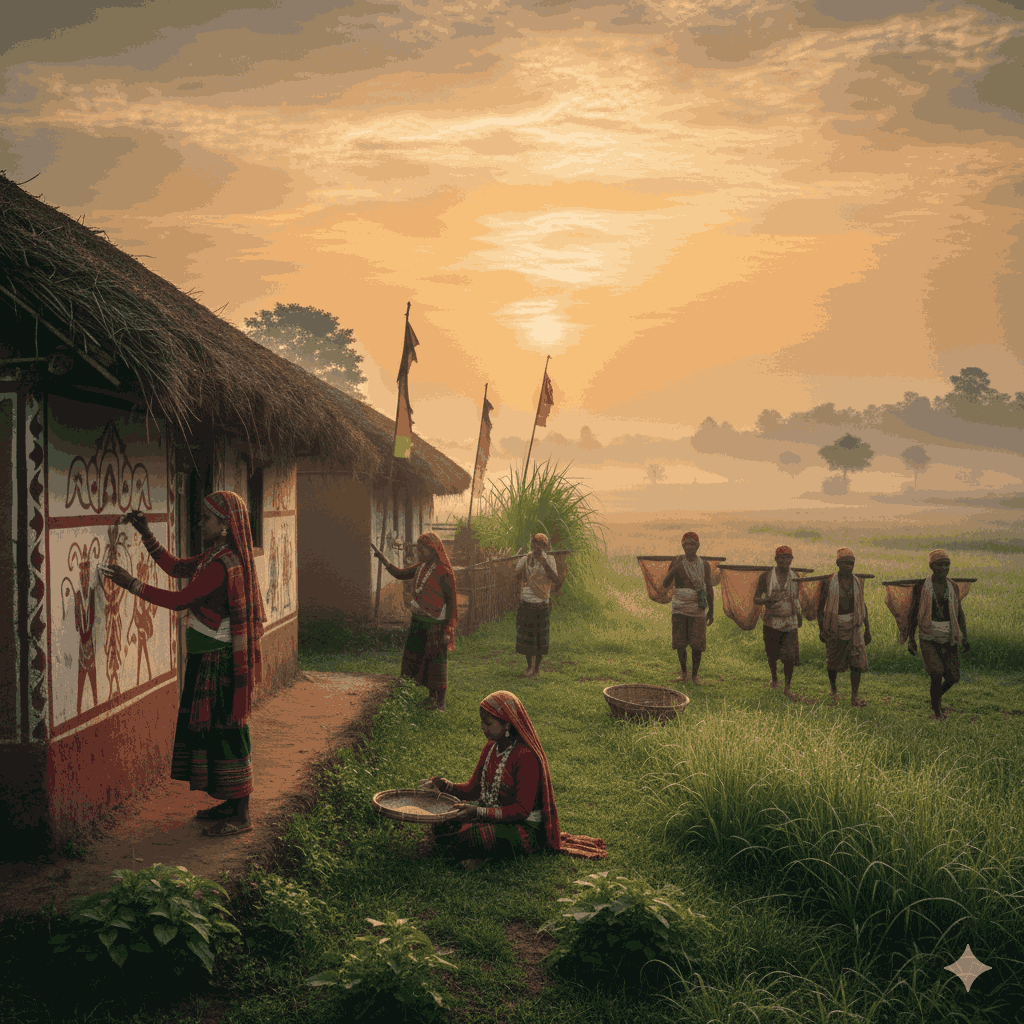
A traditional Tharu house made of mud, rice husk, and organic materials, with intricate Mokha art painted on the exterior walls, demonstrating sustainable architecture.
In 2026, the global traveler seeks more than just a selfie against a mountain backdrop; they crave a deep, soul-level connection with the places they visit. This shift has made Tharu Village Life Nepal one of the most sought-after treasures in the Terai plains. As Nepal moves toward a sophisticated “rurban” model, blending rural soul with urban efficiency, the opportunities to engage with ancient traditions in a modern context have never been better.
This definitive guide explores how to navigate Tharu Village Life Nepal in 2026. From the sunrise rhythms of the Narayani River to the sacred Maghi festival, we uncover the layers of a community that values its heritage as much as its future.
To visit the Terai in 2026 is to step into a world where time is measured by the harvest and the height of the Rapti River. While the rhinos of Chitwan are the physical draw, the Tharu Village Life Nepal offers the emotional heartbeat of the lowlands. The community is no longer just a backdrop for safaris; it is an invitation to participate. Whether you are learning to extract fiber from wild grass or sharing a meal of Ghonghi in a rural homestay, you are helping preserve a culture that is both fragile and incredibly resilient. This guide will help you find the heartbeat of the “People of the Forest.”
1. The Origins and History of the People of the Forest
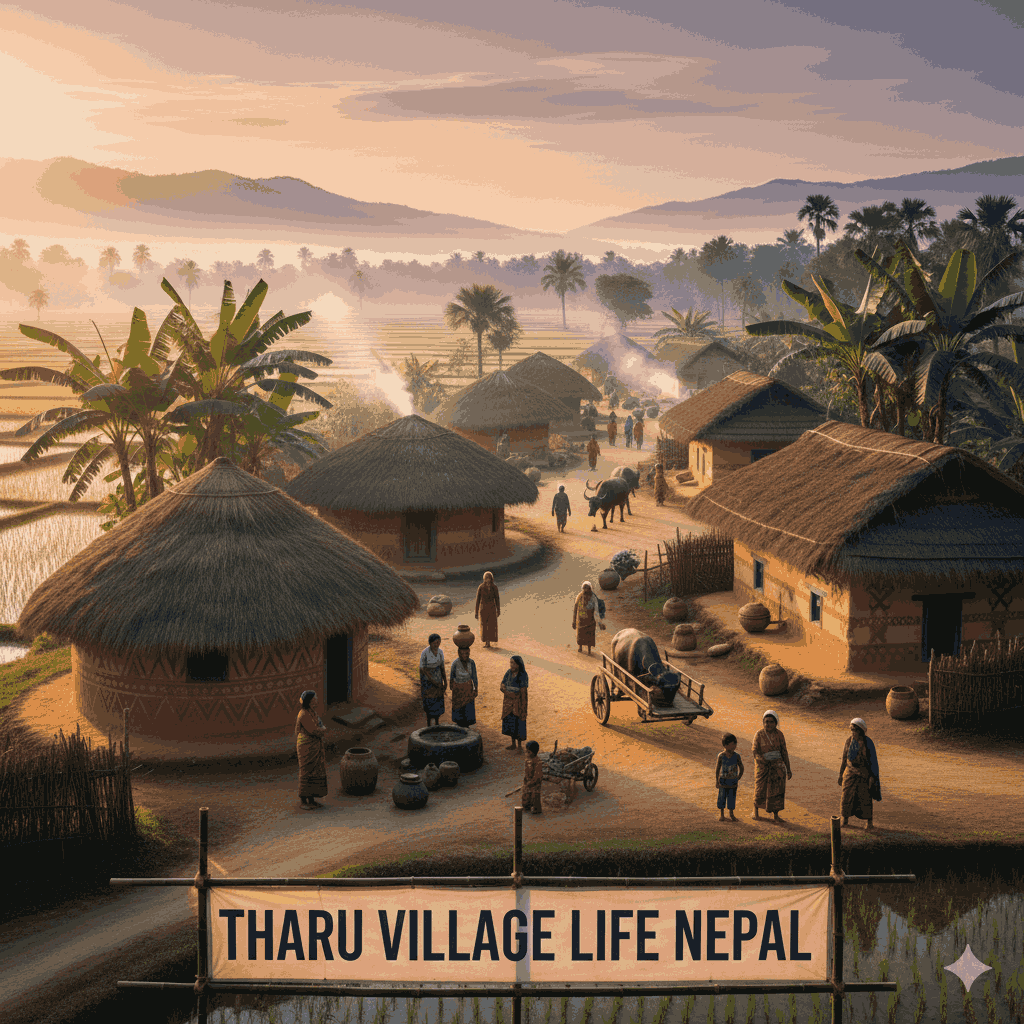
capturing the spirit of Tharu Village Life Nepal.
To understand Tharu Village Life Nepal one must lookat their remarkable origins. While historians debate their exact lineage many Tharu people consider themselves descendants of the Shakya dynasty. Others point to a migration from the Thar Desert. What remains undisputed is their legendary resilience. For generations they were the only people who could thrive in the malarial jungles of the Terai.
Genetic Resilience: Scientific studies have shown that Tharu people possess a genetic resistance to malaria, a biological adaptation that allowed them to dominate the fertile but once-deadly Terai plains for over 600 years.
Historical Isolation: Until the 1950s, the dense forests of the Terai acted as a natural barrier, allowing Tharu Village Life Nepal to evolve independently from the Hindu and Buddhist influences of the hills and the Indian plains.
Diverse Sub-Groups: The community is not a monolith. It includes diverse groups such as the Rana Tharu, Dangaura Tharu, and Kochila Tharu, each contributing to the mosaic of Tharu Village Life Nepal.
2. The Badghar System: Indigenous Governance
A unique pillar of Tharu Village Life Nepal is their traditional administrative system. The Badghar (or Bhalmansa) is the elected village chief responsible for maintaining social harmony.
Annual Elections: Every year during the Maghi festival, the community gathers to elect or re-elect their Badghar. This democratic process is central to the stability of Tharu Village Life Nepal.
Judicial Role: The Badghar settles minor disputes, manages communal labor for irrigation, and decides the dates for village rituals.
Social Safety Net: The system ensures that no family in the village goes hungry, as the Badghar coordinates grain sharing during lean seasons, a beautiful aspect of Tharu Village Life Nepal.
3. Sustainable Architecture and the Tharu Home
The physical manifestation of Tharu Village Life Nepal is most evident in their architecture. A traditional Tharu house is a masterpiece of sustainable design.
Natural Materials: Homes are built using clay mud cow dung and rice husk. This mixture creates thick walls that act as natural air conditioning, keeping the interior 5-10 degrees cooler than the outside air during the sweltering Terai summers.
Mokha Art: The exterior walls serve as a canvas for indigenous village industries nepal enthusiasts. Women paint intricate patterns of peacocks and flowers using natural pigments.
Joint Family Structures: Historically Tharu families lived in exceptionally long houses to accommodate several generations under one roof. Some traditional homes can reach over 100 feet in length, a testament to the communal nature of Tharu Village Life Nepal.
4. Culinary Traditions and the Flavors of the Terai
Food is the soul of Tharu Village Life Nepal. The cuisine is a direct reflection of the wetlands and forests they call home.
Ghonghi: These freshwater snails are a staple protein. They are collected from paddy fields and cooked with flaxseed and local spices. Eating them is a social ritual in Tharu Village Life Nepal.
Dhikri: Steamed rice flour dumplings often shaped into symbolic forms like birds or deities. They are the center of the Maghi festival table and a highlight of Tharu Village Life Nepal.
Anadi Rice: A unique variety of sticky rice grown in the Terai. It is used to make fermented drinks like Jaar and festive snacks like Chichar, which are essential to the hospitality found in Tharu Village Life Nepal.
Sidra: Dried fish mixed with fermented greens, capturing the pungent and earthy flavors that define the palate of Tharu Village Life Nepal.
5. Rituals, Festivals, and Spiritual Life
The spiritual calendar is what gives Tharu Village Life Nepal its rhythm. The community follows a lunar cycle deeply tied to agriculture.
Maghi Festival: Celebrated in mid-January, this is the Tharu New Year. It is a time for communal cleaning, elder blessings, and the iconic Stick Dance (Lathi Nach), a vibrant display of Tharu Village Life Nepal.
Jitiya Parva: A major festival for women involving strict fasting and prayers for the longevity of their children. It is a powerful display of sisterhood and maternal devotion within Tharu Village Life Nepal.
Holi and Mud Dances: In the Terai, Holi is celebrated with unique mud dances that symbolize the connection between humanity and the fertile earth, a joyful peak of Tharu Village Life Nepal.
6. Indigenous Knowledge and Forest Conservation
A core part of Tharu Village Life Nepal is the role of the community as guardians of the wild. In 2026, the Tharu people are leaders in community forest management.
Traditional Medicine: Their knowledge of medicinal plants is vast. From treating fevers with forest bark to using specific grasses for healing, this herbal wisdom is passed down through generations in Tharu Village Life Nepal.
Sustainable Hunting and Fishing: The use of traditional bamboo traps and nets ensures that the rivers are never overfished, a key practice in Tharu Village Life Nepal for maintaining ecological balance.
Animal Spirits: Many Tharu groups believe in forest deities and animal spirits, ensuring that their relationship with wildlife is based on reverence rather than exploitation, a cornerstone of Tharu Village Life Nepal.
7. Traditional Attire and Jewelry

Tharu Village Life Nepal’s rich heritage.
The visual identity of Tharu Village Life Nepal is stunningly captured in their clothing and silver ornaments.
Aghana and Lungi: Tharu women wear colorful wraps and hand-embroidered bodices that tell the story of their specific sub-group within Tharu Village Life Nepal.
Silver Adornments: From heavy silver necklaces (Hansuli) to intricate toe rings, the jewelry worn by women is not just decorative but signifies their economic status and heritage in Tharu Village Life Nepal.
Tattoos (Godna): Many elderly women carry permanent “jewelry” in the form of tattoos on their arms and legs, a tradition believed to protect the soul after death in the folklore of Tharu Village Life Nepal.
Frequently Asked Questions (FAQs)
1. What is the focus of Tharu Village Life Nepal in 2026?
The focus is on sustainable heritage tourism and the preservation of indigenous knowledge through community homestays and the revitalization of Tharu Village Life Nepal.
2. How can I visit a Tharu village responsibly?
The best way is to book through a community-based network that ensures your money goes directly to the local families, supporting the infrastructure of Tharu Village Life Nepal.
3. What is the significance of the Tharu Stick Dance?
Originally a way to ward off wild animals from the village, it has evolved into a celebratory performance of rhythm and coordination, a key cultural export of Tharu Village Life Nepal.
4. Are Tharu houses really made of mud?
Yes, they use a sophisticated mix of clay and organic binders to create durable, eco-friendly structures that define the aesthetic of Tharu Village Life Nepal.
5. Is the Tharu language different from Nepali?
Yes, the Tharu speak several dialects that are distinct from Nepali, with influences from Maithili, Bhojpuri, and Awadhi, adding to the linguistic richness of Tharu Village Life Nepal.
6. Can I participate in the rice harvesting rituals?
Many rice harvesting rituals Nepal allow for guest participation during the autumn months, offering a hands-on look at the agricultural side of Tharu Village Life Nepal.
7. What makes Tharu cuisine unique?
Its reliance on freshwater resources like snails and crabs, along with the use of indigenous sticky rice varieties, makes the food of Tharu Village Life Nepal unlike anything else in the country.
The story of Tharu Village Life Nepal is one of incredible endurance and beauty. As we move further into 2026, the lessons provided by this indigenous community become even more relevant. They teach us that high-quality living is not about the accumulation of plastic but about the quality of our connection to the land and our neighbors.
Whether you are watching a sunset over a thatched roof or sharing a plate of Dhikri by a clay hearth, you are participating in a living history. The Tharu people have successfully navigated the transition into the modern era while keeping their spiritual and cultural heart intact. Supporting their villages is a way of ensuring that the true soul of Tharu Village Life Nepal continues to thrive for generations to come.
