
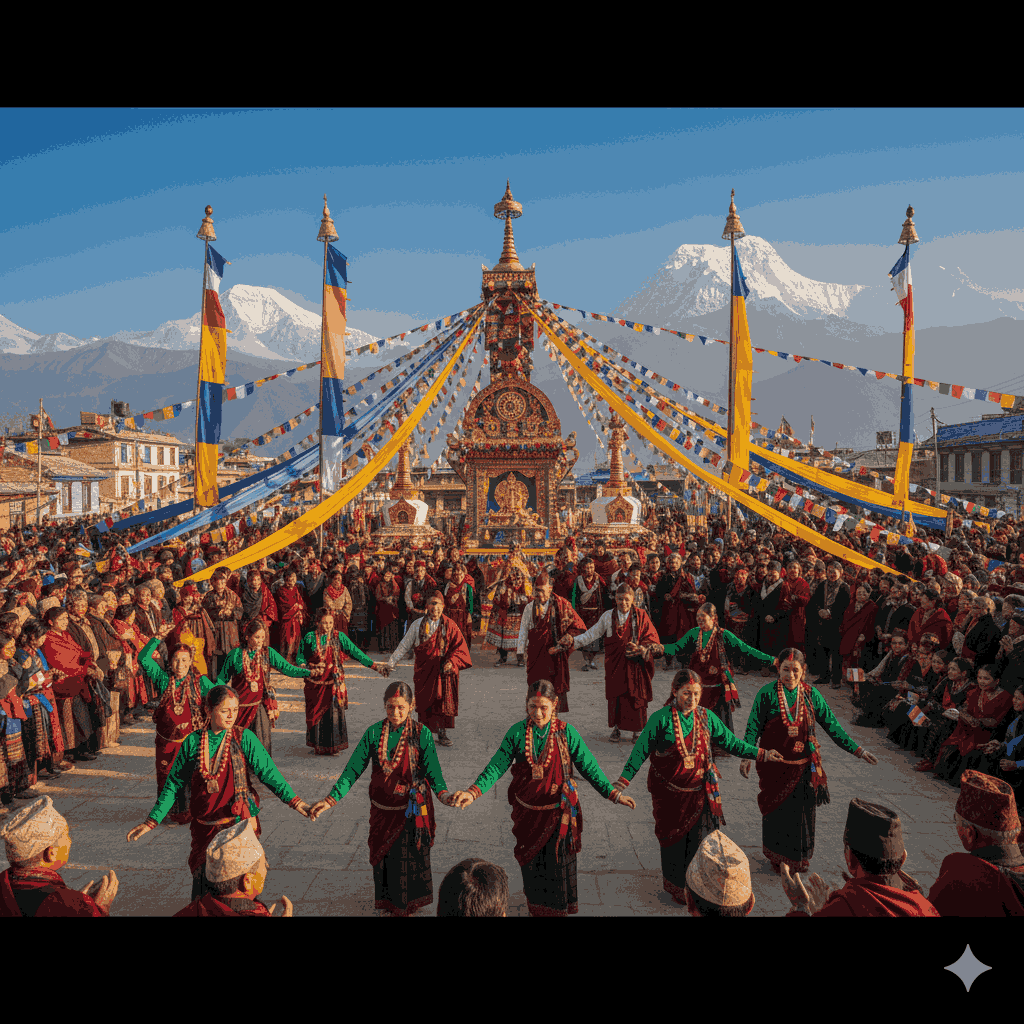
Sonam Losar Festival , Celebration of Tamang and Sherpa communities with traditional dance and colorful attire in Nepal’s mountains.
In 2026, the Sonam Losar Festival will ignite the Himalayas with a renewed sense of “Fire Horse” energy, offering a breathtaking glimpse into Nepal’s most profound cultural roots. While much of the world follows the Gregorian calendar, the high-altitude communities of Nepal look to the lunar cycles to mark their “Lo” (year) and “Sar” (new), creating a festive window that spans from January into February.
This guide explores the rituals and merit of the Sonam Losar Festival, serving as a beacon of communal joy and spiritual purification.
Sonam Losar and Sherpa and Tamang New Year Traditions
The Sonam Losar represents the spiritual heartbeat of Nepal’s Tamang community. In 2026, this vibrant new year falls on January 19, while the Sherpa community will observe Gyalpo Losar on February 18. This festive window is the most profound time to witness the intersection of Buddhism and indigenous culture. The Sonam Losar Festival is not just a date on a calendar; it is a total immersion into a world where every mask, every dance, and every bowl of soup carries cosmic weight.
1. The Deep Significance of the Sonam Losar Festival
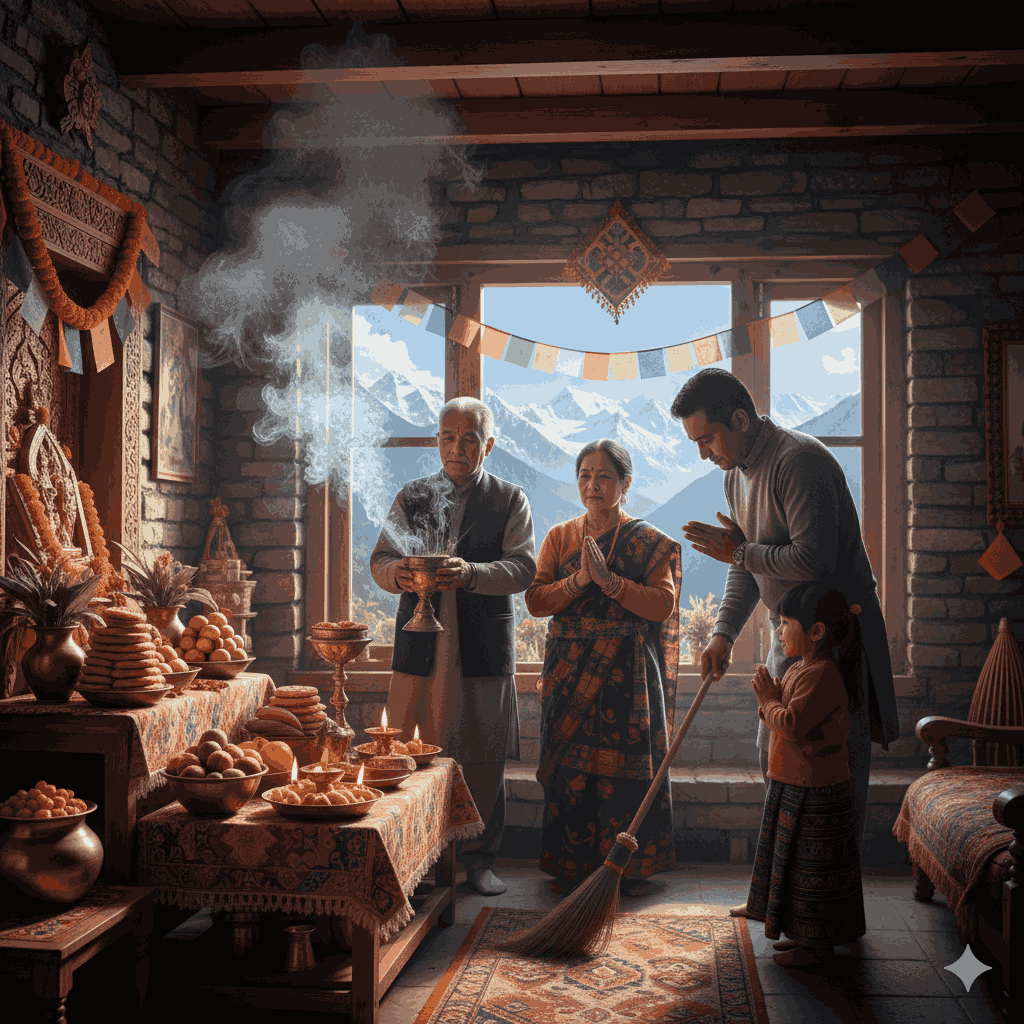
Sonam Losar Festival ,Rituals of purification and renewal with family prayers and incense in Nepal.
The term “Losar” is linguistically rooted in the Tibetan language, but the Sonam Losar Festival adds specific ethnic nuances. For the Tamang people, “Sonam” refers to merit or virtue, making their celebration a “New Year of Merit.”
The Sonam Losar Festival is deeply tied to the Lohokor (12-animal cycle). In 2026, the focus shifts to the Horse. Understanding the Sonam Losar Festival requires looking at the history of the region, where rites trace back to the pre-Buddhist Bon religion. These traditions were later synthesized with Buddhist philosophies, creating the modern tapestry of the Sonam Losar Festival we see today.
2. The 2026 Fire Horse: A Year of Rapid Transformation
What makes the 2026 Sonam Losar Festival so unique is its alignment with the Fire Horse. In the 60-year cycle of the Tibetan calendar, the Fire Horse is a rare and powerful combination. The Horse represents energy, travel, and action, while the Fire element signifies purification and illumination.
During the Sonam Losar Festival, lamas (priests) will offer specific prayers to harness this “wind-horse” (Lungta) energy. For seekers, the Sonam Losar Festival in 2026 is seen as a time of “karmic acceleration”,a year where spiritual progress and personal breakthroughs happen with unprecedented speed. This spiritual energy is often discussed in detail by the Official Nepal Tourism Board.
3. Tamang Identity: The Rhythm of the Damphu and Selo
The Tamang community, often referred to as “Horse Riders” or “Warriors” in ancient texts, makes up nearly 8% of Nepal’s population. Their contribution to the Sonam Losar is most visible in their music.
The Myth of the Damphu
Central to the Sonam Losar is the Damphu, a traditional drum. Legend tells of Peng Dorje, an ancestor who created the drum from wood and deerskin to cheer up his mourning wife. He used 32 bamboo pegs to secure the skin, representing the 32 physical symbols of the Buddha. This instrument is the soul of the Sonam Losar.
Tamang Selo: The Voice of the Hills
During the Sonam Losar, groups perform “Tamang Selo,” a genre of folk song that is catchy yet deeply emotional. It tells stories of daily life, lost love, and spiritual devotion. When you visit Tundikhel in Kathmandu during the Sonam Losar, the air is thick with the rhythmic beats of the Damphu and the swirling colors of traditional dance.
4. Culinary Traditions of the Sonam Losar
You cannot separate the Sonam Losar from the food. The traditional food prepared during Losar is a culinary map of the Himalayas.
Guthuk Soup: A staple of the Sonam Losar, this noodle soup contains nine ingredients. The most exciting part is the “fortune dumplings.” Hidden inside are dough balls containing symbolic items like salt (kind heart), coal (black heart), or chili (hot temper).
Khapse: Deep-fried biscuits that are synonymous with the Sonam Losar Festival. They are stacked high on altars to symbolize abundance.
Babar: A rice-based flatbread unique to the Tamang version of the Sonam Losar Festival.
Dresil: Sweet rice mixed with raisins and butter, served to ensure the Sonam Losar Festival begins on a sweet note.
5. Rituals of Purification and Renewal
The Sonam Losar begins long before the first day of the year. Families engage in a “big clean,” scrubbing every corner of their homes to remove “old luck.” On the eve of the Sonam Losar, a special incense made of juniper is burned to purify the air.
In monasteries, the Sonam Losar is marked by the “Lama Losar,” where practitioners offer respect to their teachers. This is followed by communal prayers for world peace. The Sonam Losar is not just about the individual; it is about the collective merit of the entire sentient world.
6. Exploring the 12-Year Animal Cycle (Lohokor)
The Sonam Losar revolves around a 12-year cycle where each year is represented by an animal: Rat, Ox, Tiger, Rabbit, Dragon, Snake, Horse, Sheep, Monkey, Bird, Dog, and Pig. During the Sonam Losar, your birth year animal determines your specific astrological “remedies” for the coming months. In 2026, those born in the Year of the Horse (1966, 1978, 1990, 2002, 2014) will be celebrating their own year during the Sonam Losar.
7. Modern Celebrations and Tourism in 2026
In 2026, the Sonam Losar has evolved into a massive public event. The Nepalese government recognizes it as a national holiday. In Kathmandu, the Sonam Losar Festival takes over public squares like Tundikhel with food stalls and craft markets.
For travelers, the Sonam Losar is the best time to see the Losar Festival Dress in its full glory. Men wear the Bhoto and Dhoti, while women wear the Gunyo Cholo, often adorned with massive turquoise and coral jewelry.
8. Strategic Summary: Why the Sonam Losar Persists
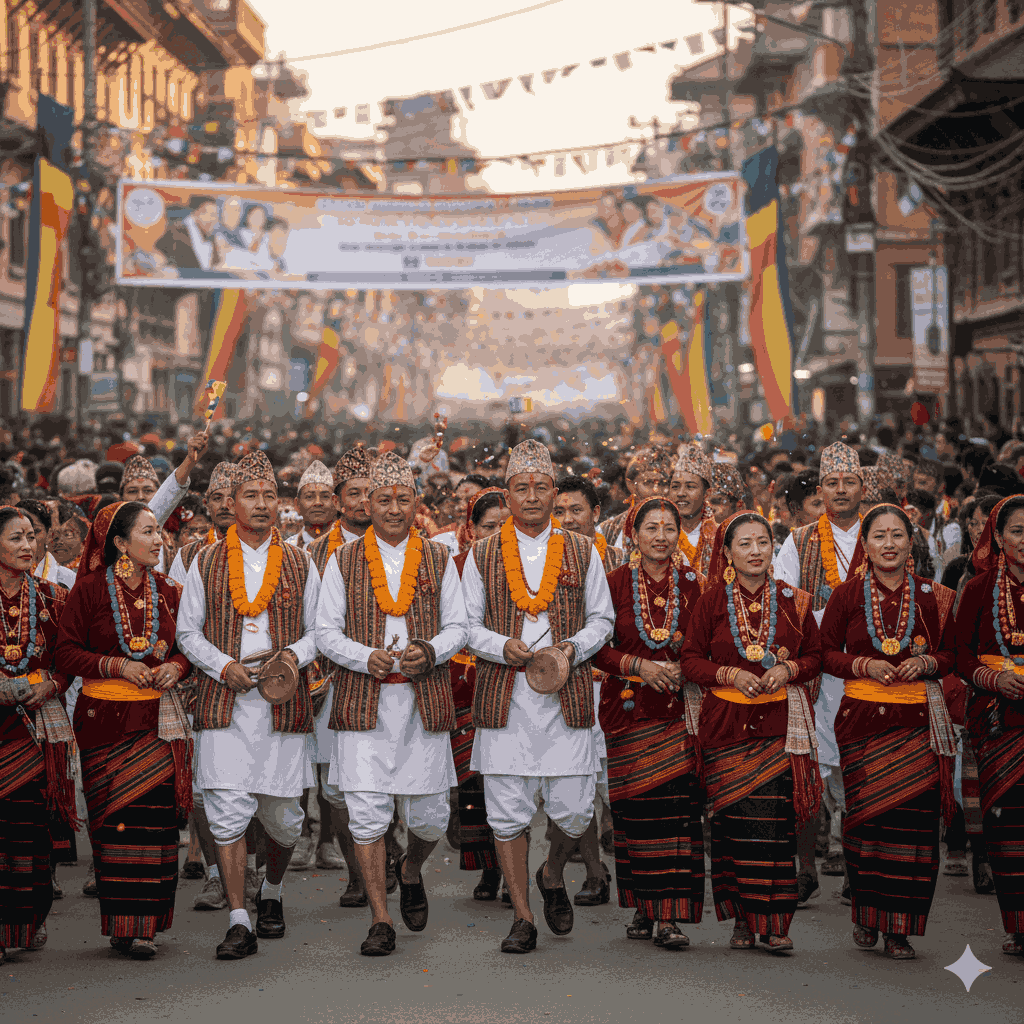
Sonam Losar Festival — Traditional dress and festival procession in Kathmandu with community celebration.
The Sonam Losar ensures that the cultural fabric of Nepal remains strong. Because the dates vary by ethnic group, you can actually celebrate the “New Year” multiple times in Nepal! Following the Sonam Losar is the best way to understand the History and Cultural Significance of Losar.
The Sonam Losar Festival defines the month of Magh. Most celebrations of the Sonam Losar Festival include morning prayers at Boudhanath Stupa. The Sonam Losar Festival is a seasonal gift to the world, reminding us of the importance of starting anew with a clean heart.
Frequently Asked Questions (FAQs)
Q: When is the Sonam Losar Festival held in 2026?
The Sonam Losar Festival (Tamang) is on January 19, 2026.
Q: Is it okay for tourists to join the Sonam Losar Festival?
Absolutely! The community is very welcoming. For tips on how to be a respectful guest, check our guide on what tourists should know before attending Losar.
Q: What is the primary greeting for the Sonam Losar Festival?
“Tashi Delek” is the universal greeting used during the Sonam Losar Festival.
In summary, the Sonam Losar Festival offers a breathtaking look into the soul of the Himalayas. By respecting these traditions, you gain access to a world of merit, virtue, and joy. The Sonam Losar Festival in 2026 will be a landmark event for anyone visiting Nepal. For more information, explore the Explore All About Nepal Blog.
