

Group of backpackers on a suspension bridge, representing the adventurous spirit of a Nepal backpacker itinerary in 2026.
Welcome to the land of eternal snow, ancient temples, and the warmest hospitality on the planet. If you are searching for a Nepal backpacker itinerary that balances rugged mountain adventure with deep cultural immersion and budget-friendly living, you have come to the right place. In 2026, Nepal has transformed into a destination that perfectly blends its heritage with modern travel conveniences. Whether you are a solo traveler or heading out with a group, the backpacker itinerary remains the gold standard for global trekking.
This guide is much more than just a list of places; it is a roadmap to discovering the soul of the Himalayas. We will dive deep into the chaotic streets of Kathmandu, the tranquil lakes of Pokhara, the high-altitude challenges of the Annapurna region, and the steamy jungles of the south. Every traveler knows that a good backpacker itinerary requires flexibility, but having a solid foundation is what turns a good trip into a life-changing one.
Week 1: Kathmandu Valley – The Gateway of Dreams
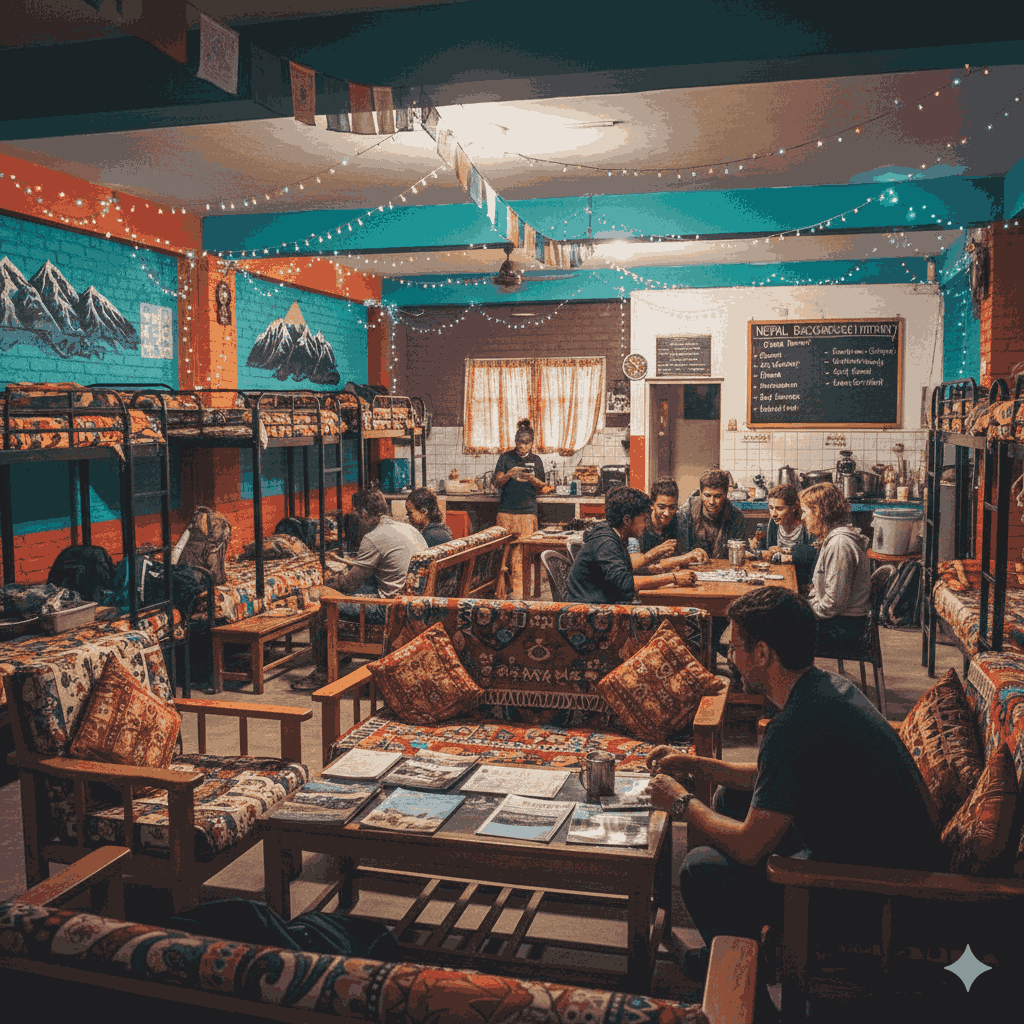
Budget hostel in Kathmandu with backpackers, showcasing affordable stays on a Nepal backpacker itinerary.
Your backpacker itinerary begins in Kathmandu, a city where the air is thick with incense and the sound of temple bells. Most people find the city overwhelming at first, but once you find your rhythm, you’ll realize it’s the heartbeat of the country.
Day 1–3: The Thamel Experience and Durbar Squares
Most travelers start their backpacker itinerary by checking into a hostel in Thamel. This neighborhood is a labyrinth of gear shops, cafes, and backpacker bars. While here, visit the Kathmandu Durbar Square to see the living heritage. For a deeper dive into the cost of living, you might want to check the latest breakdown of expenses in Nepal 2026 to plan your daily spending.
Boudhanath Stupa: The spiritual heart of the Tibetan community. It is a must-see on any backpacker itinerary.
Swayambhunath (The Monkey Temple): Offers the best sunset views of the valley.
Patan and Bhaktapur: These nearby cities are essential for any backpacker itinerary due to their perfectly preserved Newari architecture and UNESCO heritage sites.
Day 4–6: Cultural Immersion and Preparation
Before heading into the mountains, use these days to finalize your permits. In 2026, the Nepal Tourism Board has streamlined the permit process, but you still need a dedicated day for paperwork. If you are looking for a side trip, consider a short hike to Nagarkot for a Himalayan sunrise. This is a great “warm-up” for the more strenuous parts of your backpacker itinerary.
Week 2: The Heart of the Annapurnas
The next phase of your backpacker itinerary moves to the lake city of Pokhara and the high peaks of the Annapurna range. This is where you swap the city dust for mountain air.
Day 7–8: Pokhara – Lakeside Bliss
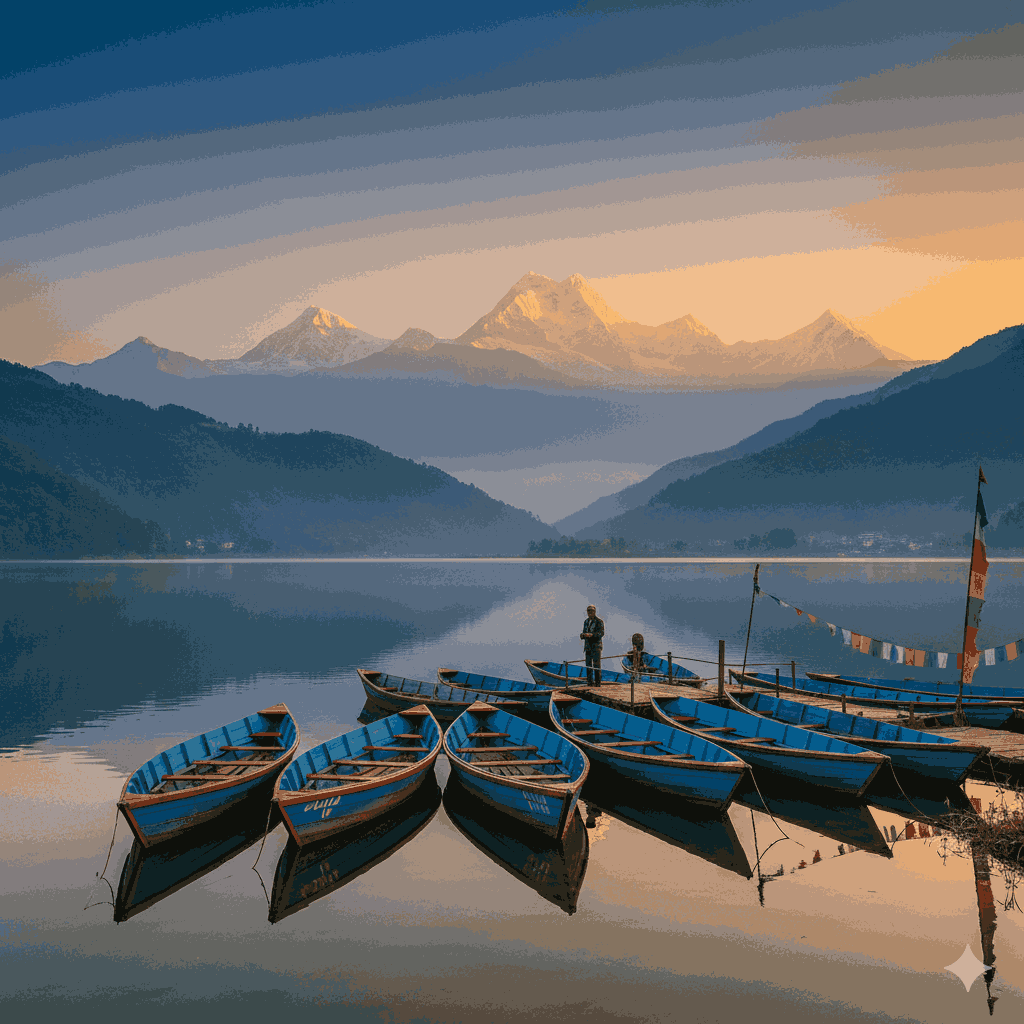
Scenic view of Phewa Lake in Pokhara, a highlight of the Nepal backpacker itinerary.
Take a tourist bus from Kathmandu to Pokhara. This 7-hour journey is a staple of every backpacker itinerary. Once in Pokhara, settle into a lakeside hostel like Zostel or Kiwi Backpackers. Spend your days boating on Phewa Lake or visiting the World Peace Pagoda. Pokhara is often the favorite city for travelers on a backpacker itinerary because of its relaxed vibe.
Day 9–16: Choosing Your Trek

Trekkers crossing Thorong La Pass, a key highlight of the Nepal backpacker itinerary.
This is where your backpacker itinerary gets serious. You have two main options:
The Annapurna Circuit: A 14-day loop crossing the $5,416$ meter Thorong La Pass.
Annapurna Base Camp (ABC): A 7–10 day trek into a natural amphitheater of peaks.
For most, the ABC trek is the highlight of their Nepal backpacker itinerary because it offers high-altitude thrills without the 2-week commitment. Be sure to pack according to our trekking gear checklist for 2026. Remember, your Nepal backpacker itinerary should always prioritize safety over speed.
Week 3: Off the Beaten Path and High Passes
If you have extra energy in your Nepal backpacker itinerary, week three is for the hidden gems that most tourists miss.
Day 17–21: Mardi Himal or Langtang Valley
If you want fewer crowds, add the Mardi Himal trek to your Nepal backpacker itinerary. It is a short, 5-day trek that brings you face-to-face with Machhapuchhre (Fishtail Mountain). Alternatively, head back toward Kathmandu and venture into Langtang Valley, a region known for its resilient people and stunning glaciers. Langtang is often cited as the best value-for-money trek on a Nepal backpacker itinerary.
Exploring Gosaikunda
For those who want a spiritual challenge, the frozen lakes of Gosaikunda are a powerful addition to a Nepal backpacker itinerary. At over $4,300$ meters, these lakes are sacred to Lord Shiva and offer a landscape that looks like another planet.
Week 4: Jungles, Birthplaces, and Farwells
The final stretch of your Nepal backpacker itinerary takes you to the Terai lowlands, showing you a completely different side of the country.
Day 22–24: Chitwan National Park
From Pokhara, take a bus to Chitwan. No Nepal backpacker itinerary is complete without a jungle safari. Here, you can spot the greater one-horned rhino and the elusive Bengal tiger. For a more “wild” and less touristy experience, some choose Bardia National Park, though it requires more travel time. Adding wildlife to your Nepal backpacker itinerary provides a much-needed break for your legs.
Day 25–26: Lumbini – The Cradle of Peace
Lumbini, the birthplace of Lord Buddha, is a must-visit for the spiritually inclined on a Nepal backpacker itinerary. Rent a bicycle and explore the various monasteries built by different countries. It’s a peaceful way to reflect on your journey before the end of your Nepal backpacker itinerary.
Day 27–28: Return to the Capital
Head back to Kathmandu. Spend your final night in Thamel, sharing stories with fellow travelers you met along your Nepal backpacker itinerary. This is the time for last-minute shopping,pashminas, thangkas, and singing bowls make for great memories. The final dinner of your Nepal backpacker itinerary should definitely be a massive plate of Momos.
Deep Dive: Budgeting Your Journey
Managing your money is key to a successful Nepal backpacker itinerary. In 2026, prices have risen slightly, but it remains one of the most affordable places in the world.
Accommodation: Expect to pay $5-10 for a dorm bed.
Food: Dal Bhat is your best friend. It’s the fuel of any Nepal backpacker itinerary.
Permits: Budget around $50-100 total for permits depending on your chosen treks.
Transport: Stick to local buses to keep your Nepal backpacker itinerary within budget.
Essential Advice for the 2026 Backpacker
Connectivity: In 2026, most teahouses have reliable Wi-Fi, but a local Ncell or NTC SIM card is still recommended for your Nepal backpacker itinerary.
Water Safety: Use a reusable bottle with a filter. It saves money and reduces plastic waste in the fragile Himalayan ecosystem, a core value for any modern Nepal backpacker itinerary.
Dal Bhat Power: Embrace the local diet. It’s cheap, nutritious, and usually comes with free refills, making it the perfect fuel for a Nepal backpacker itinerary.
Solo Safety: While solo travel is common, the 2026 rules require guides for most national park treks. Always verify with a registered agency before finalizing your Nepal backpacker itinerary.
Backpacker FAQ
1. How much does a 4-week Nepal backpacker itinerary cost?
On a budget, expect to spend about $35–$45 per day. This covers basic teahouses, local food, and public transport. Total for the month: $1,000–$1,300. This makes the Nepal backpacker itinerary one of the best values in Asia.
2. What is the best time for a Nepal backpacker itinerary?
Autumn (October-November) is the peak season for clear skies. Spring (March-April) is also excellent for rhododendrons and wildlife. Both seasons are perfect for a Nepal backpacker itinerary.
3. Do I need to book accommodation in advance?
In cities like Kathmandu and Pokhara, it’s good to book your first night of your Nepal backpacker itinerary. On treks, you’ll find plenty of teahouses, though peak season can be busy.
4. Can I do a Nepal backpacker itinerary in 2 weeks?
Yes! Focus on Kathmandu, Pokhara, and a short trek like Poon Hill or Mardi Himal. You can still have a great Nepal backpacker itinerary in half the time.
5. Is the water safe to drink?
Never drink tap water. Always use purification tablets or a filtered bottle to stay healthy throughout your Nepal backpacker itinerary.
Your Nepal backpacker itinerary is more than just a trip; it is an initiation into a community of world-seekers. From the dizzying heights of the Himalayas to the quiet sunrise over a tea garden, every moment in Nepal is designed to challenge and inspire you. As you plan your 2026 adventure, remember that the best parts of a Nepal backpacker itinerary are often the unplanned ones,the tea shared with a monk, the wrong turn that led to a hidden waterfall, or the bond formed with your guide.
Nepal is waiting. The mountains are calling. It’s time to start your Nepal backpacker itinerary today.
