

Panoramic view of Gorkha Palace Nepal perched in the Himalayan landscape,
In the rugged, vertical landscape of central Nepal, perched $1,400$ meters above the sea, stands the most significant historical monument in the country: Gorkha Palace Nepal. This is not merely an architectural relic or a museum of dust; it is the physical heartbeat of a nation. It was within these thick stone walls and under these pagoda-style roofs that King Prithvi Narayan Shah was born in 1723—the visionary leader who would go on to unify dozens of warring principalities into the single, sovereign nation we now call Nepal.
Visiting Gorkha Palace Nepal in 2026 is a journey through the very DNA of the country. While the bustling streets of the capital represent the modern, fast-paced face of the nation, Gorkha remains its ancestral spirit. Before you begin the steep ascent to this mountain fortress, it is highly recommended to soak in the urban rhythms of the capital. Attending jazz festivals and live music in Kathmandu provides the perfect cultural contrast to the ancient, profound silence of the Gorkha hills.
Chapter 1: The Historical Genesis of Gorkha Palace Nepal
The story of Gorkha Palace Nepal begins long before the unification of the modern state. Built in the 16th century by King Ram Shah (reigned 1606–1633), the palace was designed as a “Durbar” (royal court) that combined royal elegance with a brutal military necessity.
The Shah Dynasty Roots: The kingdom was originally established in 1559 by Dravya Shah. However, it was King Ram Shah who formalized the legal and social structures that made Gorkha a regional power.
Justice at the Chautara: Ram Shah was so famous for his fair judicial reforms that the saying “Nyaya Napaye Gorkha Janu” (If you don’t find justice, go to Gorkha) became a national proverb. You can still visit the Ram Shah Chautara near the palace today.
A Military Masterpiece: The location of Gorkha Palace Nepal was chosen for its strategic vantage point. From the ridge, the kings could monitor movement across the Marsyangdi and Trishuli river valleys, making the fortress virtually impregnable to surprise attacks.
The significance of Gorkha Palace Nepal shifted in the 18th century when Prithvi Narayan Shah used this palace as his “war room.” It was from this hilltop that he launched the campaigns to conquer the Kathmandu Valley. Even after the capital shifted to Kathmandu in 1768, Gorkha Palace Nepal remained the spiritual and ancestral home of the Shah monarchs until the monarchy was abolished in 2008.
Chapter 2: Architecture and Design: A Masterpiece in the Hills
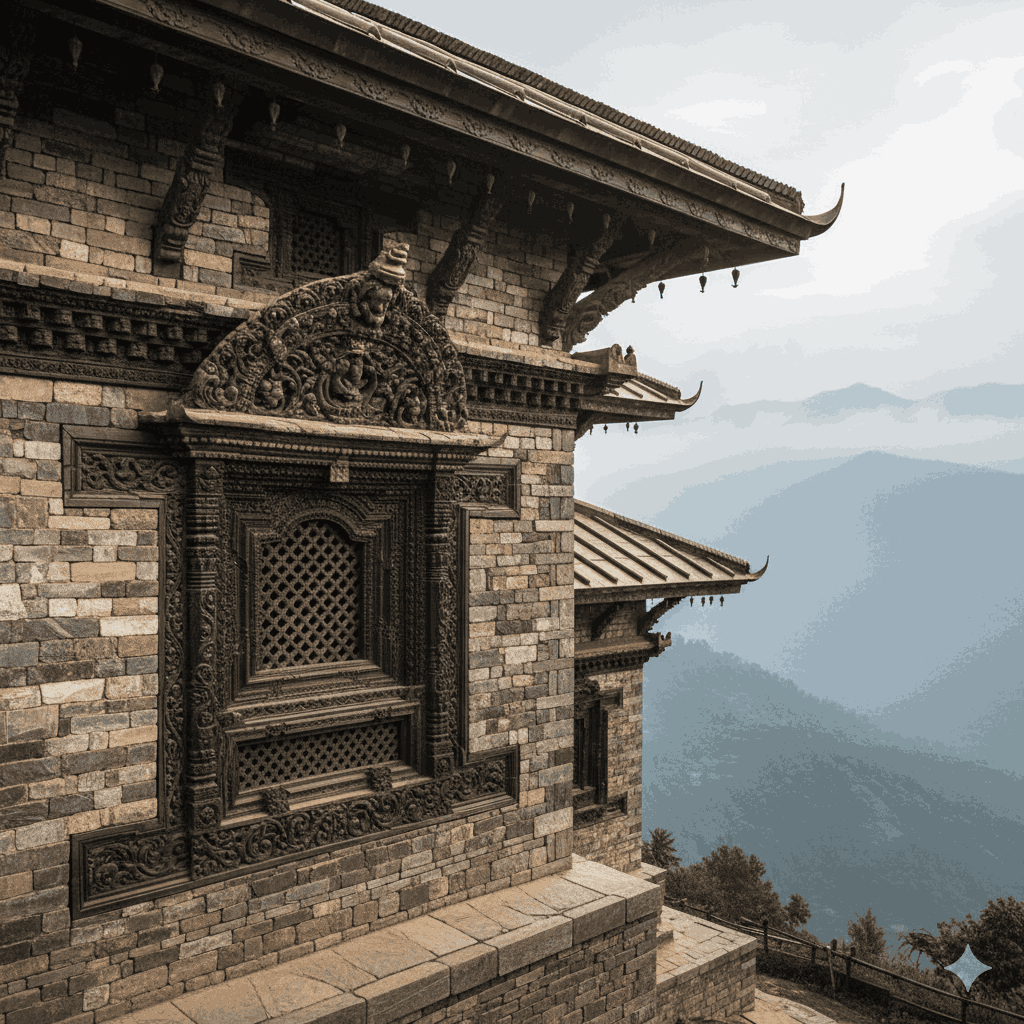
A detailed shot of the intricate wooden carvings and traditional architecture of Gorkha Palace Nepal
The architecture of Gorkha Palace Nepal is a striking blend of Newari craftsmanship and local hilltop utility. Even though the palace is located far from the traditional art centers of the Kathmandu Valley, the Shah kings invited master Newar artisans to create the intricate woodwork that defines the structure.
Intricate Woodwork: The palace features the iconic “Ankhijhyal” (lattice windows) and struts carved with images of peacocks, demons, and serpents. The wood used is primarily “Sal,” known for its extreme durability.
Wall Construction: The walls of Gorkha Palace Nepal are nearly three feet thick, built from local stone and sun-baked bricks (Appa) to withstand both the harsh Himalayan weather and enemy artillery.
The Eternal Flame: Located on the southern part of the palace, an “eternal flame” has been kept burning since the unification of Nepal. In 2026, it remains a symbol of the undying spirit and unity of the Nepali people.
The 2015 earthquake caused significant damage to Gorkha Palace Nepal, but as of 2026, the restoration is complete. The Department of Archaeology has used traditional lime-and-surkhi mortar to ensure the palace retains its 17th-century authenticity. This careful preservation makes Gorkha Palace Nepal a premier destination for those interested in medieval Himalayan architecture.
Chapter 3: The 1,500 Steps: The Journey to the Top
To reach the actual Gorkha Palace Nepal complex, travelers must undertake a physical pilgrimage that tests the lungs and strengthens the spirit.
The Ascent Process
Gorkha Bazaar: Your journey begins in the town below. This is where you can stock up on water and supplies.
The Stone Staircase: A meticulously laid stone staircase of approximately 1,500 steps winds its way up the ridge.
Rest Stops (Chautaras): Along the way, you will find shaded platforms built around massive Pipal trees. These are the traditional resting spots for porters and pilgrims visiting Gorkha Palace Nepal.
The Panorama: As you gain altitude, the view of the Manaslu ($8,163$m) and Annapurna ranges begins to peek over the green ridges.
The climb to Gorkha Palace Nepal is a visceral experience. You walk past local homes where life continues as it has for centuries—goats grazing on the slopes, children playing on the stone steps, and the distant sound of temple bells echoing through the mist.
Chapter 4: Sacred Sites Within Gorkha Palace Nepal
Gorkha Palace Nepal is as much a religious site as it is a historical one. The complex is divided into distinct spiritual zones that draw thousands of pilgrims annually.
1. The Gorkha Kalika Temple
Dedicated to the fierce goddess Kali, this temple is located on the western side of the palace. It is considered one of the most powerful Shakti Peeths in Nepal.
Royal Sacrifices: Even today, the tradition of animal sacrifice continues during major festivals like Dashain.
Restricted Entry: Only the main priest and members of the royal family (historically) could enter the inner sanctum. For tourists, the view of the exterior carvings and the vibrant energy of the devotees is the highlight.
2. The Gorakhnath Cave
Located just below the main building of Gorkha Palace Nepal, this cave is the residence of the legendary sage Gorakhnath.
The Legend: It is believed that the sage Gorakhnath blessed the young Prithvi Narayan Shah, spitting on his feet (or hand, in some versions) to grant him the power to conquer any land he stepped upon.
The Rituals: Inside the cave, you can see the idol of Gorakhnath and the footprints of the saint. The fire lit by the sage’s followers is said to have been burning for centuries.
Chapter 5: 2026 Travel Logistics: Reaching the Fortress
Navigating a trip to Gorkha Palace Nepal in 2026 requires some basic planning regarding transport and permits.
Getting There
From Kathmandu: The drive is approximately $140$ km. By private car, it takes about 5 hours. Local buses from the Gongabu New Bus Park are available every hour.
From Pokhara: Gorkha is only a 4-hour drive from Pokhara, making it an excellent stopover between Nepal’s two biggest cities.
Entry Fees for 2026
| Nationality | Museum Fee | Palace Area |
| Nepali | 25 NPR | Free |
| SAARC Citizens | 100 NPR | Free |
| Foreigners | 500 NPR | Free |
Before you head up the hill, ensure you have sufficient cash. While the bazaar has improved, it’s always helpful to check ATMs in the mountains before you start your trek to Gorkha Palace Nepal.
Chapter 6: The Gorkha Museum (Tallo Durbar)
While the hilltop palace is the main attraction, the Tallo Durbar (Lower Palace) in the heart of Gorkha Bazaar is an essential part of the Gorkha Palace Nepal experience.
Built in the 19th century by the Rana rulers, this palace now serves as a museum. It houses:
The Royal Armory: Cannons, flintlock muskets, and the iconic “Khukuri” knives used during the unification wars.
Astrological Records: The birth charts (Janmakundali) of various Shah kings.
Divya Upadesh: An original copy of King Prithvi Narayan Shah’s “Divine Teachings,” which outline his philosophy on governance and foreign policy.
Traditional Costumes: Displays of the ethnic dress of the Magar and Gurung people, who formed the backbone of the Gorkhali army.
Chapter 7: Trekking and Beyond Gorkha Palace Nepal
For those who want to use Gorkha Palace Nepal as a springboard for adventure, the region offers several world-class trekking routes.
The Manaslu Circuit
Gorkha is the traditional gateway to the Manaslu Circuit Trek, one of the most spectacular “off-the-beaten-path” routes in the world. Trekkers often spend a day at Gorkha Palace Nepal to acclimatize and soak in the history before heading toward the $8,000$-meter peaks.
Lower Manaslu Scenic Trek
This 10-day trek focuses on the villages surrounding Gorkha, including Barpak (the epicenter of the 2015 quake) and Laprak. It is a fantastic way to see the “real” Nepal away from the crowds of Everest.
Upallokot Viewpoint
If the 1,500 steps weren’t enough, continue climbing for another 20 minutes above Gorkha Palace Nepal to reach Upallokot. This is the highest point on the ridge and offers a $360$-degree panorama of the Himalayas that will leave you breathless.
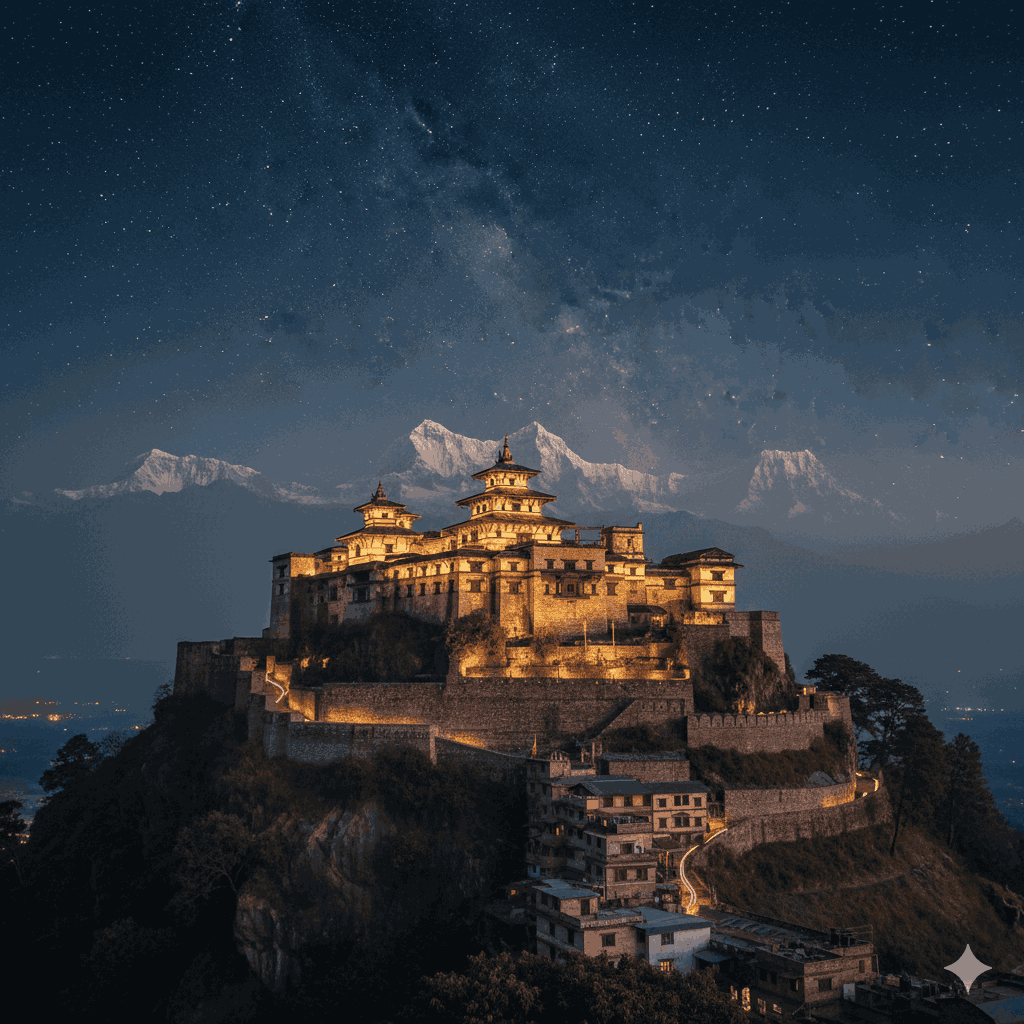
Night view of Gorkha Palace Nepal lit with traditional lamps
Frequently Asked Questions (FAQs)
Q1: Is Gorkha Palace Nepal open every day?
A: Yes, the palace area is open daily from sunrise to sunset. However, the Gorkha Museum has specific hours (usually 10:00 AM to 4:00 PM) and is often closed on Tuesdays.
Q2: Can I hire a guide for Gorkha Palace Nepal?
A: Yes, local guides are available at the base of the stairs in Gorkha Bazaar. Hiring one is recommended to truly understand the complex history of the Shah Dynasty.
Q3: What should I wear to visit the palace?
A: Since Gorkha Palace Nepal contains sacred Hindu temples, you should dress modestly. Shoulders and knees should be covered. You will be required to remove your shoes and leather belts before entering certain temple areas.
Q4: How long does a visit take?
A: To see the museum and climb to Gorkha Palace Nepal, you should allow at least 4 to 5 hours. Many travelers choose to stay overnight in Gorkha Bazaar to enjoy the sunset from the palace.
Q5: Is it safe to visit in 2026?
A: Absolutely. The roads have been improved, and the reconstruction of Gorkha Palace Nepal has made the structures safer than they have been in decades.
Standing on the cold stone terrace of Gorkha Palace Nepal, looking out at the white wall of the Himalayas, it is impossible not to feel the weight of history. This is the place where a small, ambitious kingdom decided to become a nation. It is a site of bravery, spiritual devotion, and architectural brilliance.
In 2026, as Nepal moves forward into a new era of tourism and development, Gorkha Palace Nepal stands as a reminder of its roots. It is a place where you can touch the same stones that Prithvi Narayan Shah touched and breathe the same thin mountain air that inspired a revolution. Whether you come for the history, the hike, or the holiness, Gorkha Palace Nepal will leave an indelible mark on your soul.
