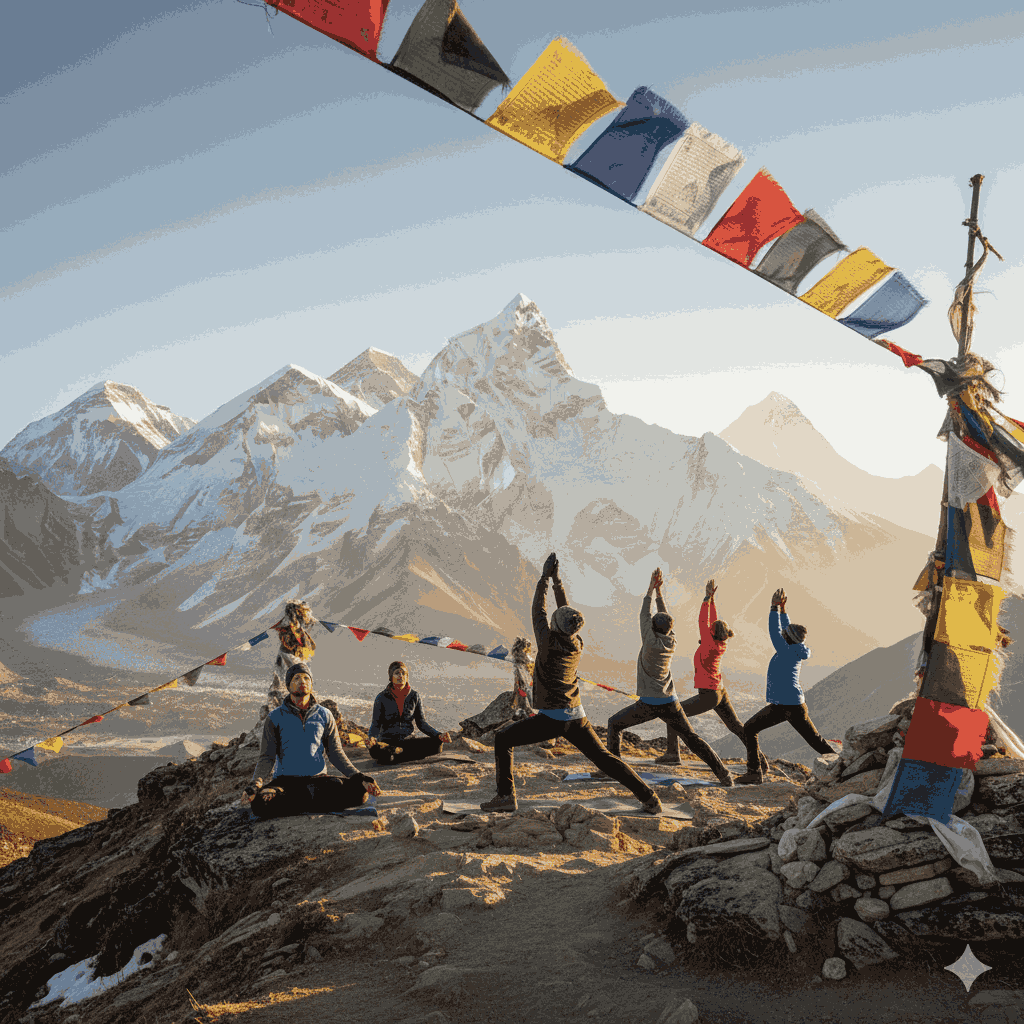
Everest yoga trek in Nepal at sunrise with yogis practicing meditation near Mount Everest
Combining the spiritual heartbeat of the Himalayas with a physical quest for the world’s highest base camp, the Everest yoga trek in Nepal is a transformative odyssey. This is not just a journey through rugged mountain trails; it is an invitation to align your chakras amidst the towering giants of the Khumbu. By integrating ancient yogic wisdom with high-altitude trekking, you experience a profound sense of self-discovery that standard mountaineering simply cannot offer.
The Everest yoga trek represents a sublime marriage between the physical challenge of the mountains and the internal peace of meditation. For centuries, the Khumbu region has been a sacred sanctuary for pilgrims and practitioners. Today, an Everest yoga trek in Nepal allows you to walk the same paths as ancient sages while refining your practice under the watchful eye of Mount Everest (8,848.86m).
Whether you are performing a sun salutation as the first golden rays hit Ama Dablam or practicing pranayama to soothe your lungs at 4,000 meters, the Everest yoga trek offers a unique physiological and spiritual advantage. Science even suggests that the focused breathing of yoga can significantly assist in altitude acclimatization, making your ascent safer and more mindful.
Discover the Philosophy: Why Choose an Everest Yoga Trek?
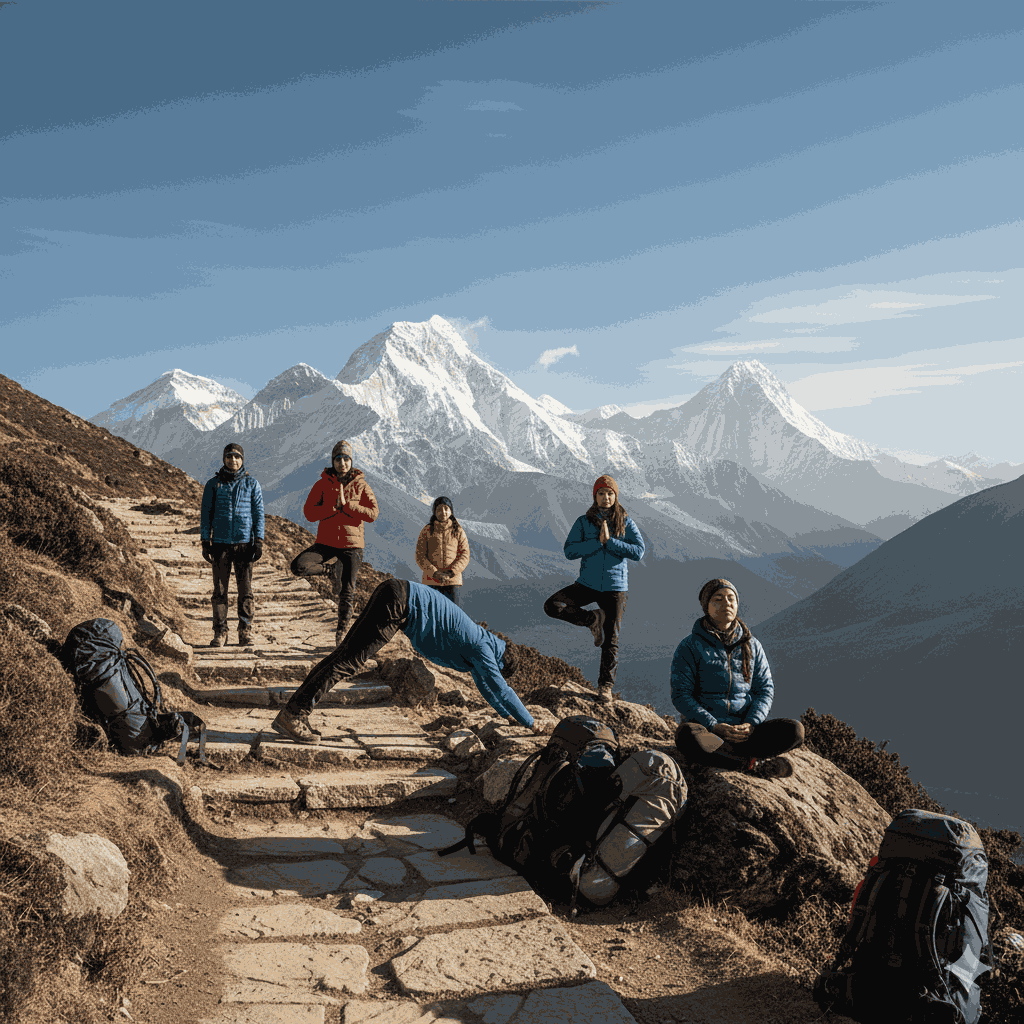
Everest yoga trek in Nepal showing trekkers practicing yoga on the trail with Himalayan peaks
Choosing an Everest yoga trek over a traditional trek is a choice to prioritize the journey over the destination. In a world of fast-paced travel, this trek invites you to slow down. The Everest yoga trek focuses on:
The Vajra Energy: Tapping into the “thunderbolt” energy of the high Himalayas.
Mindful Movement: Transforming every step into a walking meditation.
Physical Synergy: Using asanas to prevent the muscle fatigue typical of high-altitude hiking.
Everest Yoga Trek: Detailed 15-Day Soulful Itinerary
| Day | Destination | Max Altitude | Yoga & Meditation Focus |
| 01 | Arrival in Kathmandu | 1,400m | Grounding & Welcoming Ceremony |
| 02 | Kathmandu Heritage Tour | 1,400m | Meditation at Boudhanath Stupa |
| 03 | Fly to Lukla / Phakding | 2,610m | Prachmana (Opening the Lungs) |
| 04 | Trek to Namche Bazaar | 3,440m | Resilience & Core Strength |
| 05 | Namche Acclimatization | 3,880m | Sunset Yoga with Everest Views |
| 06 | Trek to Tengboche | 3,860m | Spiritual Connection at the Monastery |
| 07 | Trek to Dingboche | 4,410m | Patience & Mindful Pacing |
| 08 | Dingboche Rest Day | 4,410m | Restorative Yin Yoga for Recovery |
| 09 | Trek to Lobuche | 4,910m | Mental Focus & Breath Control |
| 10 | Everest Base Camp | 5,364m | Gratitude Meditation at the Base |
| 11 | Kala Patthar / Pheriche | 5,545m | High-Altitude Surya Namaskar |
| 12 | Trek to Kyangjuma | 3,550m | Rejuvenation & Muscle Stretching |
| 13 | Trek to Lukla | 2,860m | Celebration & Reflection Flow |
| 14 | Fly to Kathmandu | 1,400m | Farewell Jazz & Live Music Dinner |
| 15 | Final Departure | – | Closing Prayer & Departure |
Discover the Science: Benefits of an Everest Yoga Trek

Everest yoga trek in Nepal with meditation practice at high altitude near Everest Base Camp
The physiological impact of the Everest yoga trek in Nepal is backed by both tradition and modern research. When you embark on an Everest yoga trek, you are actively training your body to survive and thrive in low-oxygen environments.
1. Enhanced Lung Capacity through Pranayama
At 5,000 meters, there is nearly 50% less oxygen than at sea level. The Everest yoga trek incorporates specific breathing techniques like Bhastrika and Ujjayi, which help in expanding lung volume and improving the efficiency of oxygen transport in the blood. This is a core component of any successful Everest yoga trek.
2. Injury Prevention and Rapid Recovery
Trekking for 6–8 hours a day with a pack can lead to “trekker’s knee” and lower back strain. On an Everest yoga trek, evening sessions focus on stretching the hamstrings, hip flexors, and psoas muscles. This consistent maintenance ensures that participants of an Everest yoga trek in Nepal remain mobile and pain-free throughout the 130km journey.
3. Stress Management and Altitude Resilience
Altitude sickness often has a psychological component—anxiety can exacerbate physical symptoms. The meditation practiced on an Everest yoga trek in Nepal keeps the nervous system calm, allowing for better sleep and more effective acclimatization.
Everest Yoga Trek in Nepal: Essential Packing & Preparation
To fully enjoy your Everest yoga trek in Nepal, you must be prepared for extreme conditions. The Everest yoga trek in Nepal spans diverse climates, from lush forests to glacial moraines.
Yoga Equipment: Bring a lightweight, foldable travel mat. Do not bring heavy rubber mats on your Everest yoga trek.
Layering System: High-altitude yoga is often done in the cold. Ensure you have thermal leggings and moisture-wicking tops specifically for your Everest yoga trek in Nepal sessions.
Spiritual Journal: Part of the Everest yoga trek in Nepal is documenting your internal shifts.
If you find yourself in the capital before or after your journey, don’t miss the jazz festivals and live music in Kathmandu to soothe your soul after the mountain silence.
Discover More: Long-Form FAQs for the Everest Yoga Trek in Nepal
How difficult is the Everest yoga trek in Nepal for an average person?
The Everest yoga trek in Nepal is considered a “moderate to strenuous” adventure. While the yoga itself is tailored to your energy levels, the trekking requires you to walk 10–15km daily on uneven terrain. We recommend at least 3 months of cardio preparation before starting your Everest yoga trek in Nepal.
Do I need to be an expert in yoga to join the Everest yoga trek in Nepal?
Not at all. The Everest yoga trek in Nepal is open to all levels. Instructors focus on Hatha and Vinyasa flows that are accessible to beginners. The goal of an Everest yoga trek in Nepal is mindfulness and physical maintenance, not mastering “Instagram-perfect” poses at high altitudes.
What is the best season for an Everest yoga trek in Nepal?
The most popular times for an Everest yoga trek are Spring (March–May) and Autumn (September–November). During Spring, you’ll practice yoga surrounded by blooming rhododendrons, while autumn offers the crispest views of the peaks during your Everest yoga trek in Nepal.
How does the food on an Everest yoga trek in Nepal support my practice?
Most practitioners on an Everest yoga trek prefer a vegetarian diet. Teahouses offer “Dal Bhat” (lentils and rice), which is the ultimate high-energy fuel for an Everest yoga trek. Avoiding meat at high altitudes is often recommended for better digestion.
In conclusion, the Everest yoga trek is not merely a vacation; it is a profound investment in your mental and physical well-being. By the time you return from your Everest yoga trek, you will carry the stillness of the mountains within you. The Everest yoga trek in Nepal teaches us that while the climb is difficult, the breath is always there to guide us. Whether you are seeking a physical challenge or a spiritual reset, the Everest yoga trek is the answer. As you transition back to the bustling streets of the city, remember to check out the local jazz festivals and live music in Kathmandu to keep that vibrant energy alive long after your Everest yoga trek has ended.
