
Nepal is globally known for iconic trekking regions like Everest and Annapurna, yet many untouched destinations remain hidden beyond mainstream tourism routes. One such extraordinary destination gaining rapid attention among trekkers, photographers, and adventure lovers is Chaurikharka, a breathtaking alpine meadow located at approximately 4,000 meters in Bhume Rural Municipality–1 of Rukum East.
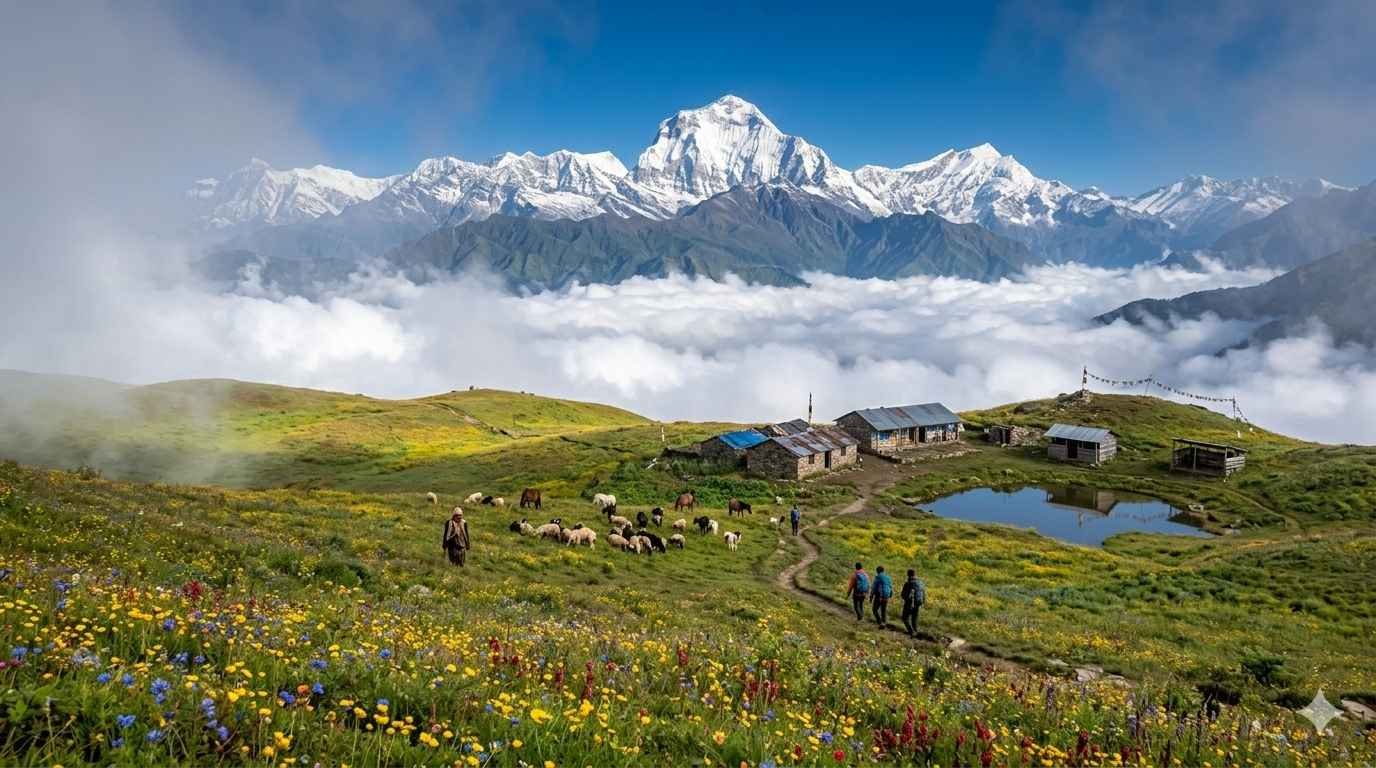
Chaurikharka Rukum East
Often referred to locally as Chunguri Buki in the Magar Kham language, Chaurikharka represents the raw beauty of Nepal’s mid-western Himalayas. Unlike crowded trekking hubs, this high-altitude grassland offers peaceful landscapes, dramatic Himalayan panoramas, and vibrant seasonal wildflowers that transform the entire region into a natural paradise during summer.
Situated near the border of Rukum East and Baglung districts, Chaurikharka has recently become accessible through a three-hour hike from Pathihalne along the Mid-Hill Highway. This accessibility makes it one of Nepal’s most promising emerging trekking destinations.
For travelers seeking untouched nature, authentic culture, and panoramic mountain views without mass tourism, it provides an unforgettable Himalayan experience filled with serenity, adventure, and cultural richness.
Where is Chaurikharka Located?
Nestled in western Nepal’s mountainous terrain, this lies within Bhume Rural Municipality of Rukum East district. The meadow stretches across rolling alpine hills surrounded by snow-capped Himalayan ranges.
The location is strategically important because it connects remote highland communities traditionally dependent on seasonal livestock grazing. The meadow sits close to Baglung district, making it geographically accessible compared to many other high-altitude destinations.
Travelers reach Chaurikharka by first traveling along the Mid-Hill Highway to Pathihalne. From there, a scenic uphill trek leads visitors through forests, ridgelines, and open grasslands before revealing sweeping alpine landscapes.
The increasing road connectivity has transformed Chaurikharka from a local grazing ground into an emerging eco-tourism destination attracting domestic explorers and international trekkers alike.
The Meaning and Cultural Identity
The name Chaurikharka reflects both geography and tradition. In Nepali mountain terminology:
Chauri refers to Himalayan yak or yak-hybrid cattle.
Kharka means seasonal grazing meadow.
Historically, local Magar communities moved livestock to Chunguri Buki during warmer months when alpine grasses flourished. Even today, herders bring yaks, sheep, and horses to graze freely across the vast meadows.
Locally known as Chunguri Buki, it remains deeply connected to Magar pastoral culture. Temporary shelters, traditional grazing systems, and seasonal migration practices continue to preserve centuries-old lifestyles.
Visitors exploring Chunguri Buki witness living cultural traditions rather than museum-style heritage — making the experience authentic and educational.
Why Chaurikharka is Becoming Popular Among Travelers
In recent years, Nepalese travel communities and social media explorers have begun showcasing the untouched beauty of Chaurikharka. Several factors contribute to its growing popularity:
1. Untouched Natural Beauty
Unlike commercial trekking regions, it remains pristine and crowd-free.
2. Easy Trekking Access
A three-hour hike makes the destination achievable even for beginner trekkers.
3. Panoramic Himalayan Views
Visitors enjoy views of Dhaulagiri and surrounding Himalayan ranges.
4. Perfect Camping Destination
The open meadow provides ideal terrain for overnight camping.
Because of these advantages, it is quickly becoming one of western Nepal’s most talked-about hidden gems.
Best Time to Visit Chaurikharka
Timing plays a crucial role when planning a visit.
Mid-July to Mid-September (Best Season)
This period transforms the alpine meadow into a colorful landscape filled with blooming wildflowers. Monsoon moisture supports lush vegetation, making photography spectacular.
Autumn Season (October–November)
Clear skies provide exceptional mountain visibility around this place, ideal for trekking and panoramic viewing.
Spring Season (April–May)
Pleasant weather and moderate temperatures allow comfortable hiking.
Winter Season
Heavy snowfall may limit accessibility, though snow-covered Chaurikharka offers dramatic scenery for experienced trekkers.
Trekking Route to Chaurikharka
The journey to Chaurikharka itself is part of the adventure.
Step 1: Reach Pathihalne
Travel via Mid-Hill Highway through Rukum East.
Step 2: Begin the Trek
A three-hour uphill hike begins from Pathihalne village.
Step 3: Forest Trails
Trekkers pass rhododendron forests and traditional settlements.
Step 4: Alpine Transition
Vegetation gradually changes into open highland grasslands before arriving at Chaurikharka.
The relatively short trek makes this trek place suitable for weekend travelers and domestic tourists seeking high-altitude experiences.
Stunning Himalayan Views from Chaurikharka
One of the main attractions of Chaurikharka is its panoramic Himalayan scenery.
From the meadow, visitors can witness:
Dhaulagiri range views
Rolling alpine ridges
Endless cloud formations
Sunrise and sunset color transitions
During clear mornings, the surrounding peaks glow golden, creating unforgettable photographic opportunities across it.
Camping Experience at Chaurikharka
Camping is among the most rewarding experiences here.
At night, Chaurikharka transforms into a peaceful wilderness under star-filled skies. With minimal light pollution, astrophotography opportunities are exceptional.
Campers often enjoy:
Bonfire gatherings
Local storytelling with herders
Sunrise above cloud layers
Responsible camping ensures the natural beauty of this place remains preserved for future visitors.
Wildlife and Biodiversity Around Chaurikharka
The alpine ecosystem surrounding this palce supports diverse flora and fauna.
Flora
Seasonal wildflowers
Alpine grasses
Medicinal herbs
Fauna
Himalayan birds
Mountain livestock
Occasional wildlife sightings
The biodiversity adds ecological importance to this place, highlighting its conservation value.
Local Lifestyle and Pastoral Culture
Life around Chaurikharka revolves around livestock grazing traditions.
Families migrate seasonally with animals, maintaining sustainable use of grasslands. Travelers interacting with locals gain insights into mountain survival techniques, food traditions, and community cooperation.
This cultural immersion makes this place more than just a scenic destination.
Photography Opportunities in Chaurikharka
Photographers consider this place is a dream location due to:
Wildflower landscapes
Mountain silhouettes
Cloud inversions
Traditional grazing scenes
Golden-hour photography across this place delivers cinematic Himalayan visuals rarely found elsewhere.
Sustainable Tourism Potential of Chaurikharka
As tourism grows, sustainable practices are essential.
Eco-friendly tourism initiatives encourage:
Waste management
Community homestays
Local employment
Environmental conservation
Responsible travel ensures it develops without losing authenticity.
Travel Tips for Visiting Chaurikharka
Acclimatize properly due to altitude.
Carry warm clothing.
Bring camping gear.
Respect local customs.
Avoid littering.
Preparation guarantees a safe journey to Chaurikharka.
Challenges and Future Tourism Development
Despite growing popularity, it faces challenges:
Limited infrastructure
Emergency access concerns
Lack of accommodation facilities
However, community-led tourism projects aim to develop sustainable visitor services while protecting natural ecosystems.
Why Chaurikharka Should Be on Every Traveler’s Nepal Bucket List
For travelers seeking peaceful Himalayan experiences beyond commercial trekking routes, it offers unmatched beauty.
It combines:
Culture
Adventure
Nature
Accessibility
Authentic rural experiences
As awareness grows, Chaurikharka may soon become western Nepal’s signature alpine destination.
Nepal continues to reveal new travel destinations that redefine Himalayan exploration, and it stands among the most promising discoveries. From vibrant summer meadows to panoramic mountain views and deep-rooted pastoral traditions, this alpine landscape offers experiences rarely found in crowded trekking regions.
The accessibility from Pathihalne, combined with breathtaking scenery and authentic local culture, positions it as a future eco-tourism hotspot. Travelers visiting today experience a destination still untouched by mass tourism peaceful, raw, and naturally magnificent.
As sustainable tourism initiatives develop, is has the potential to uplift local communities while preserving ecological balance. For explorers searching for Nepal’s next hidden paradise, this high-altitude meadow delivers adventure, tranquility, and cultural connection all in one unforgettable journey.
FAQs About Chaurikharka
1. Where is Chaurikharka located?
Chaurikharka lies in Bhume Rural Municipality-1 of Rukum East district near the Baglung border.
2. How high is Chaurikharka?
The meadow sits at approximately 4,000 meters above sea level.
3. How long is the trek take?
It takes around three hours of hiking from Pathihalne.
4. What is the best time to visit?
Mid-July to mid-September for wildflowers and autumn for mountain views.
5. Can beginners visit?
Yes, with basic fitness and proper acclimatization.
6. Is camping allowed?
Yes, camping is one of the main activities.
7. Are accommodations available?
Currently limited; camping or local arrangements are common.
8. Why is this is so famous nowdays?
For alpine meadows, Himalayan views, and pastoral culture.
